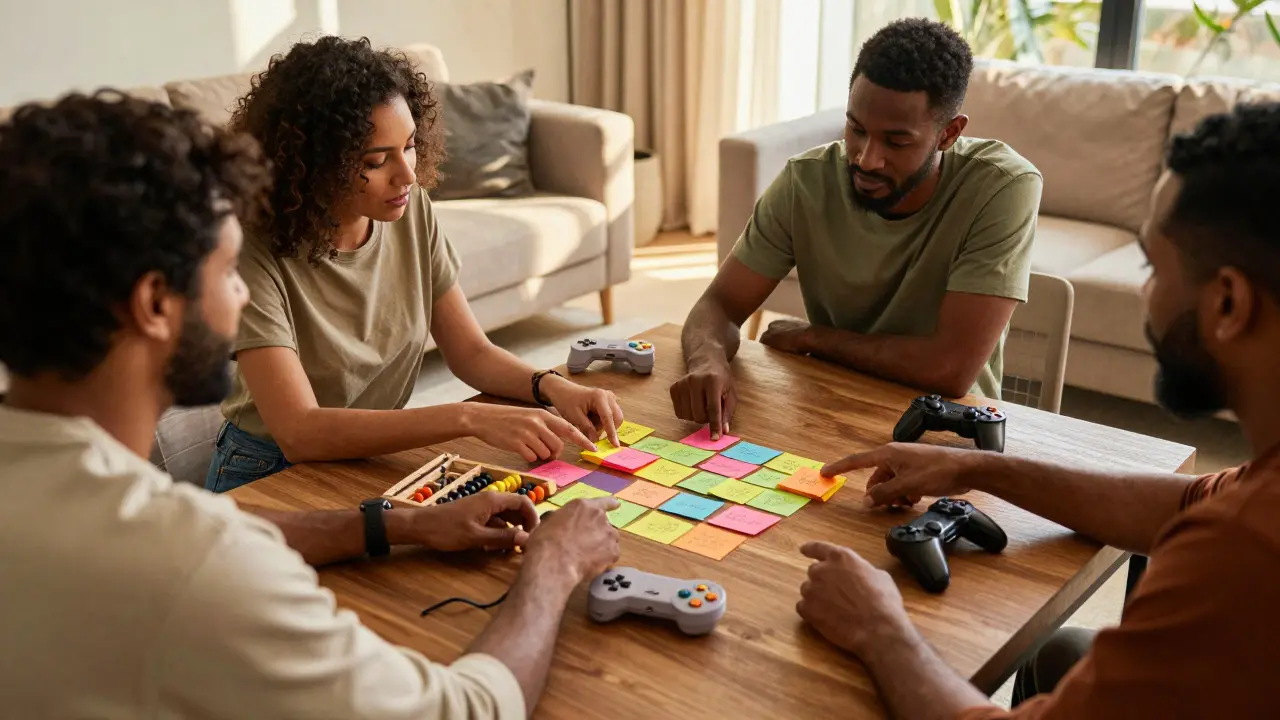
Buying a gift for someone who already owns every console and rare cartridge is a nightmare. You risk buying duplicates, low-value items, or something they simply don't care about. A Secret Santa exchange solves this by turning gift-giving into a collaborative puzzle where the group helps you find the perfect item.
For video game collectors, the stakes are higher. Unlike standard office exchanges where a mug costs $10, a collector's "nice" gift might be a specific first-run copy of a retro title or a limited-edition controller. Getting it wrong feels like a personal insult. But when done right, it’s one of the most rewarding ways to strengthen your local meetups or online Discord servers. Here is how to structure an exchange that actually works for people with deep pockets and deeper knowledge.
Define the Rules Before You Invite Anyone
The biggest killer of collector exchanges is ambiguity. If you don't set clear boundaries upfront, you will end up with complaints about budget overruns or condition disputes. Start by locking in three non-negotiables: the budget cap, the condition standard, and the deadline.
Budget caps are tricky in this niche. A $50 limit might buy a complete-in-box (CIB) copy of a common PlayStation 1 game, but it won't touch a sealed Nintendo 64 title. Set a realistic range, perhaps $30-$75, depending on your group's average spending power. Make it clear whether shipping is included. For physical collectibles, shipping can eat up 20-30% of the value if not accounted for.
Condition is the other major friction point. Use standardized grading terms so everyone is on the same page:
- Mint (M): No visible wear, original packaging intact.
- Near Mint (NM): Minor shelf wear, box corners slightly softened.
- Very Good (VG): Visible wear, manual may have creases, case has scratches.
- Complete in Box (CIB): Includes all original contents (manual, warranty card, stickers).
If you are running this digitally, create a shared spreadsheet or use a bot in your Discord server to track these details. Transparency prevents 90% of post-exchange arguments.
Build the Wishlist Strategy
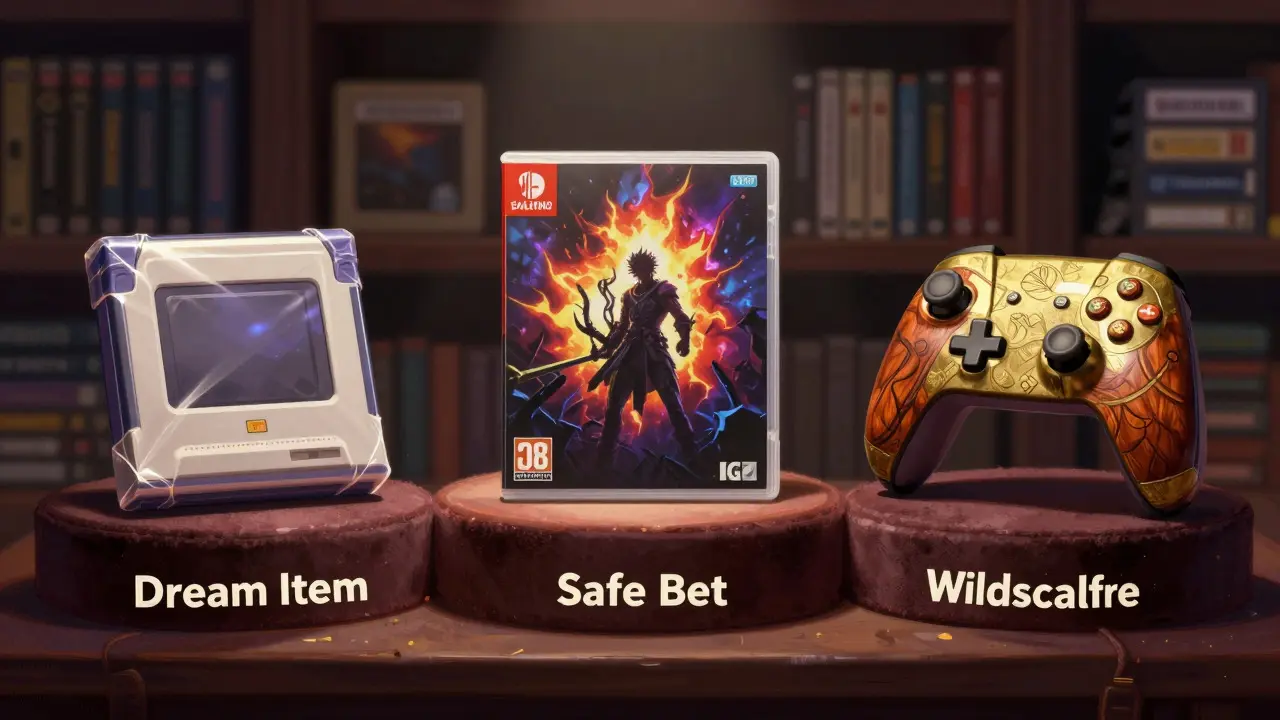
Don't just ask for "something from the 90s." That is too vague. Instead, implement a tiered wishlist system. Ask each participant to submit three categories of requests:
- The Dream Item: High value, specific version, hard to find. Only assign if the budget allows or if the giver is willing to stretch.
- The Safe Bet: Mid-range, widely available, high likelihood of being enjoyed (e.g., a new indie game on a platform they own).
- The Wildcard: Something unexpected but related (e.g., art books, replica controllers, or accessories).
This gives givers options. If the Dream Item is out of reach, they can pivot to the Safe Bet without feeling like they failed. It also prevents the dreaded "I got them another copy of Zelda Ocarina of Time" scenario because the recipient explicitly listed what they already have.
Match Givers to Recipients Wisely
Random assignment is fun for casual groups, but risky for collectors. You don't want to give a massive collection of Sega Genesis games to someone who only plays Xbox Series X. Use a matching algorithm based on interest overlap.
Create a simple matrix. List all participants on one axis and their primary platforms/eras on the other. Then, match givers to recipients who share at least one core interest. If you have a small group (under 10), do this manually. For larger groups, use a free randomizer tool but filter by tags first.
| Structure Type | Best For | Risk Level | Complexity |
|---|---|---|---|
| Strict Budget Cap | Newer groups, mixed experience levels | Low | Low |
| Tiered Wishlist | Established communities, serious collectors | Medium | High |
| Open Market | Large conventions, no fixed budget | High | Very High |
The Tiered Wishlist approach usually offers the best balance of safety and excitement. It respects the giver's budget while honoring the recipient's specific tastes.
Logistics: Shipping vs. Local Meetups
Physical objects require physical movement. This is where many exchanges fall apart. Decide early if this is a mail-in exchange or a hand-off event.
Mail-In Exchanges are exchanges where participants ship gifts directly to each other before a reveal date. They work well for global online communities. However, you must enforce strict packaging standards. Bubble wrap alone isn't enough for heavy consoles or fragile cartridges. Require double-boxing for anything over 5 pounds. Send tracking numbers within 48 hours of dispatch.
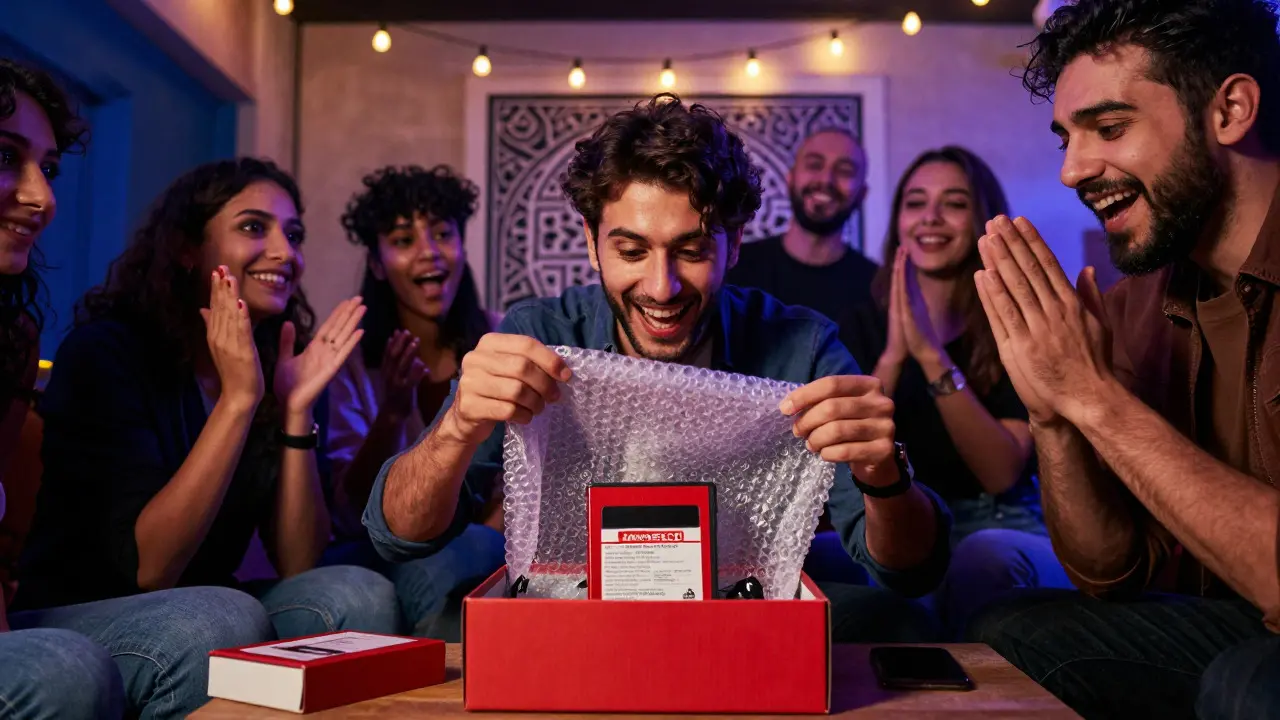
Local meetups are superior for high-value items. Seeing the item in person builds trust. If you are hosting a physical event, consider a "blind reveal" table where gifts are placed under covers. Participants pick a name, then unwrap. The energy in the room when someone pulls out a sealed copy of a rare title is unmatched. It turns a transaction into a memory.
Avoiding Common Pitfalls
Even with good planning, things go sideways. Here are the traps to avoid:
- The Duplicate Trap: Always maintain a "Already Owned" list. Cross-reference this before finalizing assignments. Even if two people play the same platform, one might own every Mario game while the other only has Super Mario Bros.
- The Condition Dispute: Take photos of the item before shipping. If there is damage in transit, you need proof it was safe when it left your hands. This protects both parties.
- The Late Giver: Set a hard deadline for shipping, not just purchasing. Buying the item doesn't count; sending it does. Follow up politely one week before the deadline.
- The Niche Error: Don't assume region compatibility. A Japanese-only cartridge might be useless to a US-based collector unless they specifically asked for imports. Check the region lock status.
Communication is your best tool here. Create a dedicated channel for logistics updates. Keep the tone positive. If someone is late, nudge them privately rather than publicly shaming them.
Post-Exchange Engagement
The exchange doesn't end when the gifts are opened. This is your opportunity to deepen community bonds. Ask recipients to post unboxing videos or photos to the group chat. Celebrate the winners of the "Most Creative Gift" or "Best Value