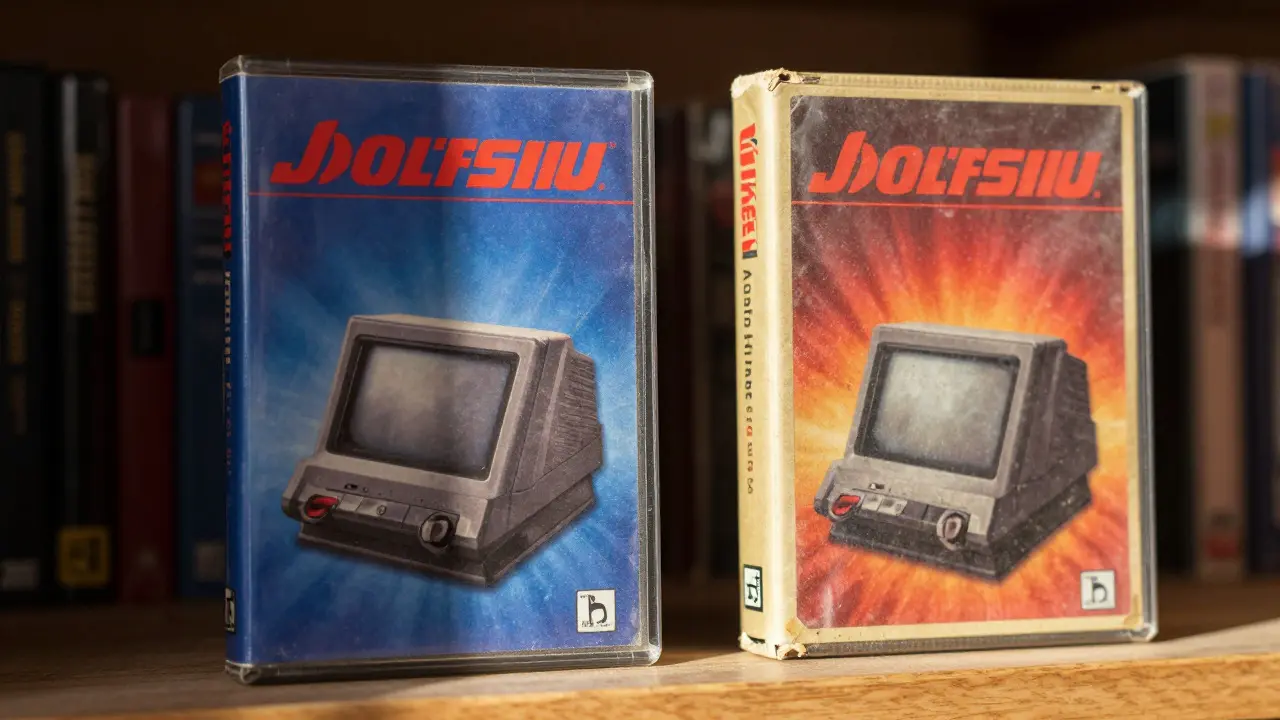
Walk into any local game store or browse an online marketplace, and you’ll notice a stark price difference between two identical copies of the same classic title. One box is crisp; the other has a yellowed spine and a corner that looks like it’s seen better days. That gap isn’t just about nostalgia-it’s about condition adjustments. For collectors, the physical state of the packaging can swing a value by 30% to 50%, sometimes more. Understanding exactly how scratches, tears, and sun-fading are evaluated is the key to buying smart and selling high.
The Hierarchy of Flaws: What Actually Matters?
Not all damage is created equal. When appraisers look at a video game box, they prioritize visibility and permanence. A minor scuff on the bottom edge might be ignored, but a scratch across the front cover art is a deal-breaker for many buyers. The general hierarchy of flaws follows this order:
- Structural Damage: Tears, creases, or missing pieces. These are the most damaging because they suggest poor storage history.
- Surface Defects: Deep scratches, water stains, or sticker residue. These alter the visual integrity of the artwork.
- Color Shifts: Sun-fading or UV damage. This is subtle but widespread in older titles.
- Minor Wear: Light scuffs on edges or corners. Often acceptable in lower-grade items.
If you’re holding a rare cartridge from the NES era, the box is often worth more than the game itself. In those cases, even a small tear can drop the value from "mint" to "very good," which can mean the difference between $500 and $150.
Sun-Fading: The Silent Value Killer
Sun-fading is the most common issue among vintage game boxes, yet it’s often misunderstood. It happens when ultraviolet (UV) light breaks down the dyes in the cardboard printing. You usually see it first as a loss of saturation-bright reds turn orange, blues turn gray, and blacks fade to dark brown. Unlike a scratch, fading is uniform and hard to spot under bright white light if you’re not comparing it side-by-side with a known-good copy.
Here’s the rule of thumb: if you can tell the colors have shifted without squinting, the box has likely lost 10-20% of its collectible value. If the entire front panel looks washed out compared to the back, the exposure was significant. For modern games (post-2010), fading is less critical because print quality is higher and reprints are common. But for pre-2000 titles, where original print runs were limited, sun-fading is a major deduction factor.
To check for fading, hold the box up to a natural light source or use a daylight-bulb lamp. Avoid incandescent bulbs, which cast a warm glow that can mask color shifts. Compare the faded area against a reference image from a trusted database or a known pristine copy. If the shift is consistent across the whole panel, it’s environmental damage. If it’s patchy, it might be mold or moisture, which is worse.
Scratches and Surface Marks: Depth vs. Width
A scratch is only a problem if it catches the light or disrupts the artwork. Collectors distinguish between "hairline" scratches and "deep" gouges. Hairline scratches are superficial-they don’t penetrate the coating layer and are often invisible unless you tilt the box at a specific angle. These rarely affect value significantly, especially on mass-produced titles.
Deep scratches, however, break through the protective laminate or gloss finish. They show up as white lines even under direct light. If a scratch crosses a character’s face or a logo, it’s considered a major defect. Why? Because it draws the eye. Buyers want the focal point of the art to be clean.
Sticker residue is another form of surface defect. Old price stickers or rental tags leave sticky spots that attract dust and can peel off the top layer of ink over time. Removing them is risky-if you pull too hard, you take the print with the sticker. Professional cleaning costs $10-$20 per box, but it can restore 5-10% of the value if done correctly. Never use household solvents like acetone; they dissolve the ink instantly.
Tears and Creases: Structural Integrity Checks
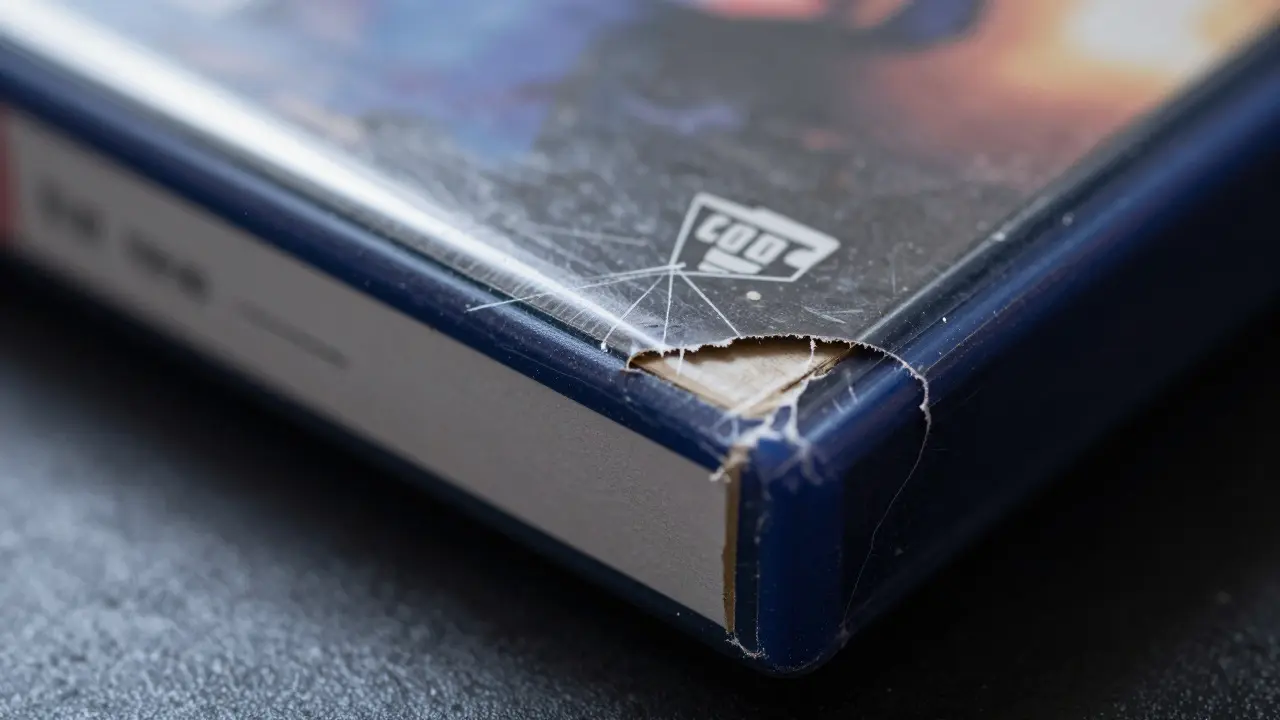
Tears are the most obvious sign of neglect. A small tear in a non-critical area, like the bottom flap, might be forgiven in a "good" grade item. But a tear on the spine or the front cover is severe. Spine tears indicate the box was bent or crushed, which suggests it was stored improperly for years. This raises red flags about the condition of the manual and media inside, even if those items seem fine.
Creases are similar. A sharp fold line running across the box suggests it was stacked under heavy objects. While creases don’t always tear the cardboard, they weaken the structure. Over time, the fold can snap. Appraisers often deduct 15-25% for visible creases on the front or spine.
How do you fix a tear? You generally don’t. Attempting to glue a tear often makes it worse, leaving a visible blob or misaligned paper. Instead, accept the flaw and price accordingly. If the tear is tiny and hidden in a shadowed area, you might get away with calling it "minor wear." But transparency builds trust. Disclosing the tear upfront prevents returns and negative feedback, which protect your long-term reputation as a seller.
Grading Scales: How Professionals Score Boxes
While there’s no single universal standard for game boxes, most serious collectors use a simplified version of the Beckett Grading Services (BGS) or PSA scale, adapted for packaging. Here’s how the grades typically break down:
| Grade | Description | Typical Price Adjustment |
|---|---|---|
| Mint (M) | No visible flaws under normal light. Sharp corners. No fading. | Baseline (100%) |
| Near Mint (NM) | Very light wear. Minor hairline scratches possible. No structural issues. | -5% to -10% |
| Excellent (EX) | Visible wear on edges. Light fading or small scuffs. No tears. | -15% to -25% |
| Very Good (VG) | Noticeable scratches, creases, or moderate fading. Corners worn. | -30% to -45% |
| Good (G) | Heavy wear, tears, significant fading, or missing parts. | -50% to -70% |
Note that these percentages vary by rarity. A common title like Super Mario Bros. 3 in VG condition might sell for $15, while the same game in Mint could fetch $80. But a rare title like EarthBound in VG might still command $200, whereas Mint could hit $1,000+. Rarity buffers the impact of condition flaws, but it never eliminates them.
Practical Tips for Inspecting and Preserving Boxes
If you’re buying, always inspect the box under multiple light sources. Natural daylight is best, but a cool-white LED bulb works in a pinch. Tilt the box to catch reflections-this reveals scratches and uneven surfaces that are invisible head-on. Check the spine carefully; it’s the first place to show wear. Look for "cigarette burn" marks, which appear as small, discolored circles from ash. These are nearly impossible to remove cleanly and signal a smoking environment, which also risks odor transfer to the manual and cartridges.
For sellers, photograph every flaw clearly. Use a macro lens or zoom feature to show texture. Include a photo of the box next to a ruler for scale. Mention the lighting conditions in your listing description. Transparency reduces buyer anxiety and speeds up sales.
To preserve boxes you own, store them vertically in acid-free sleeves. Avoid plastic bags that trap moisture, which leads to mold and warping. Keep them away from windows and heat sources. If you live in a humid climate like Portland, Oregon, consider using silica gel packets in your storage area. Humidity is the enemy of cardboard-it causes swelling, delamination, and eventual rot.
Frequently Asked Questions
Does sun-fading affect the value of modern game boxes?
Less so than vintage ones. Modern boxes are printed with more durable inks and are often reprinted, making perfect copies easier to find. However, if a modern box is part of a limited edition or special release, fading still matters because replacements aren’t available.
Can I repair a torn game box myself?
Only if the tear is tiny and in a non-visible area. Use archival tape or tissue mending technique. For larger tears, professional restoration is recommended. DIY repairs often look amateurish and can reduce value further if done poorly.
Which is worse: a deep scratch or light sun-fading?
It depends on location. A deep scratch on the front cover is usually worse than light fading because it’s immediately visible. Fading is gradual and affects the whole panel, but if it’s mild, many buyers overlook it. A scratch is a distinct, permanent mark that stands out.
Do manual and cartridge condition affect box value?
Indirectly, yes. A pristine box with a damaged manual lowers the overall set value. Collectors buy complete sets. If the box is Mint but the manual is stained, the set is graded as "Very Good" at best. Always assess all components together.
Is it worth paying for professional grading?
For high-value items ($500+), yes. A certified grade adds credibility and can increase resale value by 10-20%. For lower-value items, the cost of grading ($30-$50) may exceed the potential gain. Use third-party photos and detailed descriptions instead.