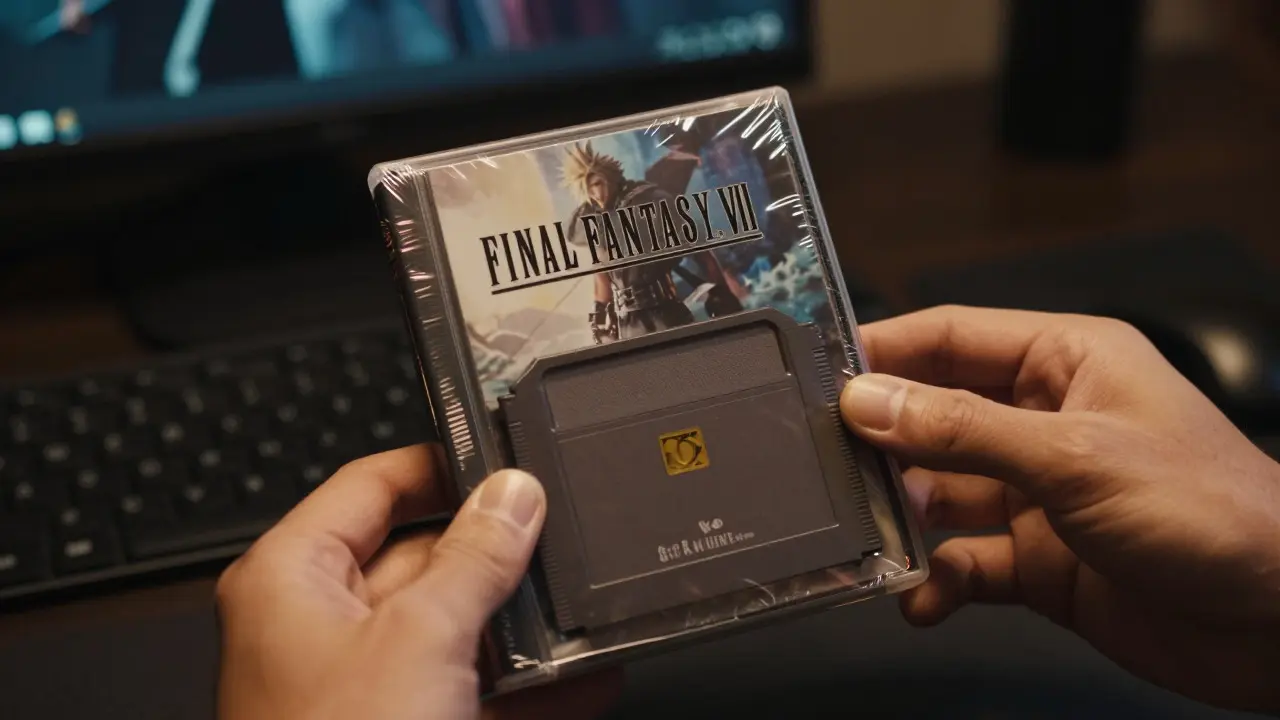
Imagine holding a sealed copy of Final Fantasy VII or a rare first-printing Mario Kart cartridge. You know it’s worth money, but the real question is: do you set a hard price and wait, or throw it into an auction and let the bidders decide? This choice can swing your profit by hundreds of dollars. In the current market, where physical media has seen a resurgence among collectors, understanding when to use which method is the difference between a quick sale and a windfall.
Many sellers default to one strategy without looking at the specific item. That’s a mistake. The right approach depends on the game’s rarity, its condition, and how much time you’re willing to spend managing the listing. Let’s break down exactly how to make that call so you stop leaving money on the table.
Understanding the Core Difference
Auction Selling is a dynamic pricing model where buyers bid against each other over a set period, usually seven days, driving the final price up based on competition. It’s best for items with high demand but uncertain maximum value. On the other hand, Fixed-Price Selling is a static model where you set a specific amount, and the first buyer who pays gets the item immediately. This is ideal for common items or when you need cash fast.
The fundamental trade-off here is control versus potential. With a fixed price, you know exactly what you’ll get (minus fees), but you risk the item sitting unsold if you priced it too high. With an auction, you might get a surprise high bid, but you also risk ending up with a low final price if interest is lower than expected. Knowing which side of this spectrum your game falls on is the first step to smarter flipping.
When to Choose Auctions: The High-Rarity Play
You should almost always use an auction for games that fit three criteria: they are rare, they are in pristine condition, and they have a passionate collector base. Think about limited edition releases, out-of-print titles from the PS1 or N64 era, or games with significant historical significance like Super Mario Bros. 3 in a mint box.
Why auctions work here is simple psychology. When two serious collectors see a rare gem, they don’t want to haggle; they want to win. An auction creates a sense of urgency and competition. If you list a rare Pokémon Gold version at a fixed $500, you might scare off a bidder who thinks it’s overpriced. But if you start it at $100, that same bidder will likely join, seeing others bid, and push the price past $800 without feeling like they’re overpaying because the market “validated” the price through bidding.
- Rarity Threshold: If fewer than 100 copies exist in good condition, use an auction.
- Collector Appeal: If the game is a fan favorite or has a dedicated community (like Zelda or Street Fighter), auctions tend to perform better.
- Condition Grade: Items graded 9.0 or higher by professional services often command premium prices in auctions due to the excitement of verified quality.

When to Use Fixed-Price: Speed and Certainty
For the bulk of your inventory, fixed-price is the superior strategy. This includes modern releases, common classics, and any game where you need liquidity. If you’re clearing out a closet full of Xbox One titles or Nintendo Switch cartridges, setting a fixed price saves you weeks of waiting for auctions to end.
Fixed-price listings also reduce buyer hesitation. Many casual buyers prefer not to participate in the stress of bidding. They want to click “Buy It Now” and move on. By offering this option, you widen your pool of potential customers. Additionally, if you’ve done your research and know the going rate for a standard copy of Red Dead Redemption 2 is around $40, setting it at $38 guarantees a quick sale, whereas an auction might drag on for days only to end at $35.
There is also a psychological benefit to fixed pricing for the seller. You avoid the anxiety of watching a bid count stay at zero for six days. You know the moment someone buys, the transaction is done. For high-volume flippers, this efficiency is crucial for maintaining cash flow.
Hybrid Strategies: Best of Both Worlds
Most major platforms now allow you to combine both methods. This is often the smartest move for mid-tier items. You can set a fixed price as the ceiling and start an auction below that price. This gives you the safety net of a guaranteed minimum sale while still opening the door for competitive bidding to push the price higher.
Consider a moderately rare game like Half-Life 2 for PC, released in a special edition case. A pure fixed price might sit at $75. A pure auction might start at $20 and end unpredictably. But if you set a fixed price of $100 and start the auction at $30, you ensure you won’t sell for less than $30, but you give the market room to drive it toward $100 or even above if a collector gets emotional. This hybrid approach mitigates the risk of low bids while capturing the upside of high demand.
| Feature | Auction | Fixed-Price | Hybrid (Buy It Now + Bid) |
|---|---|---|---|
| Best For | Rare, high-value items | Common items, urgent sales | Mid-range value, uncertain demand |
| Time to Sell | 7+ days | Immediate to 1 week | Variable (immediate to 7 days) |
| Price Certainty | Low (market-driven) | High (seller-set) | Medium (floor price protected) |
| Buyer Psychology | Competitive, FOMO-driven | Convenience-focused | Value-seeking with safety net |
| Risk Level | Higher (may end low) | Lower (may sit unsold) | Lowest (balanced risk) |

Market Research: How to Set the Right Price
Before you pick a strategy, you need data. Guessing is expensive. Look at recent completed sales, not just active listings. Active listings show what sellers *want*, but completed sales show what buyers *actually paid*. If you’re using a platform like eBay, filter for sold items in the last 30 days. This gives you a realistic baseline.
Pay attention to trends. Is there a new movie coming out featuring a character from the game? Is a nostalgia wave hitting social media? These external factors can spike demand temporarily. If you spot a trend, lean into auctions to capture the surge. If the market is flat, stick to fixed-price to ensure turnover. Also, consider the season. Holiday seasons often boost sales of popular family-friendly titles, making fixed-price effective for quick cash before year-end.
Common Mistakes to Avoid
One big error is underestimating shipping costs. If you’re auctioning a heavy console or a bulky boxed set, factor in packaging materials and carrier rates. A winning bid of $100 means nothing if shipping eats $40 of it. Always price your item with these costs in mind. Another mistake is ignoring the title description. Vague descriptions lead to questions, which delay sales. Be specific about scratches, disc condition, and whether the manual is included. Clear information builds trust, which encourages higher bids or faster fixed-price purchases.
Finally, don’t ignore the feedback loop. If an auction ends with no bids, it’s a signal. Was the starting price too high? Was the photo quality poor? Adjust your next listing accordingly. Flipping is a learning process, and every sale provides data to refine your strategy.
What is the best starting bid for a rare video game?
Start at 20-30% of the estimated final value. This lowers the barrier to entry for bidders, encouraging them to participate early. Once bidding starts, the momentum usually carries the price up significantly.
Should I grade my games before selling?
Only if the game is valuable enough to justify the cost. Grading typically costs $20-$50 per item. If the game is worth less than $100, the fee might eat into your profit. For high-value items, a professional grade adds credibility and can increase the final sale price by 10-20%.
How long does it take to sell a game via auction?
Standard auctions run for seven days. However, you should account for additional time for payment processing and shipping. Expect the total cycle from listing to receiving funds to be about 10-14 days.
Is fixed-price better for modern games?
Generally, yes. Modern games have a large supply and steady demand. Buyers usually know the exact market value and prefer the convenience of buying immediately rather than waiting for an auction to conclude.
What if my auction ends with no bids?
Relist the item with a lower starting price or switch to a fixed-price model. No bids usually indicate that the starting price was too high or the photos were unappealing. Adjust one variable at a time to test what works.