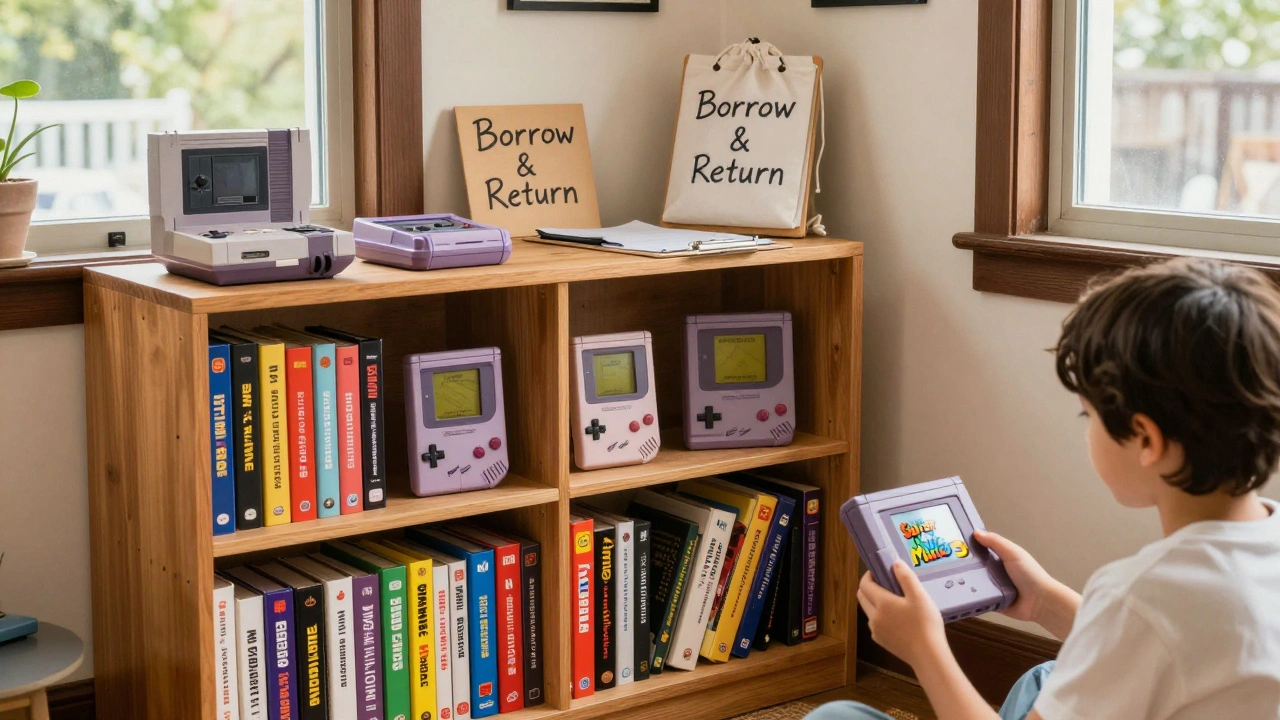
Imagine walking into a local community center and checking out a sealed copy of Super Mario Bros. 3 for your NES, or borrowing a working Sega Genesis with its original controller to play Sonic the Hedgehog for a weekend. No need to spend $200 on a used cartridge. No need to hunt down rare hardware. Just walk in, sign out, and play. That’s the power of a community lending library for retro video games.
Most people think retro gaming is about collecting - hoarding cartridges, preserving boxes, stacking consoles in climate-controlled rooms. But what if the real joy isn’t in owning, but in sharing? A lending library turns a personal collection into a public resource. It’s not about who has the most games. It’s about who gets to play them.
Start Small, Think Big
You don’t need a warehouse full of SNES cartridges to start. You need one person with a passion, a few shelves, and a willingness to say, “Take one.”
Let’s say you have 30 games you’ve collected over the years. Maybe you’ve got a working Nintendo 64, a PlayStation 1, and a stack of Game Boy Color titles. You don’t need to donate them all at once. Start with five. Put them on a table at your local library branch, community center, or even a coffee shop that lets you use a corner table on weekends.
Label each game clearly: Game Title, Console, Condition (Like New / Used / Missing Manual). Use sticky notes if you’re just testing the idea. Ask people to write their name and date on a clipboard when they take one. No fancy app needed yet. Just paper, pen, and trust.
Within two weeks, you’ll know if this works. Did anyone return the games? Did someone ask for more? Did a kid play Donkey Kong Country for the first time and ask for help? That’s your signal to expand.
Organize by System - Not by Chaos
One of the biggest mistakes new collectors make is mixing everything together. Sega, Nintendo, Atari - all jumbled on one shelf. It’s messy. It’s frustrating. And it kills the borrowing experience.
Best practice? Group everything by console. Put all NES games together. All SNES together. All Game Boy together. Even if you have only three games for a system, keep them in their own section. Why? Because people know what they’re looking for. Someone wants to play Mega Man? They go straight to the NES shelf. No guessing. No digging.
Use bookshelves. They’re cheap, sturdy, and already designed for vertical storage. Place games with the box facing forward so the artwork is visible. If you’re short on space, stack them by size - larger boxes on the bottom, smaller ones on top. Avoid stacking more than three high. Pressure can warp cartridges and crack plastic.
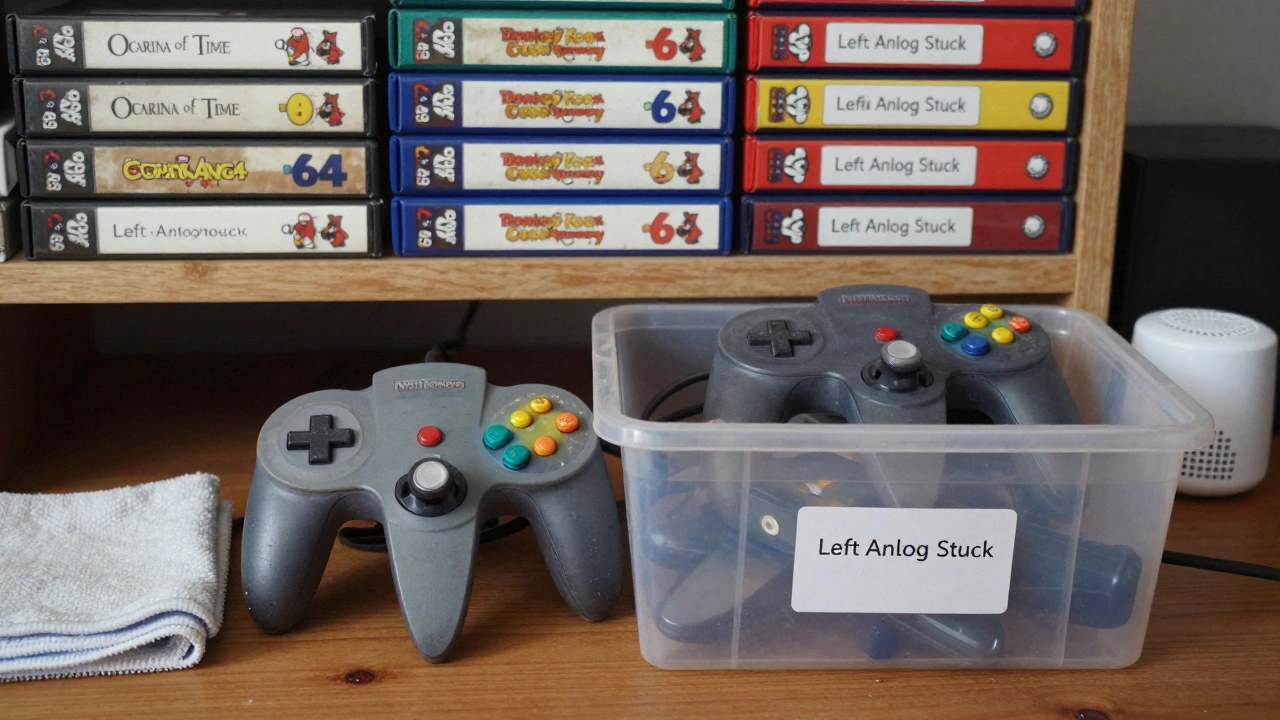
Keep hardware separate. Don’t leave a controller attached to a console unless it’s permanently paired. Store controllers in labeled plastic bins. Label them: PS1 Controller #1, N64 Controller (Left Analog Stuck). Honesty builds trust.
Protect Your Collection - Before It’s Borrowed
Retro games are fragile. Dust, moisture, sunlight, and rough handling can ruin them fast. A faded box isn’t just ugly - it’s a sign the game might not last.
Here’s what to do before any game leaves your space:
- Wipe down boxes with a dry microfiber cloth. No water. No cleaners.
- Check for missing manuals, inserts, or stickers. If it’s missing, write it down. “Super Metroid - Manual Missing” is better than pretending it’s complete.
- Test every cartridge. Plug it in. Turn it on. If it doesn’t work, don’t lend it. Label it “For Parts / Repair” and keep it separate.
- Store games away from windows. UV light bleaches color fast. A dark closet or interior shelf is better than a sunny corner.
- Keep humidity under 50%. Use a small dehumidifier if you live in a damp climate like Portland. Mold on a cartridge? That’s game over.
And here’s a simple trick from real game librarians: give borrowers a cloth bag. Not a plastic bag. Not a backpack. A soft cotton drawstring bag, like the ones used for storing sweaters. It protects the box from scratches, keeps dust out, and reminds people this isn’t a disposable item. Print “Return Me” on the bag. People remember things that are labeled.
Build Rules - Not Just Trust
Trust is great. But without rules, your library won’t last.
Start with three simple policies:
- One game at a time. No hoarding. If someone wants another, they have to return the first.
- Two-week loan period. Enough time to finish a game, not so long that it sits on a shelf for months.
- No late fees - but no exceptions. If a game isn’t returned after three weeks, call the person. If it’s still gone after four, send a polite email. If it’s still missing? Write it off. Don’t chase. Don’t argue. Let it go. The library survives because people want to do the right thing - not because they’re scared of a fine.
Post these rules on a small whiteboard near the shelf. Keep a logbook. Name, game, date taken, date returned. That’s your entire system. No software needed. No app. Just a notebook and a pen.
Grow It With the Community
Once you’ve got five people borrowing regularly, it’s time to grow.
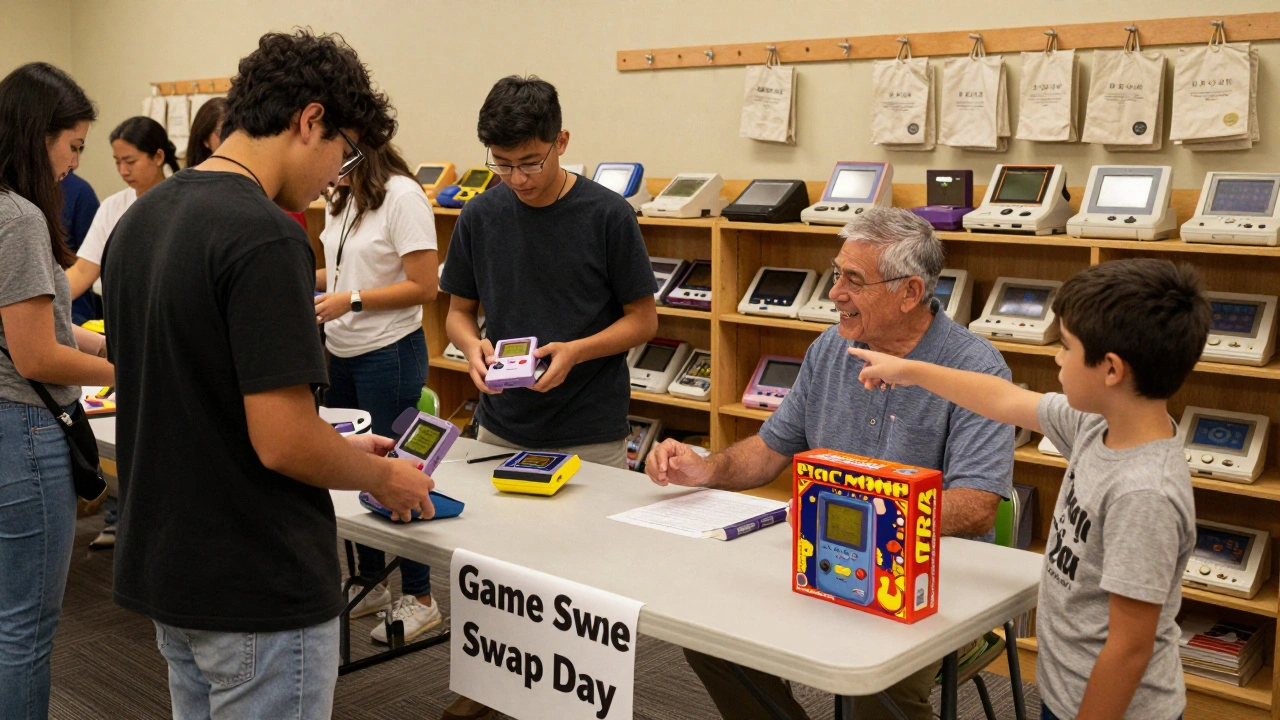
Host a “Game Swap Day” once a month. Bring in a folding table. Invite people to bring one game they don’t play anymore. They can take one in return. No money changes hands. Just exchange. You’ll slowly build your collection without spending a dime.
Ask local game stores if they have old stock they’re throwing out. Many do. Ask libraries if they’re retiring old consoles. Ask parents who bought games for their kids years ago - they’re often happy to donate.
Make a simple sign: “Got a retro game you don’t play anymore? Let us know. We’ll give it a new home.” Put it on Facebook groups, Nextdoor, Reddit. You’ll be surprised how many people have a dusty NES in their garage.
What You’ll Learn - And Who You’ll Meet
Running a lending library isn’t about managing inventory. It’s about building connections.
You’ll meet a 12-year-old who’s never played Metroid and asks, “Is this the one with the girl in the spacesuit?” You’ll talk to a 58-year-old who remembers buying Pac-Man at Sears in 1982. You’ll help a grandparent teach their grandchild how to play Super Mario Kart for the first time.
You’ll learn which games break the most. (Hint: N64 controllers. Always.) You’ll learn which games people borrow over and over. (Legend of Zelda: Ocarina of Time - always.) You’ll learn that people care more about the experience than the condition.
And you’ll realize something important: retro gaming isn’t about nostalgia. It’s about discovery. And a lending library turns that discovery into something shared.
What Comes Next?
If your library grows beyond a table in a community center, consider partnering with a local library branch. Many public libraries now lend out board games, tech gadgets, and even musical instruments. Video games are the next logical step. Bring them a printed proposal. Show them your logbook. Show them the smiles.
There’s no official handbook. No nonprofit template. No funding grant for retro game libraries. But there’s something better: people who want to play.
Start with one shelf. One game. One borrower. The rest will follow.