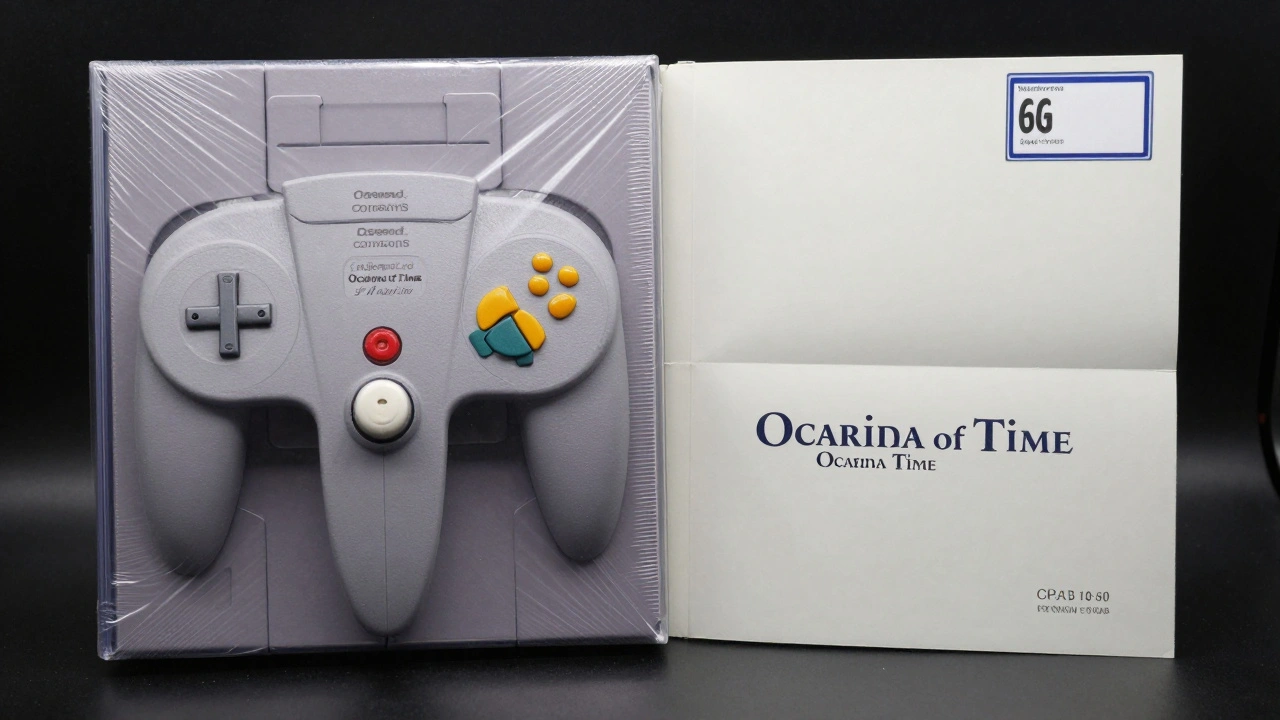
When you buy a sealed copy of Super Mario Bros. for $1,200, you’re not just paying for the game-you’re paying for trust. That’s why authenticity guarantees and return policies matter more than ever in the video game collecting world. Dealers who don’t clearly define these policies risk losing buyers, facing disputes, or even damaging their reputation overnight.
Unlike buying a new game off the shelf, collecting vintage or sealed video games involves high stakes. A single resealed box, a replaced manual, or a fake cartridge can turn a $500 investment into worthless plastic. That’s why trusted dealers and platforms like eBay and CGC Video Games™ have built layered systems to verify what’s real-and what’s not.
What Makes a Video Game Authentic?
Authenticity isn’t just about whether the game turns on. It’s about every component matching the original factory release. A genuine sealed copy of The Legend of Zelda: Ocarina of Time on Nintendo 64 must have:
- A factory-sealed plastic casing with no signs of tampering
- A manual printed on the correct paper stock with original fold lines
- A box with accurate printing, no fading, and correct regional labeling
- A cartridge that matches the mold number and color of the era
- No signs of prior use-scratches on the disc, worn buttons, or fingerprints inside the box
CGC Video Games™, the leading third-party authenticator for sealed games, breaks authenticity into three levels: Factory Seal, Authentic Reseal, and Non-Authentic Reseal. Only the first two are acceptable for high-value sales.
Factory seals are untouched from the moment the game left the production line. Authentic reseals happen when manufacturers or distributors temporarily open a game during quality control or shipping-for example, to replace a damaged manual-and then reseal it under factory supervision. These are still considered genuine because they occurred before the game reached retail.
Non-authentic reseals? Those are the red flags. If someone bought a used game, cleaned it up, slipped in a new manual, and resealed it to pass it off as new? That’s fraud. CGC rejects these submissions outright. Dealers who can’t spot this are setting themselves up for returns, chargebacks, and bad reviews.
How eBay’s Authenticity Guarantee Works (And Why It Matters)
While eBay doesn’t offer a dedicated video game authentication program, its system for trading cards and collectibles is the closest real-world model for how video game dealers should operate. Here’s how it works:
- Sellers ship high-value items ($250+) directly to CGC Trading Cards or Certified Sports Guaranty
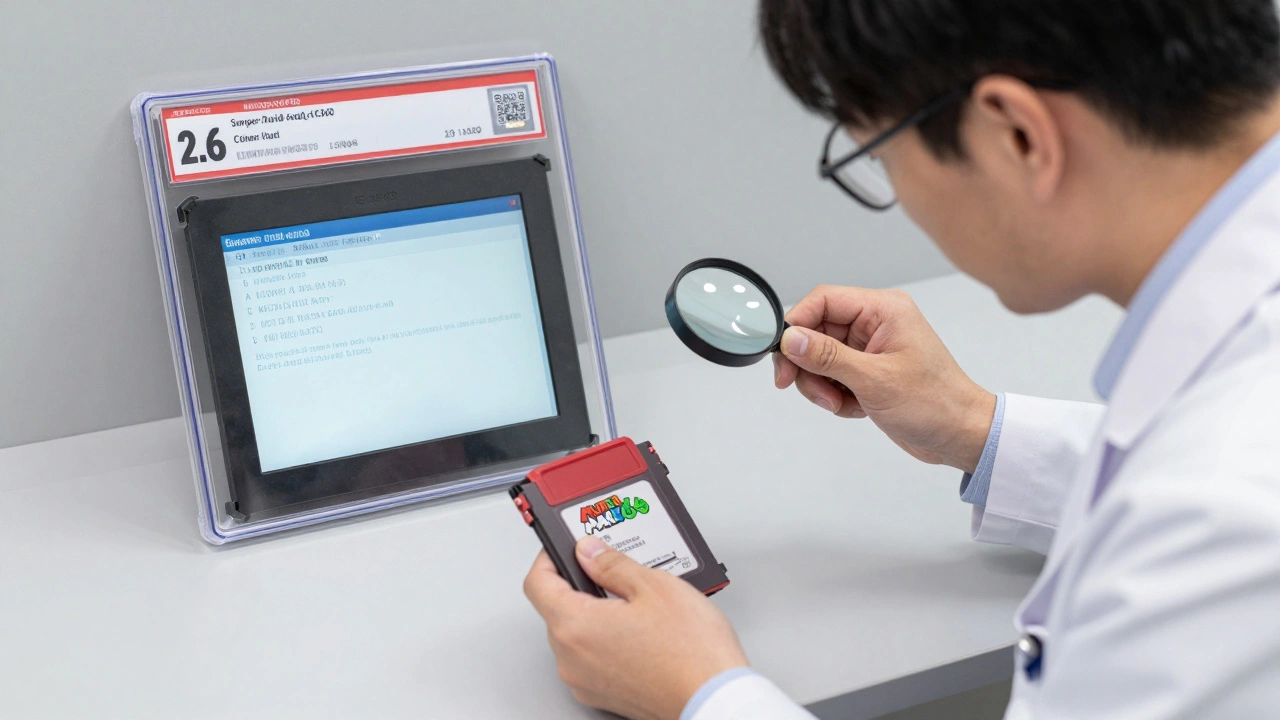
- Experts inspect the item under magnification, check serial numbers, compare against databases, and verify packaging
- Once authenticated, the item is placed in a tamper-evident case with a unique QR code
- The buyer receives the item with full verification history-no guessing
- If the item is fake, eBay refunds the buyer and returns the item to the seller
This system works because it removes doubt. Buyers don’t have to trust a seller’s word. They trust a third party with decades of experience verifying collectibles. Video game dealers who want to compete at the high end need to adopt a similar model.
Imagine a dealer selling a sealed copy of Super Mario 64 for $800. Instead of just saying “100% authentic,” they ship it to CGC Video Games™ for certification. The buyer gets a numbered holder with a QR code that links to a public report showing the game’s inspection history. That’s not just good customer service-it’s a competitive advantage.
Return Policies That Protect Both Buyer and Dealer
A clear return policy isn’t just about being nice-it’s about reducing risk. Here’s what a solid video game return policy should include:
- Time limit: 14 days from delivery
- Condition requirement: Item must be returned in the exact same state as received
- Proof of authenticity: The original authentication label (CGC or similar) must remain intact
- Return shipping: Buyer covers return shipping unless the item is confirmed fake
- Verification upon return: The item is re-inspected before refund is issued
Why re-inspect returns? Because fraud happens. A buyer might return a different copy-maybe one with a scratched disc or a fake manual-and claim the original was defective. If the dealer doesn’t verify the returned item, they lose money and credibility.
CGC’s process for handling returns on authenticated trading cards is a blueprint: returned items go back to the authentication center. Experts check the condition, verify the QR code, and confirm it’s the exact same item. Only then is the refund processed. Video game dealers should do the same.
Some dealers try to avoid returns by saying “all sales final.” That sounds safe, but it backfires. Buyers won’t pay premium prices if they feel trapped. A transparent, fair return policy builds trust-and more sales in the long run.
What Dealers Get Wrong
Many dealers make the same mistakes:
- Using generic “authentic” labels without third-party verification
- Accepting returns without checking condition
- Not documenting the game’s history (where it came from, previous owners, etc.)
- Trying to pass off resealed games as factory sealed
One dealer in Portland sold a sealed copy of Metroid Prime as factory sealed. The buyer opened it and found a replacement manual with mismatched font. The dealer refused a refund, claiming “it’s still a real game.” The buyer posted a detailed video showing the differences. Within a week, the dealer’s eBay account was suspended. The lesson? Details matter.
Another common error: dealers assume that because a game is old, it’s automatically valuable. Not true. A 1999 copy of Final Fantasy VIII with a torn box, yellowed manual, and scuffed cartridge? Worth maybe $20. A sealed copy with factory packaging and original inserts? Worth $300+. Without clear authentication, buyers have no way to tell the difference.
How to Build Trust as a Video Game Dealer
Here’s how to stand out:
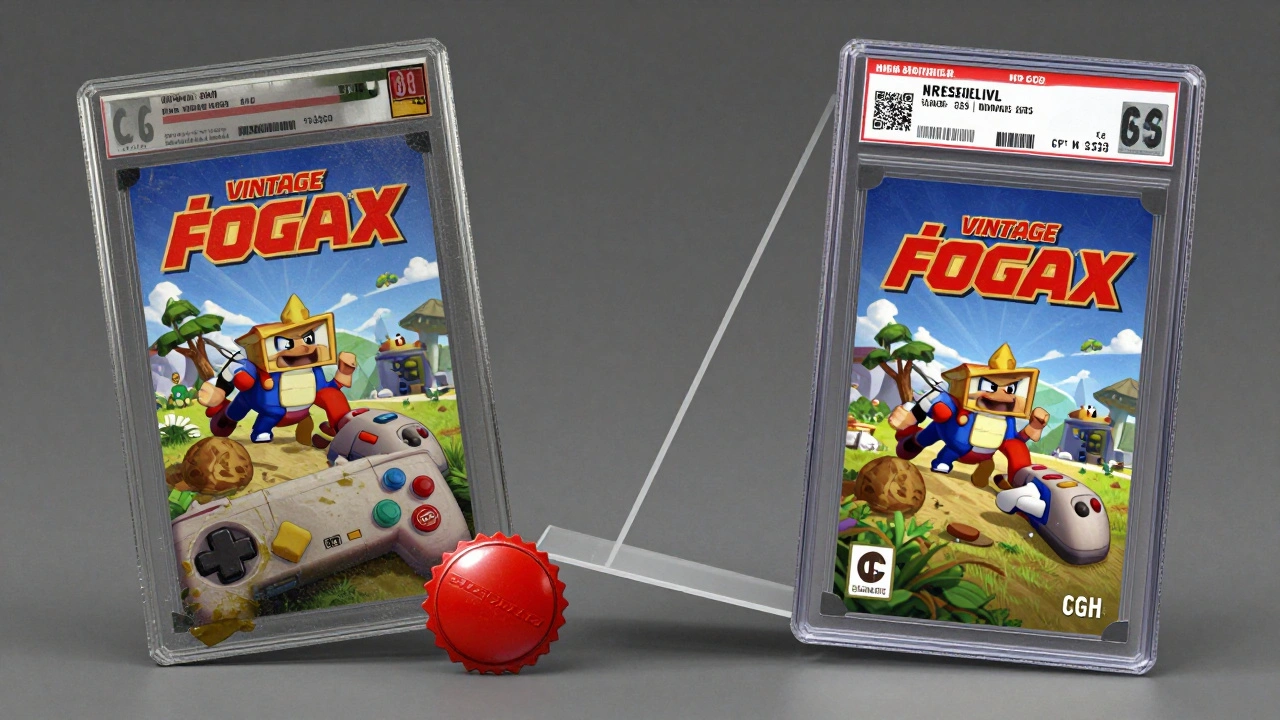
- Partner with CGC Video Games™ or another certified authenticator for high-value items
- Always include a photo of the authentication label or QR code in your listing
- Clearly state your return policy before purchase-no fine print
- Keep records: date of acquisition, source, condition notes, and authentication number
- Don’t sell games that show signs of resealing unless you label them honestly as “Authentic Reseal”
Buyers aren’t just looking for games. They’re looking for confidence. The more you can prove authenticity with verifiable data, the more they’ll trust you-even if your prices are 10% higher than a shady seller on Facebook Marketplace.
What’s Next for Video Game Collecting
Right now, video game authentication is still fragmented. Unlike trading cards, which have CGC and PSA, or sneakers, which have StockX and GOAT, video games lack a unified standard. But that’s changing.
Some dealers are starting to use blockchain-based ledgers to track a game’s history from factory to buyer. Others are embedding NFC chips into boxes to verify authenticity via smartphone. These are still experimental-but the direction is clear: transparency is the new currency.
For now, the best thing a dealer can do is follow the model already proven by eBay and CGC: third-party verification, clear labeling, and strict return protocols. It’s not glamorous. But it’s the only way to build a business that lasts.
Can I return a sealed video game if I change my mind?
It depends on the dealer’s policy. Reputable dealers typically allow returns within 14 days if the game is unopened and in the same condition as shipped. Always check the return policy before buying. If a dealer says “no returns,” ask why-this could be a red flag.
How do I know if a sealed game is factory sealed or resealed?
Look for signs of tampering: uneven plastic seams, glue residue, mismatched box printing, or a seal that looks too perfect. Factory seals have a slight texture and uniform pressure. Reseals often have a glossy, too-clean look. The safest way? Buy from dealers who use CGC Video Games™ or similar certification-they’ll provide a photo of the authentication label and a QR code you can scan.
Is it worth getting a game authenticated by CGC?
Yes-if the game is worth over $250. CGC authentication adds resale value, protects against fraud, and makes buyers more confident. For games under $100, it’s usually not cost-effective. But for rare titles like Stadium Events or Super Mario Bros. 2 (USA), authentication can double or triple the value.
What happens if a dealer sells a fake game?
If the game was sold with an authenticity guarantee (like eBay’s), the buyer gets a full refund and the dealer loses the item. On marketplaces like eBay or Mercari, the dealer’s account can be suspended. In extreme cases, buyers have taken legal action for fraud. Even without a guarantee, word spreads fast-bad reputation kills a dealer’s business.
Can I authenticate a game I already own?
Yes. CGC Video Games™ accepts submissions from individuals, not just dealers. You can mail in your sealed game, pay the fee (starting at $30), and get it certified. This is useful if you plan to sell it later or want proof of its condition. Just make sure it’s truly unopened-you won’t get certified if there’s any sign of prior use.