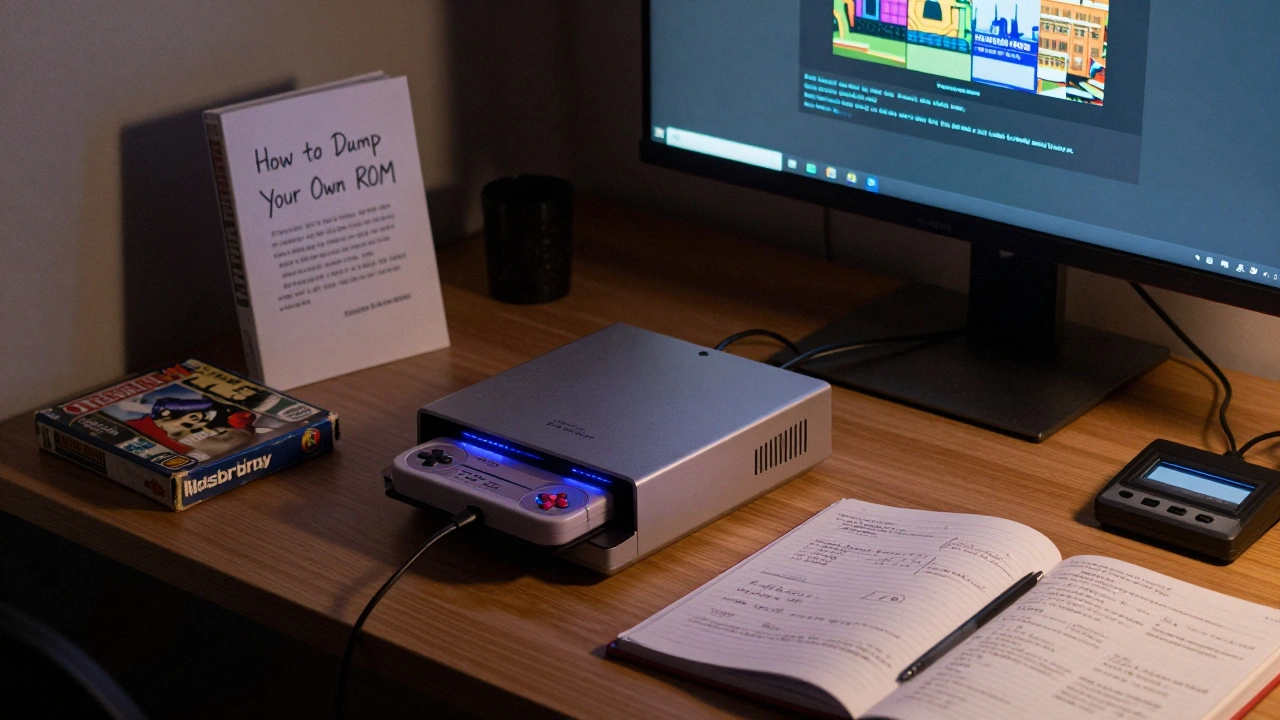
Emulation isn’t illegal. Neither are emulators. But sharing ROMs? That’s where things get messy. Millions of people use emulators to play old games on modern devices. Some do it to preserve games that publishers have abandoned. Others do it because they can’t find a working copy of a cartridge or disc. And some? They just want to play a game they never owned in the first place. The line between preservation and piracy isn’t always clear-but in ethical communities, it’s the one thing everyone agrees on: knowledge can be shared. ROMs cannot.
Emulators Are Legal. ROMs Are Not.
You can build, download, and use an emulator without breaking any laws. Dolphin, Cemu, and higan are all open source projects that reverse-engineered console hardware from scratch. They never copied a single line of code from Nintendo, Sony, or Sega. Instead, they figured out how the systems worked by studying their behavior-what’s called clean room reverse engineering. That’s legal. That’s protected under fair use.
But ROMs? Those are digital copies of game cartridges or discs. Even if you own the original game, downloading a ROM from a site like LoveROMs or CoolROM is copyright infringement. The law doesn’t care if you bought the cartridge in 1995. If you didn’t dump it yourself, you’re not legally in the clear. And yet, many communities quietly accept it. Why? Because it’s practical. It’s hard to dump a ROM from a broken SNES cartridge. It’s expensive to buy a working console just to play one game. So people do it anyway.
The key difference? Emulators are tools. ROMs are content. You can’t copyright a tool. But you can copyright a game. And that’s where ethical sharing begins: separate the tool from the content.
What Ethical Knowledge Sharing Looks Like
Emulation communities thrive on shared knowledge. Developers trade debugging techniques. Enthusiasts explain how to fix timing bugs in Super Nintendo games. Tutorials show how to configure input latency on PlayStation emulators. All of this is not just legal-it’s essential.
The Dolphin emulator team, for example, openly shares every line of code on GitHub. They’ve helped other emulators improve by showing how they handled audio synchronization or graphics rendering. They’ve even banned contributors who admitted to using leaked Nintendo documentation. Why? Because they refuse to build on stolen knowledge. That’s ethics in action.
Compare that to closed-source emulators like Cemu. While they work well, they don’t let others learn from their code. That’s not illegal-but it breaks the spirit of community. When knowledge is locked away, innovation slows. When it’s open, anyone can improve it. Ethical communities choose openness.
Don’t Share ROMs. Teach How to Dump Them.
If someone asks you for a ROM of EarthBound, don’t send it. Instead, teach them how to dump it themselves.
- Buy or borrow a working Game Boy Advance cartridge.
- Use a flash cart reader like the EZ-Flash Omega or a Raspberry Pi with a cartridge adapter.
- Follow open tutorials to extract the ROM data directly from the hardware.
This isn’t just ethical-it’s empowering. You’re not giving someone a shortcut. You’re giving them a skill. And once they’ve dumped their own ROM, they’re no longer a pirate. They’re a preserver.
Many modern consoles even make this easy. The Nintendo Switch Online app lets you download SNES and N64 games legally. But what about games that were never re-released? Like Shin Megami Tensei: Devil Summoner on Sega Saturn? Or Earthworm Jim 3 on PlayStation? Those are the games that vanish. And the only way to keep them alive is through community-driven dumping.
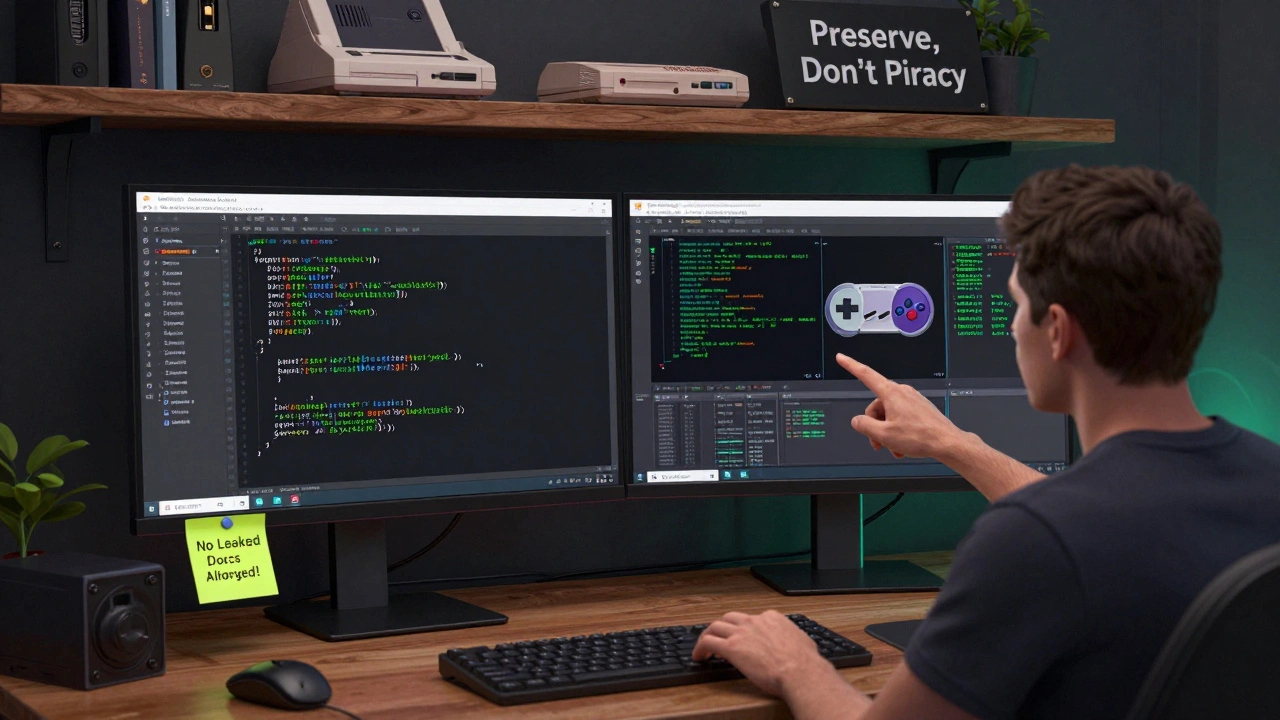
The Gray Zone: What If You Own the Game?
There’s a widely held belief: "If I own the game, downloading a ROM is fine." It’s not legal. But it’s common. And honestly? Most copyright holders don’t care. They don’t sue individuals. They target sites that host thousands of ROMs. The legal risk to you? Near zero. The ethical risk? Higher.
Why? Because it normalizes piracy. If you say "it’s fine," you’re telling new users that copyright doesn’t matter. That’s not how preservation works. Preservation requires respect. If you own the game, you should be able to make a backup. But making that backup should require effort. It shouldn’t be a one-click download.
Instead of saying "download it," say: "Here’s how to dump it. Here’s the tool. Here’s the guide." You’re not denying access. You’re demanding responsibility.
Preservation Over Profit
The most ethical reason to emulate? Preservation. Games from defunct studios, unreleased prototypes, arcade cabinets that no longer work-these aren’t just nostalgic. They’re cultural artifacts. The MAME project has saved over 10,000 arcade games. Without emulation, most would be gone forever.
Think about Star Fox 2. It was finished in 1995, then buried by Nintendo. It wasn’t officially released until 2017-over 20 years later. Without ROM dumps and emulator development, it might never have seen the light of day. That’s not piracy. That’s archaeology.
Communities that prioritize preservation don’t just share ROMs. They archive metadata. They document hardware quirks. They record how a game felt on original hardware. They preserve the context, not just the code.

How to Build an Ethical Community
If you run a Discord server, subreddit, or forum around emulation, here’s how to set the tone:
- Write a clear rule: "No ROM distribution. No links to ROM sites. No file sharing."
- Instead, link to tutorials on dumping your own cartridges or discs.
- Highlight preservation projects like MAME, higan, and the Internet Archive’s software library.
- Encourage users to upload their own dumps-especially for obscure or abandoned titles.
- When someone asks for a ROM, respond with: "Have you tried dumping it? Here’s how."
- Remove anyone who repeatedly shares links to ROM sites. Don’t warn. Don’t debate. Just remove.
Most users will understand. They don’t want to break the law. They just want to play the games. Your job isn’t to be a cop. It’s to be a guide.
Security Risks Are Real
Downloading ROMs from shady sites isn’t just illegal-it’s dangerous. Many of these sites bundle malware, keyloggers, or ransomware into ROM files. A user in Portland last year lost their entire backup drive after downloading a "clean" Super Mario Bros. ROM. The file was 12MB-too big for a real ROM. It was a fake.
Always warn your community: "Never download ROMs from sites that aren’t your own dump." If you’re not sure, use the Internet Archive’s legally hosted games. Or better yet-dump it yourself.
What’s Next? The Future of Ethical Emulation
Companies are slowly waking up. Nintendo now sells classic games through its online service. Sony has re-released dozens of PS1 and PS2 titles. Microsoft has even restored original Xbox games on Xbox Series X. But they’ll never cover everything. Too many games are lost. Too many studios are gone.
The future of emulation isn’t about bypassing copyright. It’s about filling the gaps it leaves behind. The most ethical communities won’t be the ones with the most ROMs. They’ll be the ones with the most dumps, the most documentation, and the most respect for the original creators.
So if you’re part of an emulation community-whether you’re a developer, a moderator, or just a player-ask yourself: Are you helping preserve history? Or just feeding a loophole?
Is it legal to use an emulator?
Yes. Emulators themselves are legal as long as they’re built using clean room reverse engineering and don’t include copyrighted BIOS files or system code. Developers who study how hardware works without copying proprietary code are protected under fair use.
Can I download a ROM if I own the original game?
Legally, no. Even if you own the physical cartridge or disc, downloading a ROM from the internet is copyright infringement. Ethically, some communities accept it as a gray area-but the only legally safe way is to dump the ROM yourself using your own hardware.
Why do some emulators stay closed source?
Closed-source emulators, like Cemu, often stay private to prevent cheating in online multiplayer, maintain control over development, or avoid legal scrutiny. But this limits knowledge sharing. Open-source projects, like Dolphin, allow others to learn, improve, and contribute-making the entire ecosystem stronger.
Are ROMs for abandoned games legal to share?
No. Even if a game is no longer sold or supported, copyright still applies. The publisher may be defunct, but the rights usually remain with the company or its successors. Sharing those ROMs is still illegal, though many argue it’s ethically justified for preservation purposes.
How can I help preserve old games ethically?
Dump your own games using hardware tools, document their behavior, and share your findings with preservation projects like MAME or the Internet Archive. Contribute to open-source emulators. Avoid distributing ROMs. Your goal should be to save the game-not just play it.
Do companies sue people for downloading ROMs?
Almost never. Companies target the websites that host and distribute ROMs, not individual downloaders. There are no known cases of a person being sued just for downloading a ROM. But that doesn’t make it legal-just low-risk.