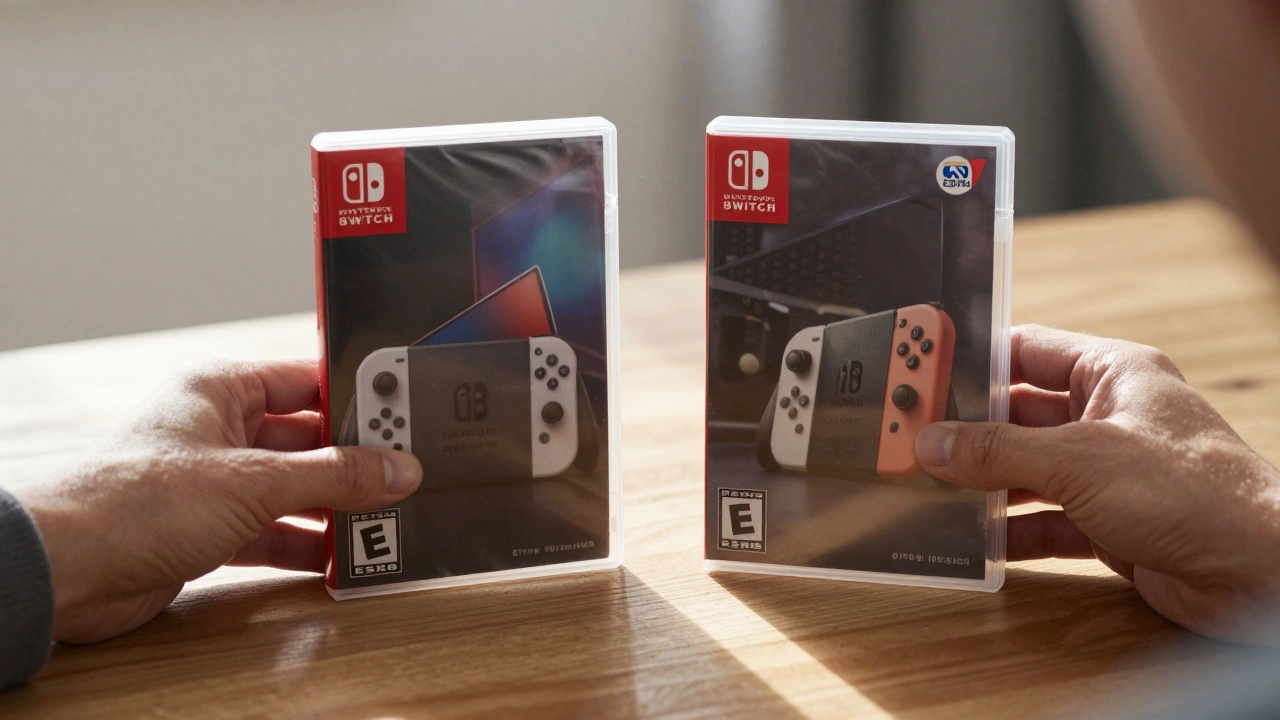
When you pick up a sealed copy of Fire Emblem: Radiant Dawn on eBay for $40, you’re not just buying a game-you’re buying a story. A story about how a single change in the ESRB logo, a new copyright date, and a tweaked Nintendo logo turned a $150 rarity into something you can grab off the shelf at GameStop. That’s the reality of modern video game collecting. It’s no longer just about finding the rarest box. It’s about understanding print runs, reprints, and SKU changes-the hidden mechanics that decide what’s valuable, what’s cheap, and what’s suddenly everywhere.
What Even Is a Print Run?
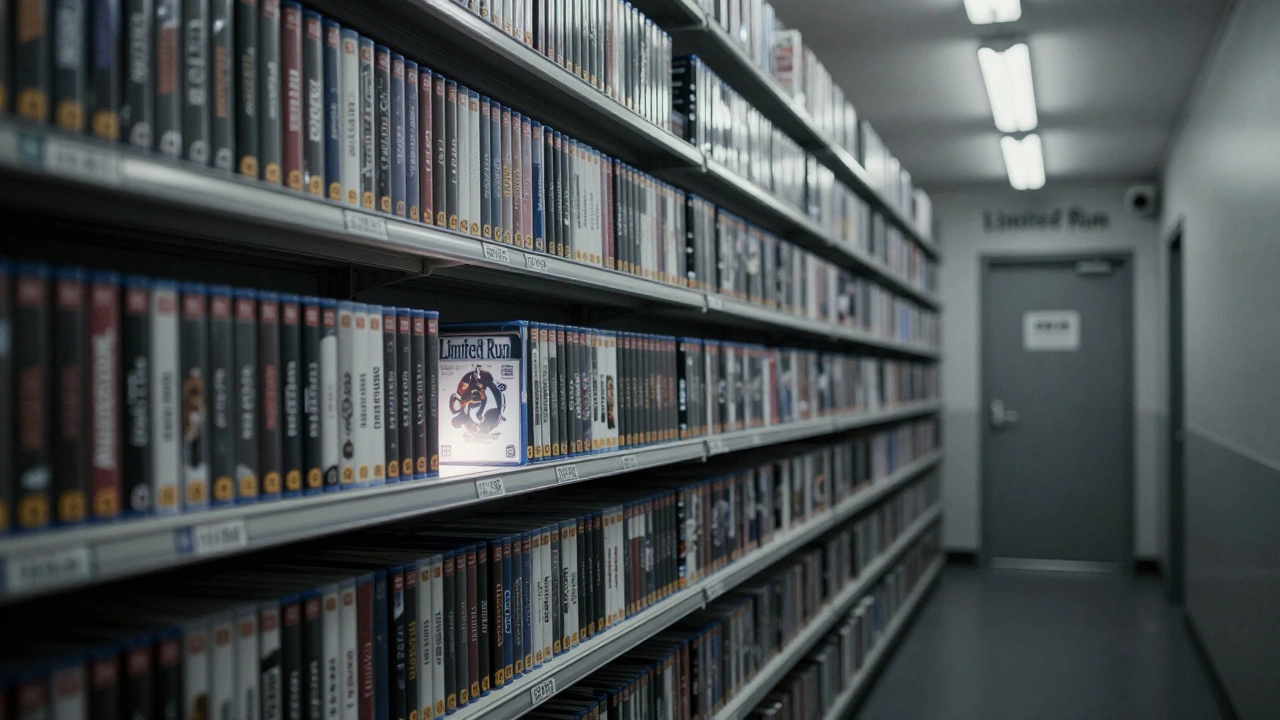
A print run is how many copies of a game a publisher decides to make before it hits stores. Back in the 2000s, companies like Nintendo and Sony would crank out tens of thousands of copies for big titles. But that’s not how things work anymore. Today, many games-especially on Nintendo Switch, PlayStation, and Xbox-start with print runs of just 5,000 to 20,000 units. Some indie titles get as few as 1,000. Why? Because publishers don’t want to be stuck with warehouse full of unsold boxes. They’d rather print what sells, not what they guess might sell.This shift started with companies like Limited Run Games a publisher that produces physical copies of digital-only games on demand, based on pre-orders. They didn’t just sell games-they built a system where collectors could vote with their wallets before a single disc was pressed. If 10,000 people pre-order, they print 10,000. If only 2,000 do, they print 2,000. No overstock. No waste. But here’s the catch: once the initial run sells out, you might wait years for another chance.
Reprints: The Great Equalizer (or the Great Betrayal?)
Reprints are when a publisher makes another batch of a game that’s been out of stock for months-or years. You’d think this would be a good thing. And for new collectors? Absolutely. Suddenly, that $200 copy of Calling a Wii game that sold for over $100 before its reprint, then dropped to $20-30 is now $25 at Amazon. You can finally own it without emptying your savings.But for collectors who bought it back when it was rare? It’s a gut punch. The game they spent years hunting down, the one they paid $120 for because it was the last copy on eBay, now sits on a shelf next to 20 others. Its value? Plummeted. That’s the brutal math of reprints. Reprinted games lose 60-80% of their market value. The Metroid Prime Trilogy a Wii game that was reprinted and sold at GameStop for $55-60 after previously commanding $150+ is a textbook example. Before the reprint, it was a collector’s holy grail. After? Just another game on the clearance rack.
And it’s not just old games. In 2024, Darksiders II a game that received a reprint with Nordic Games branding replacing THQ, making it identifiable as a later run got a reprint with a new publisher logo. The original THQ version? Still sells for $70. The Nordic Games version? $22. Same game. Different box. One’s a treasure. The other’s a bargain.
SKU Changes: How to Spot a Reprint Without Opening the Box
You can’t just look at the title screen to tell if a game is a reprint. You need to check the box. That’s where SKU changes come in. These are tiny, intentional differences in packaging, logos, or labeling that separate one print run from another. Think of them like a secret code.Here’s how to decode them:
- ESRB Rating Labels: The Fire Emblem: Radiant Dawn reprint had updated ESRB labels and a 2014 copyright date used a newer version of the ESRB logo. The original had a blockier font. The reprint had smoother edges.
- Publisher Logos: When THQ went bankrupt, Darksiders II reprint replaced THQ branding with Nordic Games logo got a reprint with Nordic Games’ logo instead. If you see Nordic, you’re holding a reprint.
- Copyright Dates: If the back of the box says "© 2011" but the disc says "© 2014", that’s a reprint. It’s not a bootleg. It’s official.
- Packaging Style: PlayStation Greatest Hits boxes had a yellow border and "Greatest Hits" stamp. Originals didn’t. Nintendo’s "New Nintendo 3DS" reprints used different box art than the original DS versions.
These aren’t random changes. They’re deliberate. Publishers add them so retailers, collectors, and resellers can tell which version is which. And yes-some collectors pay extra for the original because it’s "the real one." Others? They’ll take the reprint for half the price and call it a win.
The Rise of Print-on-Demand: Scarcity by Design
The biggest shift in modern collecting isn’t about how many copies are made-it’s about when they’re made. Print-on-demand (POD) means publishers don’t print until someone orders. No more guessing. No more warehouse overflow. Just pure demand-driven production.This system works great for indie games. But now it’s creeping into big titles too. Look at Rez a PlayStation 2 game reprinted in 2006, later followed by Limited Run Games reissues and Gitaroo Man a PlayStation 2 game reprinted in 2006, later followed by Limited Run Games reissues. Both were reprinted in 2006. Then, in 2020, Limited Run Games brought them back again. Why? Because collectors kept asking. Not because Sony or Sega thought there was mass demand. Because a few hundred people pre-ordered.
This creates something called "reprint FOMO." You hear a game is getting a reprint. You panic. You pre-order. Then you find out 10,000 others did too. The game sells out in 12 hours. You missed it. Then, six months later, you see another announcement. This time, you’re ready. You’re hooked. And publishers? They know it. They’re not just selling games. They’re selling anticipation.
The Value Rollercoaster: Rare vs. Reprinted
Let’s talk numbers. In 2018, a sealed copy of Stadium Events a 1987 Bandai NES game with only ~200 known sealed copies sold for $52,000. Why? Because Nintendo recalled it. Only 200 copies ever existed. No reprint. Ever. That’s the ultimate collector’s dream: a game so rare, it can’t be replaced.Now compare that to Chrono Trigger DS reprinted in 2014, priced $20-25. In 2012, it sold for $80. In 2014, Nintendo reprinted it. By 2015, you could find it for $25. That’s a 70% drop. Same game. Same box. Same cartridge. One version costs three times more. Why? Because one was rare. The other? Not anymore.
The rule is simple: If a game has never been reprinted, it holds its value. If it’s been reprinted, it’s probably not worth what you paid. The NeoGAF an online community that tracks video game reprints and market trends community has been documenting this for over a decade. Every time a reprint drops, prices crash. It’s predictable. It’s brutal. And it’s the new normal.
What This Means for You
If you’re new to collecting: don’t panic. Reprints are your friend. They mean you can own games you thought were impossible. Pick up the reprint. Play it. Enjoy it. You’re not "less of a collector" because you didn’t pay $150 for a sealed copy. You’re smart.If you’re a long-time collector: protect your collection. Keep originals sealed. Store them in climate-controlled spaces. Document their SKUs. Take photos of the packaging. Because one day, that $100 game might be worth $30. Or worse-$10. But if you’ve got the original, unopened, with the correct SKU? You still have something rare.
If you’re thinking of investing: be careful. The market isn’t like stocks. It’s emotional. It’s driven by nostalgia, FOMO, and hype. A game can go from $50 to $200 in six months… then crash back down when a reprint is announced. Don’t buy a game because you think it’ll double. Buy it because you love it.
The truth? Video game collecting today isn’t about hoarding. It’s about understanding the system. Print runs are shrinking. Reprints are common. SKUs are the new barcode. And the people who win? The ones who know how to read them.
How do I know if a game I bought is a reprint?
Check the packaging for changes in logos, ESRB labels, copyright dates, or publisher names. Compare your copy to images of the original on sites like NeoGAF or GameFAQs. If the box looks slightly different, especially with newer branding or a later year, it’s likely a reprint.
Are reprints bad for collectors?
It depends. If you’re trying to own a rare game for the first time, reprints are amazing-they make games affordable. But if you spent years and hundreds of dollars hunting down a sealed original, a reprint can make your collection lose value. It’s a double-edged sword: access vs. exclusivity.
Do all reprints have lower value?
Almost always. Reprints are made because there’s demand, but publishers don’t want them to be rare. So they print enough to meet demand-and then stop. That floods the market. The original, especially if sealed and unopened, still holds value-but usually only 10-20% of what it was before the reprint.
Can a game be reprinted more than once?
Yes. Games like Rez and Gitaroo Man have been reprinted twice by different companies. Each reprint has its own SKU. Collectors track these versions separately. The first reprint might be worth more than the second, depending on how many were made.
Why don’t publishers just reprint everything?
Because scarcity drives value. If every rare game was reprinted, collectors would lose interest. Publishers know that. They use limited runs to create hype, then release reprints to satisfy demand without killing the market entirely. It’s a business strategy-not a favor to collectors.
What Comes Next?
The future of collecting is messy. Big publishers are tightening control. Print-on-demand is growing. Reprints are becoming more frequent. And the line between "collector’s item" and "mass-market product" is fading fast.But here’s the upside: for the first time, you don’t need to be rich to own a game that was once impossible to find. You just need to know how to read the box. And that’s a skill worth learning.