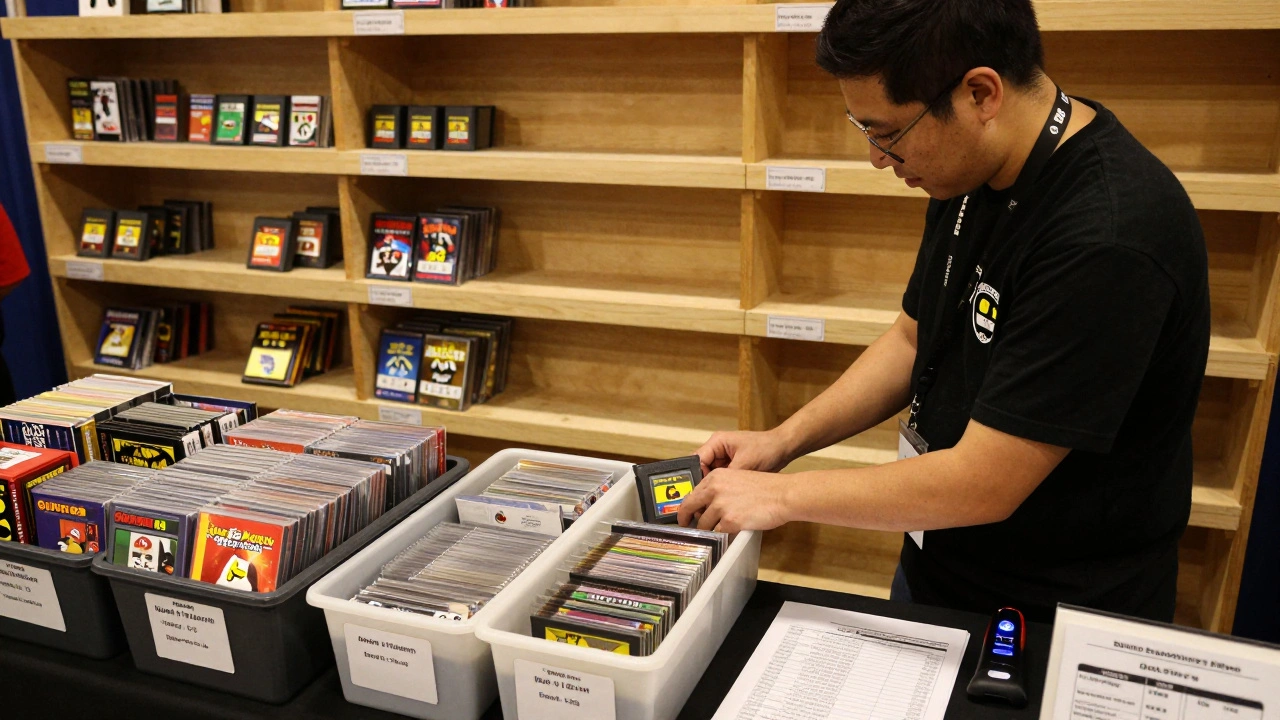
Walking into a video game expo and seeing rows of vendors with crates full of retro consoles, sealed PS2 games, and rare TCG singles feels like stepping into a treasure chest. But if you’re a vendor preparing to show up, you don’t want to be the one with 200 copies of Super Mario Bros. 3 and zero EarthBound manuals. The difference between a packed booth and a quiet one comes down to one thing: knowing what’s already out there before you even pack your boxes.
Start with the Expo’s Vendor List
Most major video game expos-like Retro Gaming Expo, Classic Con, or even PAX Retro-publish a list of confirmed vendors weeks before the event. Don’t just skim it. Click on each vendor’s name if there’s a link. Many will have websites, Instagram pages, or Etsy shops. Look at their recent posts. Are they showing off a new shipment of NES cartridges? Do they have a photo of a full bin of Final Fantasy VII manuals? That’s a clue. If three vendors are all posting about the same rare Dragon’s Lair arcade board, chances are it’s in high demand and oversaturated. You might want to avoid bringing more of it.
Check Past Sales Data
Some expos release unofficial sales summaries after the event. Look for forum threads on Reddit like r/retrogaming or r/CollectingVideoGames. Search for “[Expo Name] 2025 sales roundup.” People who attended often post what sold fast and what sat untouched. One post from last year’s Retro Gaming Expo said: “Sold 75 game guides in three hours. Had five left by 4 p.m.” That tells you something important: game guides are a fast-turn item. Bring more than you think you’ll need.
Another tactic: find a vendor who’s been to the expo for five years. Ask them (politely) what their top three best-selling items were last time. Most won’t give you exact numbers, but they’ll say things like, “I always bring 30 Castlevania: Symphony of the Night carts. They’re gone by lunch.” That’s gold.
Use ABC Analysis for Your Own Stock
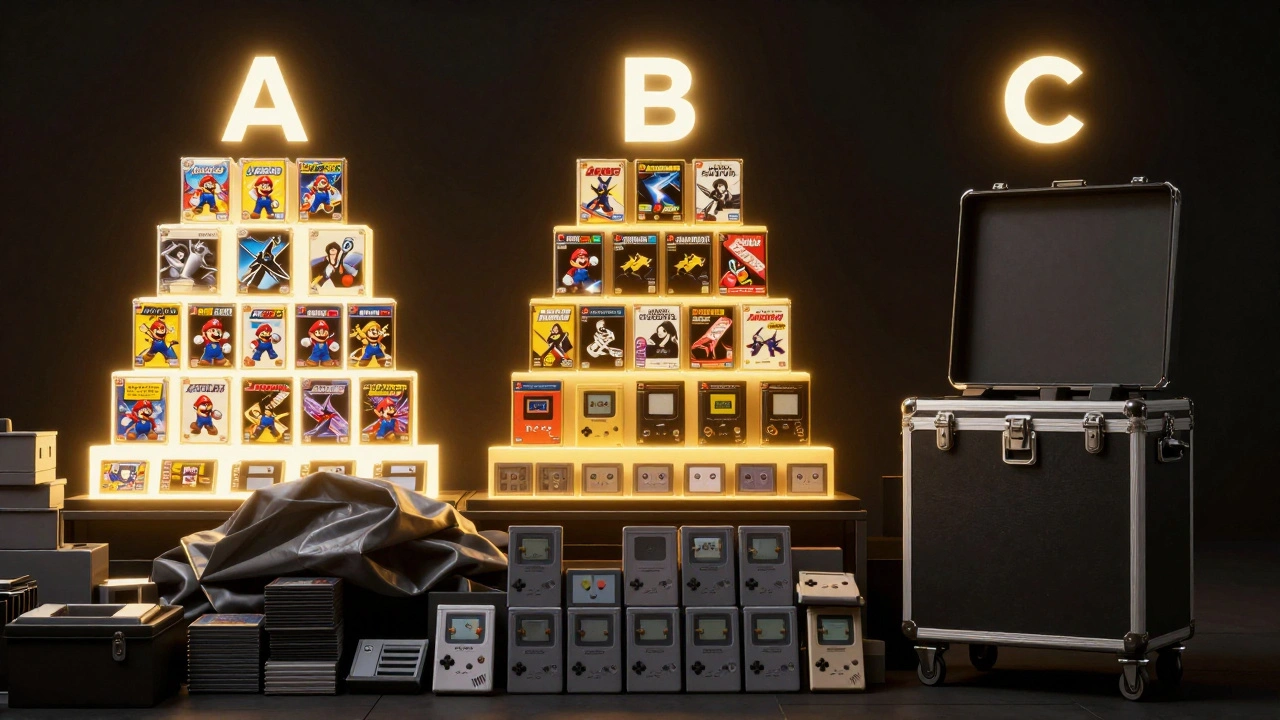
You don’t need fancy software to do this. Just grab a notebook or open a spreadsheet. Divide your inventory into three groups:
- A items: High-value, high-demand. Think sealed Super Mario 64, Metroid Prime first editions, or unopened Persona 5 Royal Collector’s Editions. These make up maybe 15% of your stock but bring in 60% of your sales.
- B items: Steady sellers. Things like used PS1 games, common TCG singles, or boxed manuals. You need these to fill space and keep customers browsing.
- C items: Low-turnover, low-profit. Maybe that box of 40 Game Boy Color cartridges you picked up for $50 at a garage sale. Only bring a few of these. They take up space and make your booth look cluttered.
Focus 80% of your booth space on A and B items. If you’re bringing 200 items total, only 20 should be C items. This isn’t about being greedy-it’s about making your booth feel alive.
Watch What Others Are Re-Stocking
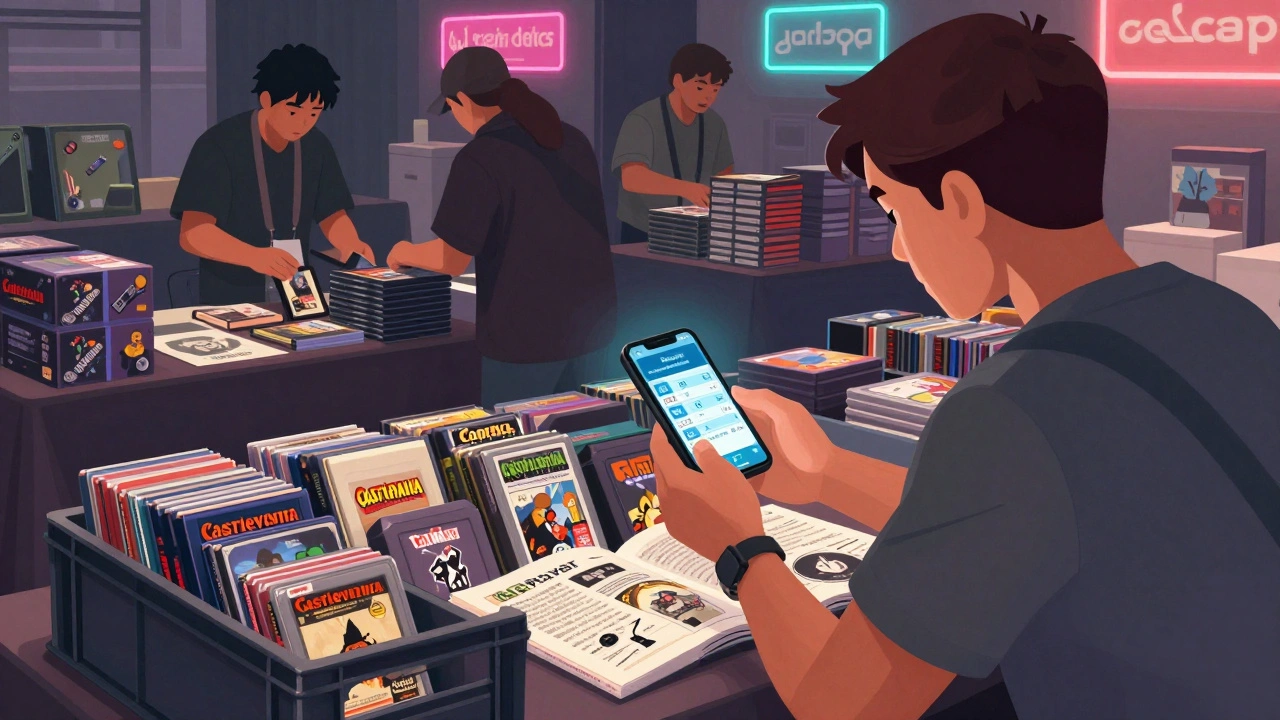
At the expo, vendors don’t just sit there. They move. After selling a stack of consoles, they’ll reorganize. If you see someone shift their display to put a new pile of Castlevania games right at eye level, that’s a signal. They just sold out of the last batch. You should too.
Also pay attention to what’s left unsold. If you see three vendors with the same 10-year-old GameCube bundle still sitting there on day two, it’s probably not worth bringing more. But if one vendor is out of Star Fox 64 by noon and still getting questions, that’s your cue.
Know Your Logistics
One vendor at last year’s Classic Con brought 12 large boxes of retro games. By 11 a.m., they had sold 80% of them. But they couldn’t restock fast enough because the boxes were too heavy to carry from their car. They ended up leaving half their inventory behind.
Plan ahead. Bring rolling carts. Use labeled bins. Keep your most popular items in easy-to-reach spots. If you’re bringing bulky items like arcade cabinets or CRT TVs, check the expo’s rules on power outlets and space limits. Some venues don’t allow heavy items near walkways. Don’t assume you can just set it up.
Use Barcode Scanners-Even If You’re Small
You don’t need a $1,000 POS system. But if you’re selling more than 50 items, a $30 Bluetooth barcode scanner and a free app like Inventory Now or Scanlife will save you hours. Scan each item before you leave home. Tag it with a price, condition, and category. That way, when you’re at the expo, you can instantly check if you’ve sold out of a specific item or if you have duplicates.
One indie vendor told me they used this method at Retro Gaming Expo. They realized they had brought three copies of Shenmue on Dreamcast-but two were in poor condition. They marked one as “Fair” and priced it lower. It sold in 20 minutes. The other two? Still in the box. Without the scanner, they wouldn’t have known.
Don’t Forget the TCG Single Market
Trading card games are a whole different beast. Prices swing daily. A Pokemon Charizard Base Set card might be $200 one week and $150 the next. Check sites like TCGPlayer and Cardmarket for real-time pricing. Don’t rely on eBay prices-they’re often inflated or include shipping.
Also, know the difference between “Near Mint” and “Lightly Played.” Buyers at expos are picky. If you say “NM” and it has a scratch, you’ll lose trust fast. Use a grading guide. Bring a magnifier. It makes you look professional.
Security Is Real
Expos like Retro Gaming Expo have 24-hour security. That’s good. But don’t assume your stuff is safe. One vendor left a locked case of 40 rare N64 carts in their car overnight. The window was cracked. By morning, 12 games were gone. The security team couldn’t help. They didn’t have footage of the car.
Bring a lockable rolling case. If you’re staying overnight, ask if the venue has a secure storage room. Most do-for a small fee. Pay it. It’s cheaper than replacing a $5,000 collection.
What to Bring, What to Leave
- Bring: Small, high-demand items (TCG singles, sealed cartridges, manuals), a portable scanner, labeled bins, a price list printed on cardstock, a small scale for weighing boxes, and a backup power bank.
- Leave: Heavy consoles unless you have a cart, items with unclear provenance (you don’t want to get accused of selling bootlegs), and anything you haven’t priced or scanned.
One last tip: don’t try to bring everything you own. You’ll burn out by day two. Pick 30-50 items you know will sell. Make them shine. The rest? Save it for next time.
Can I find out what other vendors are bringing before the expo?
There’s no official database of vendor inventories, but you can piece it together. Check vendor social media, past expo forums, and ask directly. Most vendors won’t give exact numbers, but they’ll hint at trends-like "I’m bringing a lot of EarthBound this year." Combine those clues with what sold last time to build a rough picture.
How do I know if I’m bringing too much of one item?
Look at last year’s sales data. If 100 copies of a game were brought and only 20 sold, you’re overstocking. Also, if multiple vendors are bringing the same item, it’s likely oversaturated. Stick to the 80/20 rule: 20% of your items should drive 80% of your sales. If something’s not in that top tier, reduce it.
Is it worth bringing old game manuals?
Absolutely-if they’re for popular or rare games. A Metroid Prime manual in good condition sells for $40-$70. A Contra manual? Maybe $5. Know the difference. Manuals for games with no digital versions (like Castlevania: Symphony of the Night) are especially valuable. Keep them flat, in sleeves, and avoid folding corners.
Should I bring my own scanner or can I use the expo’s?
Most expos don’t provide scanners. Bring your own. A basic Bluetooth scanner costs under $40 and works with free apps on your phone. It saves time, prevents pricing errors, and helps you track what you’ve sold in real time. You’ll thank yourself by noon on day two.
What’s the biggest mistake vendors make?
Bringing too much of the wrong stuff. Many vendors assume if a game was popular five years ago, it’ll sell now. But tastes change. A GoldenEye 007 cartridge? Still hot. A Game Boy Advance SP with a broken screen? Not so much. Research, don’t guess. Use past data, not nostalgia.