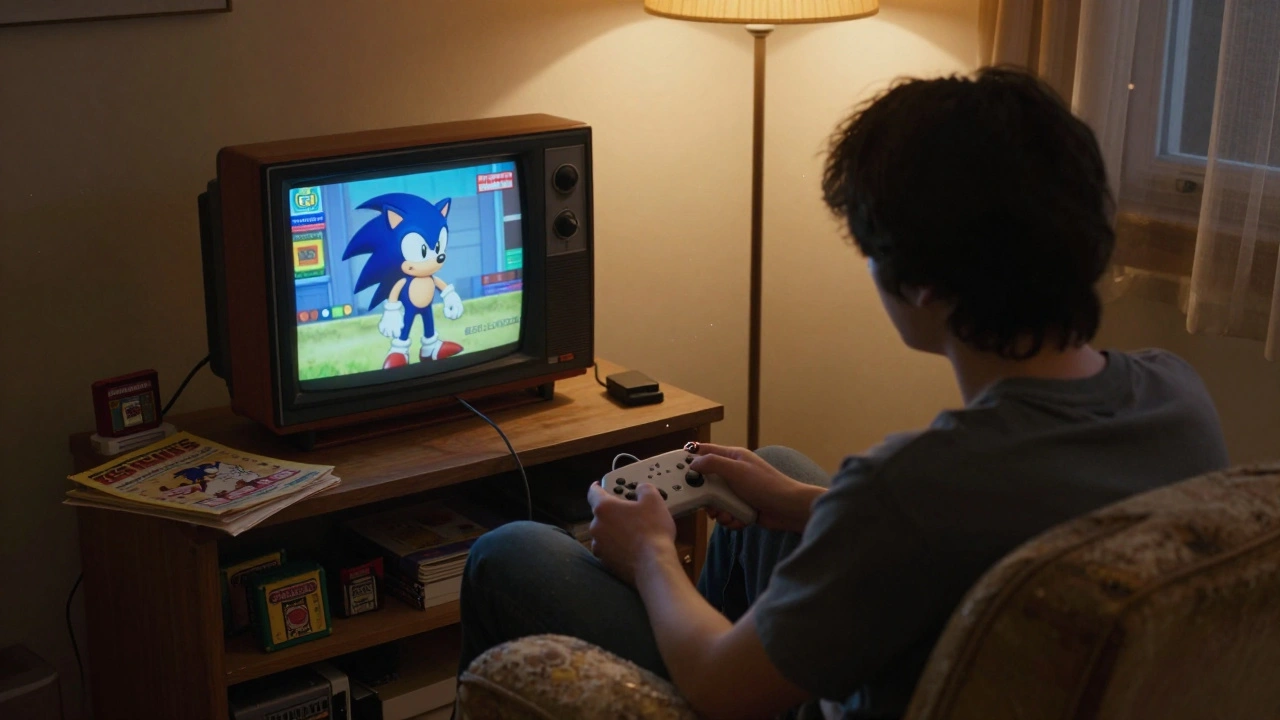
Starting a retro video game collection doesn’t mean you need to empty your bank account. The market is flooded with overpriced cartridges, but smart collectors aren’t buying everything they see. They’re waiting. They’re learning. They’re focusing. And they’re walking away from deals that don’t make sense. If you’ve ever stared at a $200 copy of Streets of Rage 2 and wondered if it’s worth it, you’re already on the right path. The secret isn’t finding rare games-it’s finding the right ones for you.
Start with One System, Not a Whole Shelf
Don’t try to collect every console from the 80s and 90s. That’s how people end up with 300 games they’ve never played and a closet full of broken controllers. Pick one system you actually loved. Maybe it was your first console-the Sega Genesis, the Super Nintendo, the NES, or even the Atari 2600. If you grew up playing Mario, start there. If you spent hours on Sonic, focus on Genesis. This isn’t about owning everything. It’s about owning games that mean something.When you limit yourself to one system, you stop chasing random carts off eBay. You start recognizing patterns. You learn what a good copy looks like. You notice when a game is overpriced because someone just listed it as "rare" without explaining why. You’ll also learn what accessories matter. A working controller with original buttons? That’s worth more than a cracked box. A manual in good condition? That’s a bonus.
Know What’s Actually Valuable-And What’s Not
Not every old game is worth money. You’ll see listings for "rare" sports games from 1992 asking $80. They’re not rare. They’re just forgotten. The real value is in:- First-party exclusives with high demand: Super Metroid, Castlevania: Symphony of the Night, EarthBound
- Games with known production issues: Stadium Events for NES (only 100 copies made), Air Raid for Atari (one of the rarest cartridges ever)
- Sealed, mint-condition copies of cult classics: Chrono Trigger, GoldenEye 007
But here’s the truth: most of your collection should be made up of games you’ll actually play. A $15 copy of Contra that you beat three times is worth more than a $120 sealed copy you never open. Don’t get sucked into "investment collecting." You’re not buying stocks. You’re building memories.
Shop Where Nobody Else Is Looking
eBay and Amazon are the last places you should start. Prices there are inflated because everyone else is already bidding. Instead, hit the real hunting grounds:- Thrift stores-Goodwill, Salvation Army, local charity shops. Check the game aisle every two weeks. Inventory turns fast. One guy in Portland found a working Sega CD for $5 at a thrift store last month.
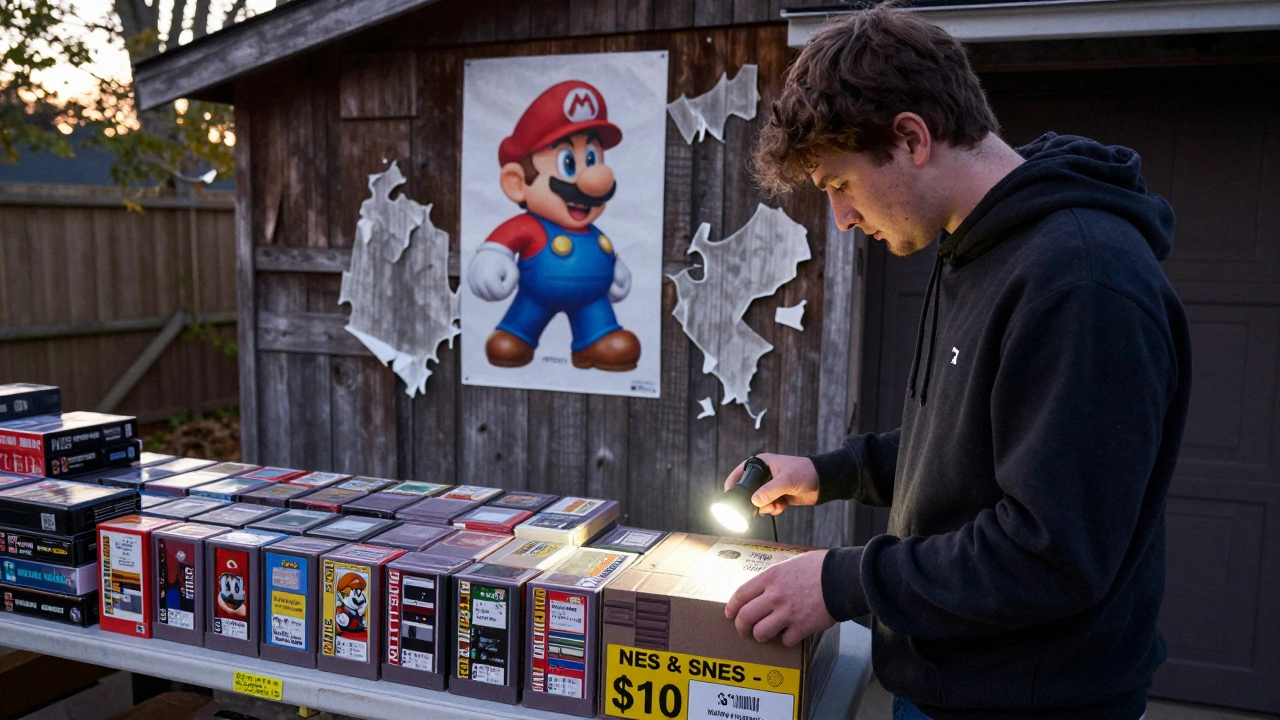
- Garage sales and flea markets-Especially in spring and early fall. People clean out basements. They don’t know what’s valuable. Ask if they have "old video games." Often, they’ll pull out a box of 20 games for $10.
- Local Facebook Marketplace-Search "retro games" + your city. Filter by "price: under $20." You’ll find people who just want them gone. No auction drama.
Pro tip: Bring a small flashlight. Scratches on the label? Dusty cartridge? Those are red flags. But if the game boots up and the controller works? Even with a cracked case, it’s still a win.
Buy in Bulk-But Only If You Know How to Filter
Buying a box of 50 games for $30 sounds like a steal. But here’s what usually happens: 35 of them are sports titles from 1994, 10 are broken, and 3 are worth $5 each. You end up with $15 in value and a box of junk.Here’s how to do it right:
- Ask the seller if they know which games are in the box. If they say "I don’t know," that’s fine-just ask for photos of the labels.
- Look for obvious names: Super Mario Bros., Mega Man 2, Teenage Mutant Ninja Turtles IV.
- Check the year. Games from 1989-1993 have higher play value.
- If it’s a mixed lot (NES, SNES, Genesis), ask if you can pick 5 games. Many sellers will let you cherry-pick.
Some collectors even use this as a strategy: buy a $20 box, pull out the 2 good games, then resell the rest for $1 each. You cover your cost and make a little profit. It’s not glamorous, but it’s smart.
Use Mini Consoles and Emulators to Test Before You Buy
Before you drop $60 on a cartridge you’re not sure you’ll like, try it first. The NES Classic, SNES Classic, and Sega Genesis Mini are perfect for this. They come with 21-42 preloaded games, all working perfectly. You can play them on your TV, save your progress, and even rewind mistakes.Here’s the trick: if you love a game on the mini console, then hunt for the real cartridge. You’ll know it’s worth it. If you skip it? You just saved $50.
For even cheaper options, try an emulator on your laptop. Download ZNES or RetroArch (free), plug in a $12 USB controller from Amazon, and play SNES games for under $20 total. You’re not collecting hardware this way-but you’re collecting experience. And that’s the whole point.
Look for Compilations, Not Just Cartridges
You don’t need the original cartridge to play Castlevania, Contra, and Metal Gear. Konami and Capcom have released dozens of budget-friendly compilations:- Sega Genesis Classics (on Switch, PS4, Xbox) - 53 games for $30
- Super Nintendo World Collection - 10 games, $25
- Nintendo Entertainment System: 50th Anniversary - 30 games, $70
These aren’t just cheap alternatives-they’re curated experiences. Many include bonus content like concept art, developer interviews, and even original manuals. And if you’re buying for your kids? These are perfect. No dusty cartridges. No broken controllers. Just instant access.
Set a Budget-And Stick to It
This is the most overlooked rule. People think collecting is about how much they spend. It’s not. It’s about how wisely they spend.Set a monthly limit. $25? $50? Doesn’t matter. But write it down. When you see a game you want, ask: "Is this within my budget?" If not, walk away. Wait. Come back next month.
One collector I know spends $15 a month. He’s had his Genesis collection for 5 years. He owns 47 games. Every one of them he played. Every one of them he loves. He didn’t buy a single sealed copy. He didn’t chase rarity. He just bought one game a month. And now, his collection is the envy of people who spent ten times more.
Trade, Don’t Just Buy
Some retro shops let you trade games for store credit. Others have online forums where collectors swap titles. Reddit’s r/RetroGaming has a weekly trade thread. Facebook groups like "Retro Game Swap Midwest" are full of people willing to exchange a copy of Blaster Master for Teenage Mutant Ninja Turtles III.Why does this work? Because most collectors have duplicates. You might have three copies of Mega Man 3. Someone else has two copies of Double Dragon. You swap. You both win. And you never spend a dime.
Patience Wins Every Time
The biggest mistake? Buying too fast. The second biggest? Giving up too soon.One guy in Portland spent 18 months hunting for a working copy of Shin Megami Tensei for the Genesis. He checked thrift stores every two weeks. He watched eBay for 14 months. He passed on three overpriced listings. Then, last winter, he found it at a flea market for $8. The box was torn. The manual was missing. But the game worked. And he played it for the first time last month.
That’s the magic. It’s not about how much you spend. It’s about how much you care.
Start Small. Stay Consistent. Enjoy the Hunt
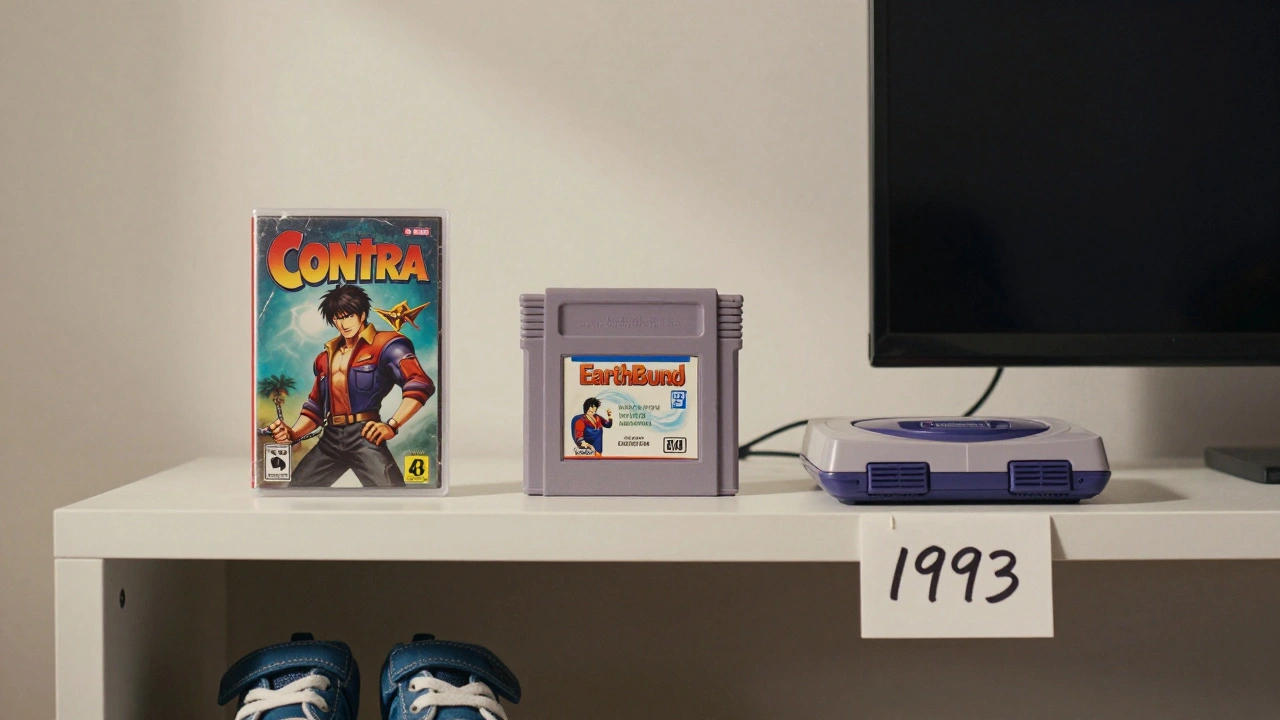
Your collection doesn’t need to be big. It needs to be meaningful. One game you love. One console you remember. One memory you get to relive.You don’t need to own every copy of Super Mario Bros. You just need to own the one that reminds you of playing with your brother after school. You don’t need a sealed EarthBound. You need a scratched copy that you beat at 2 a.m. with a half-dead controller.
That’s what retro collecting is really about. Not rarity. Not value. Not investment. It’s about reconnecting with a time when games weren’t about graphics or microtransactions. They were about joy.