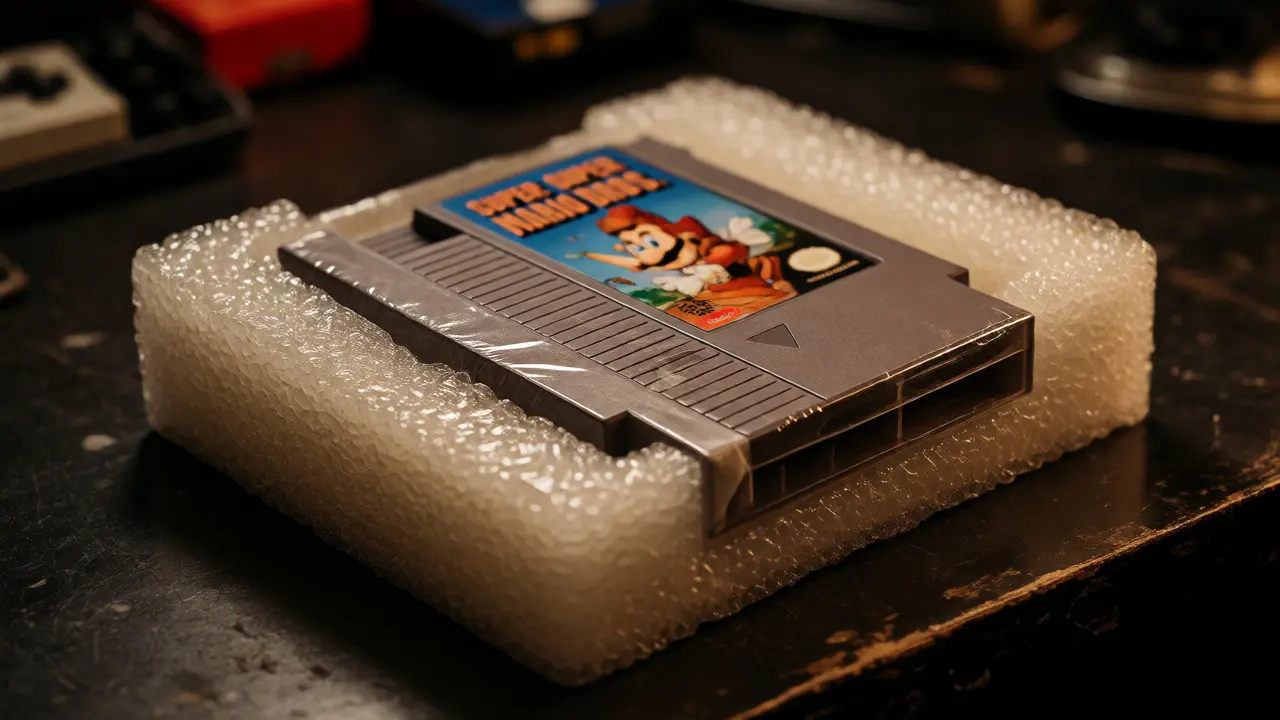
You just spent three months hunting down a sealed copy of Super Mario Bros. for the NES. It’s worth more than your car insurance deductible. Now you have to get it from your living room in Portland to a buyer in Tokyo, or maybe just across the country to a convention. You’re terrified. One crushed corner, one water-damaged sleeve, and that $500 asset becomes a $50 paperweight. I’ve shipped enough rare cartridges and loose boxes to know that standard mail is a gamble, but air transport doesn’t have to be a nightmare if you respect the physics of flight and the fragility of cardboard.
Why Air Freight Is Different From Ground Shipping
When you ship via ground courier like UPS or FedEx Home Delivery, your package sits on a truck. It gets shaken, sure, but the temperature changes are gradual, and the pressure remains relatively constant. Air cargo is a different beast entirely. Your box will experience rapid cabin pressure changes, potential temperature drops during loading/unloading on tarmac, and significant vibration during takeoff and landing. For high-value video games, especially those with plastic cases (like PlayStation CDs) or cardboard sleeves, these factors matter. Plastic can become brittle in cold; cardboard loses structural integrity if it absorbs humidity before being sealed. The biggest enemy isn't usually impact-it's moisture and static electricity. Cargo holds aren't climate-controlled like passenger cabins. If you don't seal your game properly, condensation can form inside the packaging as temperatures fluctuate. This leads to mold on cardboard or fogging on CD/DVD surfaces. We need to treat this like moving a museum artifact, not a pair of shoes.The Holy Trinity of Protection: Anti-Static, Moisture, and Shock
To keep your high-value video game safe, you need to layer your protection. Think of it as armor. The outer layer takes the hit, the middle layer handles the environment, and the inner layer protects the surface itself. First, address static electricity. Modern consoles use optical media or solid-state drives, but older games often have delicate label stickers or printed cardboard inserts. Static cling can pull dust onto these surfaces, which is nearly impossible to remove without damaging the print. Use anti-static bags specifically designed for electronics or archival-grade polyethylene sleeves. Do not use standard bubble wrap directly against a glossy CD case or a printed manual cover unless you put a barrier between them. Bubble wrap can generate static charge through friction. Second, tackle moisture. Silica gel packets are non-negotiable. Toss two or three small packets into the primary container holding the game. These desiccants absorb ambient humidity, preventing warping in cardboard boxes and protecting metal components in hardware. In my experience shipping from the wet Pacific Northwest, skipping silica gel is how you end up with a wavy box flap upon arrival. Third, shock absorption. Foam is superior to air-filled bubbles for rigid items like game cases. Polyethylene foam blocks provide consistent density and don't pop under pressure changes at altitude. Cut custom molds if you can, or use dense foam sheets to create a snug fit around the game case so it cannot shift inside its immediate container.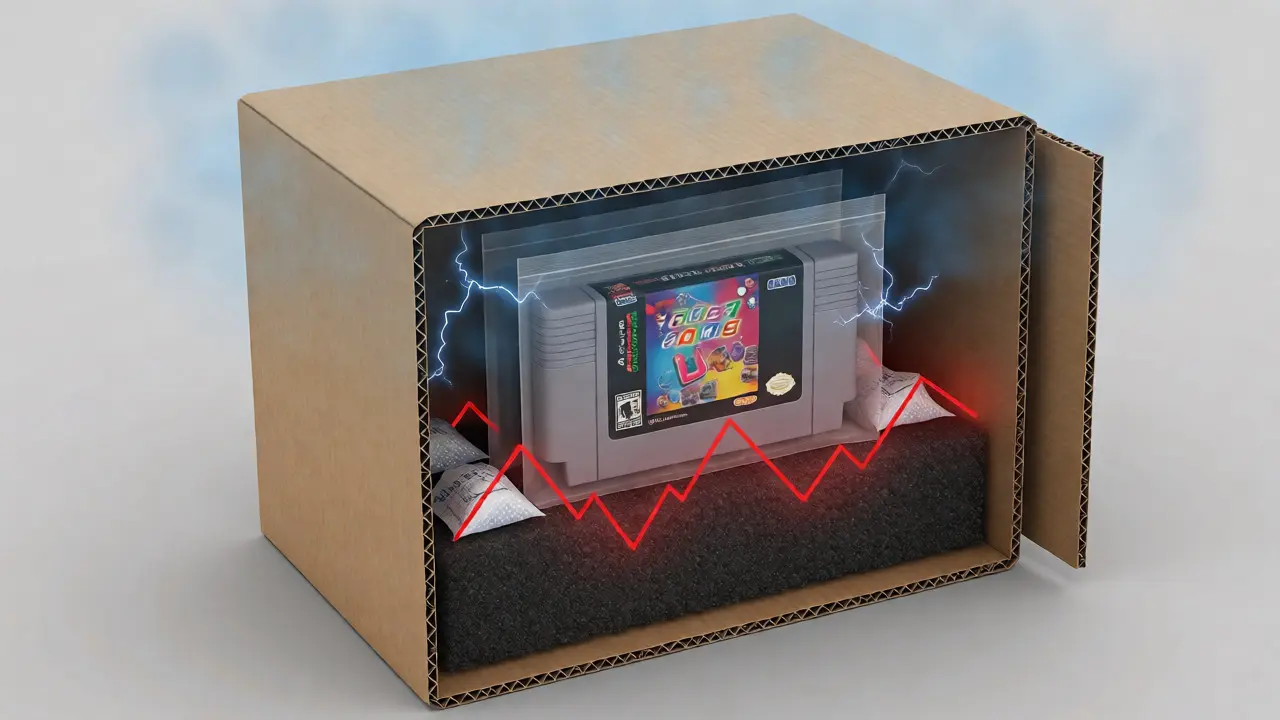
Packing Strategy for Sealed vs. Loose Games
How you pack depends heavily on whether the game is sealed in shrink-wrap or loose. A sealed game has an extra layer of protection-the plastic film-but it also makes the item slippery and prone to cracking if compressed unevenly. A loose game exposes the jewel case or cardboard box directly to the elements. For a sealed Nintendo Switch cartridge, keep it in its original retail blister pack if possible. Place this inside a rigid plastic clamshell case (often called a "game protector" or "hard case"). Then, wrap that hard case in a single layer of tissue paper to prevent scratches from the foam, and nestle it into a cut-out of dense polyethylene foam. The goal is zero movement. If you shake the inner container and hear a rattle, you haven't packed it tightly enough. For a loose retro game, such as a Sega Genesis cartridge, remove the cartridge from the cardboard box if the box is fragile. Wrap the cartridge in an anti-static bag. Place the empty cardboard box in a separate protective sleeve. Pack both separately within the main shipping box using foam dividers. Why? Because the weight of the cartridge can crush the bottom of a thin cardboard box during transit vibrations. Separating them preserves the condition of both components.| Material | Best Used For | Risk Factor | Cost Efficiency |
|---|---|---|---|
| Dense Polyethylene Foam | Shock absorption for cases/hardware | Bulky; requires precise cutting | Medium |
| Air-Filled Bubble Wrap | Filling voids in outer box | Can pop at altitude; generates static | High |
| Anti-Static Bags | Direct contact with media/labels | None if used correctly | Low |
| Silica Gel Packs | Moisture control | Ineffective if saturated | Very Low |
| Cardboard Mailers | Outer shell only | Collapses under heavy stacking | High |
Choosing the Right Outer Container
Never ship a high-value game in a padded envelope. Even the thickest ones offer minimal crush resistance. You need a double-walled corrugated cardboard box. This type of box has two layers of fluting, providing significantly higher edge-crush resistance than standard single-wall boxes. Look for boxes labeled "20 ECT" (Edge Crush Test) or higher. This rating indicates the box can withstand substantial stacking weight in cargo containers. Size matters. A box that is too large allows the inner package to shift, leading to impact damage. A box that is too small compresses the cushioning material, reducing its effectiveness. Measure your protected inner assembly, then add two inches on all sides for cushioning. If you're shipping multiple games, do not stack them loosely. Stack them vertically if they are slim (like PS5 discs) or horizontally if they are thick (like Xbox 360 cases), ensuring each layer is separated by a sheet of cardboard or foam board. Seal the box properly. Use H-taping method: tape along the center seam and both side seams. This prevents the box from opening if the top flaps fail. Mark the box clearly with "FRAGILE" and "THIS SIDE UP" arrows. While handlers don't always respect these labels, statistical data from logistics providers suggests that marked packages receive slightly gentler handling on average.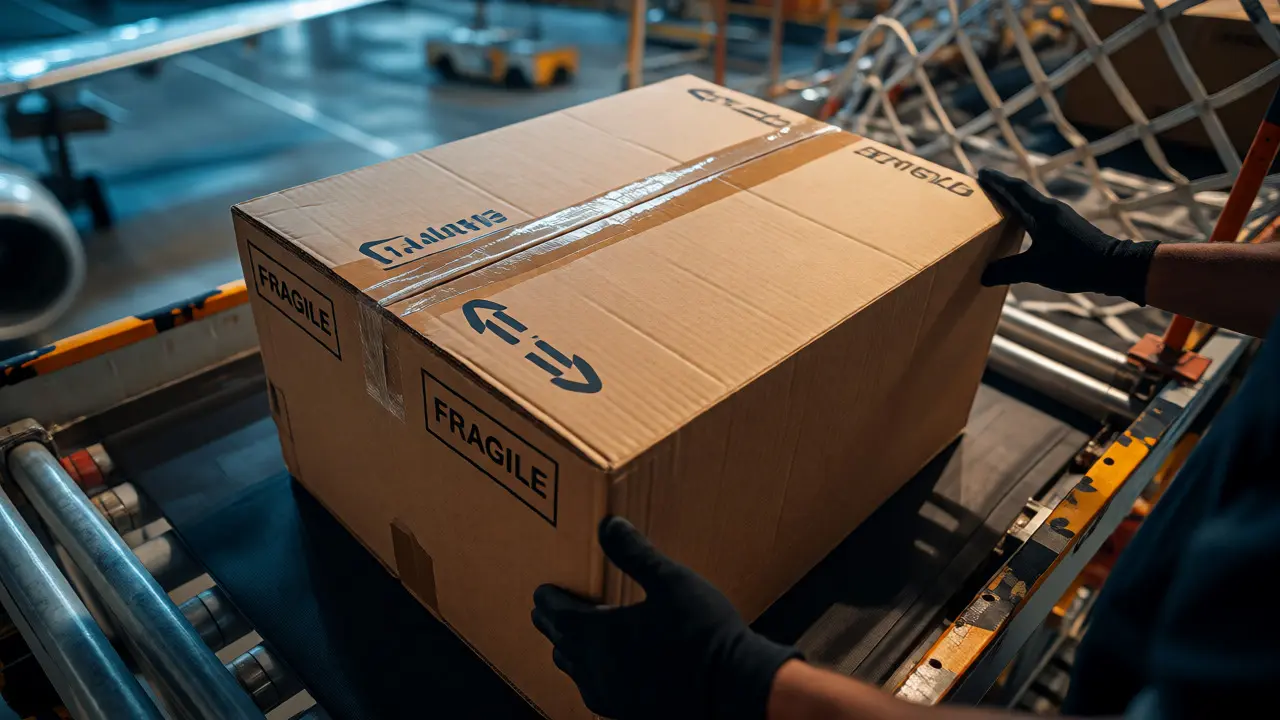
Selecting the Carrier and Insurance
Not all carriers handle high-value goods equally well. For domestic US shipments, USPS Priority Mail Express offers speed but limited tracking granularity. FedEx and UPS provide better real-time tracking and robust insurance options. However, their standard insurance caps might not cover a $1,000 game collection. You must declare the full value. International shipping adds complexity. Customs forms require accurate descriptions. Describe the item as "Video Game Software - Collectible" rather than just "Toy." Include the ISBN or UPC code if available. Mislabeling can lead to delays or unexpected duties. For international flights, consider carriers with dedicated express networks like DHL Express, which often have tighter control over handoffs between aircraft and ground vehicles. Insurance is your safety net. Most carriers exclude "collectibles" from standard coverage unless explicitly declared and appraised. Keep photos of the game in its packed state before sealing the box. If the carrier claims the item arrived damaged, you'll need proof of pre-shipment condition. Without this evidence, you're likely eating the loss.Documentation and Tracking Best Practices
Generate a bill of lading or commercial invoice if shipping internationally. List the serial numbers of any hardware included. For software, list the title, platform, and region code. This helps customs agents verify the item quickly, reducing time in transit. Time in transit equals risk exposure. Use trackable services exclusively. Avoid standard economy shipping for anything valued over $50. Track the shipment daily. If the status stalls for more than 48 hours in a hub, contact customer service immediately. Sometimes packages get stuck in sorting facilities due to unreadable labels or security scans. Early intervention can prevent weeks of delay. Finally, communicate with the recipient. Send them the tracking number and estimated delivery date. Ask them to inspect the package upon receipt and sign for it after checking for visible damage. If the box looks crushed, note it on the delivery receipt. This creates a chain of custody that strengthens any future claim.Should I remove the shrink wrap before shipping?
Generally, no. Leave the shrink wrap on sealed games. It provides a protective barrier against scratches and minor abrasions. Removing it risks tearing the cardboard box underneath and devalues the item for collectors who prefer factory-sealed copies. Just ensure the shrink wrap is tight and intact before packing.
Is bubble wrap safe for CD cases?
Bubble wrap can be used, but avoid placing it directly against the clear plastic of a CD case. Friction can cause micro-scratches or static buildup. Wrap the case in tissue paper or an anti-static sleeve first, then use bubble wrap for bulk cushioning. Better yet, use a hard plastic case insert surrounded by foam.
What happens if the plane experiences turbulence?
Modern cargo holds are secured with nets and straps, so major shifts are rare. However, vibration is constant. This is why your internal packing must eliminate any space where the game can move. If the game rattles inside its own protective case, turbulence can cause it to chip or crack against the container walls.
Do I need to worry about temperature extremes?
Yes, especially when shipping in winter or summer. Cargo holds can drop below freezing or exceed 100°F depending on ground conditions. Extreme heat can warp plastic cases or melt adhesive on labels. Extreme cold makes plastic brittle. Using insulated liners or choosing expedited shipping reduces the time the package spends exposed to ground temperatures.
How much does insurance cost for a $500 game?
Costs vary by carrier. Typically, you pay a base rate plus a percentage of the declared value above the free limit (often $100). For a $500 item, expect to pay roughly $10-$20 in additional fees. Always check the specific exclusions for "collectibles" to ensure you are covered for accidental damage, not just loss.