Everyone thinks a broken video game console is just trash. You drop it, crack the case, or it stops turning on - so you toss it in a drawer or haul it to the curb. But here’s the truth: broken consoles still have real cash value. Not a little. Not a few bucks. Sometimes hundreds. Retailers and online buyback services are actively buying damaged units - not because they want to fix them for you, but because they know how to make money off them.
Let’s cut through the noise. You don’t need to repair it. You don’t need to clean it up. You don’t even need to find the original box. If it’s a PS5, PS4, or even an old PlayStation 1, there’s someone out there who will pay for it - even if it doesn’t power on.
How Much Can You Get for a Broken PS5?
The PS5 is the king of broken console sales right now. Even if it’s completely dead, cracked, or missing a disc drive, buyers are still offering solid prices. As of March 2026, here’s what you can realistically expect:
- PS5 Pro (broken): $461
- PS5 Digital Edition (broken): $286
- PS5 Slim (broken): $286
- Standard PS5 (broken): $265
- PS5 Slim Digital Edition (broken): $234
These aren’t guesses. These are live prices from SellCell, a major platform that aggregates offers from eight different buyers. The numbers drop if the console has heavy damage - like a crushed chassis or water exposure - but they rarely go below $150. That’s more than most people expect from a "dead" device.
What About Older Consoles? PS4, Xbox One, and More
If you’ve got an older system, don’t assume it’s worthless. The market for broken PS4s is still active:
- PS4 Pro (broken): $98
- PS4 Slim (broken): $73
Even the PlayStation Portal - a newer handheld device - pays $98 when broken. Xbox Series X and S? They follow similar patterns. A broken Xbox Series X might net you $210. A Series S? Around $140. These aren’t eBay auction bids. These are guaranteed cash offers from companies that buy in bulk.
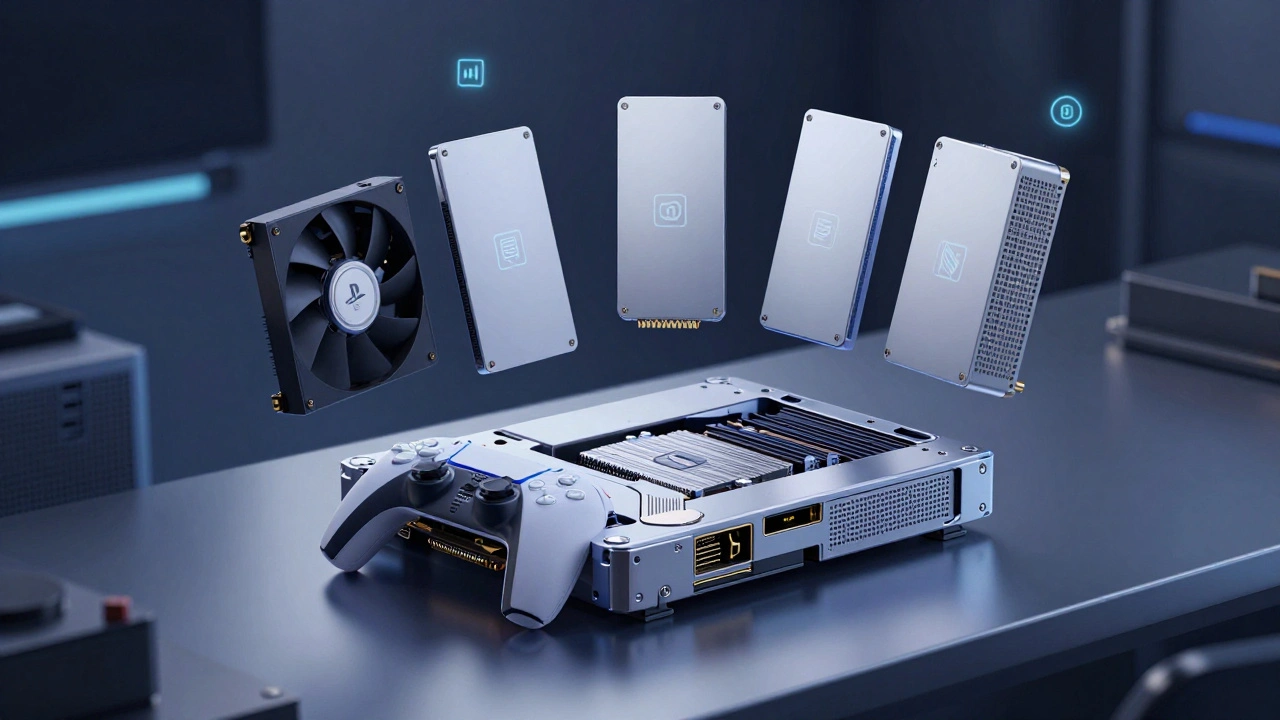
Why? Because these aren’t just trash pickups. These companies are mining your broken console for parts. A single PS5 has over 200 components. Even if the mainboard is fried, the SSD, cooling fan, power supply, and HDMI port can still be salvaged. They’re sold to repair shops or used in refurbished units. That’s how they make profit.
Why Do Retailers Pay for Broken Consoles?
Most people think retailers trade in consoles to resell them as used. That’s true - but only for lightly damaged units. For broken ones? It’s all about recycling and parts.
Here’s how it works:
- Light damage (scratched case, one button broken): The console gets cleaned, tested, and sold as refurbished.
- Medium damage (won’t turn on, cracked screen): Technicians replace the motherboard or power supply, then resell it.
- Heavy damage (waterlogged, crushed, no power): The unit is disassembled. Every metal, plastic, and circuit board component is sorted and sold to recyclers.
Companies like SellCell partner with certified e-waste recyclers. That means your broken console won’t end up in a landfill. It’s taken apart, cleaned, and reused. This isn’t just good business - it’s now a selling point. Buyers highlight environmental responsibility to attract sellers who care about sustainability.
Online Buyback Sites Beat In-Store Trade-Ins
Ever walked into GameStop with a broken PS5 and got $50? You got lowballed. In-store trade-ins are designed to make you walk away with less. They don’t have the volume, the tech, or the logistics to handle broken units efficiently.
Online platforms like SellCell, BankMyCell, and Decluttr change the game. They:
- Compare offers from 7-8 different buyers at once
- Let you select "Broken" or "Faulty" as the condition
- Pay via PayPal, Venmo, or check - no gift cards
- Include free shipping labels
- Have no hidden fees
One seller in Portland sent in a PS5 that wouldn’t boot. It had a cracked side panel and a missing power button. They got $210. The same console at a local store offered $65. The difference? Online buyers know exactly how much the parts are worth. Local stores? They guess.
Vintage Consoles Are a Whole Different Ballgame
Here’s where things get wild. If your broken console is from the 90s or early 2000s - like a PS1, N64, or Sega Saturn - you’re not just selling a broken device. You’re selling potential.
Take the original PlayStation 1. A broken unit might sell for $15 online. But if you’ve got a sealed copy of Tomb Raider in its original box? That sold for $26,400 in 2021. A sealed Twisted Metal? $22,200. Even a loose cartridge of Ignition Factor hit $100 in early 2026.
Condition is everything. A cracked case, a missing disc, or a broken power cord doesn’t matter if the game inside is sealed, pristine, and in its original packaging. The value isn’t in the console - it’s in the packaging, the label, the plastic seal. A factory-sealed game can be worth 100x more than a loose one.
Don’t throw out that dusty PS1 just because it won’t turn on. Check the games inside. If they’re sealed? Hold onto them. If not? Still sell the console. It’s worth more than you think.
What to Do Before You Sell
You don’t need to do much. But a few simple steps can get you more cash:
- Don’t erase the system. Buyers don’t need data. They’re not accessing your account. Leave it as-is.
- Keep all cables and accessories. Even if the power brick is frayed, include it. They might still use the plug.
- Take a photo. Snap a quick picture of the damage. Some platforms let you upload it to get a more accurate quote.
- Compare offers. Never accept the first offer. Use SellCell or BankMyCell to see what 8 different buyers are willing to pay.
- Don’t ship it until you accept the offer. Some sites lock in prices for 30 days. Wait until you’re sure.
What’s Not Worth Selling
Not every broken console has value. Skip these:
- Consoles with severe fire damage
- Units missing the mainboard or power supply
- Very old systems like the Sega Dreamcast or Nintendo Wii - unless they’re sealed with rare games
- Knockoffs or counterfeit consoles (they’re not worth anything)
Most of these are too hard to recycle or have no usable parts. Stick to PS4, PS5, Xbox One, Xbox Series X/S, and Nintendo Switch. Those are the big sellers right now.
Environmental Impact Matters
Every broken console you sell through a reputable buyer keeps electronics out of landfills. The EPA estimates that over 50 million tons of e-waste are dumped globally each year. Gaming consoles make up a big chunk of that.
By selling your broken PS5 to a certified recycler, you’re helping reduce toxic metals like lead and mercury from leaching into soil and water. It’s not just a cash move - it’s a responsible one. Many platforms now highlight their recycling partners on their websites. Look for certifications like R2 or e-Stewards. That’s your guarantee the unit won’t end up in a dump.
Final Thought: Don’t Underestimate the Value
Broken doesn’t mean worthless. It just means someone else gets to fix it - or take it apart - and make money from it. In 2026, the market for broken consoles is stronger than ever. PS5s are still in high demand. Retro games are hitting new highs. And the companies buying these units? They’re not charities. They’re businesses. And they’re paying real money.
So next time you see a broken console gathering dust? Don’t toss it. Don’t ignore it. Check the price. You might be sitting on a few hundred dollars you didn’t know you had.