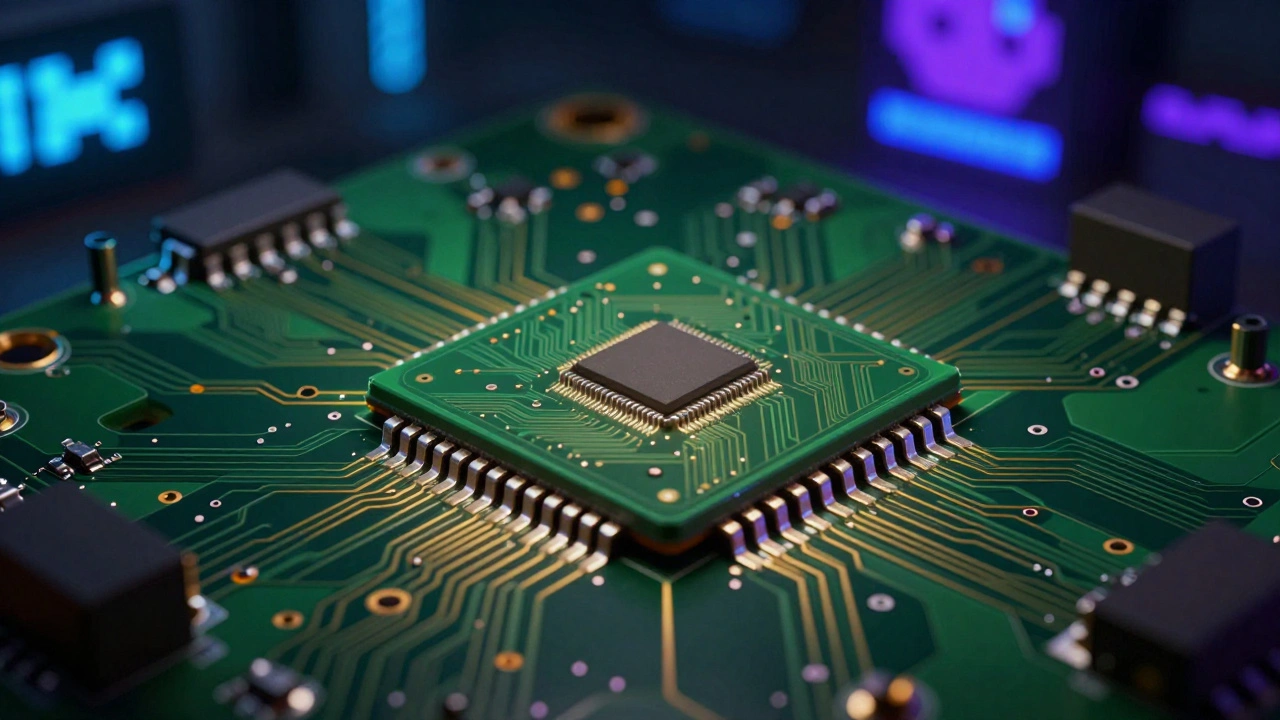
Have you ever wondered why some retro games feel slightly "off" when played on modern emulators? It’s not just nostalgia talking. Traditional software emulation often introduces tiny delays or timing errors that change how a game behaves. If you want to study video game hardware behavior with absolute precision, you need to look beyond software. You need Field Programmable Gate Arrays (FPGAs). Unlike standard emulators that guess what the hardware did, FPGAs actually become the hardware.
This guide breaks down how FPGA cores work, why they are the gold standard for studying legacy systems, and how you can use them to analyze everything from pixel-perfect rendering to exact CPU clock cycles. Whether you are a developer, a researcher, or a hardcore preservationist, understanding this technology opens a window into the true mechanics of gaming history.
What Are FPGA Cores and Why Do They Matter?
To understand the value of an FPGA Core, which is a reconfigurable digital circuit design that mimics specific vintage hardware architecture, you first have to understand the problem it solves. Standard emulators like RetroArch run on general-purpose CPUs. They translate old machine code into instructions your modern processor understands. This translation takes time. Even if that time is measured in microseconds, it adds up. This is often called "software jank."
An FPGA is different. It is a chip that can be programmed to behave like any other digital circuit. When you load an FPGA core for a Game Boy, for example, the FPGA doesn't simulate the Game Boy's CPU. It effectively turns into one. The logic gates inside the FPGA align perfectly with the original silicon. This allows for cycle-accurate reproduction, which means the exact replication of every single clock cycle and instruction step of the original hardware. For researchers studying hardware behavior, this distinction is critical. You aren't observing an approximation; you are observing the actual electrical state of the system as it would have existed in 1989.
The Technical Foundation: How FPGA Cores Replicate Hardware
Building or analyzing an FPGA core requires a deep dive into digital logic. These cores are typically written in Hardware Description Languages (HDL) like Verilog or VHDL. Instead of writing sequential code, you describe the physical structure of the circuit.
Consider the implementation of a classic Pong game on a Nexys 4 DDR board, which is a popular mid-range FPGA development platform used for educational and prototyping purposes. Developers use Finite State Machines (FSMs) to handle game logic. An FSM defines exactly what happens when a paddle moves, when the ball bounces, or when points are scored. Because the FPGA executes these states in parallel hardware rather than sequentially in software, there is zero latency between input and output.
For serious study, tools like Xilinx Vivado allow developers to simulate these designs before flashing them to the chip. You can verify FSM state transitions and timing accuracy mathematically. This validation process ensures that the core isn't just "playing" the game, but behaving exactly according to the original technical specifications. This level of control lets you isolate variables-like memory access times-to see how they affect gameplay without the noise of operating system overhead.
Case Study: Cycle-Accuracy in Action
Let’s look at a concrete example to see why this matters. Researcher Eli Lipsitz documented an FPGA Game Boy emulator that highlights the precision possible here. The original Game Boy CPU runs at 4.194304 MHz. Every four cycles form one "M-cycle," allowing one memory operation per M-cycle.
In a software emulator, handling these micro-timings is messy. In the FPGA implementation, the core pauses intelligently only when cartridge DRAM reads exceed one clock cycle. Statistical analysis showed that only about 0.5 percent of total emulator cycles are stall cycles. This means the game runs 0.5 percent slower than the original hardware-a difference imperceptible to humans but significant for data integrity. If you are studying how race conditions occur in buggy code, a software emulator might smooth over those bugs. An FPGA core will expose them because it replicates the exact timing flaws of the original silicon.
Major Platforms for Studying Hardware Behavior
You don't necessarily need to build your own FPGA board from scratch. Two major ecosystems dominate the space today, each offering different advantages for studying hardware.
| Platform | FPGA Chip | Primary Use Case | Key Advantage for Study | Limitation |
|---|---|---|---|---|
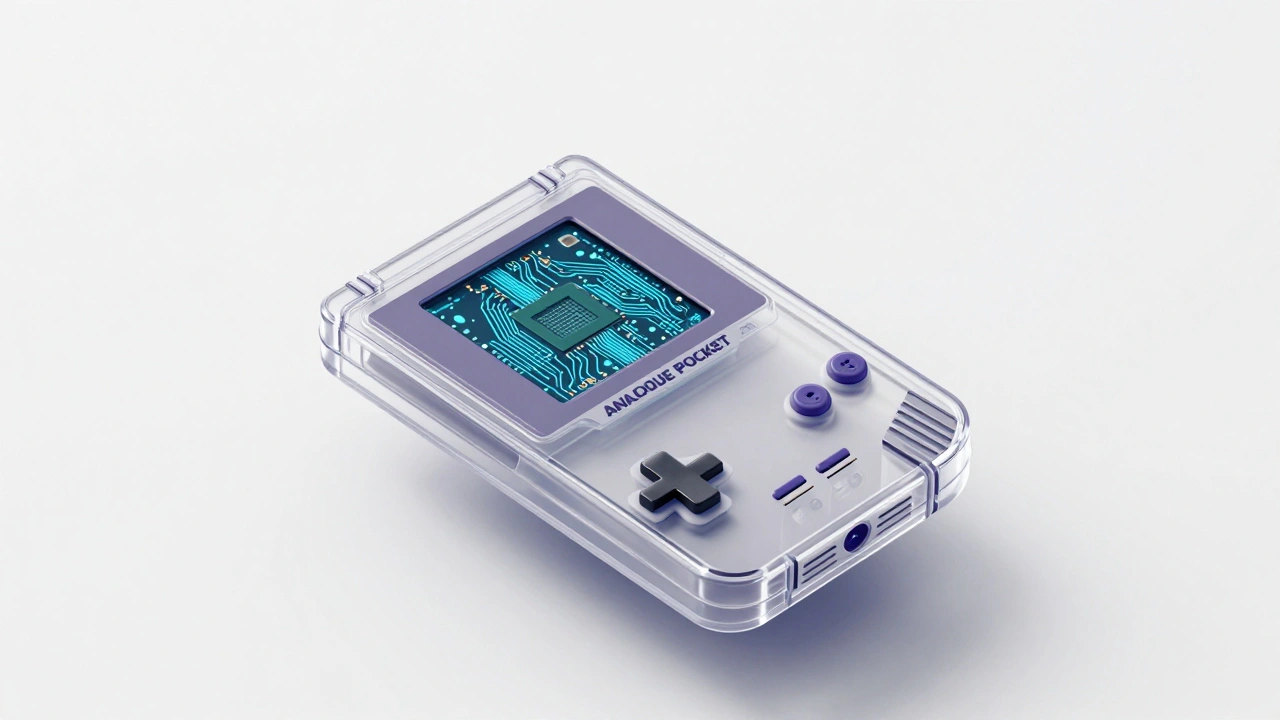
| Analogue Pocket | Custom FPGA | Handheld Cartridge Play | Plug-and-play fidelity; openFPGA framework | Limited to handheld consoles (GB, Lynx, etc.) |
| MiSTer FPGA | Intel Altera Cyclone V | Multi-system Arcade/Console | Broad compatibility; modifiable cores | Aging chip; requires add-on boards for RAM/I/O |
The Analogue Pocket, developed by Analogue Inc., represents the commercial peak of this tech. Its firmware version 1.1 introduced openFPGA, which is an open-source framework that allows third-party developers to create and share custom FPGA cores. This democratized core development. Developer Murray Aickin has released cores for Neo Geo, PC Engine CD, and Commodore Amiga. For students of hardware, the Pocket offers a clean, isolated environment to test how specific cartridges interact with the console's bus.
On the other hand, MiSTer FPGA utilizes the Cyclone V FPGA chip. While this chip is nearly a decade old by 2026, it remains powerful enough for many arcade and console systems. MiSTer is highly modular. Users often add boards for extra RAM, real-time clocks, and cooling. This modularity makes it excellent for experimental study. You can swap out components to see how increased memory bandwidth affects loading times in older games, providing a controlled experiment in hardware constraints.
Methodologies for Analyzing Hardware Behavior
Using FPGA cores isn't just about playing games; it's a research tool. Here are three key methodologies you can employ:
- Modular Component Isolation: FPGA cores break systems into modules: CPU, GPU, Sound, Memory. By implementing these separately, you can study how each component contributes to the whole. For instance, you can disconnect the audio module to see if its processing load impacts frame rates, a common issue in early console design.
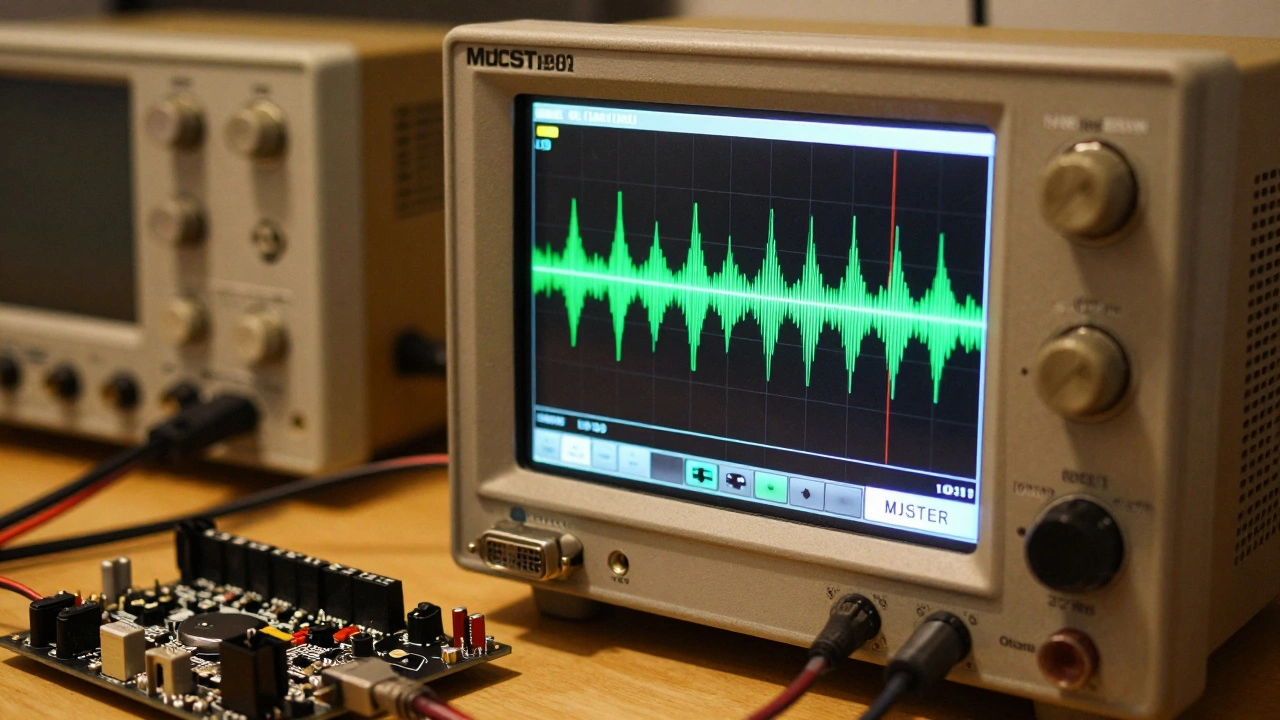
- Direct I/O Observation: Unlike software emulators that render frames to a screen buffer, FPGAs output raw VGA or HDMI signals. Connecting an FPGA board to an oscilloscope or a high-speed logic analyzer allows you to watch the actual video signal timing. You can measure horizontal sync pulses and color subcarrier frequencies directly, verifying if the core matches the NTSC or PAL standards precisely.
- Experimental Modification: Because you have access to the HDL code (in open-source projects), you can tweak parameters. What happens if you slow down the memory controller by 10 percent? Does the game crash? Does it introduce graphical glitches? This "what-if" analysis helps document the fragility and design choices of original engineers.
Challenges and Limitations
Despite their power, FPGA cores are not without hurdles. The primary barrier is technical complexity. Writing or modifying a core requires knowledge of digital logic, clock domains, and asynchronous interfaces-concepts most software developers never touch. The learning curve is steep.
Hardware limitations also exist. The MiSTer’s reliance on the Cyclone V chip means it struggles with more complex systems like PlayStation 2 or Xbox, which require significantly more logic resources and RAM bandwidth. Additionally, while FPGA cores eliminate software latency, they do consume power. A typical setup draws around 10 watts (5 volts at 2 amps), which is efficient compared to original arcade cabinets but still requires active cooling for sustained sessions.
Furthermore, "cycle-accuracy" is not always guaranteed across all community-made cores. Some developers optimize for performance over strict fidelity, resulting in cores that run faster than the original hardware. When studying behavior, you must verify the core’s documentation to ensure it prioritizes accuracy over speed.
Getting Started: Tools and Resources
If you want to start using FPGA cores for your own studies, you don’t need to buy expensive equipment immediately. Start with simulation. Download Vivado, which is Xilinx's free FPGA design software suite for simulation and synthesis. You can model simple circuits and verify FSM transitions without any hardware.
For physical experimentation, the Nexys 4 DDR is a cost-effective entry point. It supports basic VGA output and has enough logic cells for simple console cores. Join communities on GitHub and forums like the MiSTer subreddit. Open-source repositories provide existing cores that you can decompile and study. Look for comments in the Verilog code; experienced developers often leave notes explaining why certain timing hacks were necessary to make a core stable.
Conclusion
FPGA cores offer a unique bridge between past and present. They allow us to preserve not just the content of video games, but the very behavior of the machines that ran them. By bypassing the approximations of software emulation, you gain access to the raw truth of historical hardware. Whether you are debugging a rare glitch, analyzing timing constraints, or simply seeking the purest gaming experience, FPGA technology provides the tools to see the hardware as it truly was.
What is the difference between an FPGA core and a software emulator?
A software emulator translates old hardware instructions into new ones using a general-purpose CPU, which can introduce latency and timing errors. An FPGA core reconfigures the physical hardware to act exactly like the original circuit, providing cycle-accurate behavior with zero translation delay.
Do I need to know how to code to use FPGA cores?
No. Devices like the Analogue Pocket come pre-loaded with cores, requiring no coding knowledge. However, if you want to modify cores or study the underlying hardware behavior deeply, you will need familiarity with Hardware Description Languages like Verilog or VHDL.
Is the MiSTer FPGA system still relevant in 2026?
Yes, despite its aging Cyclone V chip, MiSTer remains the most versatile platform for multi-system FPGA emulation. Its large community continues to develop new cores and add-on boards, making it ideal for studying a wide range of arcade and console hardware.
Can FPGA cores run modern games like PlayStation 5?
Not currently. Modern consoles require vastly more processing power, memory bandwidth, and logic resources than current consumer-grade FPGAs can provide. FPGA cores are best suited for legacy systems up to the late 1990s and early 2000s.
What does "cycle-accurate" mean?
Cycle-accurate means the emulation reproduces every single clock cycle of the original hardware. This ensures that timing-sensitive behaviors, such as sound generation and graphics rendering, occur at the exact same moments as on the original device, eliminating timing drift found in software emulators.