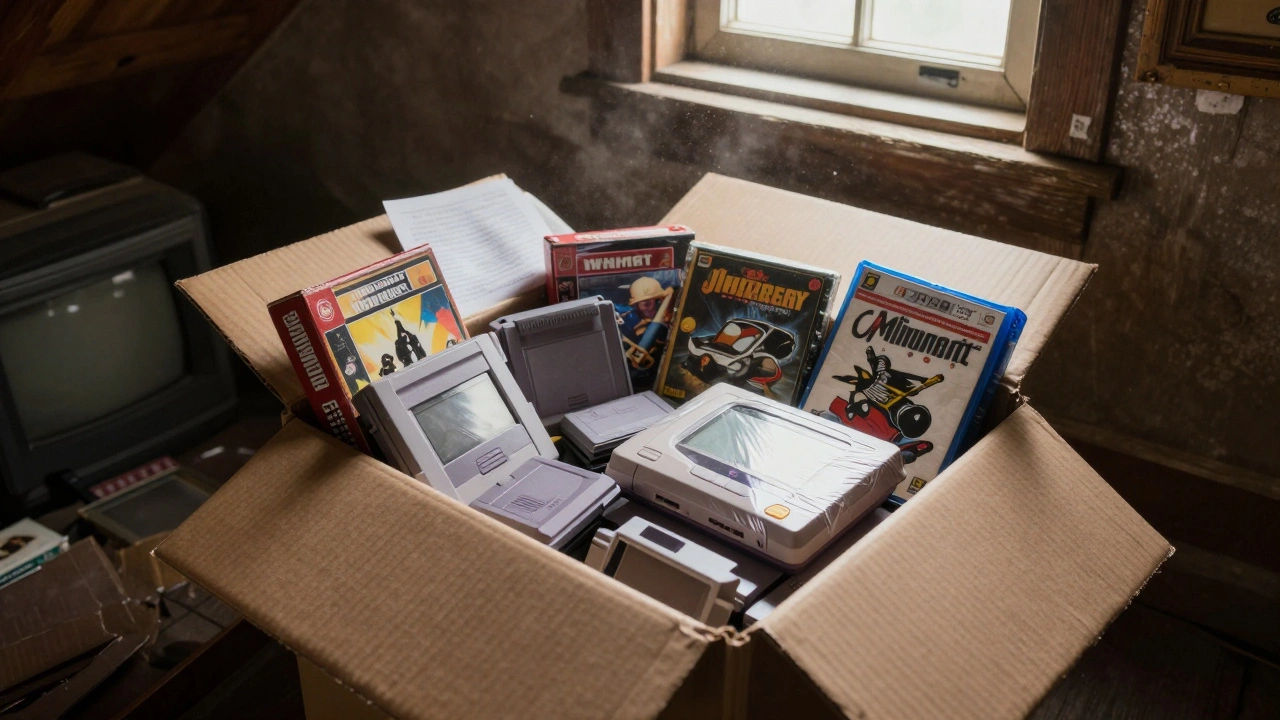
You've just stumbled upon a massive lot at a garage sale or found a dusty box in the attic. It's a dream haul: a console, a handful of controllers, and twenty games. But as you look closer, you realize it's a mess. One game is still factory sealed, three have the original boxes and manuals, and the rest are just loose cartridges. How do you actually put a price tag on something like this without guessing and losing money?
Valuing a video game console bundles with mixed completeness is a bit like solving a puzzle. You can't just use a flat average because the value of a single high-end item can outweigh ten common ones. To get an accurate number, you have to stop looking at the bundle as one unit and start treating it as a collection of individual assets with different "health" levels.
Understanding the Completeness Hierarchy
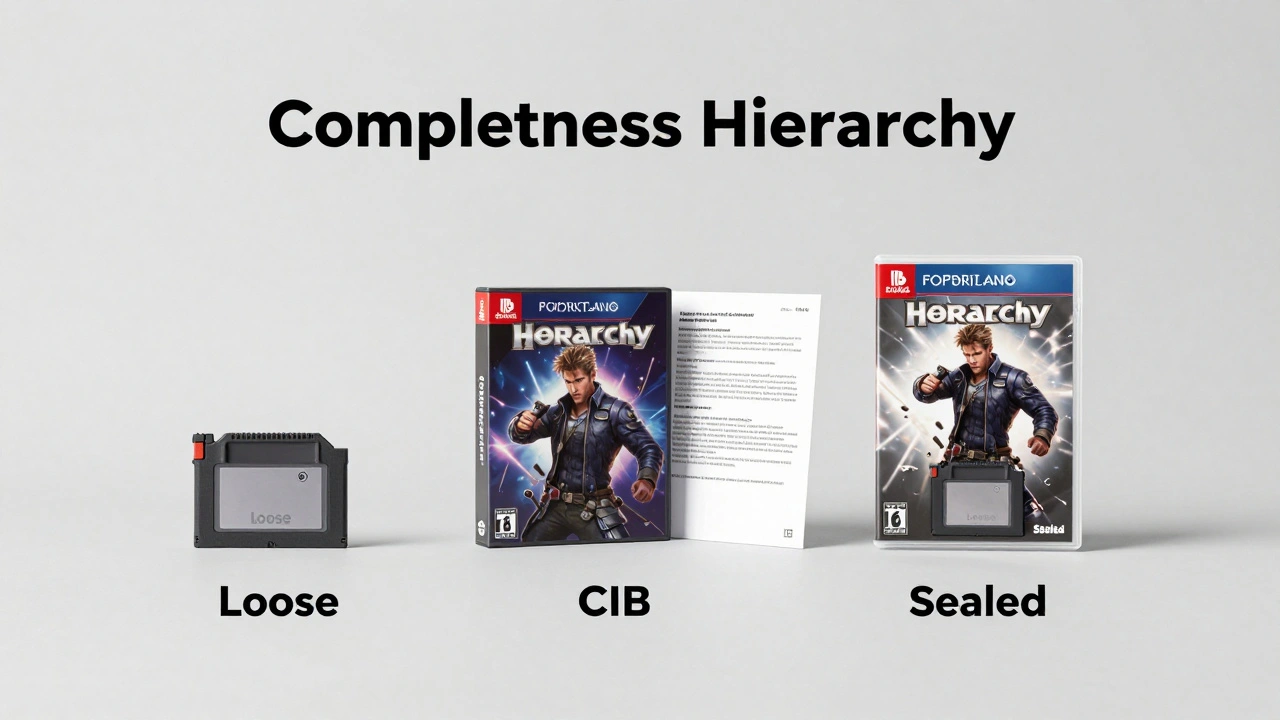
Before you start crunching numbers, you need to know the terminology. In the collecting world, "complete" doesn't just mean you have the game; it means you have everything that came in the box on launch day. This hierarchy drastically changes the price of any single item in your bundle.
Sealed is the gold standard, where the game is still in its original factory shrink-wrap. These are essentially time capsules and carry the highest premiums.
Complete-in-Box (CIB) is an opened game that still includes the original box, manual, and any inserts. These are highly desirable for collectors who want the full experience without the "museum" price of a sealed copy.
Loose is the cartridge or disc only, with no original packaging or documentation. This is the most common state for older games, and while still valuable, they typically sit at the baseline price.
The Math of Mixed Bundles
A common mistake is to see a bundle and think, "Half these games are CIB, so I'll just take the average of CIB and Loose prices." Don't do that. The market doesn't work on averages; it works on scarcity. A rare title in a sealed state might be worth 10 times what a loose copy is worth, while a common title's CIB price might only be 20% higher than its loose price.
Think of it this way: if you have a bundle with one rare sealed N64 game worth $400 and five common loose games worth $20 each, your total value is $500. The sealed game represents 80% of the bundle's value despite being only 16% of the item count. Always identify your "anchor" items-the high-value pieces-first, as they dictate the bulk of your pricing.
| Condition | Common Titles | Rare Titles | Value Driver |
|---|---|---|---|
| Loose | 1x (Baseline) | 1x (Baseline) | Gameplay/Utility |
| Complete-in-Box | 1.2x - 2x | 2x - 5x | Preservation/Aesthetics |
| Sealed | 1.5x - 3x | 5x - 10x+ | Investment/Rarity |
Step-by-Step Valuation Process
To avoid the headache of endless searching, follow this workflow to value your mixed-completeness lot efficiently:
- Inventory everything: List every console, cable, controller, and game title. Note the exact condition (Sealed, CIB, or Loose) for each.
- Check aggregated data: Use a tool like Game Value Now is a pricing aggregation tool that uses eBay metadata to provide aggregate values for games in various stages of completeness to get a quick baseline.
- Verify with "Sold" listings: Don't look at what people are *asking* for on eBay; look at what people actually *paid*. Go to eBay's "Completed Items" filter to see recent transaction prices for that specific condition.
- Consult a database: Cross-reference your findings with PriceCharting is a comprehensive database providing historical pricing data for video games and consoles organized by system and condition to ensure you aren't relying on a single outlier sale.
- Assess hardware health: A console that doesn't turn on is just a plastic box. Subtract value for yellowing plastic, missing battery covers, or non-functional ports.
The "Bundle Discount" Reality
If you are selling the bundle as a whole, you have to accept that you won't get 100% of the individual item values. Why? Because the buyer is taking a risk. They are buying a mixed bag, and they are doing you a favor by taking the common "filler" games off your hands so you don't have to sell 30 separate items.
Generally, a bundle discount of 5% to 15% is standard. If the individual pieces total $1,000, listing the bundle for $850 to $950 makes it attractive to a buyer while still netting you a significant profit. However, if you have a "grail" item (something incredibly rare), consider selling that separately and bundling the rest. High-end collectors often won't buy a sealed rarity if it's lumped in with a bunch of scratched-up common discs.
Common Pitfalls to Avoid
One big trap is the "box-only" illusion. Sometimes you'll see a game that looks CIB, but the manual is missing. In the strict world of collecting, a game without a manual is not "Complete." It's "Boxed," and it's worth significantly less than a truly CIB copy. Always check for the manual and any inserts like maps or registration cards.
Another mistake is ignoring regional differences. A bundle of Japanese imports might have different values than North American (NTSC-U) copies. If you're using a US-based pricing tool for a Japanese collection, your numbers will be off. Always verify the region of the software and hardware before assigning a value.
Should I clean the games before valuing them?
Be very careful. For loose cartridges, a gentle wipe with a cotton swab and isopropyl alcohol on the pins is fine. However, never use cleaning agents on the boxes or manuals of CIB items, as you could accidentally remove original ink or damage the cardboard, which would instantly drop the item from "CIB" to a lower condition grade.
What if I can't find a "Sold" listing for a specific mixed-condition item?
This is where interpolation comes in. Look at the price of a loose copy and a CIB copy of a similar title from the same era and developer. If the CIB version usually sells for 2x the loose price for that genre, apply that same multiplier to your rare title to get a ballpark estimate.
Does the console's original box add much value to a bundle?
Yes, significantly. While a loose console has a steady value, an original console box-especially if it's in good condition-can sometimes be worth as much as the console itself for certain systems. Always list the console box as a separate high-value entity in your valuation.
Is it better to sell the bundle or split it up?
If you have the time, splitting is almost always more profitable. You can sell the sealed and CIB items to collectors and the loose items to gamers. Only bundle if you want a quick sale or if the "filler" games are so common that they wouldn't sell individually for more than a few dollars.
How do I handle games that are "almost" complete?
If a game has the box but is missing the manual, it's generally valued somewhere between "Loose" and "CIB." A good rule of thumb is to value it at about 60-70% of the CIB price, depending on the rarity of the manual itself.
Next Steps for Sellers and Buyers
For Sellers: Once you have your total value, decide on your "bottom line." If you're listing on a local platform like Facebook Marketplace, expect lower offers because there's no shipping. If you're using eBay, factor in the seller fees and shipping costs before setting your final price.
For Buyers: When you see a "mixed completeness" bundle, look for the holes. Are the boxes crushed? Are the manuals missing? If a seller claims a bundle is "mostly complete," ask for photos of the manuals. That's where most sellers misrepresent the condition, and it's your best leverage for negotiating a lower price.