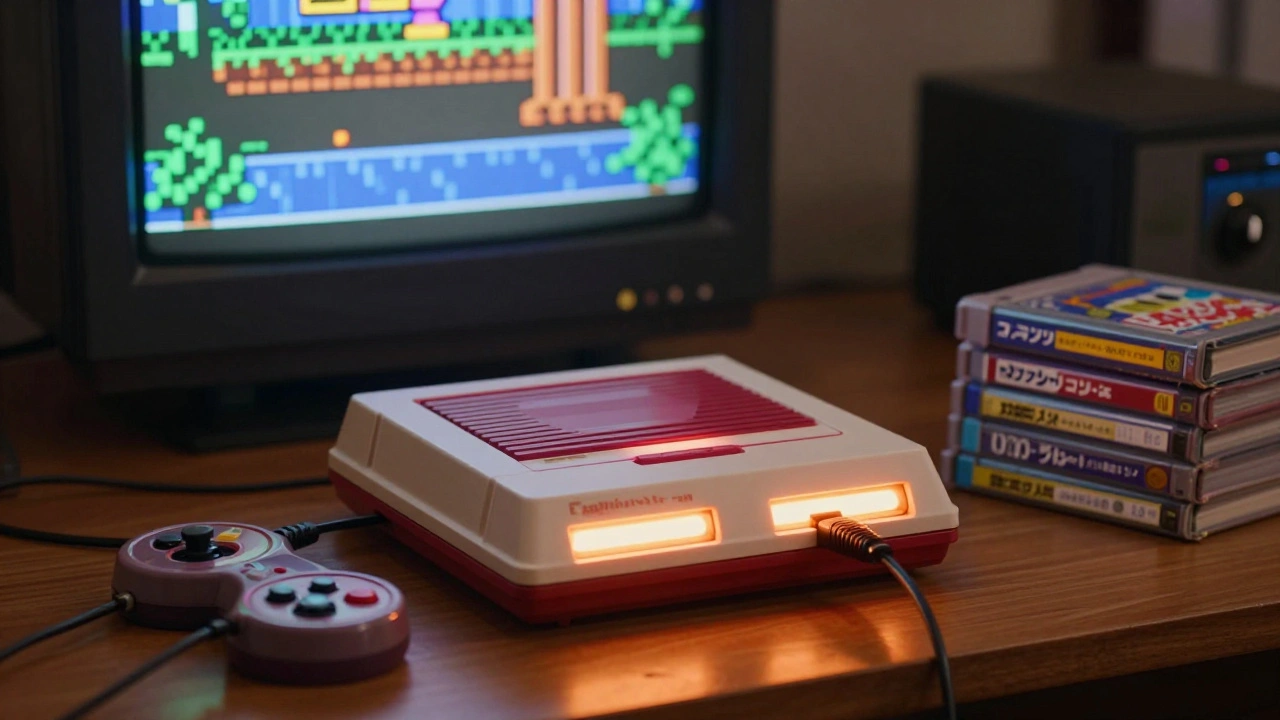
Back in the 1980s and early 90s, Japan didn’t just make video games - it made them differently. While North America and Europe got the NES and SNES, Japan had its own versions: the Famicom, the Super Famicom, and the mysterious PC-98. These weren’t just regional variants. They were distinct machines with unique games, hardware quirks, and cultural weight. Today, importing them isn’t just about nostalgia - it’s about accessing games that never left Japan, and experiencing a side of gaming history most people never saw.
Why Japanese Imports Matter
If you grew up playing Super Mario Bros. on an NES, you missed half the story. The Famicom, released in Japan in 1983, had a different cartridge shape, a different color scheme (red and white instead of gray), and a handful of games that never made it overseas. Games like Dragon Quest III, Super Mario Bros. 2 (the real one), and Final Fantasy were exclusive to Japan for years. The Super Famicom followed the same pattern - dozens of titles, from Chrono Trigger to EarthBound, were never officially released in North America until much later, if at all. Then there’s the PC-98. Not a console at all, but a line of Japanese personal computers that became the backbone of Japan’s PC gaming scene. While the West was stuck with MS-DOS and early Windows, Japan’s PC-98 ran its own OS, used unique graphics and sound hardware, and became the home for visual novels, strategy games, and early RPGs. Games like Ys, Langrisser, and Shin Megami Tensei were built for PC-98 first. Without importing, you’d never play them in their original form.Famicom: The Original Japanese Console
The Famicom (short for Family Computer) launched in 1983 with a price tag of ¥15,000. It had a 1.79 MHz Ricoh 2A03 CPU, 2 KB of RAM, and 8 KB of video memory. The cartridges were smaller than the NES versions, with a 15-pin connector. Unlike the NES, the Famicom came with two wired controllers built into the front - no separate add-ons needed. The system sold over 10 million units in Japan alone. One of the biggest reasons to import a Famicom today is for the game library. Japan got Metroid in 1986, but the U.S. version had a different title screen and no save feature. Castlevania was harder on the Famicom, with different enemy placements and no continues. And then there’s Dragon Quest III, the first game in the series to feature a class system - it didn’t come to the West until 1992 as Dragon Warrior III, and even then, it was heavily edited. Famicom games are cheaper to import than you think. A common title like Super Mario Bros. 3 (Japan version) sells for ¥1,500-¥3,000 ($10-$20) in Japan. Rare ones, like Stadium Events (a fitness game with a peripheral), can hit ¥100,000. But most are still under ¥5,000. You’ll need a converter to play them on modern TVs, but they’re easy to find online - and they’re more durable than their NES cousins.Super Famicom: The Peak of 16-Bit Japan
Released on November 21, 1990, the Super Famicom was Japan’s answer to the Sega Genesis. It had a 3.58 MHz CPU, 128 KB of RAM, and a custom graphics processor that could display over 32,000 colors at once. The system had a better sound chip than the SNES - the S-SMP - which gave Japanese games richer audio. The controller was ergonomically designed, with a more comfortable grip and four shoulder buttons (ZL and ZR equivalents). The library is where the Super Famicom shines. Japan got Chrono Trigger in 1995 - a game that took 3 years to come to the U.S. as a SNES title. EarthBound (known as Mother 2) was only ever released in Japan and North America - never in Europe. Secret of Mana had different difficulty settings and a longer story in the Japanese version. And then there are the exclusives: Fire Emblem: Shadow Dragon and the Blade of Light, Langrisser I, Super Mario RPG (which had a longer intro cutscene), and Shin Megami Tensei - all of which were Japan-only until fan translations appeared. Importing a Super Famicom today means you’re getting a console that’s still more powerful than most modern retro consoles. The hardware is solid - many units still work perfectly. You can find them on Yahoo Auctions or from Japanese resellers for ¥5,000-¥15,000 ($35-$100). Don’t forget to get a region converter or a modded TV. Original games range from ¥2,000 for common titles to ¥20,000+ for sealed copies of Super Mario RPG or Super Mario All-Stars (Japan version).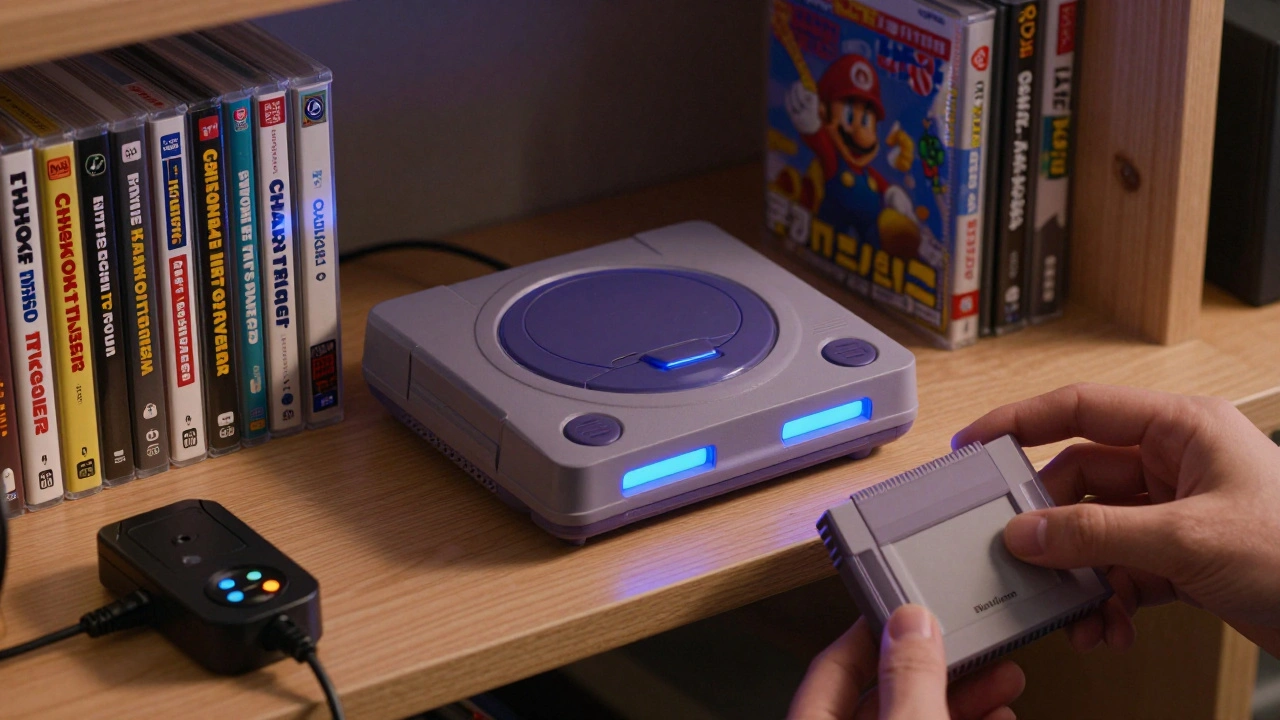
PC-98: Japan’s Secret Gaming Machine
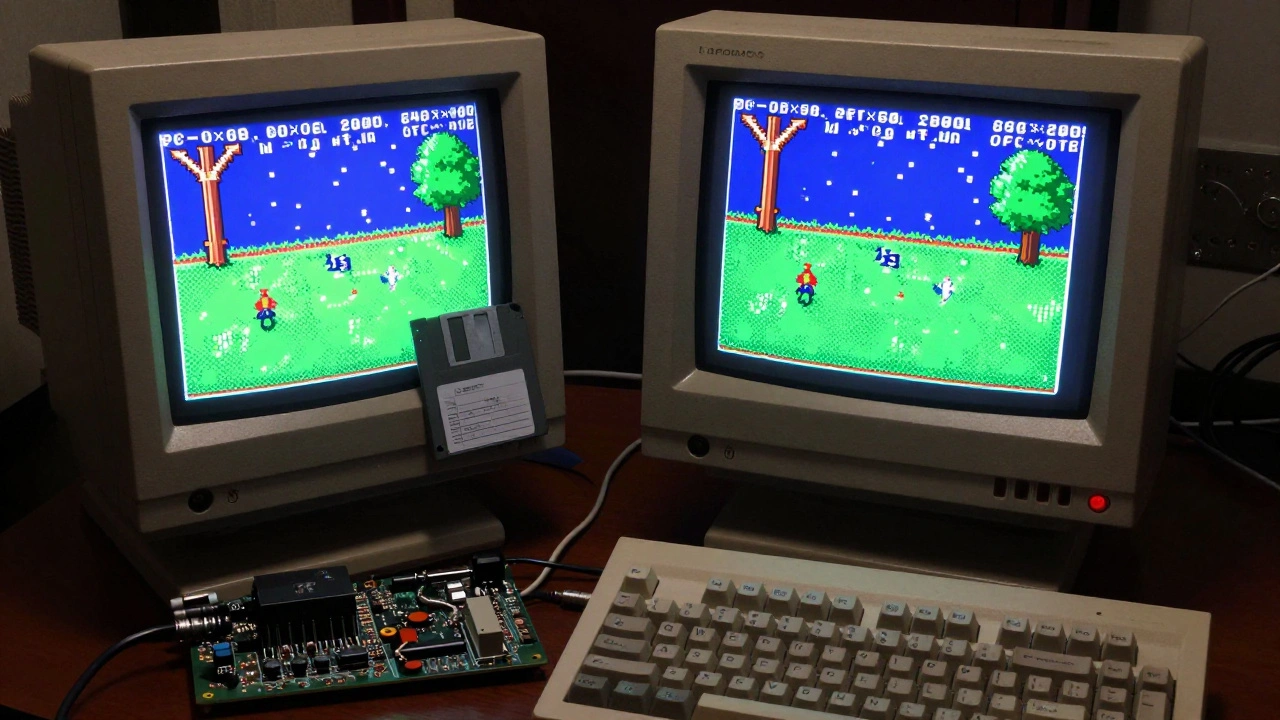
The PC-98 wasn’t a console. It was a computer - but in Japan, it was the primary way people played games in the 1980s and early 90s. Made by NEC, the PC-9801 series ran on its own architecture, with custom graphics modes (640x400), 16-color palettes, and a unique sound chip called the YM2203. It didn’t use MS-DOS like Western PCs - it used a Japanese-specific OS called PC-9801 DOS/V. Why does this matter? Because games were built for this hardware. Ys I & II ran on PC-98 with full voice acting and custom music. Langrisser I was designed for its 640x400 screen. Shin Megami Tensei had branching dialogue trees and multiple endings that were lost in later ports. Even today, PC-98 emulators like Neko Project II are the only way to play these games as intended. Finding PC-98 hardware is harder than finding a Famicom. Original machines are rare. But you don’t need one. Emulation works beautifully. You can download ROMs of games like Ys or Langrisser and play them on a modern PC. The real challenge? Finding the games. Many were sold on 3.5-inch floppy disks, and some titles were only released as limited editions. A single disk can cost ¥5,000-¥15,000 on Japanese auction sites. Some games, like Shin Megami Tensei: If…, have never been officially translated.How to Import: Tools, Tips, and Pitfalls
Importing isn’t just about buying. It’s about making it work.- Power: Japanese consoles run on 100V. Use a voltage converter if you’re outside Japan - or better yet, replace the power supply with a universal one. Many modern modders do this.
- Video: Famicom and Super Famicom output RF or composite. You’ll need an RF modulator or an AV converter. For the best quality, use an upscaler like the RetroTINK 5X.
- Games: Check for region locks. The Famicom doesn’t have one - you can plug any cartridge in. The Super Famicom does, but a simple mod (or a pass-through device) fixes it.
- Language: Most games are in Japanese. Use fan translations - sites like Romhacking.net have patches for over 200 titles.
- Shipping: Don’t buy from random eBay sellers. Use Japanese auction houses like Yahoo Auctions Japan or Mandarake. They ship internationally and guarantee authenticity.
Market Today: Prices, Collectors, and the New Wave
The market for Japanese retro games has changed. In the early 2000s, you could buy a sealed copy of Super Mario RPG for ¥5,000. Today, it sells for ¥80,000. Why? Because overseas collectors - mostly in the U.S., Europe, and China - are bidding aggressively. Japanese sellers now list games on Yahoo Auctions with English descriptions and international shipping. The PC-98 scene is quieter but growing. Emulation has made it accessible. Fan translations are now mainstream. A community of Japanese gamers is digitizing old floppy disks and uploading them to archives. The PC-98 isn’t dead - it’s being revived. Prices for Famicom games have stabilized. Common titles stay under ¥3,000. Rare ones - like Dragon Quest I (1986) with the original box - can hit ¥50,000. Super Famicom games are more volatile. EarthBound (Japan version) with box and manual? Around ¥120,000. But if you’re okay with used cartridges, you can build a full library for under ¥100,000.What You’re Missing
If you’ve only played the Western versions of these games, you’ve missed the original vision. The Famicom’s Castlevania had no continues - you had to beat it in one go. The Super Famicom’s Chrono Trigger had a longer intro, a different ending, and voice clips in the cutscenes. The PC-98’s Ys had a haunting soundtrack that was stripped from later ports. Importing isn’t about nostalgia. It’s about authenticity. These systems weren’t just hardware - they were cultural artifacts. They reflected Japan’s unique relationship with gaming: experimental, unfiltered, and deeply personal. Start small. Buy one Famicom game - Dragon Quest III or Super Mario Bros. 3. Find a Super Famicom emulator and try EarthBound in Japanese. Download a PC-98 ROM and play Ys with the original music. You’ll realize something: the games you thought you knew? They were never the same.Can I play Japanese Famicom games on a modern TV?
Yes, but you’ll need a converter. Famicom outputs RF or composite video. Use an RF-to-HDMI converter or a retro upscaler like the RetroTINK 5X. For best results, mod the console to output RGB, which gives cleaner, sharper video.
Are Japanese Super Famicom games compatible with North American SNES consoles?
No. The cartridges have different shapes and pin layouts. You need a region converter or a modded SNES. Some people use a simple adapter that flips the pins, but the safest option is to use a Japanese Super Famicom with a modern TV.
Where can I buy authentic Japanese retro games?
Yahoo Auctions Japan, Mandarake, and Hard Off are the most reliable sources. They ship internationally and authenticate items. Avoid eBay sellers who don’t show original packaging or have vague descriptions. Look for listings with Japanese text and clear photos of the cartridge, box, and manual.
Is PC-98 emulation legal?
Emulation itself isn’t illegal. But downloading ROMs of games you don’t own violates copyright. If you own an original PC-98 game disk, backing it up for personal use is generally accepted. Many fan translators host patches legally, so you can play the original game with an English patch.
Why are Japanese retro games so expensive now?
Because global demand has exploded. Collectors from the U.S., Europe, and China are bidding against each other on auction sites. Japanese domestic buyers aren’t willing to pay high prices anymore - but overseas buyers are. This has driven prices up, especially for sealed or rare titles like Super Mario RPG or Dragon Quest I.