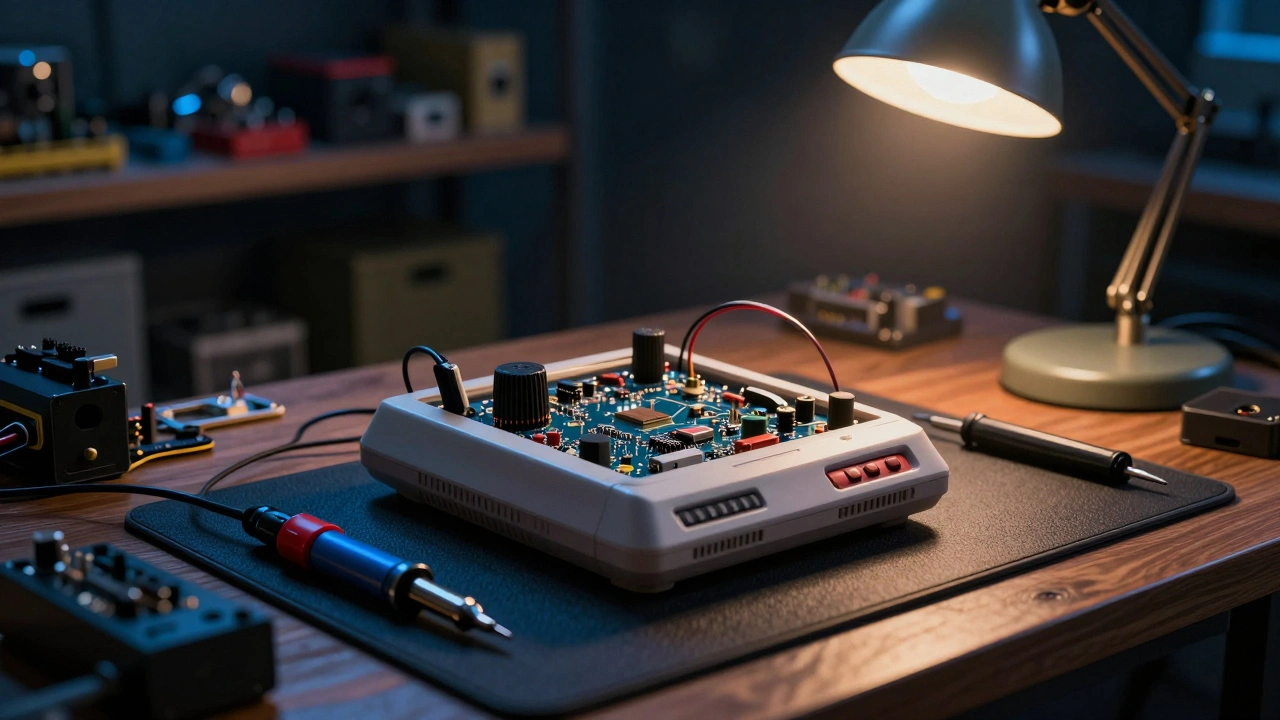
You see the listing on eBay or Facebook Marketplace: a retro handheld with a new screen, extra storage, and a custom operating system. It looks like an easy profit if you buy used units, tweak them, and resell them. But before you pack that first box, stop. The intersection of selling modded video game consoles and federal law is not just gray-it’s black and white, and it could land you in serious legal trouble.
Many hobbyists believe that because they own the physical device, they can do whatever they want with it. That logic holds up for your personal garage project. It collapses completely when money changes hands. Under U.S. law, commercializing modifications to digital entertainment devices triggers a cascade of liabilities involving the Digital Millennium Copyright Act (DMCA), patent infringement, trademark dilution, and product safety regulations. This isn’t about corporate greed; it’s about specific statutory protections that console manufacturers have successfully enforced against individuals.
The First Sale Doctrine and Patent Exhaustion Limits
When you buy a legitimate copy of a console, say a Nintendo Switch or a PlayStation 5, you acquire the right to resell that specific unit. This is known as the first sale doctrine. In patent law terms, this is called patent exhaustion. Once the manufacturer sells the item, their control over that specific object ends regarding basic use and resale.
However, this protection has hard boundaries. The law distinguishes between "repair" and "reconstruction." If you replace a broken battery or fix a cracked screen, you are repairing. You are substituting unpatented parts one at a time. But if you add significant new features-like integrating a portable monitor, installing a secondary battery pack, or adding internal storage expansion-you may cross the line into creating a "whole new device."
If your modification creates a new device that infringes on active patents held by the manufacturer, the first sale doctrine does not protect you. For older hardware like the Nintendo 64, many original patents have expired. But for modern systems, or even retro-modded devices using recent technology components, active patents often cover battery integration, display interfaces, and wireless protocols. Selling these modified units without analyzing the patent landscape exposes you to direct infringement claims.
DMCA Section 1201: The Commercial Trap
This is where most sellers get caught. The Digital Millennium Copyright Act (DMCA) contains anti-circumvention provisions in Section 1201. These laws make it illegal to bypass digital rights management (DRM) systems. Crucially, the law treats personal use differently from commercial use.
If you modify your own console to play homebrew software or backup copies of games you own, you might fall under certain exemptions or face only civil penalties. But if you sell that console, you are acting for "commercial advantage or private financial gain." Under Section 1204(a), willful circumvention for commercial purposes carries criminal penalties. This includes fines and potentially prison time.
A pivotal case in 2009 highlighted this danger. A student modified consoles to allow backup copying-a practice generally considered legal for personal use. However, because he charged money for the service, he faced potential ten-year prison sentences. The court ruled that intent to enable piracy was irrelevant; the act of circumventing DRM for profit was enough to trigger criminal liability. This means that even if your customers promise never to pirate games, selling the modified hardware itself is a federal offense.
Trademark Infringement and Palming Off
Even if you avoid copyright and patent issues, trademark law poses a significant risk. When you sell a heavily modified console but leave the original manufacturer’s logo intact, you are engaging in what lawyers call "palming off." This occurs when a seller passes off their goods as those of the original equipment manufacturer (OEM).
Consumers expect a standard level of quality and authenticity when they see the official brand logo. If your modification causes the device to malfunction, overheat, or behave unexpectedly, the customer blames the brand, not you. By leaving the logo on a non-standard device, you create consumer confusion and damage the brand’s reputation. This constitutes trademark infringement.
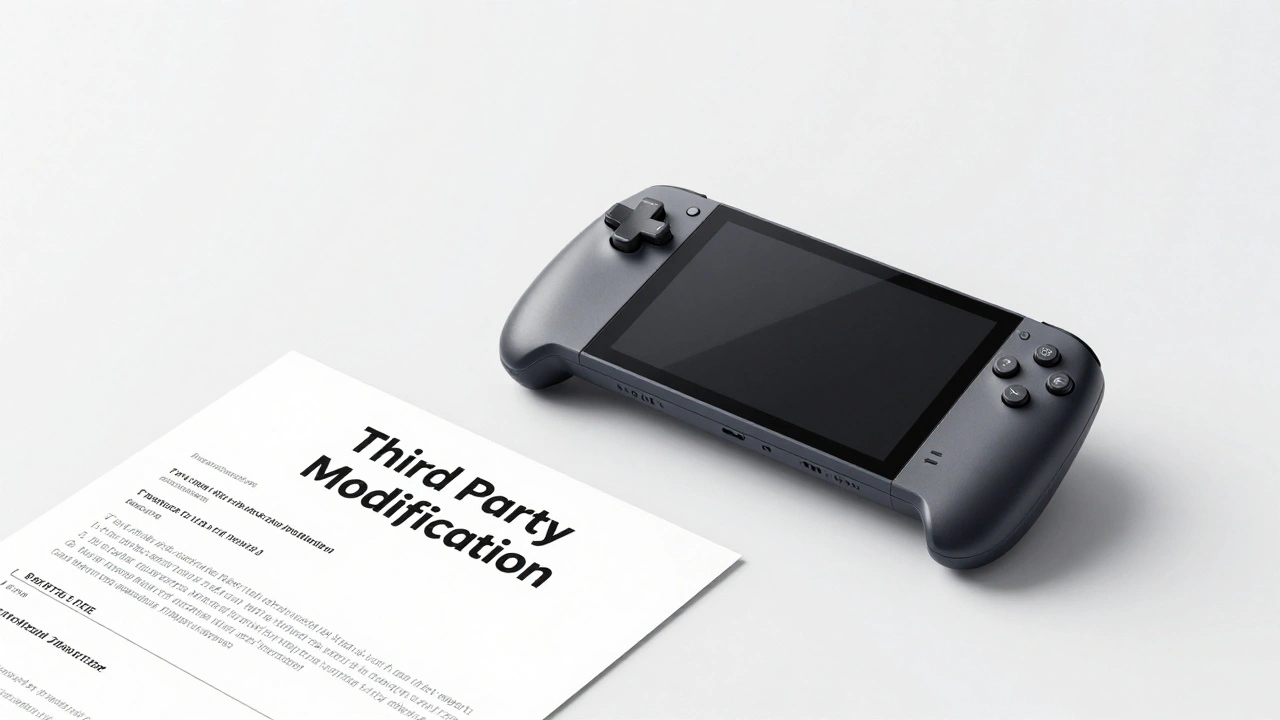
To mitigate this, you must clearly distinguish your product from the OEM. This involves removing original branding or adding prominent labels stating that the device is modified by a third party. Your advertising must also be careful. Saying "Officially Licensed Nintendo Modification" is false and illegal. Saying "Compatible with Nintendo Switch" or "Modded Unit - Third Party Hardware" is factual and safer, though still risky depending on execution.
Product Liability and Safety Certifications
Original consoles come with safety certifications from bodies like Underwriters Laboratories (UL). These certifications guarantee that the device meets strict electrical and fire safety standards. When you open the casing and add wires, batteries, or screens, you void those certifications.
Selling an uncertified electronic device creates massive product liability exposure. If your modified console catches fire, damages a user’s TV, or causes injury, you are personally liable. Standard business insurance policies often exclude coverage for modified electronics sold without proper re-certification. Re-testing every unit to meet current safety standards is prohibitively expensive for small operations, leaving most sellers uninsured and exposed.
| Modification Type | Primary Legal Risk | Severity | Mitigation Strategy |
|---|---|---|---|
| Hardware Circumvention (Mod-Chips) | DMCA Criminal Penalties | Extreme (Federal Crime) | Do Not Sell |
| Software-Only (Softmodding) | Copyright Infringement | High (Civil/Criminal) | Avoid Commercial Sale |
| Cosmetic/Additive (Screens/Batteries) | Patent Infringement / Trademark | Moderate | IP Clearance & Clear Labeling |
| Repair Services | Product Liability | Low-Moderate | Insurance & Waivers |
Best Practices for Minimizing Legal Exposure
If you are determined to enter this market, you must treat it like a regulated industry, not a hobby. Here are the steps to reduce your risk profile:
- Consult Intellectual Property Counsel: Before buying inventory, hire an IP attorney to conduct clearance analyses. They can check for active patents related to your specific modifications.
- Avoid DRM Circumvention: Do not sell devices that require breaking encryption or security locks to function. Focus purely on additive hardware like screens, controllers, or storage that does not interfere with the console’s security architecture.
- Clear Branding: Remove all original manufacturer logos. Replace them with your own brand name. Include disclaimers such as "Not affiliated with [Manufacturer]" on all packaging and listings.
- Re-Certify or Insure: Attempt to get UL certification for your specific build. If that is impossible, obtain product liability insurance that explicitly covers modified electronics. Verify this coverage in writing.
- Seek Licensing: The safest path is to approach the manufacturer directly. Some companies offer licensing programs for accessory makers. While difficult, this provides legal immunity.
The Enforcement Reality
Online forums often suggest that individual sellers fly under the radar. Anecdotal evidence shows few jail sentences for small-scale operators. However, enforcement patterns shift. Federal agencies focus on large-scale distributors, but they also issue takedowns on platforms like eBay and Amazon. These platforms ban accounts selling modded consoles to avoid their own liability.
Relying on enforcement gaps is a dangerous business strategy. One lawsuit can bankrupt a small operation. The goal is not to find loopholes, but to operate within the bounds of repair and additive innovation without infringing on core intellectual property rights.
Is it illegal to sell a modded Nintendo Switch?
Yes, it can be illegal. If the modification involves circumventing the console's digital rights management (DRM) to run unauthorized software, selling it for profit violates the DMCA Section 1201, which carries criminal penalties. Even if the modification is purely cosmetic, you risk patent and trademark infringement if you do not have proper licensing or clearances.
What is the difference between softmodding and hardmodding legally?
Hardmodding usually involves installing physical chips (mod-chips) to bypass security, which is a direct violation of anti-circumvention laws. Softmodding uses software exploits. While softmodding avoids some hardware circumvention issues, it still often infringes on copyright laws regarding derivative works and DRM bypass. Both carry high risks when sold commercially.
Can I sell a repaired console with a new battery?
Generally, yes, if it is a true repair. Replacing a defective part with an equivalent one falls under the first sale doctrine and permissible repair. However, if you add a larger battery or integrate a new power system that wasn't in the original design, you may be creating a new device subject to patent laws.
Why do marketplaces like eBay ban modded consoles?
Marketplaces ban these items to limit their own liability. Selling modded consoles is associated with piracy and copyright infringement. By prohibiting these sales, platforms protect themselves from lawsuits by console manufacturers and maintain compliance with digital millennium copyright act guidelines.
How do I avoid trademark infringement when selling mods?
You must remove all original manufacturer branding from the device. Use your own brand name. Clearly state in your marketing that the product is a third-party modification and is not affiliated with, endorsed by, or licensed by the original manufacturer. Never imply official association.