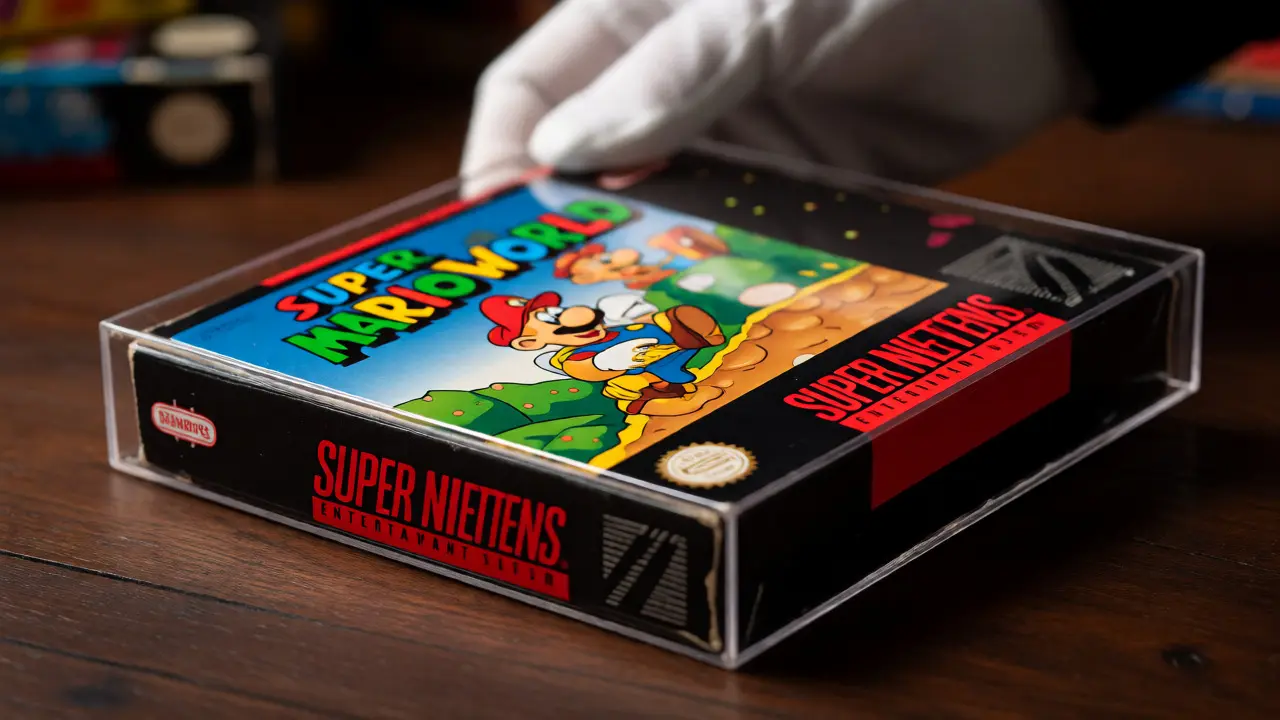
You just scored a complete-in-box Super Mario World for the Super Nintendo Entertainment System (SNES). The box is crisp, the manual is intact, and the cartridge feels heavy with history. But here is the hard truth: if you shove it on a shelf in your garage or stack it under a pile of other games, you are actively killing it. Cardboard degrades, plastic warps, and ink fades. If you want that $200 find to be worth $500 in ten years, you need proper archival storage.
This isn’t about being obsessive. It’s about chemistry. Retro games from the 1980s and 90s were made with materials that age poorly without intervention. Paper yellows, glue dries out, and plasticizers migrate. Whether you have a single rare title or a wall of 50 cartridges, understanding how to store them correctly separates casual players from serious collectors. Let’s break down exactly how to keep your NES and SNES boxes looking new.
Why Standard Shelves Fail Retro Collectors
Most people treat video games like books. They stand them upright on a bookshelf or lay them flat in stacks. For modern media, this might be fine. For vintage cardboard, it’s a disaster waiting to happen. The primary enemy is lignin a complex organic polymer found in wood pulp paper. Most NES and SNES boxes from the late 80s and early 90s used cheaper, acidic paper stock rich in lignin. Over time, exposure to light and oxygen causes this material to oxidize, turning yellow-brown and making the cardboard brittle.
Then there is physical stress. Stacking boxes puts weight on the bottom spines, causing creases and crushing corners. Standing them too tightly on a shelf rubs the artwork against neighboring boxes, wearing away the gloss finish. Humidity swings cause the cardboard to expand and contract, leading to delamination where the printed outer layer peels off the inner corrugated board. If you live in a place like Portland, Oregon, where humidity fluctuates seasonally, this risk doubles. Your goal is stability: stable temperature, stable humidity, and zero physical pressure.
The Gold Standard: Archival Materials Explained
To stop the decay, you need to create a microenvironment around each game. This means using specific materials that do not react with the paper or plastic. Avoid anything labeled "acid-free" without further qualification, as some cheap products still off-gas volatile compounds. You want true archival quality.
The core component is the polypropylene sleeve a clear, inert plastic protective cover designed for media cases. Unlike PVC (polyvinyl chloride), which releases hydrochloric acid as it ages and can stick to game cases, polypropylene is chemically stable. Look for sleeves marked "non-PVC" or "PP." These protect the outer box art from scratches and UV damage while allowing you to see the cover.
For the interior, especially if the manual is loose or the cardboard insert is fragile, use Mylar bags boPET film pouches that provide a moisture barrier and resist tearing. Mylar is significantly more durable than standard polyethylene bags and doesn't stretch or tear easily. It also has high clarity, so you can read manuals without removing them. Always ensure the bag is larger than the item to prevent tension on the paper edges.
| Material | Chemical Stability | Best Use Case | Risk Factor |
|---|---|---|---|
| Polypropylene (PP) | High (Inert) | Outer box protection | Low; safe for long-term |
| Mylar (BoPET) | Very High | Manuals, inserts, cards | Low; excellent barrier |
| PVC Vinyl | Low (Acidic) | Avoid entirely | High; causes yellowing/sticking |
| Standard Poly Bag | Medium | Short-term dust cover | Medium; tears easily, low clarity |
| Acid-Free Tissue | High | Cushioning inside box | Low; prevents abrasion |
Step-by-Step Preparation Process
Before you buy a single sleeve, you need to prep the game itself. Never put a dirty or damp game into an archival sleeve. Trapped moisture or dirt will accelerate mold growth and staining from the inside out.
- Inspect and Clean: Check for existing mold, water damage, or sticky residue. Use a soft, dry brush to remove dust from the box spine and edges. For smudges on the glossy cover, use a barely damp microfiber cloth. Never use household cleaners like Windex, which contain ammonia and alcohol that strip finishes.
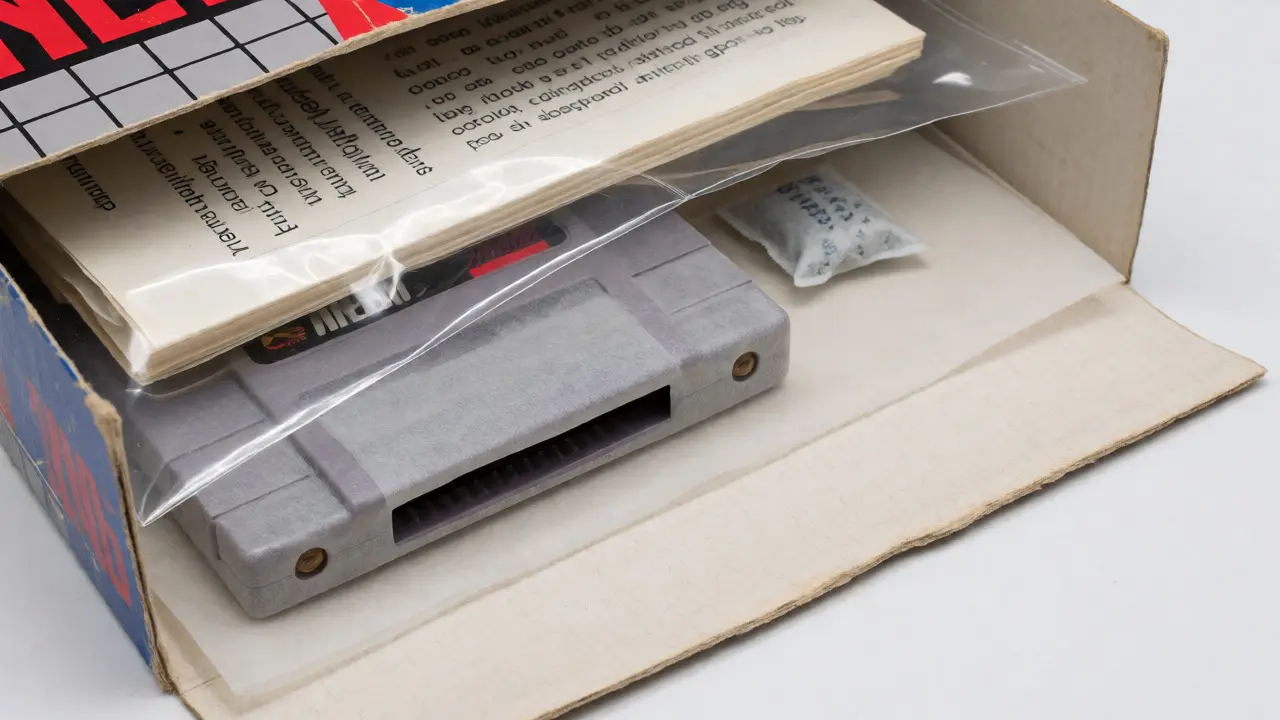
- Protect Internals: Place the instruction manual, warranty card, and any promotional flyers into individual Mylar bags. Seal these bags carefully. If the box contains a plastic insert or tray, wrap it in acid-free tissue paper to prevent it from rubbing against the cardboard walls.
- Sleeve the Box: Slide the entire boxed game into a polypropylene sleeve. Ensure the sleeve is the correct size-too tight and it strains the box corners; too loose and it shifts around. Tape the opening of the sleeve with archival-quality tape (like linen tape) if necessary, but avoid adhesive touching the game box directly.
- Stabilize the Cartridge: While the box protects the exterior, the cartridge needs its own care. Remove the battery-backed save batteries if they show signs of leakage (green corrosion). Wrap the cartridge in anti-static bubble wrap or place it in a dedicated hard shell case before putting it back in the box.
Storage Environment: Temperature and Humidity
You can have the best sleeves in the world, but if you store your collection in an attic during a Portland summer, you’re wasting your money. Heat accelerates chemical reactions. For every 18°F (10°C) increase in temperature, the rate of paper degradation roughly doubles. Ideal storage temperature is between 60°F and 70°F (15°C-21°C).
Humidity is equally critical. Relative humidity (RH) should stay between 30% and 50%. Below 30%, cardboard becomes brittle and cracks. Above 50%, mold spores activate and paper begins to warp. In humid climates, consider using silica gel packets inside your storage bins. Replace them regularly when they change color (indicating saturation). Do not use clay-based desiccants, as they can be messy and less effective at maintaining stable RH levels.
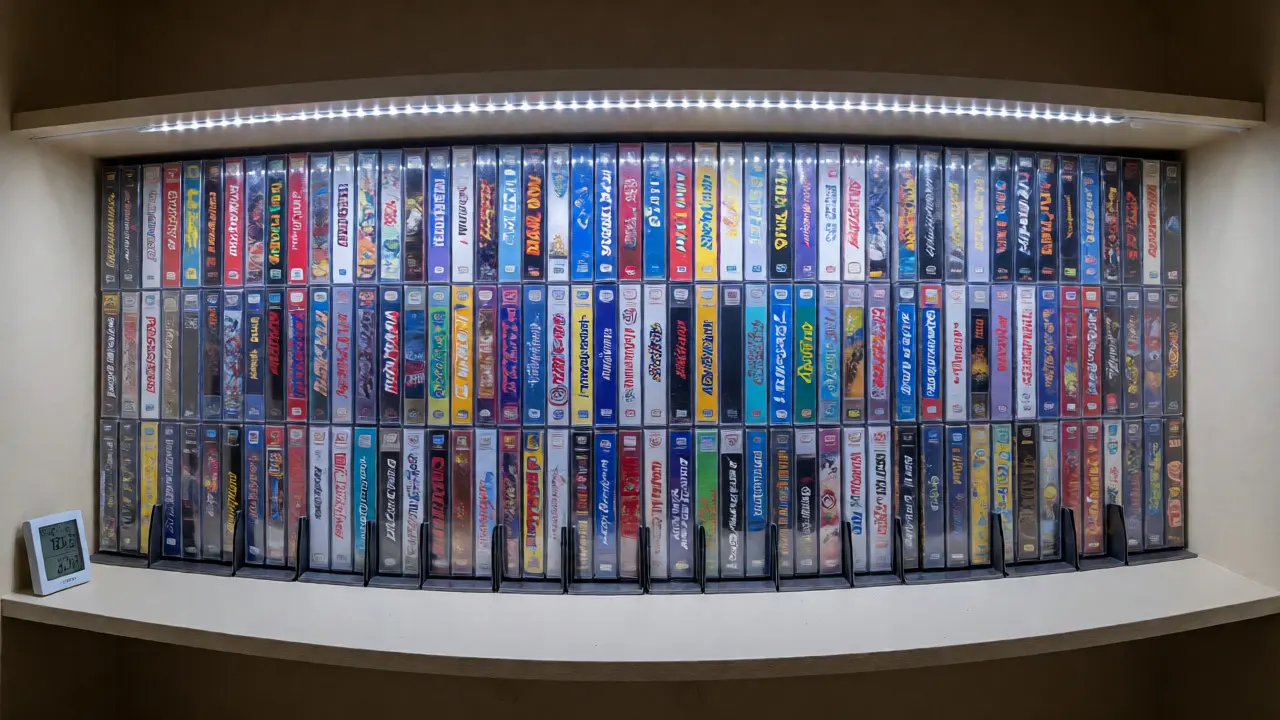
Light exposure is another silent killer. Ultraviolet (UV) rays break down dye bonds in printing inks, causing colors to fade. Keep your collection out of direct sunlight. If you display games on open shelves, install UV-filtering films on nearby windows or use LED lighting with a low UV output. Incandescent bulbs emit heat, which can raise local temperatures near the top shelves, so LEDs are superior for display cases.
Physical Organization Strategies
How you arrange the boxes matters as much as what surrounds them. There are two main approaches: vertical standing and horizontal stacking. Each has pros and cons depending on your space and volume.
Vertical Standing: This mimics a library setup. Boxes stand upright, side by side. To prevent slumping, use metal bookends or archival dividers. Ensure the shelf depth matches the box depth so the front doesn’t hang over unsupported. This method allows easy access and viewing but requires strict alignment to prevent tipping.
Horizontal Stacking: Lay boxes flat on their backs. This is safer for very large or irregularly shaped boxes (like some multi-game bundles). However, limit stacks to no more than three or four boxes high. Weight compresses the bottom box, potentially denting corners or cracking the spine. Place heavier items at the bottom and lighter ones on top. Never mix different sizes in a way that leaves gaps, as smaller boxes can shift and get crushed.
For maximum protection, many serious collectors use acid-free document boxes rigid, buffered cardboard containers used for preserving paper artifacts. These provide structural support, block light, and maintain a stable microclimate. Label the outside clearly so you don’t have to open them frequently. This is ideal for long-term storage of high-value titles you don’t plan to play often.
Common Mistakes to Avoid
Even experienced collectors make errors. Here are the most frequent pitfalls that damage NES and SNES collections.
- Using Rubber Bands: Rubber contains sulfur and other chemicals that degrade paper and plastic. Over time, rubber bands leave permanent yellow stains and become brittle, snapping unexpectedly. Always use cotton twine or archival tape instead.
- Stacking on Concrete Floors: Concrete wicks moisture from the ground. Even in a basement, placing boxes directly on concrete invites mildew. Use wooden pallets or plastic shelving units to create an air gap beneath your collection.
- Ignoring the Spine: The spine is the most visible part of a boxed game. Friction from sliding boxes in and out of tight spaces wears down the spine text. Leave a small gap between boxes or use sleeves with reinforced spines to reduce wear.
- Over-Sleeving Manuals: Don’t fold manuals to fit into small sleeves. Folding creates weak points that eventually crack. Buy sleeves sized for the unfolded manual, or use pocket folders designed for letter-size documents.
Long-Term Maintenance Checklist
Archival storage isn’t a one-and-done task. You need to monitor your collection periodically. Set a reminder to check your games once a year, preferably during a season with moderate weather.
- Visual Inspection: Look for signs of mold, insect activity (silverfish love paper glue), or fading.
- Smell Test: A musty odor indicates excess humidity. A sharp vinegar smell suggests PVC off-gassing nearby-remove any vinyl binders or albums close to your games.
- Check Desiccants: If you use silica gel, replace or recharge it according to the manufacturer’s instructions.
- Re-sleeve if Needed: Polypropylene sleeves can scratch over time. If a sleeve looks hazy or damaged, transfer the game to a fresh one immediately.
By treating your NES and SNES games as historical artifacts rather than disposable toys, you preserve both their monetary value and their cultural significance. It takes a bit of effort upfront, but the peace of mind knowing your Chrono Trigger or The Legend of Zelda won’t turn into brown mush is worth every penny spent on archival supplies.
Can I use regular ziplock bags for my game manuals?
It is not recommended. Standard ziplock bags are often made of polyethylene, which can stretch and tear. More importantly, some cheap plastics release gases that can adhere to paper over decades. For long-term preservation, invest in acid-free Mylar bags. They are clearer, stronger, and chemically inert, ensuring your manuals remain legible and undamaged.
Is it safe to store games in a basement?
Basements can be risky due to humidity and potential flooding. If you must use a basement, ensure it is climate-controlled and elevated off the floor using pallets or shelving. Monitor relative humidity closely; if it consistently exceeds 50%, you risk mold growth. Using sealed plastic bins with silica gel packs can help mitigate moisture issues, but ventilation is key to preventing stagnant air conditions.
Should I remove the plastic shrink wrap from new-in-box games?
Generally, yes. Original factory shrink wrap can tighten over time as it ages, putting pressure on the box seams and corners. It can also discolor and stick to the box art. Removing it and replacing it with a polypropylene sleeve gives you better control over the environment and prevents the plastic from damaging the cardboard underneath.
What is the best way to clean a dusty NES box?
Use a soft, natural-bristle paintbrush or a can of compressed air held at a distance to blow away loose dust. For stubborn grime on the glossy surface, lightly dampen a microfiber cloth with distilled water and wipe gently. Avoid soaking the cardboard, as moisture can cause warping or ink bleeding. Never use chemical cleaners unless specifically tested on an inconspicuous area first.
Do I need to worry about magnetic fields near my games?
For NES and SNES games, magnetic fields are rarely a concern for the data itself, as ROM chips are not magnetic storage. However, strong magnets can sometimes affect the plastic casing or attract metallic dust. It is best to keep games away from large speakers or industrial magnets simply to avoid physical interference or aesthetic issues, though data loss is unlikely.