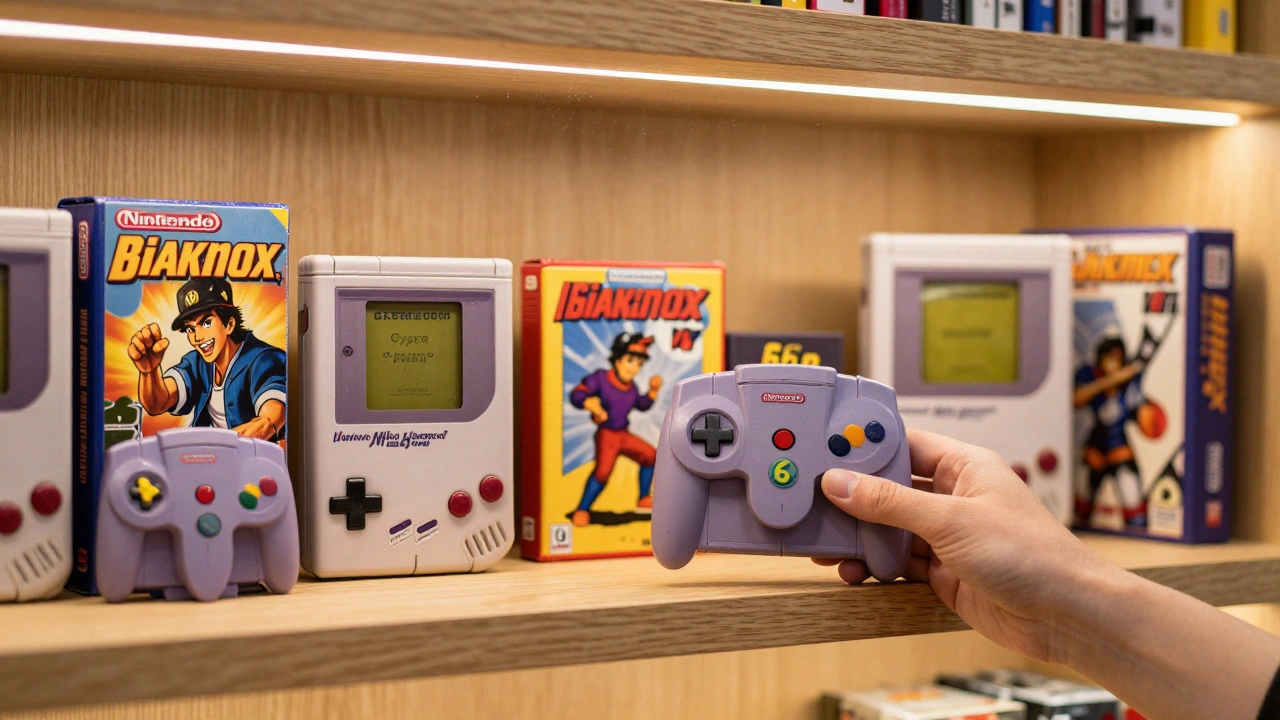
When you’re building a video game collection, the format you choose matters more than you think. It’s not just about what games you own-it’s about how they look, how they feel, and how long they’ll last. For collectors, the debate between discs and cartridges isn’t just technical-it’s personal. One holds memories in plastic and metal; the other, in layers of data under a shiny surface. Which one should you bet on?
Cartridges: The Tactile Treasure
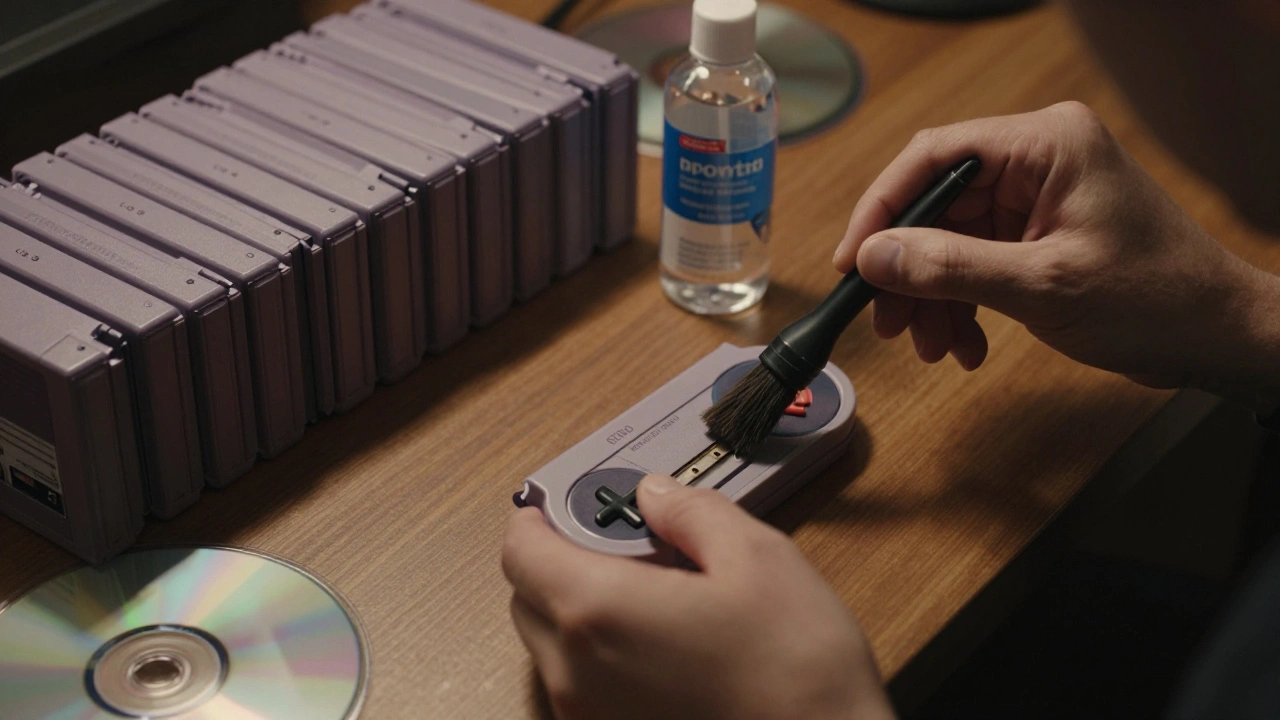
Cartridges have a presence. They’re chunky, they click into place, and their cover art is right there, facing forward. You don’t need a binder or a sleeve. You just line them up on a shelf, and your collection looks like a museum exhibit. Nintendo 64 carts, SNES boxes, even Game Boy cartridges-they all have weight, texture, and character. Collectors love that. There’s something satisfying about holding a game in your hand and knowing it’s built to last, not just read by a laser.But they’re not perfect. Dust builds up on the metal contacts. Over time, corrosion can creep in, especially if the game sat in a damp basement for years. And yes, blowing into a cartridge? That’s a myth. Saliva accelerates corrosion. It doesn’t fix the connection-it makes it worse. Still, many collectors swear by cleaning contacts with isopropyl alcohol and a soft brush. It’s a ritual, not a fix.
Storage? Easy. No need for special cases. Just stack them. Display them. Flip through them like trading cards. And unlike discs, you don’t have to worry about scratches ruining the whole thing. A cartridge might get bent, but unless the circuit board breaks, it’s usually playable. Even decades later, a well-cared-for N64 cart still boots up like it did in 1998.
Discs: The Fragile Giant
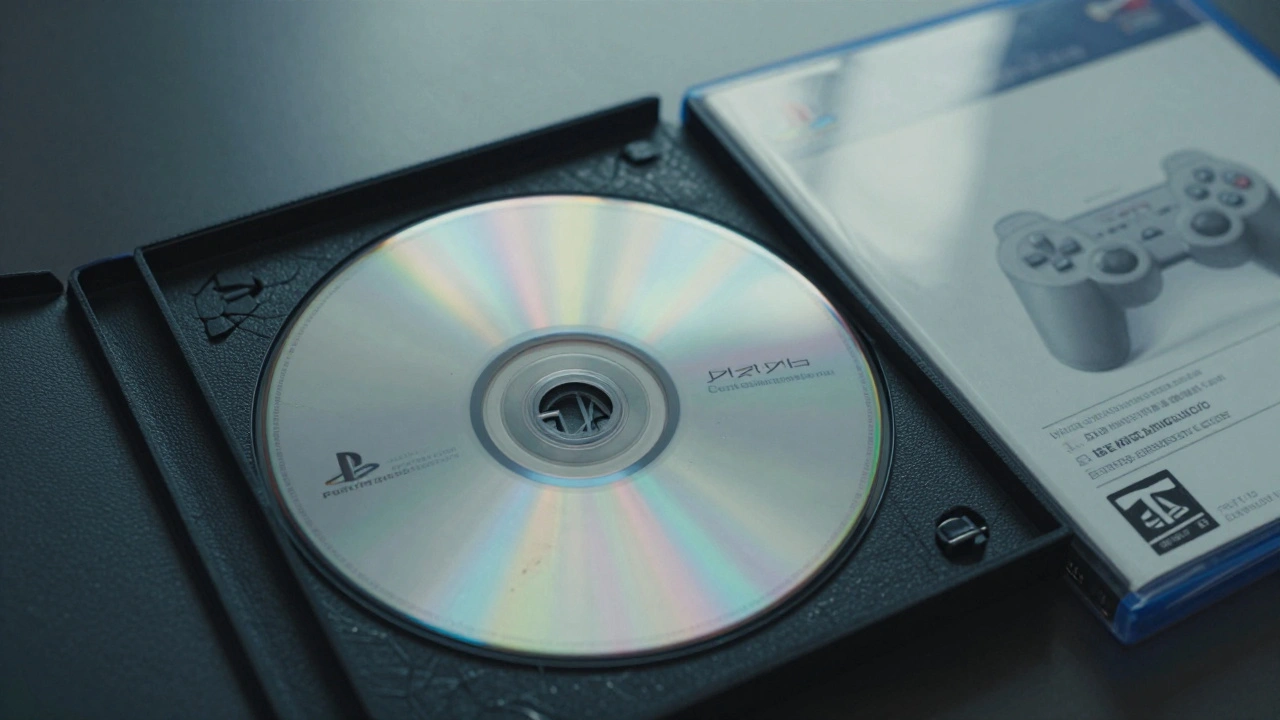
Discs changed everything. A single PlayStation 1 disc held 650MB-ten times what the biggest N64 cartridge could manage. That meant bigger worlds, full voice acting, cinematic cutscenes, and orchestral soundtracks. Games like Final Fantasy VIII and Metal Gear Solid became possible because of discs, not cartridges.But here’s the catch: discs are fragile. A single scratch, a fingerprint, a drop onto a hardwood floor-and you’re looking at a $60 game that won’t load. Even if the disc looks fine, a tiny flaw in the data layer can crash the whole thing. And once it’s ruined? There’s no repair. No clean. No magic fix. You need a replacement.
That’s why collectors don’t just collect discs. They collect the box, the manual, the insert. The disc itself? It’s just a piece of plastic. The real value is in the packaging. A sealed PS2 game with its original box and manual can sell for hundreds. The disc alone? Worthless. That’s a big shift from cartridges, where the game itself is the artifact.
Storage is another headache. You can’t just stack discs. You need binders, sleeves, or shelves with narrow slots. Most collectors end up with a drawer full of CD binders that look like a library of forgotten textbooks. It’s not the same as having a row of colorful carts lining your shelf.
Performance: Speed vs Capacity
Cartridges win on load times. No spinning disc, no laser hunting for data. The game loads instantly because the ROM chips are right there, connected directly to the console. That’s why games like The Legend of Zelda: Ocarina of Time feel so responsive on N64. No loading screens between dungeons. No pauses while the disc spins.Discs? They’re slower. A PlayStation 2 might take 15 seconds to load a new area. That’s because the laser has to move along a spiral track, find the right data, and read it. It’s mechanical. It’s imperfect. And it adds latency.
But here’s the trade-off: capacity. A modern Blu-ray disc holds 50GB. A Nintendo Switch cartridge? Around 32GB max. That’s why you don’t see 100GB games on cartridges. The tech doesn’t scale that way. Cartridges need expensive memory chips. Discs? They’re cheap to mass-produce. One machine burns data onto a blank disc. No chips. No complex circuitry. Just a laser and a mold.
Longevity: What Lasts Longer?
This is where collectors argue the loudest.Some say cartridges last longer. They’ve seen 30-year-old SNES carts still working. They’ve held them, cleaned them, played them. No degradation of data. No rotting layers. Just metal and plastic.
Others swear by discs. DVDs and Blu-rays, they argue, are stable. If you store them in a cool, dry place, away from sunlight, they’ll outlast the consoles themselves. One collector in Oregon says he’s got a stack of PS3 games from 2007 that still boot perfectly. No scratches. No fading. Just clean, sealed discs.
The truth? Both can last. But both can die. Cartridges fail from contact corrosion. Discs fail from physical damage or disc rot-a slow degradation of the reflective layer. Neither is guaranteed. It’s about how you store them.
Value: What’s Worth More?
Price tags tell a story. Cartridges were expensive to make. That’s why N64 games often cost $70 at launch. Discs? Cheap to produce. That’s why PS1 games hit shelves at $50. Today, the gap is gone. Digital downloads, physical discs, and even modern cartridges (like on the Switch) all cost about the same.But collectible value? That’s different.
A sealed, mint-condition Super Mario 64 cartridge? You’re looking at $1,000+. The same game on disc? No one cares. Why? Because the cartridge is the original. It’s the artifact. It’s the thing you held in 1996. The disc version? It’s a port. A re-release. A copy.
And here’s the kicker: you can’t go backward. You can’t take a PS5 game and put it on a cartridge. The storage demands are too high. The tech doesn’t exist. But you can reissue music on vinyl-even if it was made for CD. That’s why vinyl collectors love it. And why cartridge collectors feel like they’re holding onto something irreplaceable.
Collector’s Choice: Which One Wins?
If you care about display, handling, and history? Go for cartridges. They’re built for collectors. They’re tactile. They’re visual. They’re durable-if you treat them right.If you care about game variety, modern titles, and cost? Discs win. You can find almost every game ever made on disc. You can build a massive library without breaking the bank. And if you’re careful with storage, they’ll last.
But here’s what most serious collectors do: they collect both. Not because one is better. But because they’re different. A cartridge is a piece of history. A disc is a piece of technology. Together, they tell the whole story.
Some collectors start with cartridges because they’re nostalgic. Others start with discs because they’re practical. But the ones who stick with it? They end up with both. Because the game isn’t just in the code. It’s in the plastic. In the metal. In the box. In the way it feels in your hands.
Practical Tips for Collectors
- Store cartridges upright in a dry place. Avoid basements.
- Use isopropyl alcohol and a cotton swab to clean cartridge contacts-never blow into them.
- Keep discs in hard cases, not soft sleeves. Soft sleeves scratch.
- Buy sealed games if you want long-term value. Opened games lose 70% of their resale value.
- For discs, prioritize the box and manual. The disc is secondary.
- For cartridges, the game is the collectible. The box is a bonus.
Are cartridges more durable than discs?
It depends. Cartridges don’t scratch like discs, but their metal contacts can corrode over time, especially if exposed to moisture. Discs can last decades if stored properly in cases and kept away from sunlight. Neither is indestructible, but cartridges are less vulnerable to everyday handling damage.
Why are cartridge games more expensive to collect?
Cartridges cost more to produce because they use expensive memory chips and require complex circuit boards. That meant fewer were made, especially for rare titles. Limited supply + high demand = higher prices. Discs were cheaper to mass-produce, so more copies exist, keeping prices lower.
Can I play modern games on cartridges?
Not in the way you might think. The Nintendo Switch uses cartridges, but they’re based on flash memory and can hold up to 32GB. Modern AAA games with 100+GB of data-like Cyberpunk 2077 or Red Dead Redemption 2-can’t fit on a cartridge. So while you can buy Switch games on cartridge, you can’t expect big-budget PS5 or Xbox games to ever come on cartridge.
Do discs degrade over time?
Yes. Disc rot is real. It’s when the reflective layer inside a disc breaks down, making data unreadable. It’s often caused by poor manufacturing or exposure to heat and humidity. You can’t see it until the disc stops working. That’s why collectors store discs in cool, dark places and avoid touching the surface.
Is it worth collecting disc-based games today?
Absolutely-if you care about the box, manual, and packaging. Many disc-based games from the PS2, PS3, and Xbox 360 eras are now rare. A sealed copy of a game like Silent Hill 2 or Metal Gear Solid 2 can be worth hundreds. The disc itself doesn’t hold value-it’s the whole package.