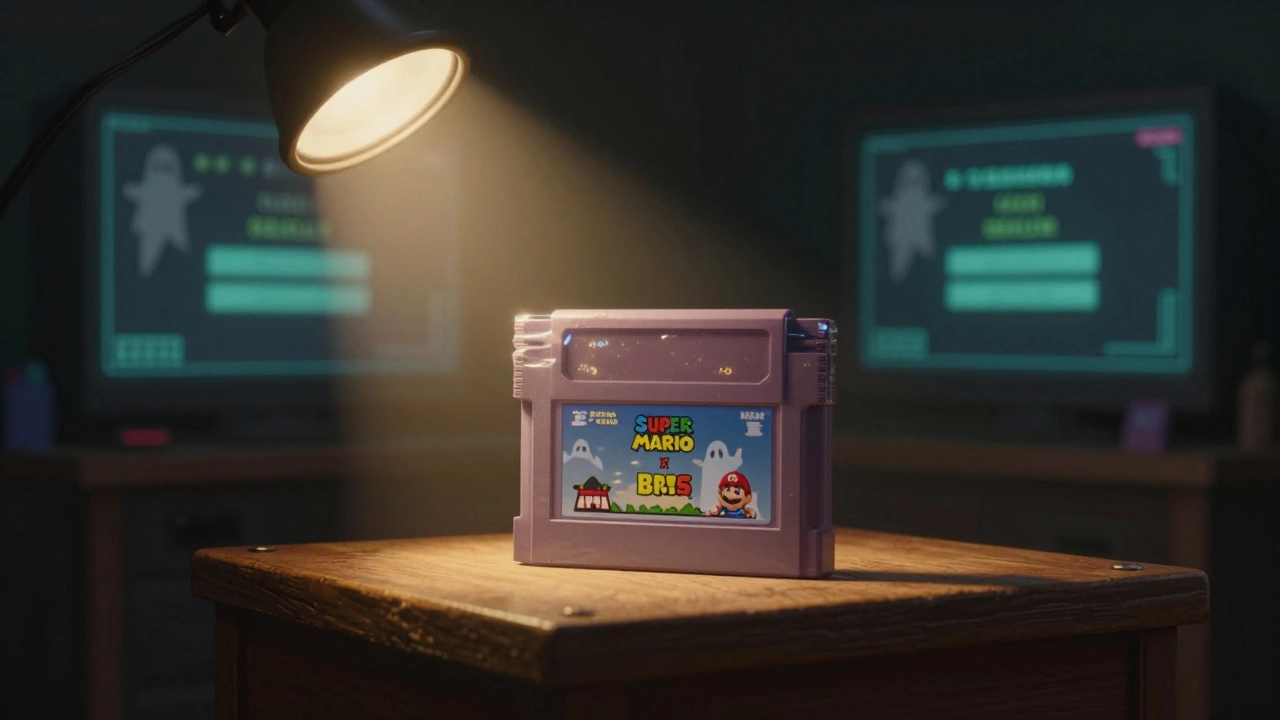
When a rare copy of Super Mario Bros. sells for $100,000 at auction, it’s not just a collector’s win-it’s a signal. A loud, noisy, unmistakable signal that something’s off in the video game market. Not because people are paying too much for nostalgia, but because the entire system of how games are valued has started to twist. What used to be a hobby is now a mirror for a bursting bubble, and the auction blocks are the clearest place to read the writing on the wall.
Think about it: Why would anyone pay $100,000 for a cartridge when you can download the same game for $10 on a modern console? The answer isn’t about the game. It’s about what’s happening behind the scenes. The AAA game industry has been running on fumes for years, pushing out bloated, overpriced titles with microtransactions, DLC packs, and promises of "future content" that never come. Players are tired. And when they stop buying new games at full price, the market doesn’t just slow down-it reverses. That’s when the auction houses start lighting up.
How Auctions Reveal What Publishers Won’t Admit
Video game auctions don’t just move old cartridges. They move data. Every bid, every final price, every unsold lot tells a story. And that story is this: the primary market is broken, so people are turning to the secondary market to find real value.
Take the case of Stadia. Google shut it down in 2023. No refunds. No backups. Just a dead platform with 10 million users who paid for games they could no longer play. What happened next? Auction sites like Heritage Auctions and eBay saw a spike in used Stadia controller bundles, digital code cards, and even printed manuals. Prices for these items didn’t just hold-they jumped. Why? Because people realized: if you don’t own it physically, you never owned it at all.
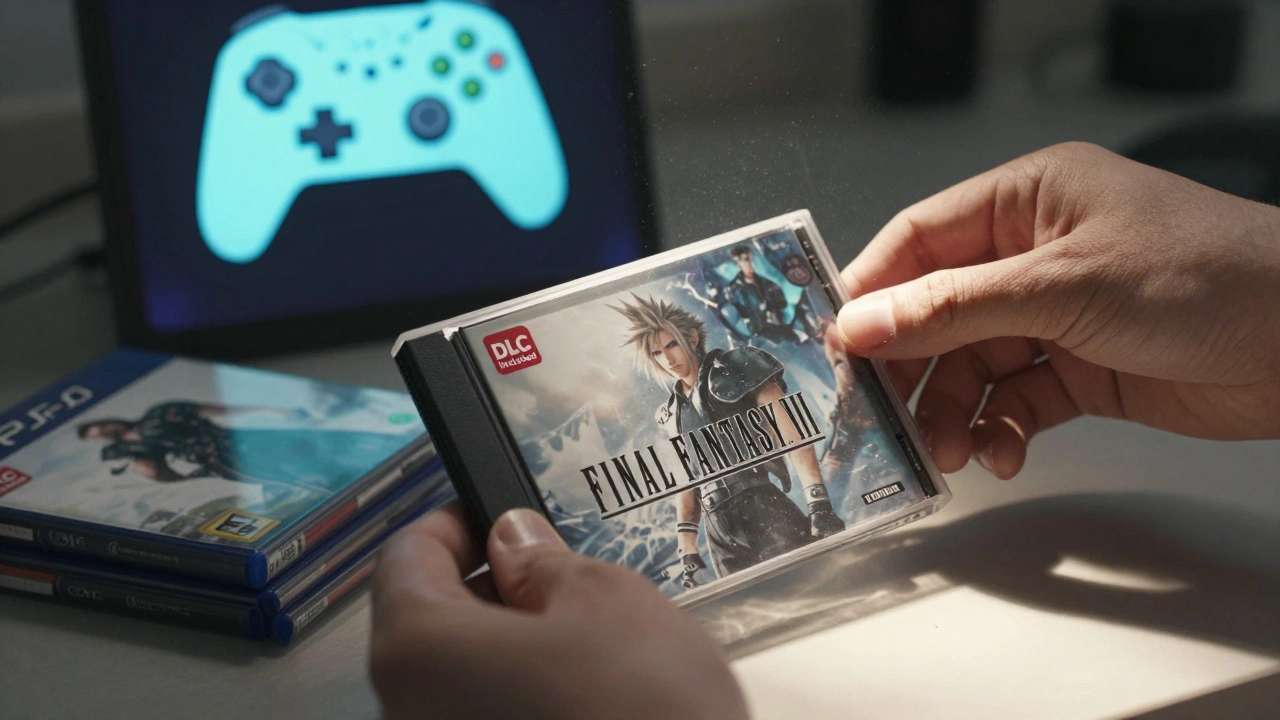
That’s the first signal: digital ownership is an illusion. When publishers lock games behind accounts, servers, or DRM, they’re not selling a product-they’re renting access. And when that access vanishes, the only thing left with real value is the physical copy. That’s why sealed copies of Final Fantasy VII on PS1 now sell for $800. Not because the game is perfect. But because it’s one of the last untouched physical artifacts from a time when you could actually keep what you bought.
The $70 Game That Costs $200 to Own
Modern AAA games are sold at $70. That’s the sticker price. But that’s not the real cost. Add on the $30 expansion, the $20 season pass, the $15 battle pass, the $10 cosmetic skin pack, and the $50 "premium edition" that includes the base game plus three DLCs you didn’t ask for. Suddenly, you’ve spent $200 for a game that’s still buggy, incomplete, and full of grind.
EA’s Apex Legends is a textbook example. The game launched as free-to-play, then slowly added paid cosmetics, weapon skins, and character bundles. By 2025, EA admitted that only 1.55 million players were actively spending money on the game-down nearly half from projected numbers. Their stock dropped 30% in one quarter. Meanwhile, auction listings for early Apex Legends physical collector’s editions (with steelbooks and art books) started selling for $250. Why? Because those editions came with no microtransactions. They were the last honest version of a game that had turned into a cash grab.
This isn’t an anomaly. It’s a pattern. When publishers overcharge and underdeliver, collectors step in. They buy the original, unmodified version. They preserve it. And they auction it. That’s not a market trend-it’s a protest.
Historical Bubbles and What They Tell Us
Look back at the dot-com bubble of 2000. Investors poured money into websites with no revenue, no profit, no plan. They believed in "future growth." When the money stopped flowing, companies like Pets.com vanished overnight. The same thing is happening now. Publishers are betting on endless monetization, not game quality. They assume players will keep paying forever. But players are learning: if you can’t play it tomorrow, it’s not worth today’s price.
The housing bubble of 2006 had the same signs. People bought homes they couldn’t afford, assuming prices would always rise. Then the market flipped. Houses sat unsold. Foreclosures exploded. And the only people who made money were those who had bought low, held on, and sold when panic hit.
Now, look at auction data from 2024-2025. Sealed copies of Star Wars: Battlefront II (2017)-the game infamous for its loot box controversy-sold for 5x their original price. Why? Not because it’s a great game. But because it’s the last version before EA removed the loot boxes. Collectors knew: this was the final, unaltered form of a game that had been ruined by corporate greed. That’s not speculation. That’s history repeating.
What the Auction Numbers Are Saying Right Now
Here’s what the data shows in early 2026:
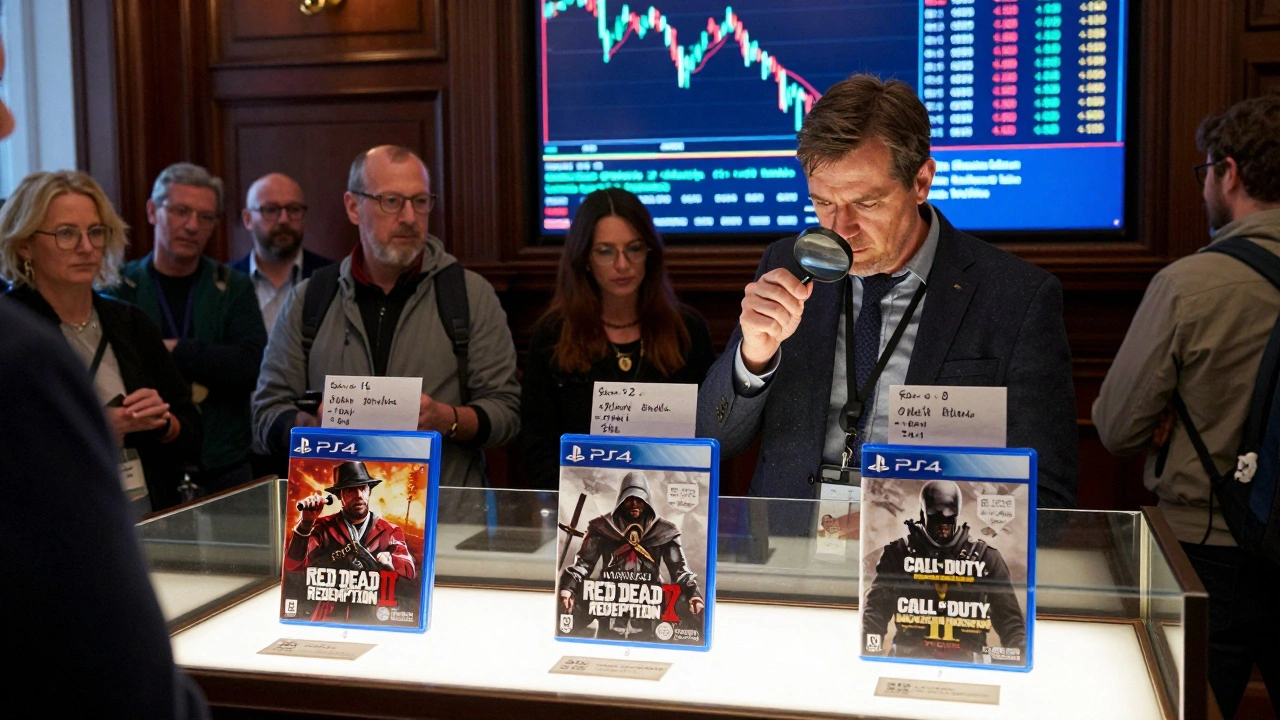
- Sealed copies of Red Dead Redemption 2 (PS4) are selling for $220-up 180% since 2023.
- Unopened copies of Assassin’s Creed: Valhalla (standard edition) are going for $110, even though the game was released at $60.
- Physical copies of Call of Duty: Modern Warfare II (2022) are being listed with a "no DLC" guarantee-and selling for $150.
- Games with DLC pre-installed? They’re sitting unsold. No one wants them.
The message is clear: players are voting with their wallets. They’re not buying the new $70 game. They’re buying the old $60 game that didn’t try to nickel-and-dime them.
The auction market isn’t just reflecting demand-it’s defining it. Publishers think they’re making money through live service models. But the real money is being made by collectors who know: the only thing that lasts is what you can hold in your hands.
What Comes Next?
The bubble won’t collapse because of a single game failure. It’ll collapse because the entire model is unsustainable. When the next AAA title-say, Grand Theft Auto VI-launches with $150 in optional purchases and 12 months of server-dependent content, and sales drop 40% from expectations, the industry will finally have to admit: we’re not selling games anymore. We’re selling subscriptions.
And when that happens, the auction houses will be the first to know. Because the next wave of buyers won’t be kids with allowance money. They’ll be adults with memories of when games were worth owning.
The future of gaming isn’t in cloud servers or NFTs. It’s in cardboard boxes, shrink wrap, and sealed cartridges. The market has spoken. And it’s saying: give us something real, or we’ll find it on eBay.
Why are sealed video game cartridges selling for so much more than their original price?
Sealed games are selling for high prices because they represent the last untouched versions of games before publishers started overloading them with microtransactions, DLC, and online-only features. Collectors value these copies not for the game’s content, but for what they symbolize: a time when buying a game meant owning it permanently. Physical copies with no DRM or online dependencies are becoming rare artifacts.
Do auction prices predict future AAA game failures?
Yes-indirectly. When games that were marketed as "blockbusters" start fetching high prices at auction shortly after release, it’s often because players are rejecting the monetization model. For example, high demand for sealed copies of Star Wars: Battlefront II after its loot box scandal showed that players were willing to pay more to avoid the patched version. Auction trends reflect player backlash before financial reports do.
Is the video game auction market a bubble too?
Not in the traditional sense. Unlike speculative bubbles where prices rise on hype alone, video game auction prices are driven by scarcity and loss of trust in digital ownership. The value isn’t based on future growth-it’s based on the fact that physical copies are disappearing, and modern games are being stripped of permanence. This is a correction, not a bubble.
Why are digital-only games not valuable at auction?
Digital-only games have no resale value because you don’t own them-you license them. If the publisher shuts down servers, deletes your account, or changes DRM rules, your "ownership" vanishes. Auctions only value items you can physically hold, transfer, or verify. That’s why even rare digital codes without physical proof sell for pennies compared to sealed cartridges.
Should I buy games at auction instead of new releases?
If you want to own a game that won’t be taken away, yes. Buying older physical copies-especially those from before 2018-means you’re getting a complete, unmodified experience without forced microtransactions. You’re also supporting preservation. The next generation of gamers will thank you for keeping these artifacts alive.