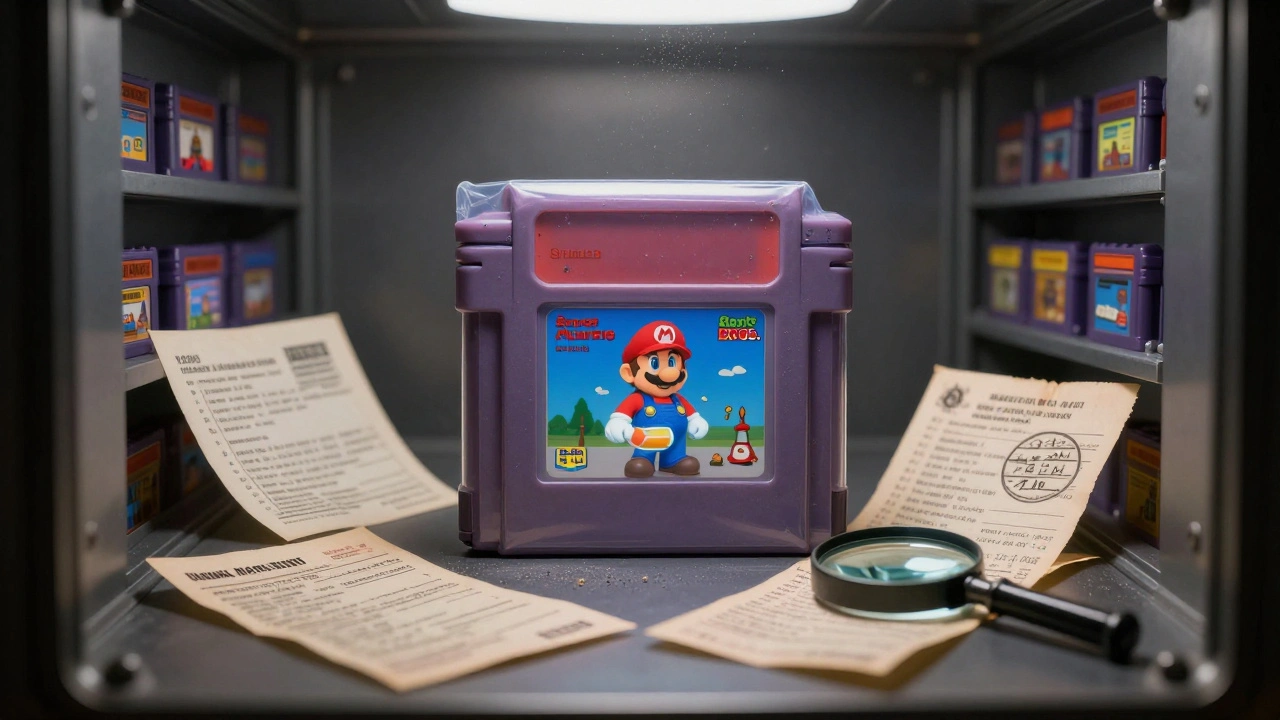
Buying or selling a sealed, graded copy of Super Mario Bros. for $200,000 isn’t just a lucky flip-it’s a high-stakes transaction that demands trust. If you’re dealing with vintage video games, especially sealed, graded, or prototype copies, your auction house isn’t just a platform-it’s your insurance policy. Choosing the wrong one can mean losing thousands, getting scammed, or ending up with a fake that no one will touch. Here’s how to vet auction houses that actually know what they’re doing with video games.
Look for Proven Track Records, Not Just Fancy Websites
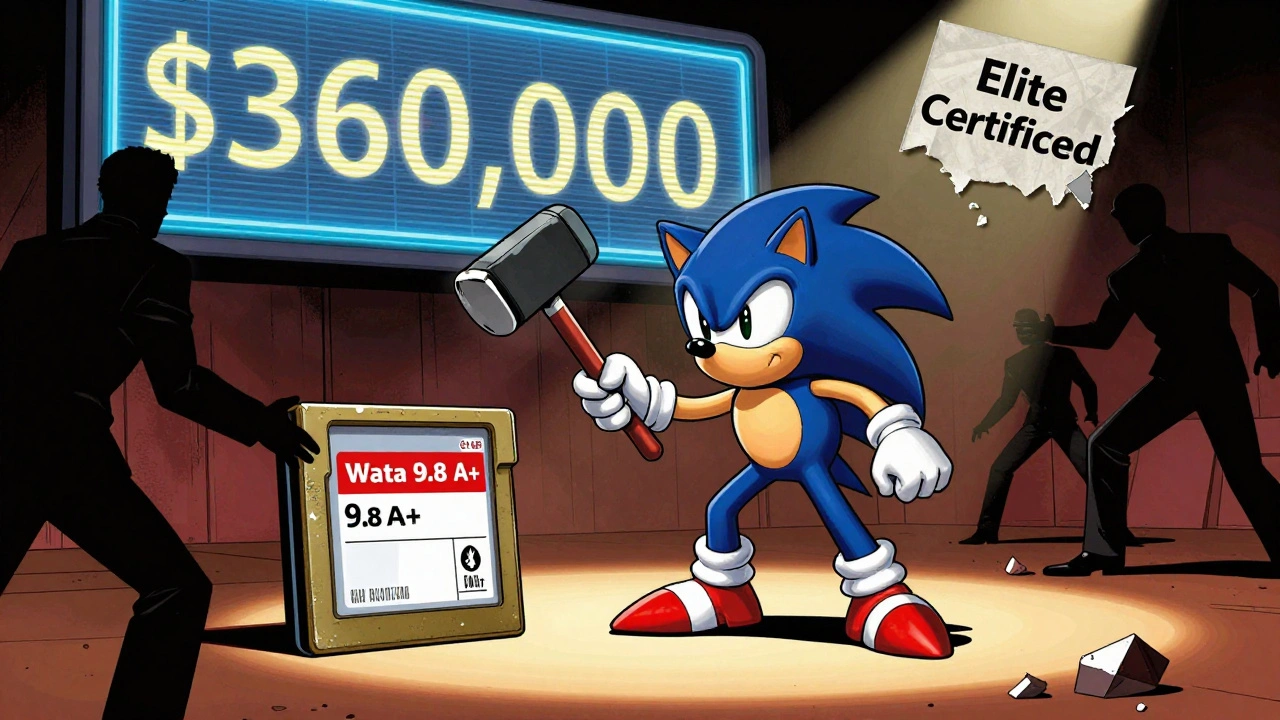
Auction houses that specialize in video games don’t just list items-they move markets. The difference between a legit operation and a fly-by-night shop is clear in their sales history. Look for auction houses that have repeatedly sold high-value items and published those results publicly. Heritage Auctions is the clearest example: they set the record in 2022 when a sealed Sonic the Hedgehog for Sega Genesis, graded Wata 9.8 A+, sold for $360,000. That wasn’t a fluke. They’ve done it multiple times with Super Mario Bros. 3, The Legend of Zelda, and even rare prototypes. If an auction house can’t point to at least three major sales over the last two years with specific titles, grades, and prices, walk away.Don’t just take their word for it. Search their online auction archives. Filter for video games. See if the same high-grade copies keep reappearing. Check if they list the grading company, the condition notes, and the final price. If they don’t, they’re hiding something.
Authentication Partnerships Are Non-Negotiable
No auction house should be grading games themselves. That’s a red flag. Instead, they must partner with established, independent grading services. Right now, there are only two that matter: Wata Games and VGA (Video Game Authority).Wata Games is the gold standard. Founded by collectors and industry veterans, they use a 10-point scale, assign letter grades (A+, A, B, etc.), and publicly document their grading criteria. Their certificates include unique serial numbers you can verify online. If a game is graded by Wata, you know it’s been examined under controlled lighting, checked for shrink wrap integrity, and tested for factory seal authenticity.
VGA (Video Game Authority) is the next tier down but still trusted. It’s a division of CGA (Comic Guaranty, LLC), which also grades action figures and trading cards. Their process is similar to Wata’s but slightly less granular. Still, if an auction house accepts VGA-graded games, that’s a good sign.
Avoid auction houses that use their own grading labels-like “Elite Certified” or “Vintage Verified.” These are meaningless. They’re made up by the seller or the auction house itself, and no one else recognizes them. If you can’t look up the grading company’s official website and verify the certificate number, it’s not real.
Transparency in Fees and Terms
Here’s where most people get burned. Auction houses charge fees, but some hide them. A reputable one will tell you upfront: commission rate, listing fee, insurance cost, and buyer’s premium.Heritage Auctions, for example, charges sellers a 15% commission on the final sale price up to $250,000, then 10% above that. They also charge a $25 non-refundable listing fee. No surprises. They publish this on their website. Compare that to smaller auction houses that say “fees vary” or “we’ll send you a quote after inspection.” That’s not transparency-that’s a trap.
Also, check their return policy. If a buyer receives a game and later proves it was misgraded or tampered with, does the auction house refund the buyer? Do they cover the cost of re-grading? Reputable houses have clear policies and stand behind their authentication. If they don’t, they’re not protecting you.
Provenance Isn’t Just a Buzzword
A game’s history matters as much as its condition. A sealed Super Mario Bros. from 1985 that came from a collector’s personal stash is worth less than one that came from a 1980s arcade owner’s warehouse, with receipts, photos, and a letter from the original owner.Top auction houses require full provenance. That means:
- Original purchase receipts
- Photos of the game in its original packaging before grading
- Letters from previous owners or collectors
- Documentation linking the item to a known event, like a tournament or store opening
Heritage Auctions published the full story behind the $360,000 Sonic game: it was found in a sealed box in a garage in Ohio, bought by a collector in 2008, stored in climate control, and never opened. That story adds value. If an auction house can’t-or won’t-tell you where the game came from, it’s a huge risk.
Check for Physical Presence and Infrastructure
Auction houses that take video games seriously have offices, staff, and storage facilities. Heritage Auctions has locations in New York, Dallas, Los Angeles, and even London. They have climate-controlled vaults for high-value games. They have on-site experts who inspect items before listing.If an auction house is just a website with a PayPal button and no physical address, avoid it. Even if they claim to be “based in the UK” or “operating out of a garage in Florida,” that’s not enough. You need a company with a legal entity, a business license, and insurance. Ask for their business registration number. If they can’t provide it, they’re not legitimate.
Watch for These Red Flags
Not every auction house that says “video games” is trustworthy. Here’s what to avoid:- Grading certificates from companies that no longer exist (like the defunct “GameCert”)
- Claims of “rare” games with no serial numbers or verification links
- Pressure to sell quickly or “take a deal now”
- Auction houses that also sell games directly (conflict of interest)
- No public past sales records
- Only accepting PayPal or crypto-no escrow or bank wire
Also, check collector forums. Reddit’s r/videogamecollecting and the Video Game Auctions Facebook group are full of people who’ve been burned. Search for the auction house name + “scam” or “fake.” If you see three or more complaints about misgraded items or unreturned payments, walk away.
What About Goldin Auctions?
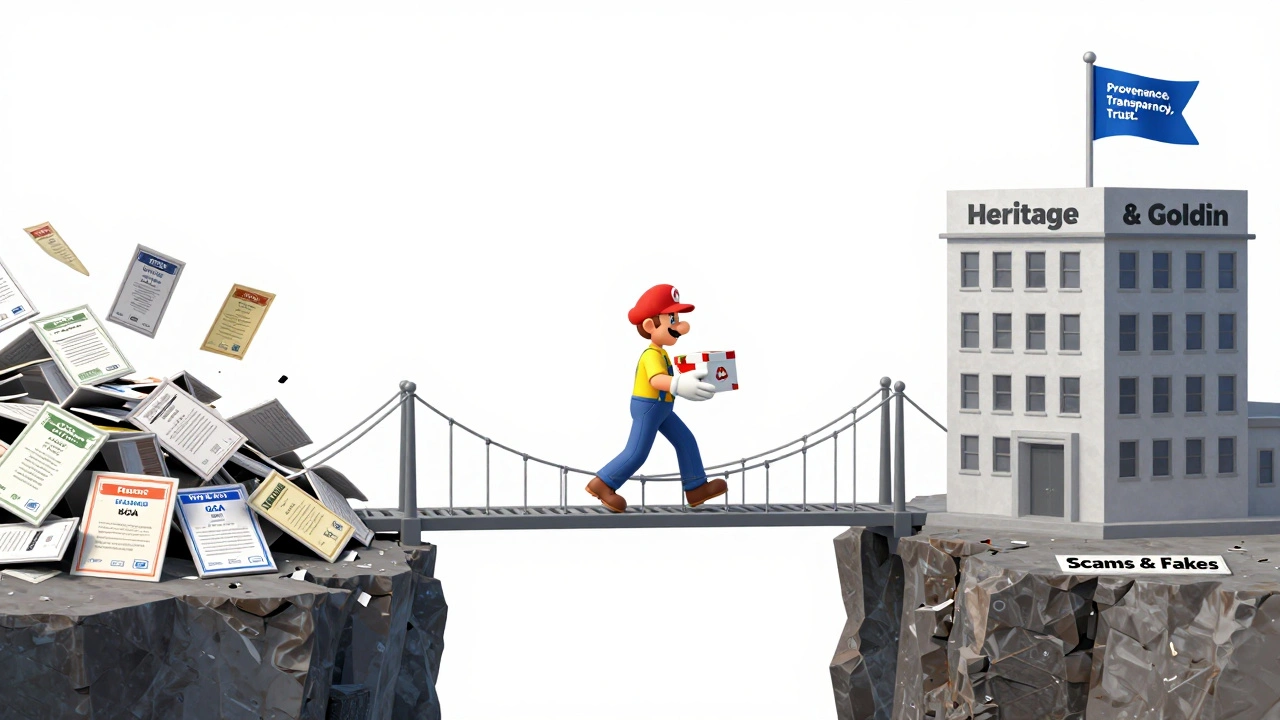
Goldin Auctions, now owned by eBay, is another strong option-especially if you have a large collection. They handle high-end sports memorabilia, trading cards, and now video games. They’re more focused on consignments than individual listings, so if you have 10+ graded games, they’re a solid choice. Their fees are similar to Heritage’s, and they partner with Wata and VGA. They’re less flashy, but they’re reliable.Final Checklist Before You Consign
Before you sign anything, ask yourself:- Does the auction house list past sales with full details (game, grade, price, date)?
- Do they only accept Wata or VGA grading?
- Can you verify the grading certificate online?
- Are their fees clearly published?
- Do they have a physical address and contact number?
- Can they provide a written provenance summary for your item?
- Do they use escrow or bank wire for payments?
If you answered yes to all seven, you’re dealing with a serious player. If you answered no to even one, keep looking.
Why This Matters Now
The vintage video game market isn’t about nostalgia anymore. It’s about preservation. A sealed Super Mario Bros. from 1985 is now treated like a rare artifact-like a first-edition comic or a signed baseball. The people who buy these items aren’t just collectors-they’re historians, archivists, and investors. They want proof. They want transparency. They want institutions they can trust.The auction houses that survive are the ones that treat these games like museum pieces, not eBay listings. They invest in grading standards, provenance research, and buyer protection. If you want to get the most out of your collection-or avoid getting ripped off-you need to work with them.
What’s the difference between Wata Games and VGA?
Wata Games is the most respected grading service for video games, with a detailed 10-point scale and letter grades (A+, A, etc.). They’re collector-run and transparent about their methods. VGA, part of CGA, is also trusted but slightly less granular. Both are industry standards. Avoid any other grading labels-most are made up.
Can I sell my video games without grading them first?
You can, but you’ll get 50-80% less. Ungraded games are treated as unverified, and buyers assume they’re damaged or tampered with. Even if the game looks perfect, without a Wata or VGA certificate, it’s hard to prove its condition. Most serious buyers won’t touch ungraded items.
Is Heritage Auctions the only option?
No. Goldin Auctions is a strong alternative, especially for large collections. But Heritage is the market leader for high-value individual items. Other auction houses either don’t specialize in games or lack the track record. Stick with Heritage or Goldin unless you find another with proven, public sales history.
How do I verify a grading certificate?
Go to the grading company’s official website-WataGames.com or VGAAuthority.com. Enter the certificate number. It should show the game title, grade, year, region, and a photo of the item. If the site doesn’t exist, or the number doesn’t return a match, the certificate is fake.
What if I’m just buying, not selling?
Same rules apply. Always check the auction house’s reputation, verify the grading certificate, and confirm provenance. Never buy from a private seller who won’t let you see the certificate or doesn’t offer a return policy. Auction houses offer buyer protection; private sellers don’t.