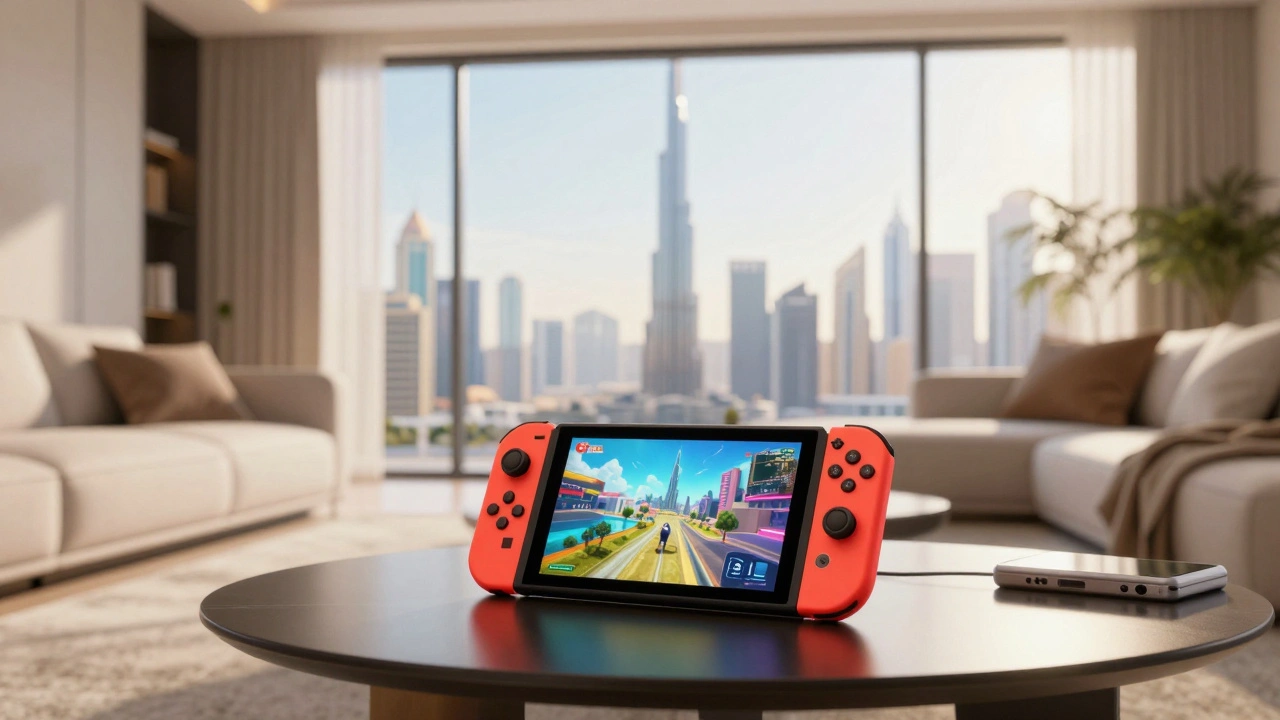
Ever feel like you're buying a console at the exact wrong moment? Just as you drop $500 on a system, a rumor leaks about a massive spec bump or a price drop that makes your new purchase feel like a relic. In the current market, we're seeing a strange split between high-end luxury machines and accessible portable hybrids. With the hardware landscape shifting rapidly in 2026, the real game isn't just about who has the most teraflops, but who is offering the most bang for your buck. Identifying an undervalued video game console means finding the machine where the performance-to-price ratio is skewed in the buyer's favor, often because the manufacturer misjudged the market or a competitor failed to launch on time.
To figure out where the value lies, we have to look at the three heavy hitters: Nintendo, Microsoft, and Sony. Each is playing a completely different game right now. We have one company sprinting to market with portability, one aiming for the ultra-premium "enthusiast" tier, and one struggling with pricing hikes and delays. If you're hunting for a deal, you aren't looking for the cheapest box; you're looking for the one that delivers the most experience per dollar spent.
The First-Mover Advantage: Nintendo's Strategy
Nintendo usually doesn't try to win the power war, and they aren't trying now. The Nintendo Switch 2 is the successor to the original Switch, focusing on hybrid portability and a massive existing software library. By launching in early 2025, Nintendo basically walked into an empty room. While Sony and Microsoft were still arguing over chipsets and price points, Nintendo was already moving millions of units.
Industry data from DFC Intelligence suggests that getting to market early was the decisive move here. They predicted sales of 15-17 million units in 2025 alone, with a trajectory hitting 80 million by 2028. When a company captures the market this early, the console often becomes "undervalued" in terms of utility. You get a massive library of games and a huge community of players long before the "powerhouses" even hit the shelves. If you value the ability to play on your couch and then take that same game on a plane, the Switch 2 is the current value champion because there simply isn't a direct, high-quality portable competitor from the other big two.
The Premium Gamble: Xbox Helix and the $1,000 Ceiling
On the opposite end of the spectrum, we have the Xbox Helix. This is where things get weird. Reports indicate that Microsoft is positioning the Helix not as a mass-market toy, but as a high-end specialty device. We're talking about a machine powered by an AMD semi-custom System-on-Chip (SOC) designed for raw power. But that power comes at a steep cost.
Analysts are seeing pricing estimates anywhere from $899 to a staggering $1,500, with $999 being the most likely target. Does that make it overvalued? Not necessarily. If the Helix delivers a leap in performance that makes current-gen games look like cartoons, it's a value play for the enthusiast. However, the real opportunity for this machine to become "undervalued" happens if Microsoft feels the pressure from Sony and decides to slash prices six months after launch. If you can snag a $1,000-tier machine for $600 in a desperate bid for market share, that's when the Helix becomes the best value in gaming.
| Console | Target Market | Est. Price Point | Value Driver |
|---|---|---|---|
| Nintendo Switch 2 | Mass Market / Portable | Low to Mid | Early access & portability |
| Xbox Helix | Enthusiast / High-End | High ($899 - $1,500) | Raw processing power |
| PlayStation 6 | Loyal Base / Mid-High | Mid to High | Exclusive IP & ecosystem |
The Sony Dilemma: PlayStation 6’s Delayed Entry
Sony is in a tricky spot. The PlayStation 6 (PS6) has been plagued by rumors of price hikes and a delayed launch. When you enter a market late, you usually have two choices: come in with a better product or come in with a lower price. Sony has historically relied on its loyal fan base to ignore the price and buy the hardware anyway. But the market is changing.
Consumer sentiment data from 2026 shows a growing fatigue. About 11% of gamers aren't planning to buy a new console at all, which signals a saturation point. If Sony tries to launch the PS6 at a premium price while the Switch 2 has already eaten the casual market and the Xbox Helix has claimed the ultra-high-end, Sony might be forced to pivot. If they launch with aggressive bundles or a surprisingly competitive price to claw back market share, the PS6 could suddenly become the most undervalued high-performance machine on the market.
How to Spot an Undervalued Console Before the Crowd
If you're trying to predict the next wave of value, stop looking at the marketing brochures and start looking at these three specific red flags:
- Pricing Miscalculations: When a company like Microsoft sets a price ($999+) that shocks the general public, they often overcorrect. Keep an eye on "Limited Time Offers" that become permanent.
- The Competition Gap: When Nintendo releases a console in 2025 and the competition doesn't arrive until 2027, the early bird isn't just getting the worm-they're getting a monopoly on the current trend.
- The "Enthusiast" Trap: Hardware that is marketed to a tiny sliver of 1% gamers often has the most room for price drops once the company realizes the mass market won't pay a premium for 8K resolution.
Another factor to consider is the Steam Deck and the rise of handheld PCs. While not a traditional console, these devices have pushed Nintendo to keep the Switch 2 competitive and forced Sony and Microsoft to rethink what "home console" actually means. If a traditional console starts pricing itself like a PC but offers a closed ecosystem, it's overvalued. If it offers a curated, seamless experience for half the price of a gaming rig, it's undervalued.
The Verdict on Value for 2026 and Beyond
So, where is the money actually well-spent? Right now, the Nintendo Switch 2 is the safest bet for value because it satisfies the most people for the lowest entry cost. It leverages a massive ecosystem and portability that the others can't match. However, the "big win" for a savvy buyer will likely be the Xbox Helix, provided you can wait for the inevitable price correction. No mass-market gaming device can sustain a $1,000+ price tag indefinitely unless it's selling millions of units to people who don't care about money.
The real danger is buying into the hype of a