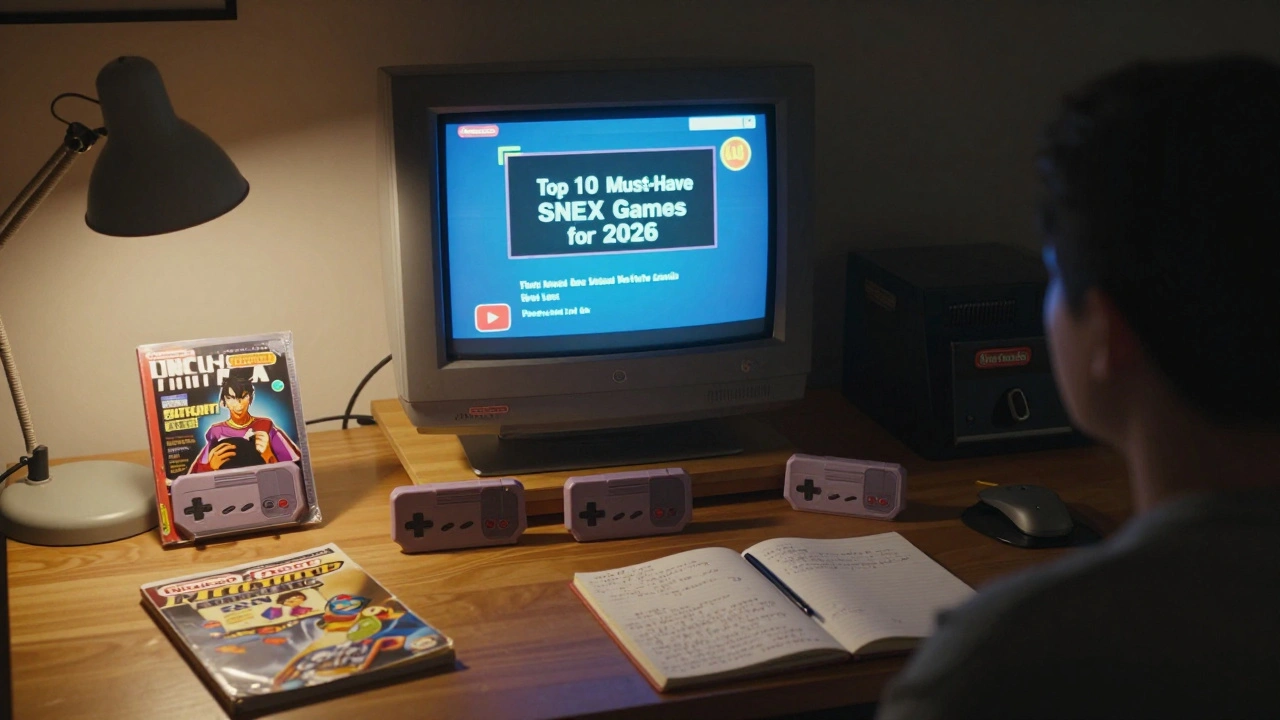
When you're building a video game collection, it's easy to get swept up in hype. A popular content creator posts a video titled "Top 10 Must-Have SNES Games for 2026", and suddenly you're adding every title to your cart. But here's the truth: not every game on a creator's list is worth owning. Many of these guides are made for clicks, not collectors. And if you're serious about building a meaningful collection, you need to treat them like a starting point-not a rulebook.
Why Creator Guides Are Tempting (and Dangerous)
Creator buy guides are everywhere. YouTube channels, TikTok lists, Instagram reels-they all promise you the "perfect" retro collection. They show sealed copies of Super Mario World, boxed EarthBound, and rare strategy guides with glowing reviews. The problem? Most of these creators aren't archivists. They're entertainers. Their goal isn't to preserve gaming history. It's to get you to click, comment, and buy the same games they did.Take the Nintendo Power Player's Guide for Final Fantasy III. It’s one of the most valuable strategy guides on the market, selling for over $300 in near-mint condition. But if a creator says, "You need this guide to complete your SNES collection," they’re not telling you why. They’re assuming you care about completeness, not context. What if you’ve never played Final Fantasy III? What if you don’t even like JRPGs? Buying it just because a creator said so doesn’t make you a collector-it makes you a shopper.
What Makes a Good Collector?
The best collectors don’t chase trends. They chase meaning. They ask: Why do I want this? What does it say about my history with games? Does it connect to a memory, a moment, or a design I admire?There’s a reason EarthBound became a cult classic. It wasn’t because it sold millions. It was because a small group of players felt something unique in its tone, humor, and heart. Today, collectors who own it aren’t just holding a cartridge-they’re holding a piece of emotional history. That’s not something a 5-minute YouTube list can capture.
Think about your own collection. Do you own games because they’re rare? Or because they made you laugh, cry, or stay up all night? If the answer is the latter, then your collection already has a foundation. Creator guides can help you find games you didn’t know existed-but they shouldn’t rewrite your personal story.
How to Critically Evaluate a Creator Guide
Not all creator guides are useless. Some are deeply researched. Others are made by longtime collectors who’ve spent years tracking down obscure titles. The trick is learning how to tell the difference.Here’s how to spot a guide worth your time:
- Do they explain why? A good guide doesn’t just list games. It explains why each one matters. Did Contra redefine run-and-gun mechanics? Did Super Metroid influence modern exploration design? If the guide gives context, it’s likely written by someone who understands the history.
- Do they mention condition? A sealed copy of Super Mario All-Stars can cost $400. A used copy might be $20. A smart guide will tell you which version suits your goal. If they treat all copies as equal, they’re not thinking like a collector.
- Do they admit bias? If a creator says, "I grew up with these games, so they’re my favorites," that’s honest. If they say, "These are objectively the best," that’s a red flag. Collecting is personal. No game is objectively "best."
- Do they warn you about scams? The market is flooded with fake cartridges, reprints, and tampered boxes. A credible guide will mention Wata Games’ grading system, the Video Game Authority (VGA), or how to spot bootlegs. If they ignore authenticity, they’re not helping-you’re being misled.
Don’t Collect What You Don’t Love
The retro game market exploded around 2017, when investors from coin and comic collecting saw video games as a new asset class. Prices for sealed games shot up. Auction houses started selling Super Mario Bros. cartridges for over $100,000. But here’s the catch: the majority of retro games are not that great.There are thousands of NES and SNES titles. Maybe 5% are worth playing today. Maybe 1% are worth owning. The rest? They’re dusty relics of a time when publishers released games just to fill shelves. Buying them because a creator said so doesn’t build a collection. It builds clutter.
One collector in Portland told me he spent $2,000 on a bulk lot of 120 SNES games. He opened 80 of them. Only three were worth keeping. The rest? He sold them for $5 each. He didn’t lose money-he gained clarity. He learned that quantity doesn’t equal quality. And he stopped relying on lists.
Build Your Own Guide
The most powerful tool you have isn’t a YouTube video. It’s your own memory. Start by asking:- What games did you play as a kid? What did you wish you could replay?
- What games do you still think about? What mechanics, stories, or sounds stick with you?
- What games do you want to pass down? Not because they’re rare-but because they mean something.
Write those down. Then, use creator guides to expand your list-not replace it. If a guide mentions a game you’ve never heard of, research it. Watch a playthrough. Read a review. If it clicks, add it. If it doesn’t, skip it. That’s how you build a collection that lasts.
Strategy Guides: The Hidden Treasure
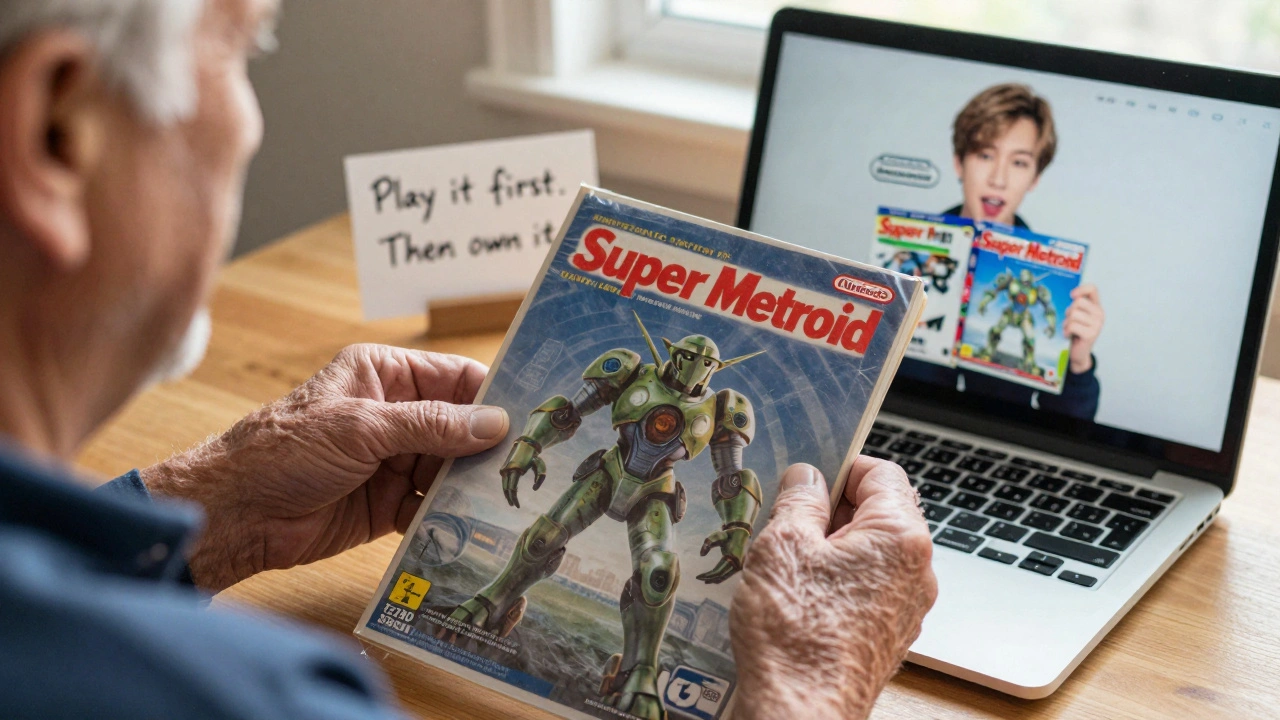
Don’t forget about strategy guides. They’re often overlooked, but they’re some of the most valuable items in retro collecting. A sealed Nintendo Power Player’s Guide for Super Metroid can sell for $250. A complete Final Fantasy Tactics guide with its original poster and map? Over $400.But here’s the catch: collectors who buy guides based on creator lists often miss the details. A guide with a torn cover or missing pages is worth 80% less. A guide with a pack-in poster or DLC code? That’s the real prize. If a creator says, "Get the guide," ask: Which version? What condition? What extras? If they can’t answer, they’re not giving you a guide-they’re giving you a sales pitch.
Start Small. Think Long-Term.
Don’t rush. Don’t buy a whole collection at once. Start with one game you truly want. Then another. Visit thrift stores. Browse local retro shops. Check eBay auctions with patience. Let your collection grow slowly. That’s when you start to notice patterns: which games hold value, which ones fade, which ones you just can’t let go of.Collector communities on Twitter and Reddit often say: "Know why you’re collecting. Stick to your goals." That’s the best advice you’ll ever get. Creator guides can help you discover new games. But only you can decide which ones belong in your collection.
Are creator buy guides always wrong?
No. Some creators spend years researching games, tracking prices, and verifying authenticity. The issue isn’t that the guides are wrong-it’s that they’re often written for viewership, not collection value. Always cross-check their recommendations with trusted sources like Wata Games, the Video Game Authority, or community forums like AtariAge or Reddit’s r/retrogaming.
Should I buy sealed games because a creator says they’re valuable?
Only if you plan to keep them long-term or genuinely love the game. Sealed games aren’t investments-they’re collectibles. Many lose value if the market shifts. A game that’s "hot" today might be forgotten in five years. Buying sealed copies just because a creator says so is gambling, not collecting. Focus on games you’d still want to play even if they lost all resale value.
How do I know if a strategy guide is authentic?
Check the publisher, print date, and cover design. Nintendo Power guides from the 90s have a specific font, color palette, and logo placement. Look for the "Nintendo Power" logo on the spine and inside. Compare with verified listings on eBay or the Video Game Authority’s database. If the guide has a poster or map, check if it matches the game’s release year. Reproductions often have blurry images, wrong colors, or missing details.
Is it better to collect games I’ve played or ones I haven’t?
Both have value. Games you’ve played carry emotional weight-they’re memories preserved. Games you haven’t played offer discovery. A great collection balances both. But never buy a game you’ve never heard of just because it’s rare. Play a YouTube playthrough first. Read a retrospective. If it doesn’t spark interest, leave it alone.
Can I trust creator price estimates?
No-not entirely. Creator price estimates are often based on recent eBay sales, which can be inflated by bidding wars or rushed sellers. The real market value is determined by Wata Games’ grading scale and the Video Game Authority’s certification. A game listed at $150 by a creator might be worth $80 in average condition. Always check multiple sources before paying premium prices.