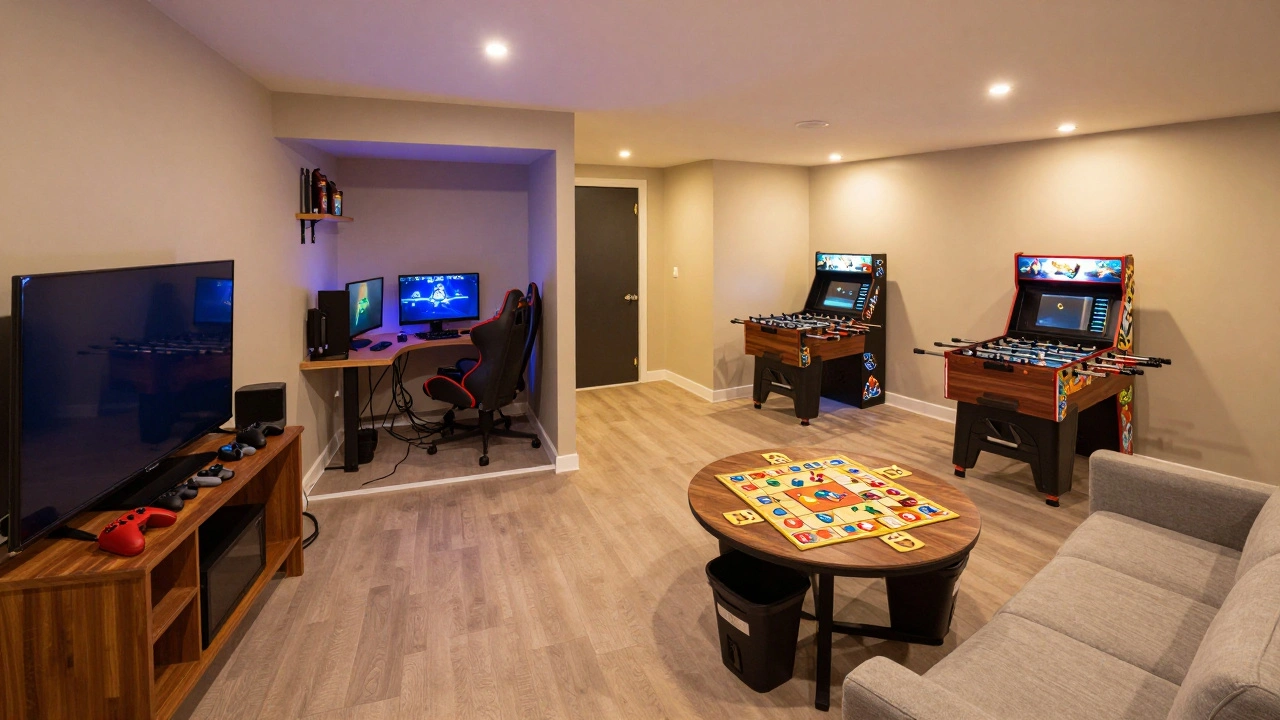
Think about your game room. You’ve got shelves full of boxed games, controllers stacked by the console, and that rare copy of Super Mario Bros. buried under a pile of manuals. But when your friends come over, they trip over the Xbox, knock over a shelf, or crowd too close to the PS5 while trying to grab a snack. And when you’re alone at 2 a.m. with a glass of water in hand, you catch yourself glancing at the shelf-just to make sure everything’s still there.
Most people design game rooms for fun. But if you’ve got a collection worth more than a few hundred bucks, you need to design for flow and security too. Not just how it looks. How it works.
Start With Zones-Not Just Furniture
A game room isn’t one big blob of controllers and screens. It’s a series of zones, each with its own purpose and movement pattern. Think of it like a kitchen: the prep area, the cooking area, the dining area. You don’t want people bumping into each other while one person’s chopping onions and another’s washing dishes.
Break your space into four zones:
- Console Zone: TV or monitor, couch, controllers, power strips. Keep this area quiet. No foot traffic behind the couch. Leave at least 3 feet of clearance on all sides.
- PC Gaming Zone: Desk, chair, keyboard tray, cable management. This isn’t a social spot. Keep it tucked into a corner with enough room to stand up and stretch without knocking over a monitor.
- Tabletop & Board Game Zone: Round table, storage bins, snack area. Round tables are better than rectangles because they let people move in and out without blocking others. Keep game boxes on open shelves, not stacked high. You don’t want to climb a ladder to find Settlers of Catan.
- Arcade & Active Play Zone: Foosball, air hockey, Pop-A-Shot. These need space to swing, move, and watch. Put them in the center of the room with at least 8 feet of clear space around them. Don’t tuck them into a corner-people will bump into them, and the game will break faster.
When you map these zones on paper, draw arrows showing how people move between them. Where do people go after a match? To the snack bar? To the couch? To the bathroom? If the path from the arcade table to the fridge cuts through the console zone, you’ve got a problem. People will get in each other’s way. And when someone’s trying to win a game of Street Fighter, the last thing they need is someone elbowing them for a soda.
Storage Isn’t Just Shelves-It’s Protection
You don’t store your games like library books. You store them like collectibles. Dust, heat, humidity, and light all degrade cartridges, discs, and cases over time. A $200 copy of Super Mario 64 can lose half its value if the plastic is warped or the label is faded.
Here’s what actually works:
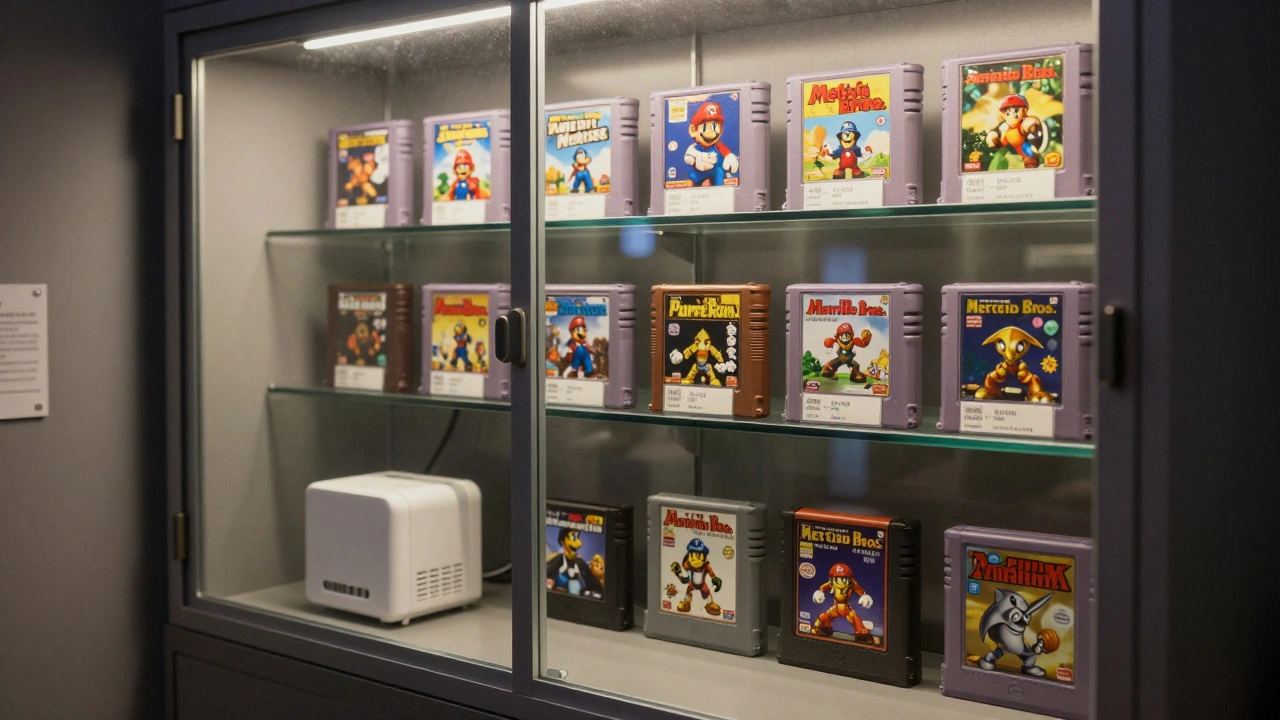
- Wall-mounted cabinets with glass doors: These keep games visible but protected. Use UV-filtering glass if you can. Sunlight bleaches colors and cracks plastic over time.
- Climate-controlled shelves: If you’re serious, install a small dehumidifier in the room. Ideal humidity? 40-50%. Too dry? Cracks in plastic. Too damp? Mold on labels. Portland’s weather is tricky-humid winters, dry summers. A $50 dehumidifier is cheaper than replacing a damaged copy of Metroid Prime.
- Locked drawers for high-value items: If you’ve got rare games, prototypes, or sealed copies, lock them. Not just in a cabinet. A small, anchored safe with a combo lock. You don’t need a vault. You need a drawer that won’t be opened by a curious guest-or a drunk roommate.
- Label everything: Use a small label maker. Write the game title, year, condition, and value. No one remembers that EarthBound is in the third drawer from the left. But a label does.
Don’t stack games on the floor. Don’t leave them in plastic bins under the bed. That’s how collections get lost, damaged, or stolen.
Security Isn’t Just a Lock-It’s Awareness
Most people think security means cameras. But the biggest threat isn’t a burglar. It’s a friend who thinks, “I’ll just borrow this one.” Or a kid who drops a game on the tile floor. Or a pet that chews on a controller cable.
Real security is about control, not cameras.
- Place high-value items out of reach: Put rare games on shelves above eye level. Not so high you need a ladder, but high enough that a child or guest won’t casually grab them.
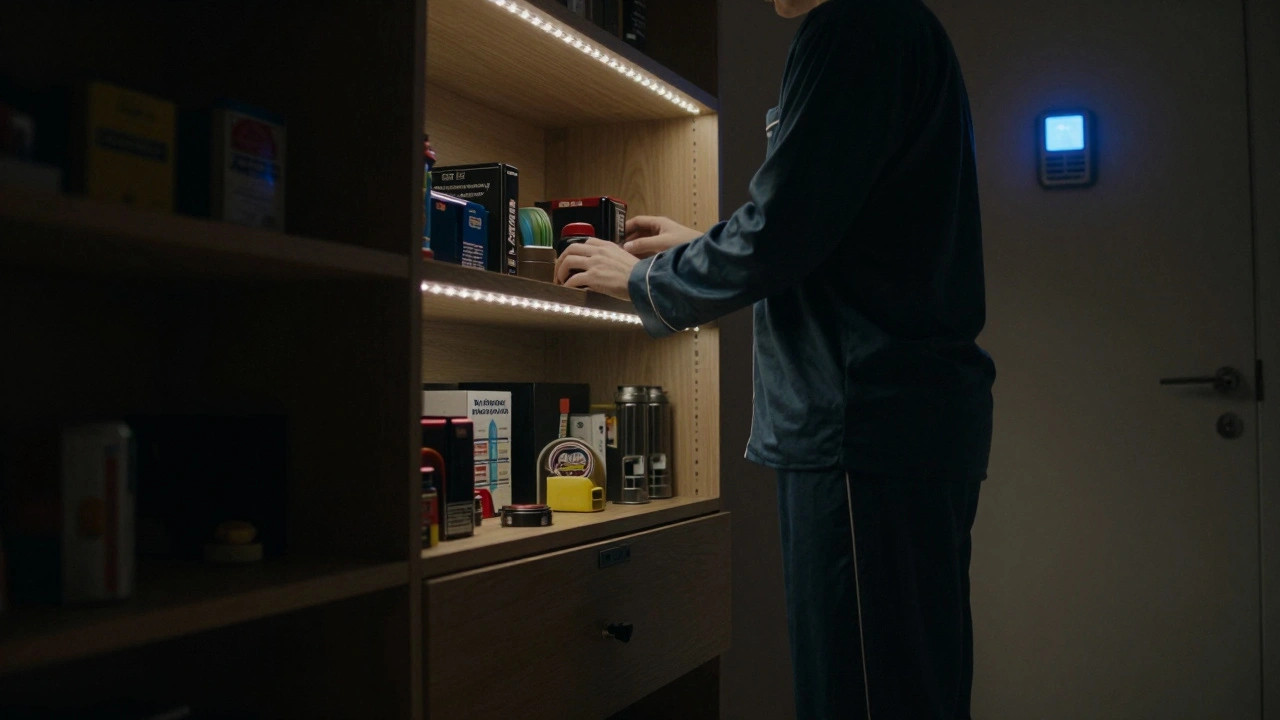
- Use motion-sensor lighting: Install motion lights near your game shelves. When someone walks into the room after dark, the lights turn on. Not just for safety. For visibility. If someone’s sneaking around your collection, they’ll know they’re being watched-even if there’s no camera.
- Install a door alarm: A simple wireless door sensor on the game room door. It beeps if the door opens after 10 p.m. No one needs to know it’s there. But if someone opens the door at 2 a.m. to grab a game, you’ll get a text alert on your phone.
- Keep an inventory: Take a photo of every game. Store it in a cloud folder titled “Game Collection - 2026.” Include the price you paid, the condition, and where you bought it. If something goes missing, you’ve got proof. Insurance companies ask for this. And so will your conscience when you realize you lost a $500 copy of EarthBound and you didn’t even have a list.
You don’t need a full home security system. You need awareness. If you can walk into the room and instantly tell if something’s out of place, you’re already ahead of 90% of collectors.
Lighting, Seating, and Flow-The Hidden Rules
Lighting isn’t just about seeing the screen. It’s about seeing everything.
Use layered lighting:
- Overhead: Recessed LEDs for general room light. No harsh fluorescents. They wash out colors.
- Task lighting: A small pendant lamp over the PC desk. A reading lamp next to the board game table.
- Accent lighting: LED strips under shelves to highlight game boxes. Blue or white. Not red. Red makes everything look like a horror game.
Seating matters too. You need:
- Two or three couches or armchairs for console gaming-no bean bags. They sink too low.
- Bar stools at a snack counter. Keep drinks away from electronics.
- One fold-out chair for guests. Don’t overdo it. Too many seats means people linger too long. And the longer they stay, the more likely they are to touch something they shouldn’t.
And here’s the quiet truth: if your game room feels like a living room, people will treat it like one. If it feels like a museum-quiet, intentional, respected-they’ll behave differently. That’s not about decor. That’s about psychology.
What to Avoid-The Common Mistakes
Here’s what breaks game rooms:
- Putting the console in front of a window. Glare on the screen. Heat from sunlight. Dust buildup. Avoid it.
- Using open shelves for all games. Dust gets in. Kids grab them. Pets knock them over. Use glass doors for anything worth more than $50.
- Ignoring cable management. Tripping over wires is the #1 reason people stop coming back. Use cable clips, under-desk trays, and zip ties. Label each wire: “PS5,” “Switch,” “Soundbar.”
- Putting the room in the basement. Basements are damp. Basements flood. Basements get forgotten. If you must use one, install a dehumidifier and raise your shelves off the floor by 6 inches.
- Not planning for guests. If your room has no clear path to the bathroom or kitchen, people won’t stay long. Make the flow obvious.
Final Rule: Build for You, Not for Instagram
Some game rooms look like they belong in a video game store. Glass cases. LED lights. neon signs. But if you can’t reach the game you want without climbing on a stool, it’s not functional. It’s a display. And displays don’t get played.
Design for use. Not for looks. If you can grab your favorite game in 10 seconds, if you can walk through the room without bumping into anything, if you can sleep knowing your collection is safe-then you’ve won.
It’s not about how many games you own. It’s about how well you can enjoy them.
How do I protect my game collection from humidity in Portland?
Portland’s damp winters and dry summers make climate control essential. Install a small dehumidifier in the game room and keep the humidity between 40% and 50%. Use sealed, UV-filtering glass shelves for valuable games. Avoid placing shelves directly against exterior walls-they get colder and collect condensation. Check for moisture buildup every few months, especially in basements or attics.
Should I lock up my video game collection?
If any of your games are worth more than $100, yes. Use a small, anchored safe with a combo lock for rare or sealed titles. For the rest, use locked cabinets with glass doors. The goal isn’t to keep people out-it’s to keep them from accidentally damaging or misplacing items. A locked drawer prevents a curious child or drunk friend from grabbing a game they shouldn’t.
What’s the best layout for a small game room?
In small rooms, prioritize zones over size. Put the console setup against a wall with a single couch in front. Use wall-mounted shelves above for games and accessories. Skip large arcade games like foosball or pool tables. Focus on one or two console setups, a small PC station, and a fold-out table for board games. Keep walkways at least 2.5 feet wide. Use vertical space-shelves up to the ceiling-and avoid floor clutter at all costs.
Do I need cameras to secure my game collection?
Not necessarily. Most thefts happen from people you know-a friend, a guest, a roommate. Cameras don’t stop that. What does? Awareness. Motion-sensor lights, door alarms, and locked storage make it obvious when someone’s tampering with your collection. If you can tell at a glance if something’s missing, you don’t need a camera. If you’re worried about strangers breaking in, then yes-add a simple outdoor camera. But focus on the easy wins first: lighting, locks, and labels.
How do I organize my board games for easy access?
Sort them by player count: 2-player games, 3-4 player, 5+ player. Use labeled bins or drawers. Keep the most-played games at eye level. Store rarely used ones on higher shelves. Don’t stack boxes. Use vertical dividers or bookshelf organizers. If you have a round table, keep the most popular 3-5 games on a nearby cart so you can grab them without moving furniture.
Can I put my game room in the garage?
Only if you insulate and climate-control it. Garages get too hot in summer and too cold in winter. Plastic cases warp. Discs crack. Electronics fail. If you must use a garage, install a mini-split HVAC unit, raise all shelves off the floor, use sealed storage, and add a dehumidifier. Otherwise, pick a dry, interior room-like a spare bedroom or finished basement with proper ventilation.