
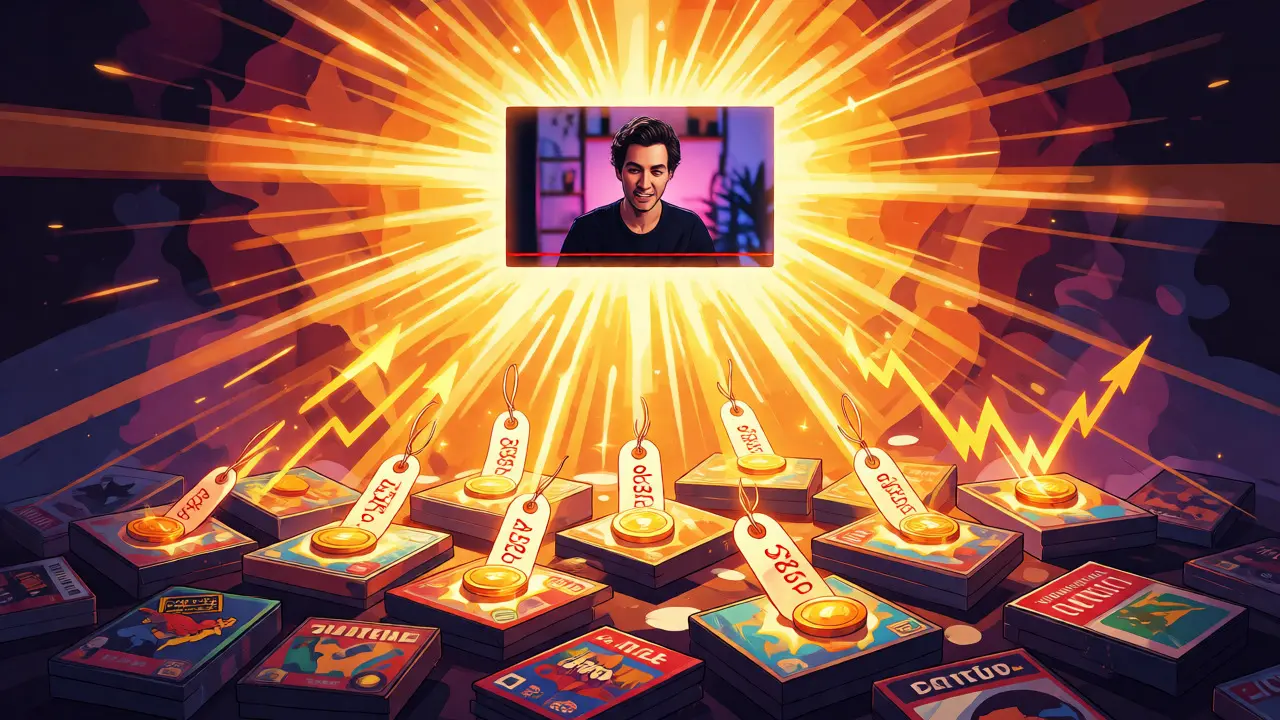
You’re browsing eBay or Facebook Marketplace on a Tuesday night, minding your own business, when you see it: that obscure PS2 RPG you missed in 2004. It’s listed for $15. You hesitate. "Maybe next week," you think. Then, on Thursday, a popular YouTuber with two million subscribers features that exact game in a 'Hidden Gems' video. By Friday morning, the $15 listing is gone. The new lowest price? $85. This isn't bad luck; it's the Creator Spotlight Effect, a phenomenon where content creators significantly inflate the market value of specific media through targeted exposure.
This dynamic has fundamentally changed how we buy and sell physical media. It’s no longer just about supply and demand in the traditional sense; it’s about attention economics. When a trusted voice highlights a niche product, they don’t just inform the audience-they trigger a buying frenzy that outpaces inventory availability. If you’ve ever felt like the moment you decide to buy something, the price doubles, this guide explains exactly why that happens and how you can navigate the chaos.
The Mechanics of Attention Economics
To understand why prices spike, you have to look at the velocity of information flow. In the pre-internet era, word-of-mouth moved slowly. A friend might tell you about a great game, but that influence was limited to your immediate social circle. Today, a single video reaches hundreds of thousands of people instantly. This creates a massive, synchronized shift in demand.
Consider the Influencer Marketing model applied to retro gaming. Unlike traditional advertising, which feels pushy, creator recommendations feel like advice from a friend. This trust lowers the barrier to purchase. When a viewer sees a gameplay clip that looks fun, the emotional connection is immediate. They aren't just buying a disc; they're buying into an experience promised by someone they admire.
The problem arises because the supply side cannot react quickly enough. Physical games are finite. If there are only 50 copies of a rare title in circulation, and a video generates interest from 5,000 potential buyers, the competition for those 50 copies becomes fierce. Sellers, seeing the traffic surge, adjust their prices upward in real-time. This isn't always price gouging; often, it's simply sellers realizing their item is now worth more than they thought.
Anatomy of a Price Spike Event
Not every mention causes a spike. There is a specific anatomy to these events that savvy collectors can learn to recognize. First, the creator must have high engagement rates, not just subscriber counts. A channel with 100k active, loyal fans will move markets more effectively than a channel with 1M passive viewers.
Second, the timing matters. Spotlights released during weekends or holidays tend to cause sharper, shorter spikes because people have time to browse and buy immediately. Weekday releases might lead to a slower, more sustained increase as the news trickles down over several days.
| Phase | Timeframe | Market Behavior | Buyer Strategy |
|---|---|---|---|
| Incubation | 0-6 Hours Post-Upload | Slight increase in views; few sales yet. Prices remain stable. | Monitor listings closely. Act fast if you find old inventory. |
| Viral Surge | 6-48 Hours | Rapid search volume increase. Low-priced items vanish instantly. | Avoid bidding wars. Wait for the initial panic to settle. |
| Price Adjustment | 3-7 Days | Sellers update prices based on recent sales data. Average price jumps 50-200%. | Set alerts for lower thresholds. Consider alternative platforms. |
| Stabilization | 2-4 Weeks | Demand cools off. New inventory may surface from hoarders selling out. | Best time to buy if you missed the first wave. |
Understanding this timeline helps you avoid paying peak prices. Most buyers rush in during the Viral Surge, driven by FOMO (Fear Of Missing Out). But smart collectors know that prices often stabilize after the hype dies down, sometimes even dropping below the post-spike average as sellers who bought low try to flip their stock.
Case Studies: When Creators Moved Markets
Let’s look at real-world examples to ground this theory. Take Elden Ring. While already popular, specific lore videos by channels like VaatiVidya caused temporary spikes in demand for collector’s editions and strategy guides. These weren't permanent increases, but short-term surges that affected secondary market pricing for weeks.
Another prime example is the resurgence of Yakuza 0. For years, it sat on shelves for cheap. Then, a series of deep-dive analysis videos highlighting its humor and story went viral. Suddenly, copies that were selling for $10 were going for $40. The creator didn't just review the game; they reframed its cultural value, making it a "must-play" for a new generation.
These cases show that the impact varies by genre. Narrative-heavy games or those with unique mechanics tend to see higher volatility than mainstream shooters or sports titles, which already have saturated markets. Niche genres like JRPGs, visual novels, and obscure platformers are the most susceptible to the Creator Spotlight Effect because their fanbases are smaller and more tightly knit.
Strategies for Buyers and Sellers
If you are a buyer, your goal is to beat the algorithmic wave. Here is how:
- Subscribe to Niche Channels: Follow smaller creators who focus on specific genres. Their recommendations often precede major influencers, giving you a head start.
- Use Price Tracking Tools: Websites like PriceCharting or eBay Watch Lists allow you to set alerts for price drops. Don't rely on manual checks.
- Ignore the Hype Cycle: If a game just got featured, wait three weeks. The initial spike is artificial. Patience saves money.
For sellers, the opportunity is obvious but requires timing. If you have a box of old games gathering dust, keep an eye on trending topics. Did a big streamer just play a forgotten PS1 classic? List yours immediately. However, be cautious about overpricing. If you list too high, you’ll sit unsold while competitors undercut you. Check the "Sold" listings on eBay, not just the asking prices, to gauge true market value.
The Ethical Gray Area
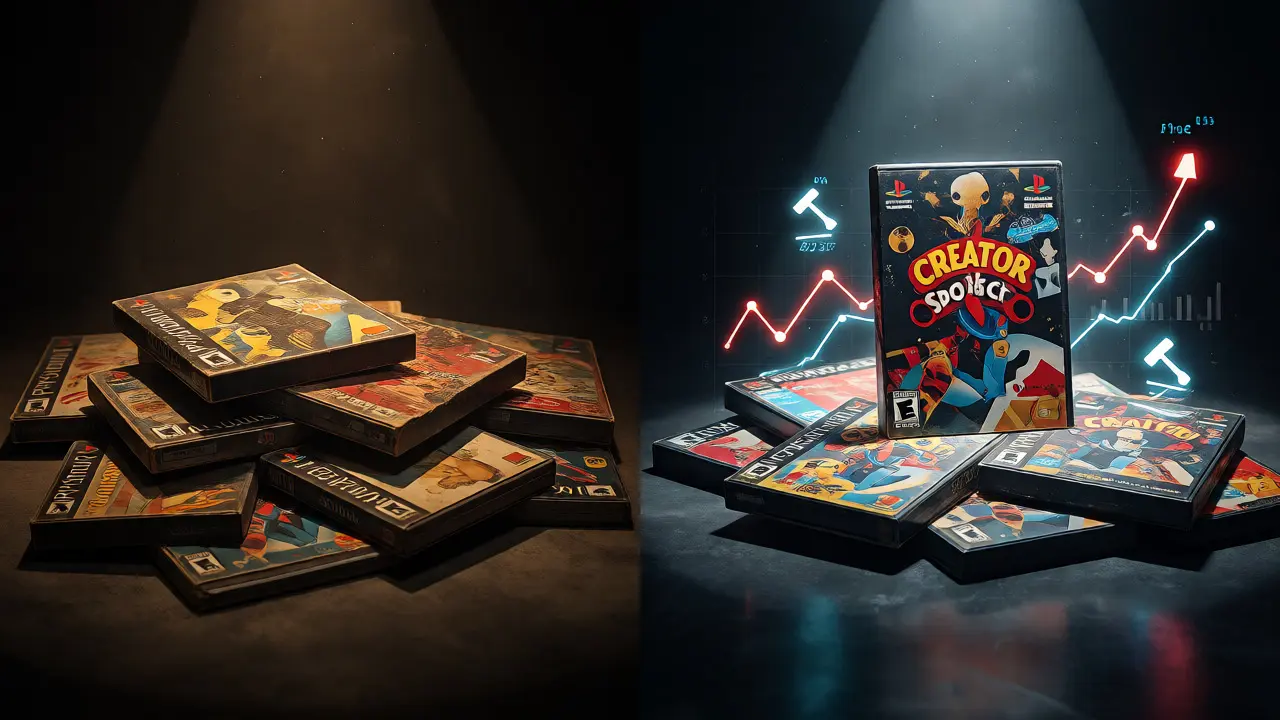
Is this manipulation? Some argue yes. Creators hold power over the livelihoods of small resellers and the budgets of casual gamers. When a video causes a 300% price jump, it can lock out players who genuinely want to experience the game but can’t afford the inflated cost.
However, others argue that creators provide essential curation in an oversaturated market. Without them, many great games would remain unknown. The price spike is simply the market correcting itself to reflect true demand. It’s a double-edged sword: discovery drives value, but rapid discovery distorts accessibility.
As consumers, we need to be aware of this dynamic. Recognizing that a price hike is likely due to a recent video rather than intrinsic rarity helps us make better decisions. We can choose to support the creator by watching the video, but resist the urge to buy immediately unless we truly need it right now.
Beyond Video Games: The Broader Implications
This phenomenon isn't limited to gaming. It applies to books, vinyl records, board games, and even fashion items. The underlying mechanism-attention driving scarcity-is universal. As content creation grows, so does the speed at which markets react. What used to take months to trend now takes hours.
For collectors across all hobbies, the lesson is clear: information asymmetry is dead. Everyone knows what’s hot almost simultaneously. Your edge no longer comes from knowing what exists, but from knowing when to act. Speed and patience are your best tools in this new economy.
Do all creator mentions cause price spikes?
No. Only mentions by creators with highly engaged audiences in relevant niches typically cause significant spikes. A generic review from a large, broad-audience channel may have less impact than a passionate recommendation from a smaller, specialized channel.
How long does a price spike last?
Most spikes peak within 48 hours and begin to stabilize after 2-4 weeks. However, if the game gains lasting popularity or critical acclaim, the new higher price point may become permanent.
Should I sell my games immediately after a spotlight?
It depends. If you need cash, selling during the spike maximizes profit. If you’re a collector, consider holding, as prices may drop back down once the hype fades, allowing you to potentially rebuy later or keep the asset without losing liquidity.
Can I predict future price spikes?
Partially. Monitor upcoming release dates for documentaries or anniversary celebrations. Also, track which older games are being played by major streamers in live streams, as these often precede formal review videos and subsequent price hikes.
Does digital gaming suffer from this effect too?
Less so for base prices, since digital supply is infinite. However, DLC, special editions, and virtual items tied to specific games can still see increased trading activity and secondary market value fluctuations due to creator exposure.