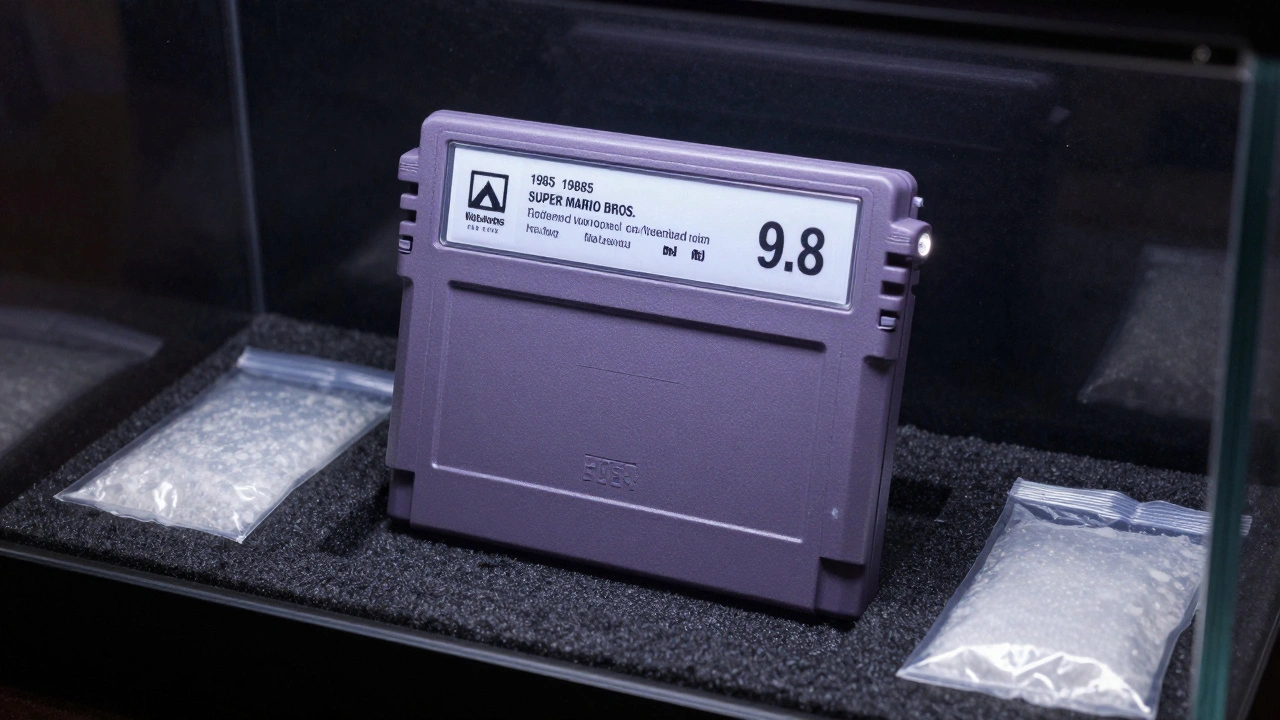
When you buy a video game today, you’re not just buying a game-you might be buying an asset. For collectors and investors, the condition of a game isn’t just about looks-it’s about value. And that’s where grading comes in. Professional grading doesn’t just tell you if a game is clean or dusty. It turns a cartridge or disc into a certified investment with a numbered score that directly impacts its price, liquidity, and long-term growth potential.
What Grading Actually Measures
Grading isn’t a single number. It’s a breakdown. Every sealed game is evaluated on five separate parts: the box, the seal, the cartridge or disc, the manual, and any inserts like maps or posters. Each gets its own grade. A game can have a perfect 9.8 seal but a 7.5 box because of a crease along the spine. That’s not a mistake-it’s how the system works. Investors who ignore this and treat the overall grade as one number are leaving money on the table.
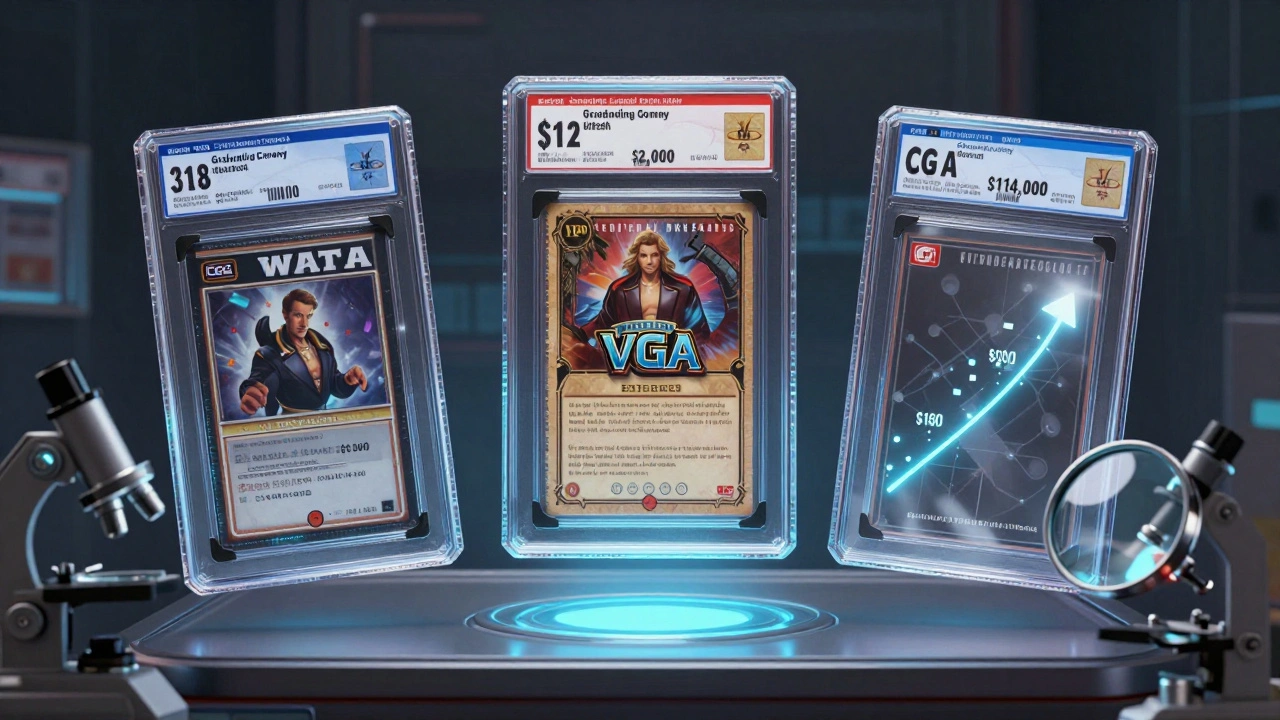
Companies like Wata Games, VGA, and CGC Video Games all use different scales, but they’re trying to do the same thing: turn subjective condition into objective data. Wata uses a 1-to-10 scale. VGA uses 10 to 100. CGC uses both a 10-point scale and a 100-point scale, with a conversion chart so you know a 9.9 on their 10-point scale equals a 95 on their 100-point scale. If you own games graded by different companies, you need to know how to translate them. Otherwise, you can’t compare your portfolio accurately.
The Seal Is Everything
The single biggest factor in value isn’t the game itself-it’s whether it’s still sealed. A game that’s never been opened commands 3x to 10x more than the same game in perfect condition but opened. That’s not a rumor. It’s market fact. A sealed copy of Super Mario Bros. from 1985 graded 9.8 sold for $114,000 in 2025. The same game, opened but never played, graded 9.8, sold for $12,000. That’s not a glitch. It’s the system.
Grading companies label sealed games with special designations. Wata uses “Sealed” with a blue label. VGA uses “Unopened.” CGC uses “Sealed” or “Unused in Box” (formerly “Qualified”). The difference matters. If a seal breaks accidentally-say, from humidity or rough handling-the game drops from sealed status. Even if it looks untouched, it’s now worth far less. That’s why serious investors store sealed games in climate-controlled vaults, not attics or basements.
Grades in the Premium Range: The 9.0 to 9.8 Zone
Not all high grades are equal. A game graded 9.0 might sell for $200. A 9.2? $450. A 9.4? $800. A 9.6? $1,300. A 9.8? $3,000+. The jump isn’t linear. Each 0.2-point increase in the premium range can double or triple the price. That’s why investors obsess over details: a faint scuff on the box corner, a tiny crease on the seal, a slightly faded manual. These aren’t flaws-they’re grade killers.
Grading companies use microscopes and lighting rigs to spot damage invisible to the naked eye. A 9.8 game might have a single scratch on the disc so small it’s only visible under 10x magnification. That scratch could drop the grade to 9.6. That’s a $1,700 loss. Investors who don’t understand this level of detail are gambling, not investing.
The Cost of Grading and Break-Even Math
Grading costs at least $25 per game. For a $50 game, that’s half its value just to get graded. So why do it? Because only graded games trade reliably. An ungraded game might sell for $200 on eBay, but a graded 9.6 version sells for $800 with a 48-hour auction window and 12 bidders. The difference isn’t just price-it’s speed, certainty, and buyer trust.
That’s why smart investors only grade games with a clear path to value. A common $30 game from 2010? Not worth grading. A rare copy of The Legend of Zelda: Ocarina of Time in sealed condition? Absolutely. The rule of thumb: if the game’s ungraded market value is under $150, skip grading. If it’s over $300, grading pays for itself quickly.
Company Risk and Market Fragmentation
There’s no single authority in video game grading. Wata is popular. VGA has deep roots. CGC is growing fast. But what if one of them collapses? Or changes their standards? Or loses credibility?
That’s real risk. In 2024, a major grading company revised its seal inspection policy. Overnight, dozens of games previously graded 9.8 dropped to 9.4. Their market value halved. Investors who held all their assets with that one company lost millions in paper value. The lesson? Never put all your eggs in one grading basket. Diversify across companies. Own games graded by Wata, VGA, and CGC. That way, if one loses trust, your portfolio doesn’t collapse.
Portfolio Strategy: Sealed vs. Graded
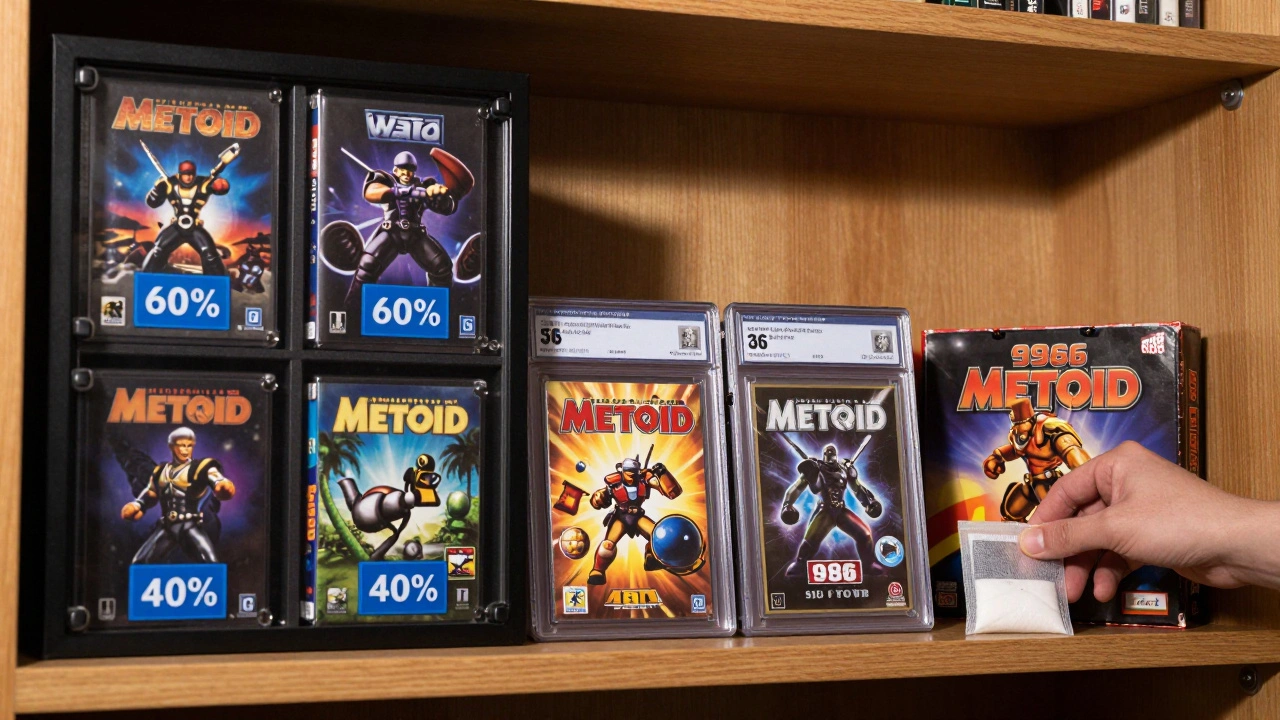
You have two paths. One: invest in sealed games. They’re rare. They’re expensive. They’re the only way to get top-tier returns. But they’re hard to find. Only 1 in 500 copies of Metroid from 1986 are still sealed. The supply is tiny.
The other path: invest in graded games in the 8.5 to 9.2 range. These are more common. You can buy them in bulk. They’re cheaper. Their market is deeper. Liquidity is higher. You can sell them faster. They’re not going to hit $100,000 like a sealed 9.8 Super Mario Bros., but they’ll steadily appreciate 15-20% a year with less volatility.
Top investors split their portfolios. 60% in sealed, high-end titles. 40% in mid-tier graded games. That way, they get explosive upside from rare sealed finds and steady growth from the broader market.
What Could Go Wrong?
Grading is still young. Standards change. Companies change hands. Buyers change their minds. In 2023, a popular game was regraded after a new team took over a grading company. Hundreds of games dropped 0.6 points. Prices crashed. Investors who didn’t track the news got burned.
Storage matters too. Humidity warps boxes. Sunlight fades labels. A game in perfect condition today can degrade into a 7.5 in five years if stored wrong. That’s why investors use silica gel packs, UV-blocking cases, and temperature-controlled environments. You can’t grade condition-you can only preserve it.
Long-Term Thinking
This isn’t about flipping games for quick cash. It’s about building a portfolio that holds value for decades. The best long-term investors don’t chase trends. They buy the games that will still matter in 2040: first editions, culturally significant titles, games with limited print runs. They don’t care if it’s trendy now. They care if it’s timeless.
Grading turns emotion into data. It turns nostalgia into a measurable asset. And in a market where trust is scarce, a certified grade is the only thing that gives buyers confidence to pay top dollar.
What’s the difference between Wata, VGA, and CGC grading scales?
Wata uses a 1-to-10 scale, where 10 is perfect. VGA uses a 10-to-100 scale, with 100 being flawless. CGC uses both: a 10-point scale (for simplicity) and a 100-point scale (for precision). A 9.9 on CGC’s 10-point scale equals a 95 on their 100-point scale. The grades are interchangeable if you know the conversion chart, but you must track which system was used for each game in your portfolio.
Can a game be graded after it’s been opened?
Yes, but it loses its sealed premium. Games that are opened but never played are graded as “Unused in Box” (CGC) or “Open Box” (Wata). These are worth 30-70% less than sealed versions. The box and manual still get graded, but the absence of a sealed label removes the highest-tier market value.
Is grading worth it for modern games?
Only if they’re rare or limited edition. Most modern games (2015-present) aren’t worth grading unless they’re collector’s editions with unique packaging or low print runs. A standard copy of Call of Duty from 2024 won’t gain value from grading. But a sealed, numbered copy of Animal Crossing: New Horizons with a special box? That’s a different story.
How do I know if a game is worth grading?
Check its current market value. If it’s selling for under $150 ungraded, skip grading-it won’t cover the cost. If it’s already trading above $300, grading will likely double or triple your return. Also, consider rarity. A game with only 500 copies printed is worth grading even if it’s currently priced at $200.
What happens if a grading company goes out of business?
Your games don’t vanish, but their value drops. Buyers lose trust in the label. Liquidity dries up. That’s why smart investors diversify across multiple grading companies. Holding games graded by Wata, VGA, and CGC reduces risk. If one company fails, your other holdings still trade reliably.