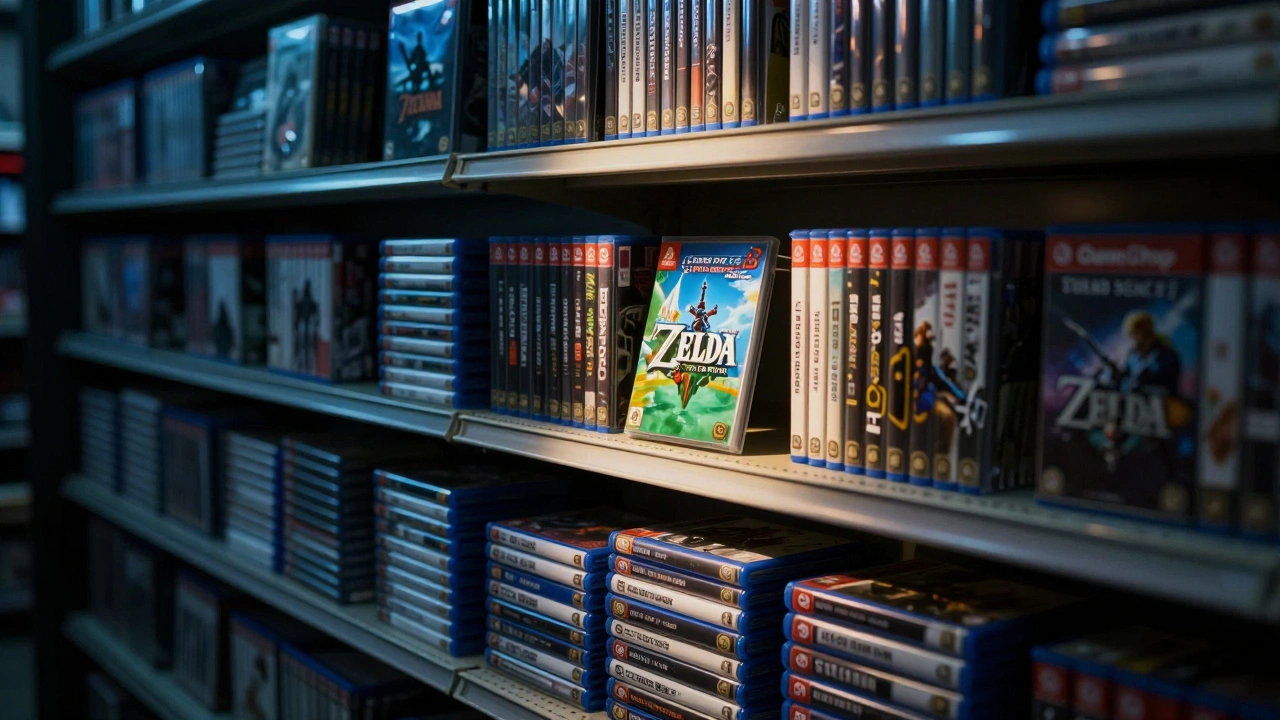
Ever wonder why the trade-in value for your old copy of Legend of Zelda: Tears of the Kingdom dropped from $25 to $8 in just three weeks? It’s not because the game got worse. It’s because the store’s inventory turned over too slowly.
Video game retailers don’t set trade-in prices based on how much you loved the game or how rare it is. They set them based on one cold, hard number: inventory turnover. This isn’t some abstract finance term-it’s the heartbeat of every used game section in every GameStop, EB Games, or independent shop. And if you’re trading in games, you need to understand how it works.
What Is Inventory Turnover, Really?
Inventory turnover measures how many times a retailer sells and replaces its stock in a given period. For most stores, it’s calculated as: Cost of Goods Sold (COGS) divided by Average Inventory Value. If a store sells $500,000 worth of games in a year and keeps $50,000 in stock on average, that’s a 10x turnover rate. Sounds good? For video games, it’s not nearly enough.
New releases demand 12 or more turns per year. Why? Because the window to sell a game at full price is tiny. By the time a game hits 90 days after launch, its retail value drops by half. Retailers can’t afford to sit on unsold stock-they need cash flowing in fast. And that’s where trade-ins come in.
Why Trade-In Prices Swing Like a Stock Market
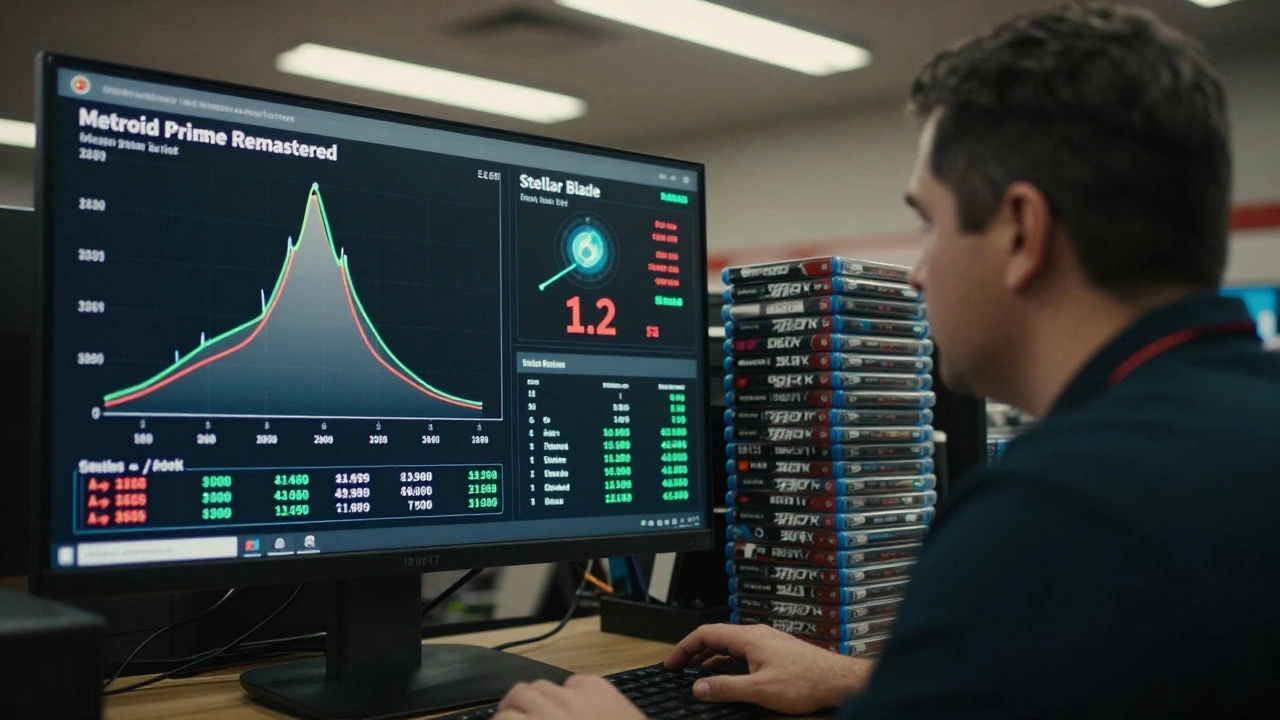
Trade-in prices aren’t fixed. They’re dynamic. If GameStop has 400 copies of Stellar Blade sitting on the shelf and only sold 12 last week, they’re not going to pay you $15 for your copy. They’re going to offer $3-or less. Why? Because they already have too much of it. Holding onto slow-moving inventory costs money: storage, insurance, risk of damage, and lost capital that could be used to buy more popular titles.
Here’s how it flips: If Metroid Prime Remastered suddenly starts selling out every day, GameStop needs more used copies to meet demand. Suddenly, they raise trade-in prices for that title-maybe to $20 or $25. They’re not being generous. They’re desperate to stock up before the next wave of players comes in.
This isn’t speculation. It’s standard practice. Retailers monitor sales velocity daily. If a game’s sell-through rate drops below 1.5 units per week, trade-in offers for it plummet. If it’s selling 5+ units a week, they’ll pay top dollar to keep the supply flowing.
The Hidden Costs That Drive Trade-In Cuts
It’s not just about how many games are sitting on the shelf. It’s about how much they cost to hold.
In 2026, video game retailers face a 10% shrinkage rate-meaning one in every ten games in stock disappears. Maybe it’s stolen. Maybe it’s damaged. Maybe it got lost in the back room. That’s not a minor loss. That’s $500,000 worth of inventory vanishing every year if you’re doing $5 million in sales.
And then there’s shipping. Inbound freight costs are projected at 20% of revenue. That means for every $100 in game sales, $20 goes to moving boxes from warehouse to store. Retailers can’t absorb that unless they turn inventory fast. Slow turnover = higher cost per unit sold.
So when a store sees a pile of 200 used copies of Dead Space 3 that haven’t moved in six months, they don’t just lower the price. They slash trade-in offers to $0.50 per copy. Why? Because they’d rather spend $50 to buy 100 copies of Final Fantasy XVI that sell out in two weeks than tie up $1,000 in inventory that might never move.
Used Games vs. New Games: Two Different Worlds
New games have one advantage: marketing. Launch week, pre-orders, media hype-they create urgency. That’s why new releases need 12+ turns per year. Used games? They don’t get trailers. They don’t get billboard ads. They don’t get influencer streams.
So their turnover is naturally slower. A used game might turn 3-4 times a year. That’s fine… until it’s not. When a store has too many slow-turning used titles, they start trading down. They offer less for your copy of Red Dead Redemption 2 because they already have 180 of them. And if they can’t sell those 180 in the next month, they’ll discount them to $5 each just to clear shelf space.
This creates a vicious cycle: low trade-in offers → fewer people trade in → less used stock → fewer customers come in for budget options → lower sales → even lower trade-in offers.
How Accessories Change the Game
Here’s something most gamers don’t realize: your trade-in value isn’t just about games. It’s about controllers, headsets, memory cards, and charging docks.
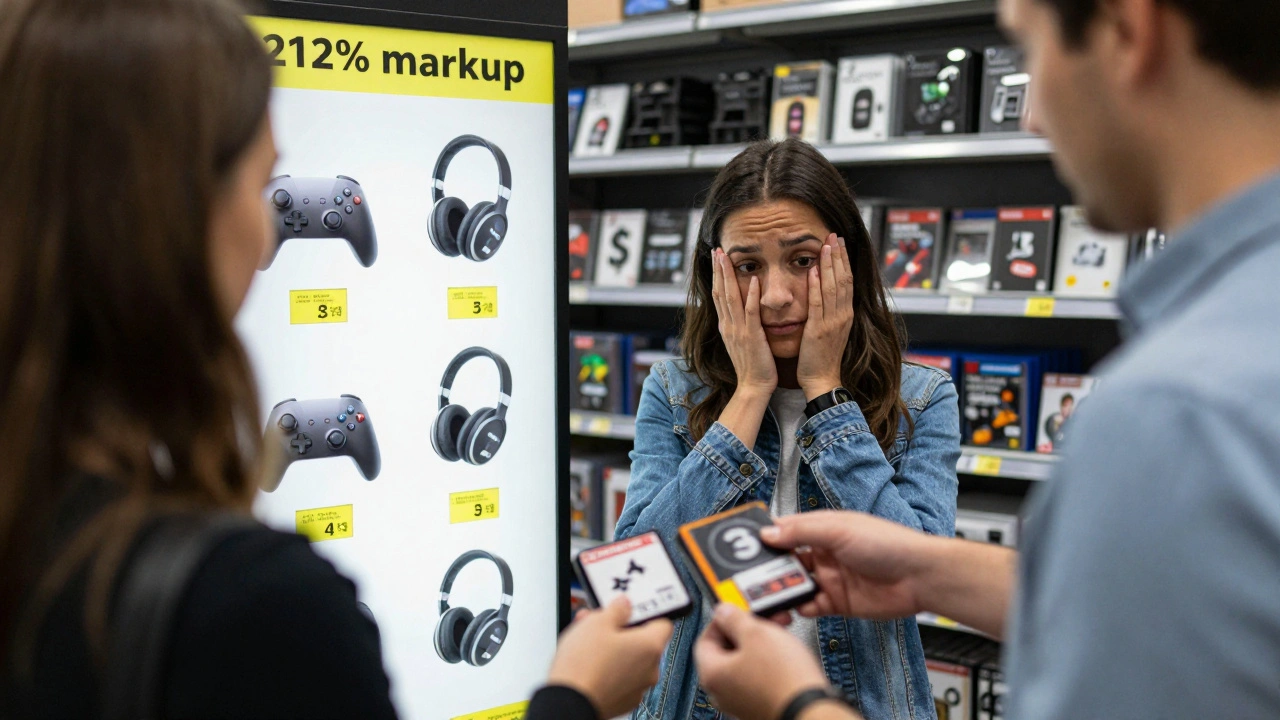
Accessories have better margins and faster turnover. A $15 wireless controller might cost $8 to buy and sell for $25. That’s a 212% markup. A used game? It might cost $4 to acquire and sell for $12. That’s only a 200% markup-and that’s if it turns fast.
So when a retailer sees accessories turning over twice as fast as games, they adjust. They might lower trade-in prices for games to push customers toward accessories. "Trade in your old game and get $5 extra toward a new headset." It’s not charity. It’s strategy.
If you’re trading in games to buy accessories, you’ll get better offers. If you’re trading in just to get cash? You’re getting the worst deal.
Profit Margins Are a Tightrope Walk
Lower trade-in prices mean higher profit margins. Pay $2 for a game and sell it for $15? That’s a 650% gross margin. Pay $8 and sell it for $15? That’s only a 87% margin.
But here’s the catch: if you pay too little, people stop trading in. No trade-ins = no used stock = fewer customers. So retailers walk a line. They want high margins, but they need volume.
Inventory turnover breaks the deadlock. If turnover is high-meaning games sell fast-they can afford to pay more. If turnover is low, they have to pay less to avoid drowning in unsold stock.
Think of it like this: a store with 12+ turns per year can afford to be generous. A store with 5 turns? They’re barely surviving. And they’re not going to give you $10 for a game they can’t sell.
What You Can Do About It
Trade-in prices aren’t random. They’re calculated. And you can use that to your advantage.
- Trade in right after a big release. Stores are flush with cash and need to restock used inventory.
- Avoid trading in games that are over a year old unless they’re still trending. Older titles = lower offers.
- Bundle your trade-in with accessories. You’ll get better value overall.
- Check online trade-in values weekly. If a game’s price just dropped 30%, wait a few days. It might rebound.
- Don’t trade in 10 copies of the same game. Stores max out on quantity. One copy gets full value. The second gets half.
The best time to trade in? Two weeks after a new game launches. That’s when retailers are scrambling to stock up on used versions for budget buyers. That’s when your trade-in value peaks.
Final Reality Check
Video game trade-ins aren’t about fairness. They’re about supply, demand, and cash flow. Retailers aren’t trying to rip you off. They’re trying to stay in business.
With shipping costs at 20% of revenue, shrinkage at 10%, and new releases coming every week, every dollar tied up in slow-moving inventory is a dollar lost. That’s why your $15 game is now worth $3. Not because it’s broken. Not because it’s outdated. Because the store needs to turn its inventory faster-and you’re part of that equation.
Next time you walk into a store with a used game in hand, ask yourself: Is this game selling fast right now? If not, you’re not getting paid for the game. You’re getting paid for the store’s need to move inventory.
Why do trade-in prices change so often?
Trade-in prices change because retailers adjust them based on real-time inventory turnover. If a game is selling quickly, they raise trade-in offers to get more copies. If it’s sitting on the shelf, they lower offers to stop adding to the pile. This happens weekly, sometimes daily.
Do all retailers use the same system?
Most major retailers like GameStop use similar models based on turnover, but smaller stores may have less data and rely on experience. Independent shops might offer higher trade-in prices for popular titles simply because they have fewer copies in stock and need to attract customers.
Is it better to sell my game online or trade it in?
It depends. Online marketplaces like eBay or Mercari usually pay more but take time and effort. Trade-ins give you instant cash or store credit, but you’ll get less. If you need cash fast and the game isn’t in high demand, trade-in is fine. If you’re patient and the game is rare, selling online is better.
Why do I get less for a game I just traded in a month ago?
Because the store now has more copies of it. When a game is traded in frequently, inventory builds up. Once the stock exceeds what they can sell in a week, they slash trade-in prices to avoid overstock. It’s not about the game’s condition-it’s about supply.
Can I predict when trade-in prices will go up?
Yes. Prices usually rise two weeks after a new game launches. That’s when retailers need used copies to meet demand from budget buyers. Also, prices spike before holidays, especially Black Friday and Christmas, when demand for used games surges.