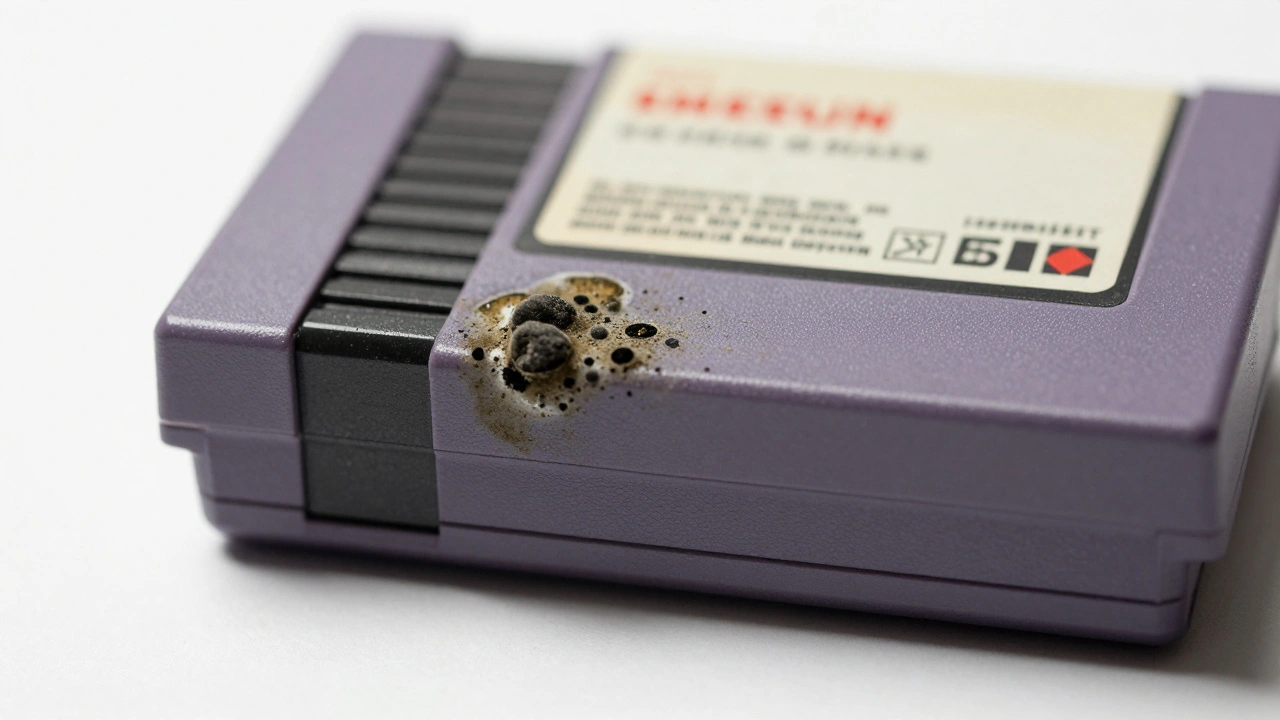
Imagine pulling a pristine copy of Super Mario Bros. is a legendary platformer for the Nintendo Entertainment System that has sold for over $100,000 when sealed from your closet, only to be hit by a wave of musty attic air or worse-visible black mold spots. For collectors, this isn't just a hygiene issue; it's a financial one. Aggressive cleaning can strip labels, fade colors, and slash resale value by tens of percent. But leaving them dirty invites further degradation. The good news? You don't need professional lab equipment to save your collection. By combining simple environmental controls with gentle, stage-by-stage cleaning methods, you can eliminate up to 95% of odors and stop mold growth without risking damage to your prized cartridges, boxes, or consoles.
The Science Behind the Smell and Spots
Before grabbing any cleaning supplies, it helps to understand what you're fighting. Most retro game collections contain three main materials: ABS plastic is the common polymer used for cartridge shells and console bodies, often blended with flame retardants, polycarbonate discs, and acidic paper products like cardboard boxes and manuals. These materials react differently to contaminants.
Mold thrives on organic nutrients found in dust, skin oils, and especially paper fibers. It needs relative humidity (RH) above 60-65% to grow. Once established, mold releases microbial volatile organic compounds (MVOCs), creating that sharp, earthy scent. Meanwhile, "musty" smells often come from the slow breakdown of lignin in old paper, releasing acetic acid and other aldehydes. Cigarette smoke leaves behind nicotine and tar residues that bond tightly to plastics and porous cardboard, creating stubborn odors that linger long after the source is gone. Understanding these sources dictates which cleaning method will actually work-and which might cause irreversible harm.
Step 1: Stabilize the Environment
You cannot clean mold effectively if the environment still supports its growth. The first step in any preservation effort is stabilization. Professional conservation guidelines from institutions like the Library of Congress is a federal library in Washington, D.C., that provides authoritative preservation standards for cultural artifacts recommend keeping storage areas between 18-22 °C (65-72 °F) and 30-50% RH.
- Use a dehumidifier: Set it to maintain 45-50% RH. Empty the reservoir daily during humid seasons.
- Add silica gel: Place 10-30 grams of silica gel packets per storage box containing 10-20 games. Recharge or replace them every 2-3 months.
- Air circulation: Ensure your storage area has some airflow to prevent stagnant pockets of moisture.
Once the humidity drops below 50%, active mold growth stops. This creates a safe window for physical cleaning. Never attempt to clean heavily moldy items in a high-humidity room; you risk driving spores deeper into paper fibers.
Step 2: Physical Cleaning of Plastics and Cartridges
For plastic components like cartridge shells and console cases, surface cleaning is highly effective because odor compounds often sit in a film of grime on top of the material. Here is a safe workflow:
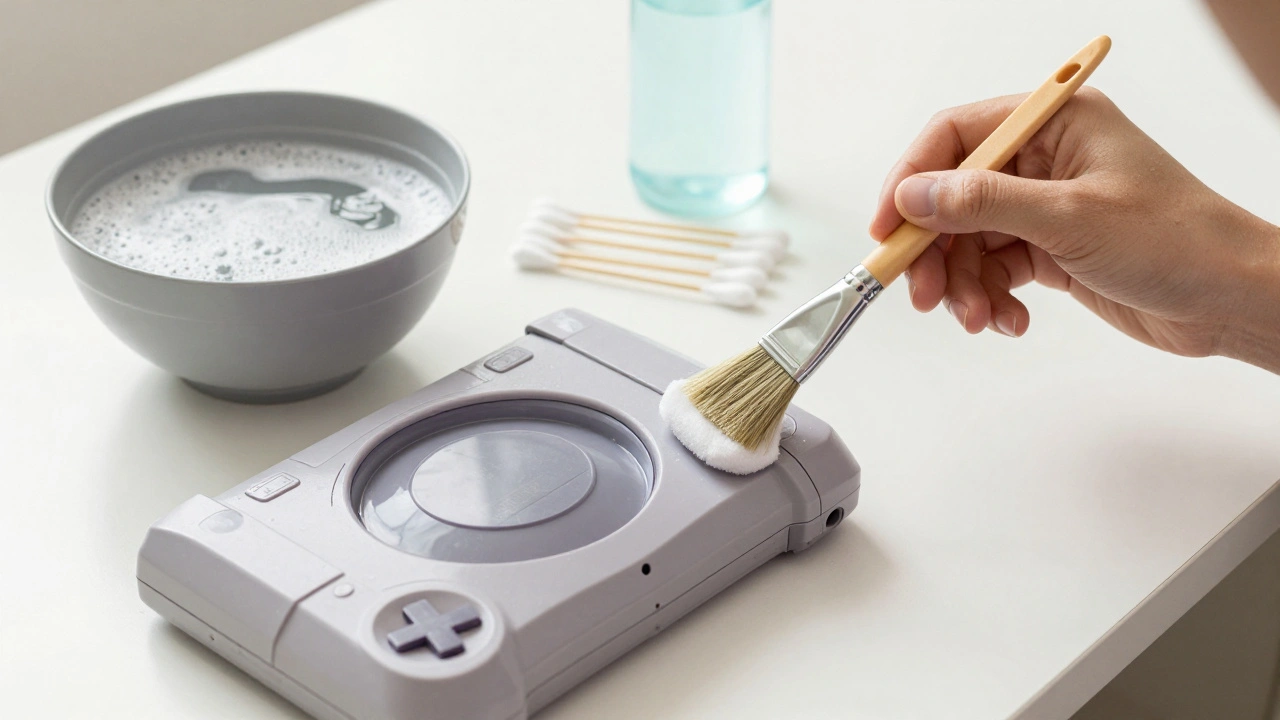
- Dry dust first: Use a soft artist’s brush (1-2 cm wide) to gently sweep away loose dust. Avoid abrasive cloths that could scratch molded textures.
- Disassemble carefully: If possible, separate the PCB from the shell using appropriate security bits (e.g., 3.8 mm or 4.5 mm gamebits). This prevents liquid from reaching sensitive electronics.
- Wash the shell: For heavy smoke or grime, soak the plastic shell in warm water with 1-2% mild dish soap for 2-5 minutes. Scrub gently with a soft brush, rinse thoroughly, and let it air-dry for at least 24 hours.
- Spot clean with Isopropyl Alcohol (IPA): Use 70-99% IPA on cotton swabs to wipe down edges and non-printed surfaces. IPA evaporates quickly and removes oily residues without damaging ABS plastic. Never apply alcohol directly to paper labels, as it can dissolve ink.
For adhesive residue from old stickers, specialized solvents like Goo Gone can be used sparingly on inconspicuous areas first. Test for 30 seconds to ensure no discoloration occurs before proceeding.
Step 3: Handling Paper and Cardboard Safely
Paper is far more fragile than plastic. Water can cause inks to run and drive mold hyphae deeper into the cellulose structure. Therefore, dry methods are preferred for boxes and manuals.
- HEPA Vacuuming: Use a HEPA vacuum on the lowest suction setting with a micro-tool attachment. Hold a fine mesh screen over the surface to catch larger debris while allowing spores to be sucked away. Wear an N95 respirator during this process.
- Dry Cleaning Sponges: Vulcanized rubber sponges (often called soot sponges) can lift surface dirt and light mildew stains. Rub gently in one direction to avoid smearing.
- Avoid Sunlight: While UV light kills mold, it also rapidly fades printed colors and yellows paper. Skip the direct sun exposure and rely on dry air instead.
If a box is structurally sound but smells bad, do not wet it. Instead, move to odor adsorption techniques described below.
Step 4: Odor Removal Using Adsorbents
Once visible contamination is removed and items are completely dry, persistent odors require time and absorption. Two community-proven methods dominate the retro gaming world:
| Method | Best For | Treatment Time | Risk Level |
|---|---|---|---|
| Coffee Grounds | Cigarette smoke, strong mustiness | 24-72 hours | Low (if kept in sachets) |
| Activated Charcoal | General VOCs, long-term storage | 1-4 weeks | Very Low |
| Baking Soda | Mild acidic odors | 24-72 hours | Medium (powder can abrade) |
| Ozone Generators | Severe smoke saturation | 1-2 hours | High (plastic embrittlement) |
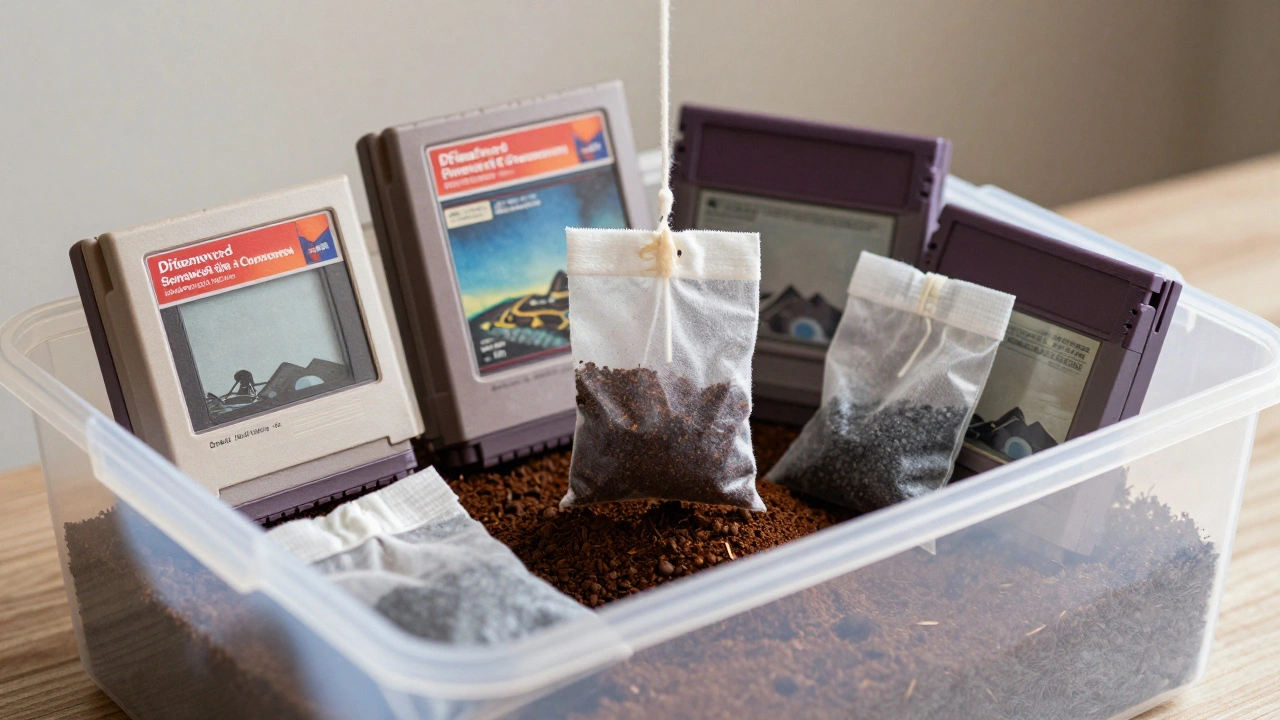
The Coffee Grounds Method: Popularized by restoration videos, this involves placing 100-200g of dry ground coffee in breathable cheesecloth sachets inside a sealed plastic bin with your games. Do not let the grounds touch the items directly. Leave the bin closed for 2-3 days. The porous structure of roasted coffee absorbs sulfur compounds and masks odors effectively. Discard the grounds afterward-they will smell foul as they’ve absorbed the contaminants.
Activated Charcoal: For a more inert approach, use 50-200g of activated carbon in aquarium filter bags or odor absorber pouches. Place these in sealed bins with your collection for 1-4 weeks. Charcoal has a massive surface area (500-1500 m²/g) that traps volatile organic compounds without introducing new scents. This is ideal for long-term storage alongside archival sleeves.
Baking Soda: While popular, baking soda is less effective on complex MVOCs than charcoal or coffee. If used, place 30-60g in an open container within the bin. Never sprinkle powder directly onto paper artwork, as it can cause abrasion or leave residues.
Methods to Avoid: Ozone, UV, and Sprays
In the rush to eliminate odors, many collectors turn to aggressive tools that can destroy value.
- Ozone Generators: While ozone oxidizes smoke particles, concentrations required for odor removal (>0.1 ppm) can degrade ABS plastic, causing it to become brittle and yellow over time. The EPA warns against indoor use due to health risks and material damage.
- Fragrance Sprays: Products like Febreze mask odors with perfume rather than removing them. They can leave chemical residues that accelerate paper deterioration and create an unpleasant "perfume plus smoke" mix.
- UV-C Sterilization: UV light kills mold spores but also fades inks and weakens plastics. Conservation labs generally prohibit UV exposure for cultural heritage objects, including vintage games.
Patience beats power here. Repeated cycles of gentle cleaning, airing, and adsorbent treatment over 1-4 weeks yield safer, more sustainable results than a single harsh chemical bath.
Long-Term Preservation Strategy
Removing mold and odor is only half the battle. To keep your collection fresh, implement a maintenance routine. Inspect your collection every 3-6 months for early signs of humidity issues. Store high-value items in acid-free, lignin-free boxes or MicroChamber folders, which contain zeolites to trap acidic gases long-term. Keep your primary storage room climate-controlled, and always handle items with clean hands or nitrile gloves to minimize oil transfer. By treating your collection as a living archive rather than static inventory, you protect both its playability and its market worth for years to come.
Can I use bleach to remove mold from game cartridges?
No, never use bleach on retro game cartridges or consoles. Bleach is highly corrosive and can permanently discolor ABS plastic, strip labels, and damage internal circuitry. Stick to isopropyl alcohol (70-99%) for plastic surfaces and dry cleaning methods for paper components.
How long does it take to remove cigarette smoke smell from a console?
Removing cigarette smoke odor typically takes 1-4 weeks depending on severity. Start with thorough washing of plastic shells with soap and water, followed by multiple cycles of activated charcoal or coffee grounds in sealed bins. Expect a 70-95% reduction in smell after consistent treatment.
Is it safe to put game boxes in the sun to kill mold?
No, direct sunlight should be avoided. While UV rays kill mold, they also rapidly fade printed colors and yellow paper. Instead, dry the boxes in a shaded, well-ventilated area with low humidity (below 50% RH) and use HEPA vacuuming to remove spores safely.
What is the best way to store retro games to prevent future mold?
Store games in a climate-controlled environment maintained at 18-22 °C and 30-50% relative humidity. Use dehumidifiers and silica gel packets in storage bins. Consider acid-free archival boxes or MicroChamber sleeves for valuable items to trap acidic gases and prevent long-term degradation.
Will coffee grounds stain my game boxes?
Coffee grounds will not stain your boxes if used correctly. Always place the grounds in breathable cheesecloth or pantyhose sachets and ensure they do not physically touch the paper or cardboard. The sachets absorb odors through the air within the sealed bin without transferring moisture or pigment.