Online sales tax is the consumption tax applied to digital products and services sold over the internet, determined by the location of the buyer rather than the seller. In the gaming world, this applies to everything from the base game to that rare character skin you just bought. Because digital goods don't cross physical borders, governments have had to rewrite the rules to ensure they get their cut, leading to the complex system we have today.
The Different Flavors of Gaming Purchases
Before you can track the impact, you have to categorize what you're actually buying. Not all digital transactions are treated the same by the tax man. A monthly subscription to a multiplayer server is viewed differently than a permanent license for a single-player RPG.- Digital Downloads: These are your standard game purchases. Most states treat a perpetual license for a game as a taxable digital product.
- Microtransactions: These are the small, frequent purchases. Whether it's a "Battle Pass" or a cosmetic outfit, these are often taxed based on the base game's status.
- Virtual Currency: Buying "Gems" or "V-Bucks" is a grey area. Some jurisdictions tax the currency at the moment of purchase, while others wait until you spend that currency on a specific item.
- Subscriptions: Monthly fees for online access. Interestingly, some states, like Indiana, have previously ruled that these don't qualify as taxable digital products, though this varies wildly by region.
Understanding the Nexus Trap
If you're a developer or a power-seller on a secondary market, you need to understand Nexus is the legal connection between a business and a state that triggers the requirement to collect and remit sales tax . In the old days, you only had nexus if you had a physical office or warehouse in a state. Now, we have "economic nexus," meaning if you sell enough to the people of a certain state, you owe that state tax, even if you've never stepped foot there.The thresholds for this are not uniform. For instance, if you're selling games in Washington, you might hit the nexus trigger at $100,000 in annual sales. But in Massachusetts, you might not need to worry until you hit $500,000. There is also "affiliate nexus," where your connection to a high-profile influencer living in a specific state could potentially create a tax obligation for your company in that state.
| State | Annual Sales Threshold | Impact Level |
|---|---|---|
| Washington | $100,000 | High (Lower entry bar) |
| Alabama | $250,000 | Moderate |
| New York | $300,000 | Moderate |
| Massachusetts | $500,000 | Lower (Higher entry bar) |
The Global Price Gap: VAT vs. Sales Tax
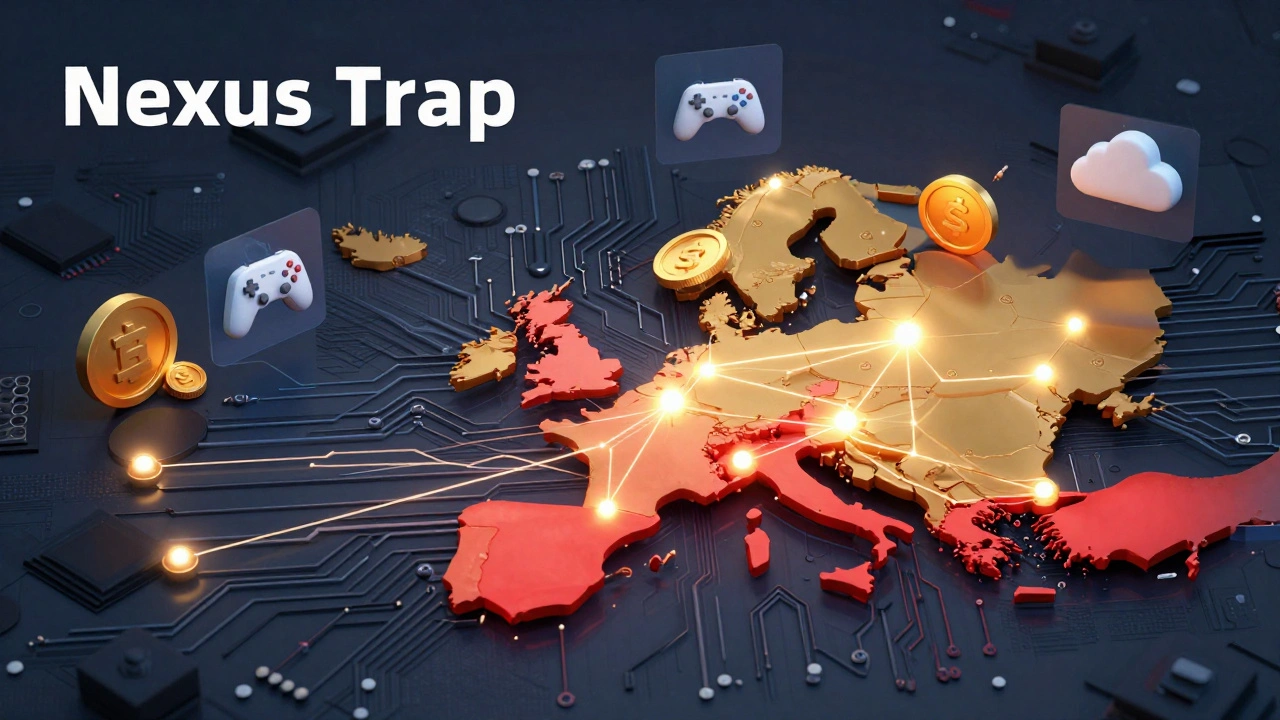
If you're tracking sales across borders, you'll notice a massive jump in price when moving from the US to Europe. This is because of VAT (Value-Added Tax), which is a consumption tax placed on a product whenever value is added at each stage of the supply chain . Unlike US sales tax, which is added at the very end of the checkout, VAT is often baked into the listed price.The variation is staggering. While some US states have 0% sales tax on digital goods, EU countries can range from 17% in Luxembourg up to 27% in Hungary. This means the same digital item can have a price difference of over 20% just based on which country the buyer is in. To track this accurately, you can't use a flat rate; you need a system that pings the user's IP address or billing zip code in real-time.
How the Technical Tracking Actually Works
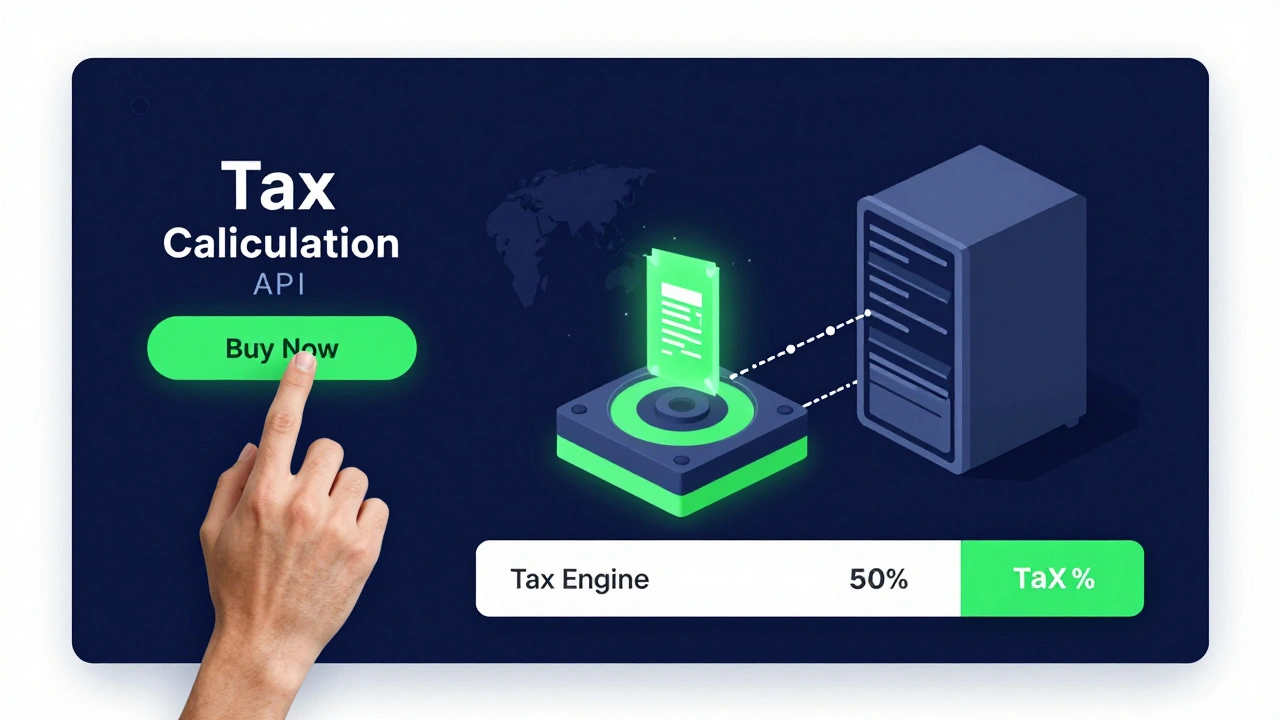
You can't realistically maintain a spreadsheet of every tax law in every zip code. It's impossible. Instead, professional tracking relies on Tax Calculation APIs, which are software interfaces that automatically calculate the correct tax rate based on the product type and buyer's location at the moment of checkout .Here is the typical flow of a taxable game purchase:
- The player clicks "Buy Now" on a $5.00 item.
- The checkout system sends an API call to a tax engine with the item ID (e.g., "Digital Skin") and the user's address (e.g., "Portland, OR").
- The tax engine checks the current state laws and returns the exact rate (e.g., 0% for Oregon, or a specific percentage for other states).
- The system adds that amount to the total, charging the user $5.00 or $5.40 instantly.
Virtual Real Estate and Intangible Property
As we move deeper into the era of persistent digital worlds, we're seeing a rise in the sale of virtual land and high-value assets. These aren't just "game items" anymore; they are being treated as Intangible Personal Property, which is property that has no physical substance but carries legal value, such as copyrights, trademarks, or virtual real estate .When players trade these assets on external marketplaces for real money, it can trigger a separate set of tax obligations. If a transaction volume becomes substantial, it's no longer just a hobby; it's a taxable retail event. Tracking the impact here requires monitoring not just the initial sale from the developer, but the secondary market transactions if the developer takes a cut of those sales.
Common Pitfalls and Compliance Tips
One of the biggest mistakes developers make is assuming that a ruling in one state applies to all. For example, a ruling from the Indiana Department of Revenue in early 2025 suggested that some in-game items and virtual currencies aren't taxable in that state. However, that ruling was specific to the taxpayer who asked for it. Assuming this is the "law of the land" everywhere else is a fast track to an audit.To keep your records clean, you should maintain a ledger that tracks:
- The exact jurisdiction of every buyer.
- The specific tax rate applied to that specific product category.
- The date of the transaction (since tax rates can change monthly).
- Proof of remittance to the state authorities.
Do I have to pay sales tax on in-game currency?
It depends on the jurisdiction. In many US states, virtual currency is treated like a digital code and is taxed at the moment you buy the currency. However, some regions only tax the final item you purchase using that currency. Because laws vary by state, the best way to track this is through a real-time tax API at checkout.
What is an economic nexus and why does it matter for gamers?
Economic nexus is a legal trigger that requires a business to collect sales tax in a state even if they have no physical presence there, provided they meet a certain sales threshold (e.g., $100,000 in Washington). For the consumer, this means you'll start seeing taxes on your digital purchases as more games become popular in your specific state.
Is VAT different from US sales tax for digital games?
Yes, significantly. US sales tax is usually added at the end of the transaction and varies by state. VAT is a value-added tax used primarily in the EU and other countries, often ranging from 17% to 27%. VAT is typically included in the listed price of the game, whereas US sales tax is added on top.
Are subscriptions for online multiplayer always taxable?
Not always. Some jurisdictions do not classify monthly subscriptions as taxable digital products. For instance, certain rulings in Indiana have suggested that these services aren't subject to sales tax, but you should check the specific laws of your state as this is not a universal rule.
How can indie developers avoid the complexity of tax tracking?
The easiest way is to use a marketplace facilitator like Steam, Epic Games Store, or the Apple App Store. These platforms typically handle the tax calculation, collection, and remittance for the developer, leaving the indie creator with a net payment after taxes are handled.