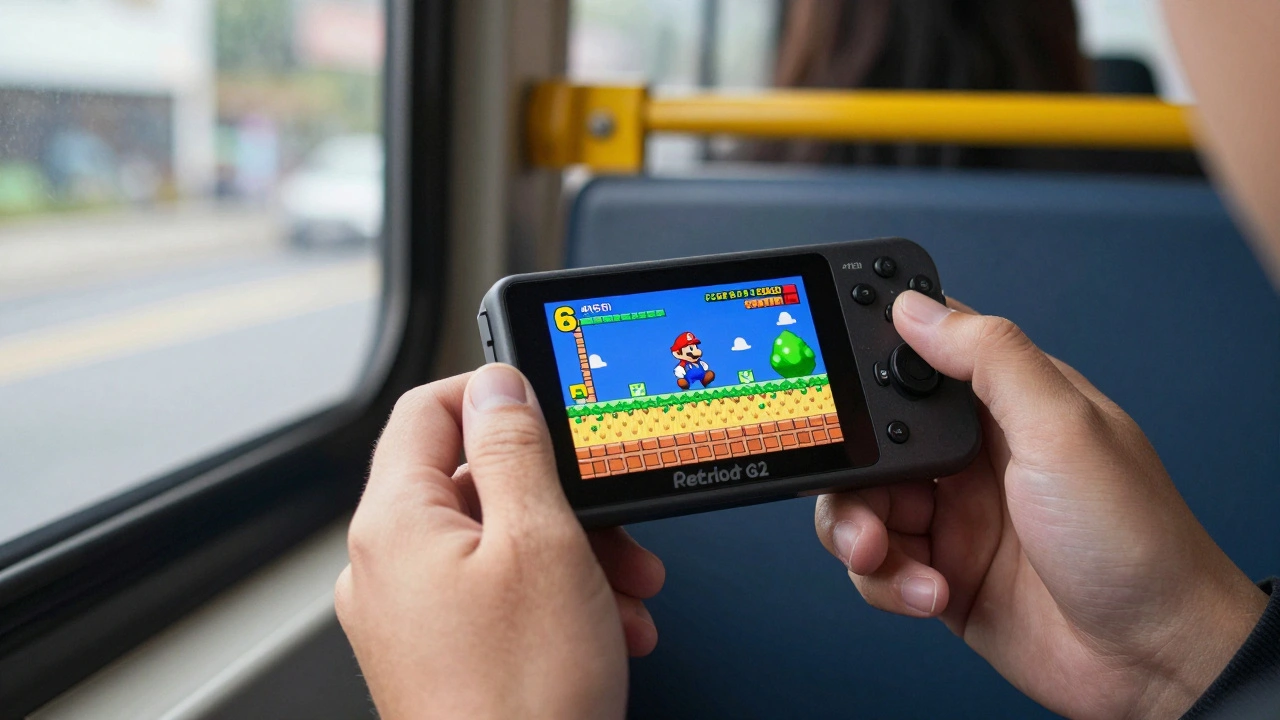
Want to play your favorite retro games anywhere-on the bus, in bed, or during lunch break-without hauling around a PlayStation 2 or a stack of Game Boy cartridges? Handheld emulation devices make it possible. These small, battery-powered gadgets let you run classic games from SNES, N64, Sega Genesis, PlayStation 1, even GameCube and PS2, all on a single device you can slip into your pocket. And in 2026, the options have never been better, cheaper, or more powerful.
What Exactly Is a Handheld Emulation Device?
A handheld emulation device is a portable gaming console built around software that mimics older hardware. Instead of using original cartridges or discs, it loads digital copies of games (called ROMs) and runs them through an emulator-a program that tricks the device into thinking it’s playing on a Sega Genesis or Nintendo 64. These aren’t just cheap knockoffs. Modern devices like the Retroid Pocket G2 is a high-performance handheld emulation device featuring a 4.5-inch 1280x720 OLED screen, dual Hall effect analog sticks, and a Mali-G57 GPU capable of smooth PS2 and GameCube emulation are built with quality components: durable analog sticks, responsive buttons, and screens that actually look good.
Unlike the Steam Deck, which is basically a mini PC that can play retro games as a side feature, these devices are built from the ground up for retro emulation. They run lightweight Linux or Android-based systems optimized for speed, not modern AAA titles. That means they boot up in seconds, use less power, and don’t overheat during long play sessions.
How Much Do You Really Need to Spend?
The market is split into clear price tiers, and each one serves a different kind of player.
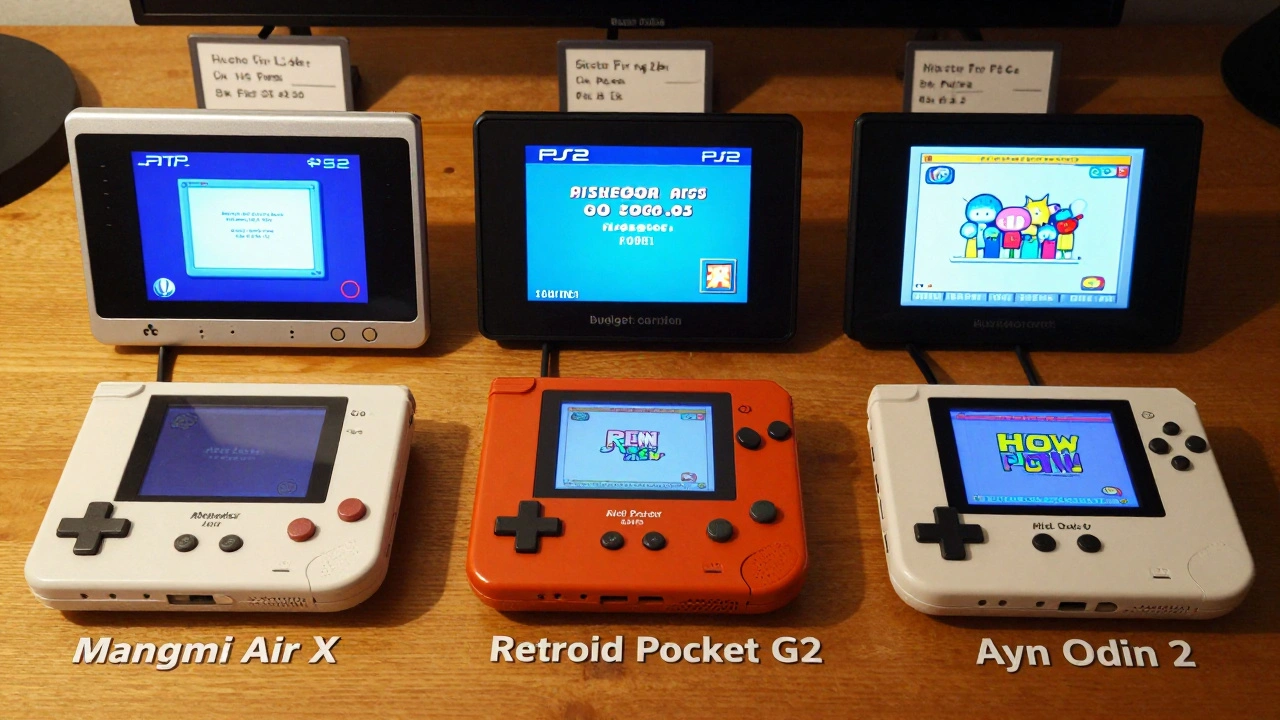
- Under $90: The Mangmi Air X is a budget-friendly handheld emulator supporting PSP, Nintendo 64, and 3DS emulation with a 3.5-inch IPS screen and 6GB RAM, offering near-perfect performance for its price is the standout. It handles N64 games like Super Mario 64 with no slowdown, plays PSP titles in native resolution, and even runs 3DS games decently. For under $90, you’re getting more power than most people expect.
- $100-$200: This is where most serious retro fans land. The Retroid Pocket G2 offers flawless PS2 and GameCube emulation, a 1:1 aspect ratio touchscreen, Bluetooth, and a 4.5-inch OLED display, making it the best overall device in 2026 dominates here. It’s small enough to carry daily, yet powerful enough to run games that used to need a PS2 or Xbox. The Anbernic RG35XXSP is a clamshell device with a Game Boy Advance SP-inspired design, featuring a 3.5-inch 320x240 screen and optimized for 2D classics like SNES and GBA is perfect if you love the look and feel of old handhelds.
- $250+: The Ayn Odin 2 is a high-end handheld with a 7-inch 1080p screen, 8GB LPDDR5 RAM, and a powerful AMD Ryzen Z1 Extreme chip, excelling at PS2, GameCube, and even Switch emulation and the Ayaneo Thor features dual 5.5-inch OLED screens optimized for Nintendo DS and 3DS emulation with upscaling and perfect touch response push boundaries. They’re not just for nostalgia-they’re for people who want to play the most demanding retro games at the highest quality possible.
The Steam Deck OLED sits in its own category. At $400+, it’s a beast with a 120Hz screen, 24GB of RAM, and full PC gaming support. But it’s bulky. It doesn’t fit in a jacket pocket. And if you’re only playing Super Metroid or Chrono Trigger, you’re overpaying. For retro-only use, it’s like using a chainsaw to cut paper.
Screen, Controls, and Form Factor Matter
Not all devices are made the same. The screen size, button layout, and shape affect how much you actually enjoy playing.
Clamshell designs like the Anbernic RG35XXSP is a retro-inspired handheld with a flip-up screen, 3.5-inch display, and optimized controls for GBA and SNES games are nostalgic. They feel like holding a Game Boy Advance SP again. But they’re not always comfortable for long sessions. The screen is small, and the buttons are cramped.
Horizontal devices like the Retroid Pocket G2 is a modern handheld with a 4.5-inch OLED screen, dual analog sticks, and touchscreen support for better control of DS and 3DS games or the Ayaneo Thor is a dual-screen device with two 5.5-inch OLED panels designed specifically for Nintendo DS and 3DS emulation feel more like modern controllers. The Retroid Pocket G2’s touchscreen lets you play DS games the way they were meant to be played-touching the bottom screen. The Thor’s dual screens recreate the original DS experience with perfect resolution scaling.
Controls matter too. Hall effect analog sticks (used in the Retroid Pocket G2 and Ayn Odin 2) don’t wear out like traditional joysticks. They last longer and feel more precise. Some devices, like the Anbernic RG ARC-D is a specialized controller with a six-button layout modeled after the Sega Saturn, ideal for fighting games and Dreamcast emulation, even include buttons designed for specific systems-perfect if you’re deep into fighting games or Sega Saturn titles.
What Games Can You Actually Play?
Not every device can run every game. Performance depends on the chip inside.
- NES, SNES, Game Boy: These run on almost anything. Even the cheapest device handles them perfectly.
- N64, PlayStation 1, Sega Genesis: Require a decent processor. The Mangmi Air X and Retroid Pocket G2 handle these with no issues.
- GameCube, PS2, Nintendo 3DS: These are heavy. Only devices with powerful chips like the Mali-G57 or Ryzen Z1 can run them smoothly. The Retroid Pocket G2 and Ayn Odin 2 are top choices here.
- Nintendo Switch: Still a challenge. Only the most powerful devices like the Odin 2 and Steam Deck can play a few Switch games, and even then, only with performance drops.
Some devices, like the Evercade EXP-R is a cartridge-based handheld with 500+ pre-loaded games and support for vertical TATE mode for arcade shoot-em-ups, skip ROMs entirely. Instead, you plug in physical cartridges with games already on them. It’s a legal gray area, but it’s clean-you’re buying the games outright. No downloading, no piracy questions.
Legal and Practical Realities
Let’s be clear: downloading ROMs of games you don’t own is illegal. Nintendo has sued emulator developers and shut down major ROM sites. But here’s the truth most people don’t talk about: if you own the original game, backing up your own ROM for personal use is rarely enforced-and widely practiced.
Most handheld emulators don’t come with games. You have to add them yourself. That means you need to find your old cartridges, dump them using a flash cart or a PC, or rely on community archives. Some users use services like RetroArch is a frontend for multiple emulators, allowing users to manage ROMs, configure controls, and apply graphical filters across platforms to organize their libraries, apply filters to reduce pixelation, or tweak frame rates.
The legal risk isn’t zero. But the practical reality? If you’re playing games you already own on a device you bought, you’re in the same gray zone as people who rip CDs to MP3s. Most manufacturers don’t care. The community doesn’t police it. And unless you’re distributing ROMs online, you’re unlikely to ever hear from anyone.
Getting Started: What You Need to Know
If you’re new to this, here’s how to jump in:
- Choose your device based on the games you want to play. Don’t buy a $400 device just to play Super Mario Bros.
- Buy a microSD card (64GB or 128GB). Most devices use these to store games.
- Find your old cartridges or discs. Use a ROM dumper if you have them.
- Transfer the ROMs to the microSD card. Organize them into folders (e.g., "SNES", "PS1").
- Power on the device. It’ll auto-detect the games. Adjust controls if needed.
- Use the built-in menu to tweak graphics, save states, or enable shaders for cleaner visuals.
There are great guides out there-Retro Handheld Starter Guide is a comprehensive beginner resource covering 14 popular devices, setup steps, and emulator recommendations and Joey's Retro Handhelds offers in-depth reviews, performance benchmarks, and price-to-performance comparisons for retro handhelds-that walk you through every step. YouTube has dozens of unboxings and setup videos. You don’t need to be a tech expert.
What’s Next?
The handheld emulation market isn’t slowing down. In 2026, we’re seeing OLED screens become standard, better battery life, and more refined software. New devices are popping up every month. Some are adding Wi-Fi for online multiplayer. Others are experimenting with cloud saves and game streaming.
But the core idea stays the same: retro gaming should be accessible, portable, and fun. You don’t need a closet full of consoles. You don’t need to spend hundreds on original hardware. You just need a small device, a few games you love, and the freedom to play them wherever you are.
Can I use any ROMs with handheld emulation devices?
You can load any ROM file onto the device’s microSD card, but legally, you should only use ROMs of games you own. Most devices don’t include ROMs-you have to add them yourself. Downloading ROMs of games you don’t own is against copyright law, even if it’s common practice. Some devices, like the Evercade EXP-R, avoid this issue entirely by selling physical cartridges with pre-loaded games.
Which handheld emulation device is best for beginners?
The Mangmi Air X is the best choice for beginners. It costs under $90, supports PSP, N64, and 3DS games, and has a simple Android-based interface. It’s powerful enough for most retro systems, easy to set up, and doesn’t require technical knowledge. If you’re unsure, start here before spending more.
Do these devices support online multiplayer?
Some do. The Retroid Pocket G2 and Ayn Odin 2 have Wi-Fi and Bluetooth, allowing you to link with other handhelds for local multiplayer in supported games like Super Smash Bros. or Mario Kart. True online play (over the internet) is rare and usually requires custom software or third-party tools, which can be unstable.
How long does the battery last?
Battery life varies by device and game. For 8-bit or 16-bit games like SNES or Genesis, you can expect 6-8 hours. For demanding systems like PS2 or GameCube, it drops to 2-4 hours. The Retroid Pocket G2 lasts about 5 hours on average. The Steam Deck, being a full PC, drains faster-around 3-5 hours even for retro games.
Are these devices better than original consoles?
For portability, yes. For authenticity, no. Original consoles have the real hardware, authentic controllers, and perfect compatibility. But handheld emulators let you carry hundreds of games in one device, apply visual filters to clean up pixel art, save anywhere, and play on a modern screen. They’re not replacements-they’re upgrades for convenience and flexibility.