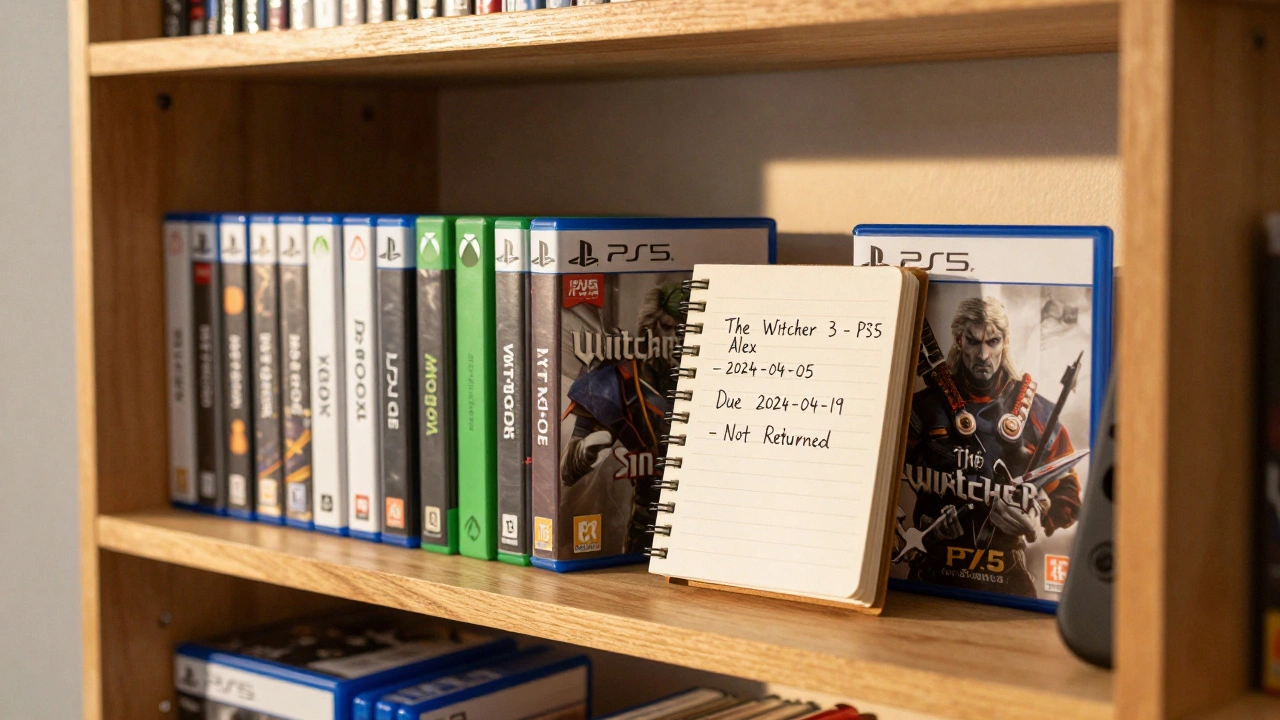
Have you ever lent a video game to a friend and never seen it again? You’re not alone. Many gamers have that one game that vanished after a "just borrow it for a week" promise. Without a system, tracking who has what becomes a mess of forgotten texts, vague promises, and awkward follow-ups. A simple loan register fixes this. It’s not about being distrustful-it’s about keeping friendships intact while protecting your collection.
Why a Loan Register Matters
Video games aren’t just software. They’re physical objects-boxes, manuals, limited editions-that hold sentimental and monetary value. A $70 new release or a $200 collector’s edition isn’t something you want to lose because someone forgot to return it. Even if the game is used, it’s part of your collection. And when you lend it, you’re trusting someone to treat it like their own. A loan register turns trust into a clear, documented agreement.
Think of it like borrowing a book from a library. You know the due date. You know what condition it should be returned in. You know who you borrowed it from. Your video game collection deserves the same respect.
What to Track in Your Loan Register
You don’t need a fancy app. A simple spreadsheet or even a notebook works. But to make it useful, include these five key details for every loan:
- Game Title - Include the full name, including special editions (e.g., "The Witcher 3: Wild Hunt - Complete Edition").
- Platform - PS5, Xbox Series X, Nintendo Switch, PC? Don’t assume they know.
- Borrower’s Name - Use their full name or nickname you both use. Avoid vague entries like "Mike" if you have two Mikes.
- Loan Date - When did they take it? Write the exact date.
- Due Date - Set a realistic return date. Two weeks is usually fair. If they ask for longer, write it down.
- Condition (at time of loan) - Note if the case is scratched, the disc has a fingerprint smudge, or the manual is missing. Take a quick photo if you’re unsure.
- Return Status - Keep this updated: "Not returned," "Returned," or "Returned damaged."
That’s it. Six to seven fields. No need for interest rates or payment schedules. This isn’t a bank. It’s a friendship tracker.
How to Set Up Your Register
You have three easy options:
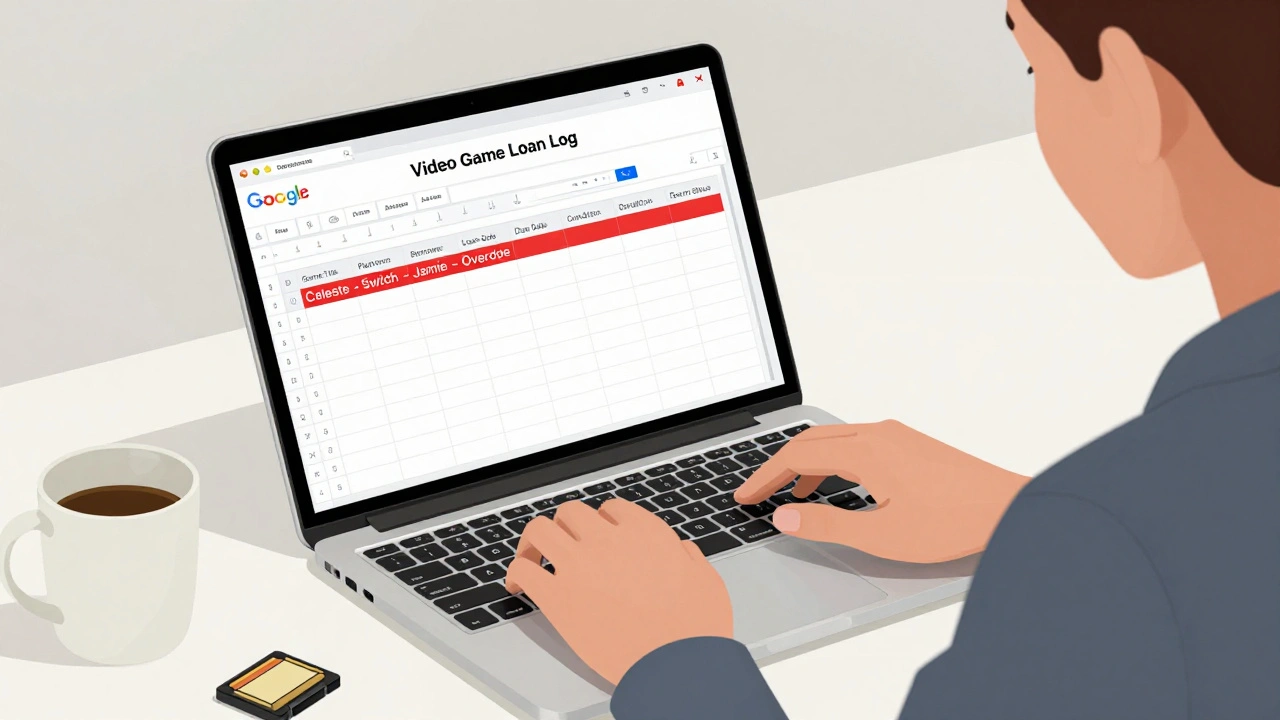
- Google Sheets - Best for most people. Create a new sheet. Name the columns: Game Title, Platform, Borrower, Loan Date, Due Date, Condition, Return Status. Share it with your friends so they can see what’s out. Add a filter so you can sort by "Not returned" with one click.
- Excel or LibreOffice Calc - Same setup. Save it on your computer. Use conditional formatting to highlight overdue loans in red.
- Handwritten Log - If you’re old-school, use a notebook. Number each entry. Keep it in a drawer with your game cases. Update it every time someone returns a game.
Pro tip: Add a column for "Notes." Maybe your friend said, "I’ll return it after my birthday party," or "I’m playing it with my nephew." That context helps you remember why it’s been out longer than expected.
How to Ask for It Back
Asking for a game back shouldn’t feel like confrontation. With a register, it’s just a reminder, not a demand.
Here’s what works:
- Before the due date: "Hey, just a heads-up-your copy of Celeste is due next Friday. Let me know if you need more time!"
- After the due date: "I’m cleaning out my shelf this weekend and realized Celeste is still out. No rush, but if you’re done with it, I’d love to get it back before I move it to storage."
- If it’s been months: "Hey, I’m sorry to ask, but I’ve been looking for Celeste and realized I haven’t seen it since January. Is it still around? I’d really appreciate it if you could return it when you get a chance."
Most people will return it. The ones who don’t? They’re not worth your time. Your register helps you spot them early.
What to Do When Games Don’t Come Back
Some games vanish. That’s life. But here’s how to handle it without burning bridges:
- After two polite reminders, assume it’s gone.
- Don’t demand payment. Instead, say: "I know you didn’t mean to lose it. If you ever want to replace it, I’d be happy to help you find a copy. Otherwise, no worries-I’ll get another one later."
- Update your register: "Lost-replaced." Then, move on.
Most friends will offer to replace it. If they don’t, you’ve learned something: not everyone treats your stuff the same way you do. That’s okay. You’ll know next time.

How This Helps Your Collection
A loan register doesn’t just prevent loss. It makes your collection smarter.
- You’ll notice which games get borrowed the most. That tells you what’s popular.
- You’ll see which friends are reliable. That helps you decide who to lend to next time.
- You’ll stop buying duplicates because you forgot you already lent out a copy.
- You’ll feel more confident about lending. No more anxiety.
One friend in Portland started tracking her loans last year. She’s lent out over 40 games. Only three didn’t come back-and she knew exactly which ones, when they were due, and who had them. She didn’t have one awkward conversation. She had six polite reminders. That’s the power of a simple log.
Start Today
You don’t need to go back and log every game you’ve ever lent. Start with what’s out right now. Ask yourself: "Which games are currently with friends?" Write them down. Add the names, dates, and due dates. Update it when they return them.
In two weeks, you’ll have a system. In a month, you’ll wonder how you ever managed without it. Your collection will stay complete. Your friendships will stay strong. And you’ll never have to ask, "Where’s my copy of Hollow Knight?" again.
Do I need to use a spreadsheet, or can I use a paper log?
Either works. Spreadsheets are easier to update and search, especially if you lend often. But if you prefer writing things down, a notebook with numbered entries is just as effective. The key isn’t the tool-it’s consistency. Update it every time you lend or get back a game.
What if my friend says they lost the game?
Don’t panic. First, thank them for being honest. Then, say something like: "I get it. Stuff happens. If you want to replace it, I can help you find a used copy. Otherwise, I’ll just buy another one later." Most will offer to replace it. If they don’t, let it go. Your peace of mind is worth more than one game.
Should I charge a deposit for lending games?
No. Charging deposits turns a friendly exchange into a transaction. It can hurt trust and make people feel like you don’t believe them. A simple register with clear expectations builds better relationships. If someone keeps borrowing and never returning, stop lending to them. No deposit needed.
Can I use this for digital games?
Not really. Digital games are tied to accounts, not physical items. You can’t lend a Steam game like you can a PS5 disc. This system works for physical copies only-discs, cartridges, boxed editions. If someone asks to borrow your account, say no. It’s against the terms of service and risky.
How often should I review my loan register?
Check it every month. Scroll through the "Not returned" list. Send a quick message to anyone who’s past their due date. It takes five minutes and prevents big problems. Think of it like checking your mail-small, regular actions keep things running smoothly.