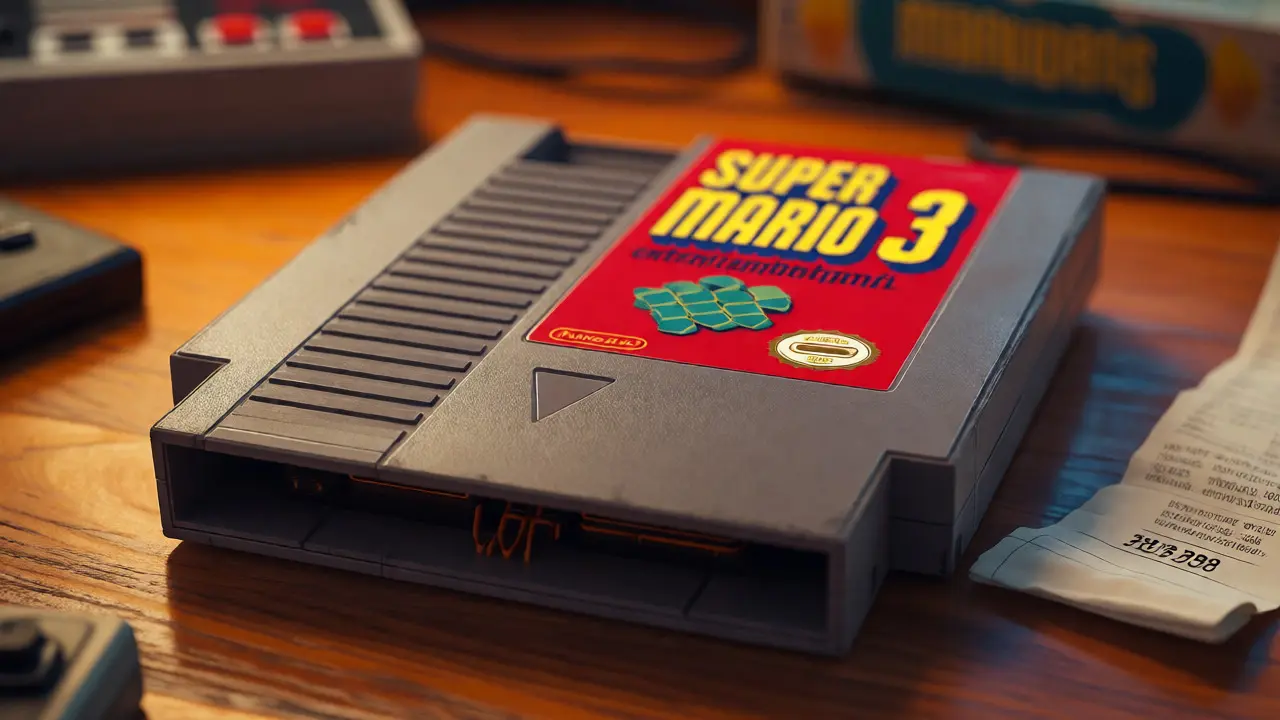
You walk into a local game store or scroll through eBay, and suddenly you're staring at a $500 Super Mario Bros. 3 cartridge that looks identical to the one you played in your friend's basement thirty years ago. Why does this plastic rectangle cost more than your car payment? The answer lies in the chaotic intersection of print runs, condition grading, and pure nostalgia. If you want to start Nintendo NES collecting, you need to know what actually holds value versus what is just hype.
This isn't about hoarding every gray cartridge you find. It is about building a curated library that respects history and your wallet. Whether you are hunting for Holy Grails or just trying to fill gaps in your shelf, understanding the market dynamics of the Nintendo Entertainment System (NES) is crucial. Let's break down the essentials, the rarities, and how to spot a fair deal without getting burned.
The Foundation: What Makes an NES Game Valuable?
Value in the NES market doesn't appear out of thin air. It stems from three specific pillars: scarcity, demand, and condition. Most people assume age alone drives price, but that is false. There were thousands of Popeye cartridges printed; they are old, but they aren't expensive because everyone has one.
Scarcity comes from low print runs. Did Nintendo pull a game from shelves early? Was it a regional exclusive? Did a lawsuit halt production? These factors create supply constraints. Demand is driven by gameplay quality and cultural impact. A bad game with a low print run might still be cheap if nobody wants to play it. Condition is the multiplier. A loose cartridge (no box, no manual) is worth a fraction of a Complete-in-Box (CIB) copy. Sealed copies command exponential premiums due to their preservation status.
| Driver | Impact on Price | Collector Action |
|---|---|---|
| Print Run | High | Research historical sales data and regional releases. |
| Condition | Very High | Learn to grade boxes and manuals; check for battery leaks. |
| Popularity | Medium-High | Focus on titles with active speedrunning or fan communities. |
| Completeness | High | Prioritize CIB over loose unless budget is tight. |
Essential Titles: The Starter Pack
If you are new, don't chase the $1,000 games yet. Start with the titles that define the system. These are the games that sold millions, so they are affordable, easy to find, and essential for any collection. They form the backbone of your library.
- Super Mario Bros.: The game that saved the industry. Look for original "black label" copies if possible, though standard red labels are fine for beginners.
- The Legend of Zelda: A masterpiece of open-world design before the term existed. The gold cartridge is iconic.
- Metroid: Introduced non-linear exploration. Highly replayable and historically significant.
- Mega Man 2: Often cited as having the best soundtrack on the console. It’s a platformer perfectionist's dream.
- Castlevania: Defined the action-platformer genre alongside Mega Man. Great difficulty curve and atmosphere.
These five titles give you a solid foundation. They are widely available, meaning you can focus on finding good condition copies rather than breaking the bank. Once you have these, you can branch out into genres you prefer, like RPGs or sports sims.
Understanding Rarity Tiers: From Common to Grail
Not all rare games are created equal. Collectors often use informal tiers to categorize value. Understanding these helps you set realistic expectations.
Common: Games with massive print runs like Tetris or Duck Hunt. You can find these in thrift stores for under $10. They are great for filling space but won't appreciate much.
Uncommon: Games with moderate print runs or those that fell out of fashion quickly. Titles like Bionic Commando or Blaster Master fit here. Prices range from $20 to $80 depending on condition. This is the sweet spot for most collectors.
Rare: Low print runs, late-cycle releases, or niche genres. Think Ninja Gaiden III or certain sports titles. Expect to pay $100-$400 for CIB copies. These require patience and vigilance when buying online.
Grail: The unicorns. Games like Air Fortress, Spelunker, or King's Quest V (if you count PC ports, though strictly NES has its own grails like International Superstar Soccer Deluxe). These can fetch $500 to $5,000+. Buying these requires authentication skills.
The Pitfalls: Reproduction Cartridges and Fake Boxes
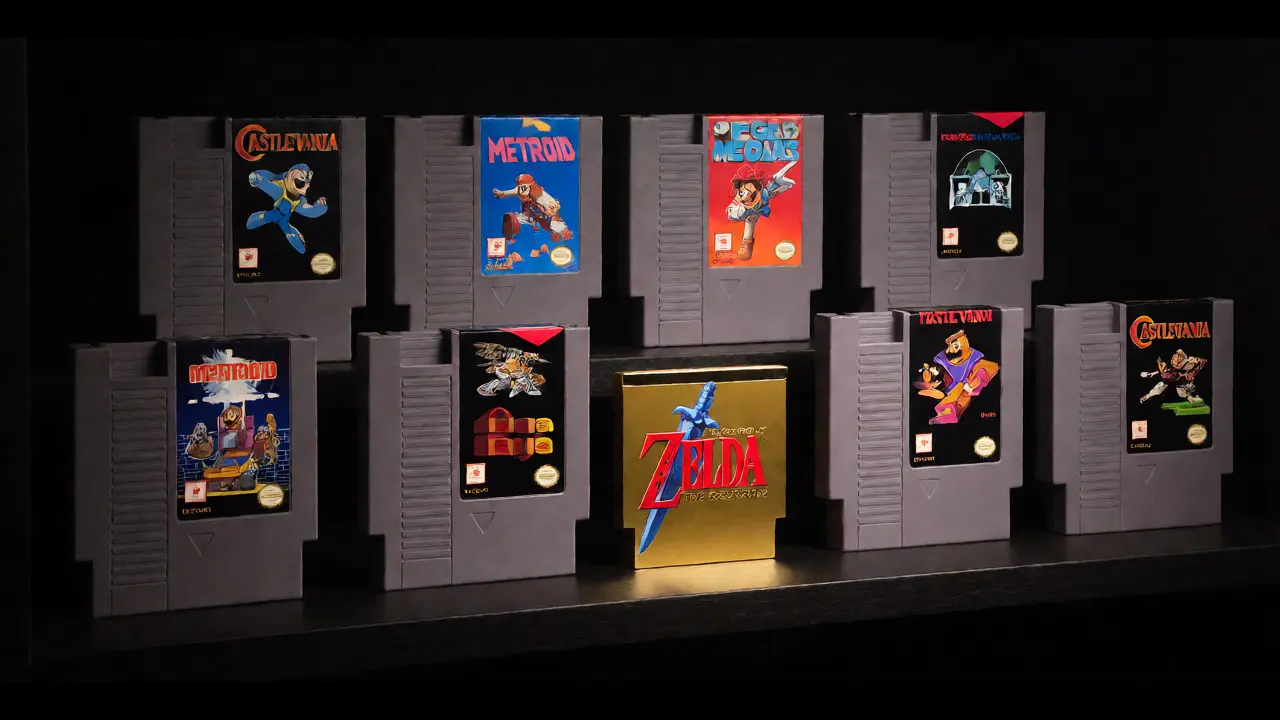
Here is where many new collectors get hurt. The NES market is flooded with reproductions. Companies make high-quality fake cartridges that look almost identical to originals. Some are honest re-pros sold as such, but others are passed off as authentic.
How do you tell them apart? Check the screws. Original NES carts used tri-wing screws, but some later models or re-releases might differ. More importantly, inspect the PCB (printed circuit board). Original boards have specific manufacturer stamps and component layouts. Re-pros often use generic chips or lack the proper Nintendo seal of quality stamp on the back sticker.
Boxes are another minefield. Many sellers sell "Complete" games where the box is a reprint. Original boxes have specific paper stock, color accuracy, and wear patterns. Reprints often feel too smooth or have colors that are slightly off. Always ask for close-up photos of the spine and flap tabs. If the price seems too good to be true for a rare title, it probably is.
Regional Variations: NTSC-U vs. PAL vs. Japan
Most US collectors focus on NTSC-U (North America) releases. But the world is bigger. Japanese Famicom games often feature unique art styles and sometimes different content. However, they require an adapter to play on US hardware unless you mod your console.
PAL regions (Europe/Australia) released fewer games, making some titles rarer there. But PAL versions often run slower (50Hz vs 60Hz) and have cut-down graphics. For pure collecting value, NTSC-U generally commands higher prices due to the larger collector base. However, a clean Japanese release of a popular game can be cheaper than its US counterpart. Decide if you care about authenticity of region or just gameplay.
Building Your Collection: Strategy Over Impulse
Don't buy everything. Pick a lane. Are you a completionist trying to get all 700+ licensed US titles? That is expensive and time-consuming. Maybe you only collect RPGs. Or maybe you only collect games with cover art featuring dragons. Niche collections are easier to complete and often more satisfying.
Set a budget per month. The NES market fluctuates. In 2026, prices have stabilized somewhat after the pandemic boom, but spikes still happen. Buy during lulls. Join community forums or Discord servers dedicated to retro gaming. People often sell below market rate to fellow enthusiasts who appreciate the history.
Storage matters. Keep your games away from direct sunlight and humidity. UV light fades box art. Humidity causes cardboard to warp and metal contacts to corrode. Use acid-free sleeves for manuals. Proper storage preserves value. A damaged box loses 50% of its value instantly.
Where to Buy: Trustworthy Sources
eBay is the largest marketplace, but it carries risk. Use seller ratings and read reviews carefully. Ask questions before bidding. Local game stores are great for hands-on inspection but may have higher markups. Facebook Marketplace and local swap meets can yield hidden gems, but you need to move fast and know your stuff.
Specialized retro retailers offer graded copies. Paying extra for a WATA or VGA graded game ensures condition consistency. This is vital for high-value purchases. If you are spending $300+, grading insurance is worth it. For cheaper games, trust your eyes and basic knowledge.
Frequently Asked Questions
Are all NES games compatible with all consoles?
No. While most US NES games work on US consoles, Japanese Famicom games have different physical shapes and pinouts. You need an adapter or a multi-region console to play them. Additionally, some special chip games like Punch-Out!! or StarTropics rely on specific internal components that may degrade over time.
What is the difference between Loose, CIB, and Sealed?
Loose means just the cartridge. CIB (Complete-in-Box) includes the original box, manual, and any inserts. Sealed means the game is still in its factory shrink wrap, unopened. Sealed copies are exponentially more valuable than CIB, which are significantly more valuable than Loose. Condition within each category also affects price.
How do I clean my NES cartridges safely?
Use isopropyl alcohol (90%+) and cotton swabs for the pins. Avoid water-based cleaners on the label as they can cause ink to bleed. For the plastic shell, mild soap and water are fine, but dry thoroughly. Never submerge the entire cartridge in liquid. Be gentle with the label stickers; they are fragile.
Is it worth investing in NES games right now?
As an investment, it is risky. Retro gaming markets are speculative. However, as a hobby, it offers tangible enjoyment and potential appreciation for rare titles. Don't buy solely for profit; buy for love of the games. The market has matured since the 2020 spike, offering more stable entry points for common titles.
What should I avoid when starting a collection?
Avoid buying sealed games without authentication expertise. Beware of "bundles" that hide poor condition items among good ones. Don't ignore shipping costs; they can double the price of small transactions. Finally, avoid impulse buys at auction ends; set a maximum bid and stick to it.