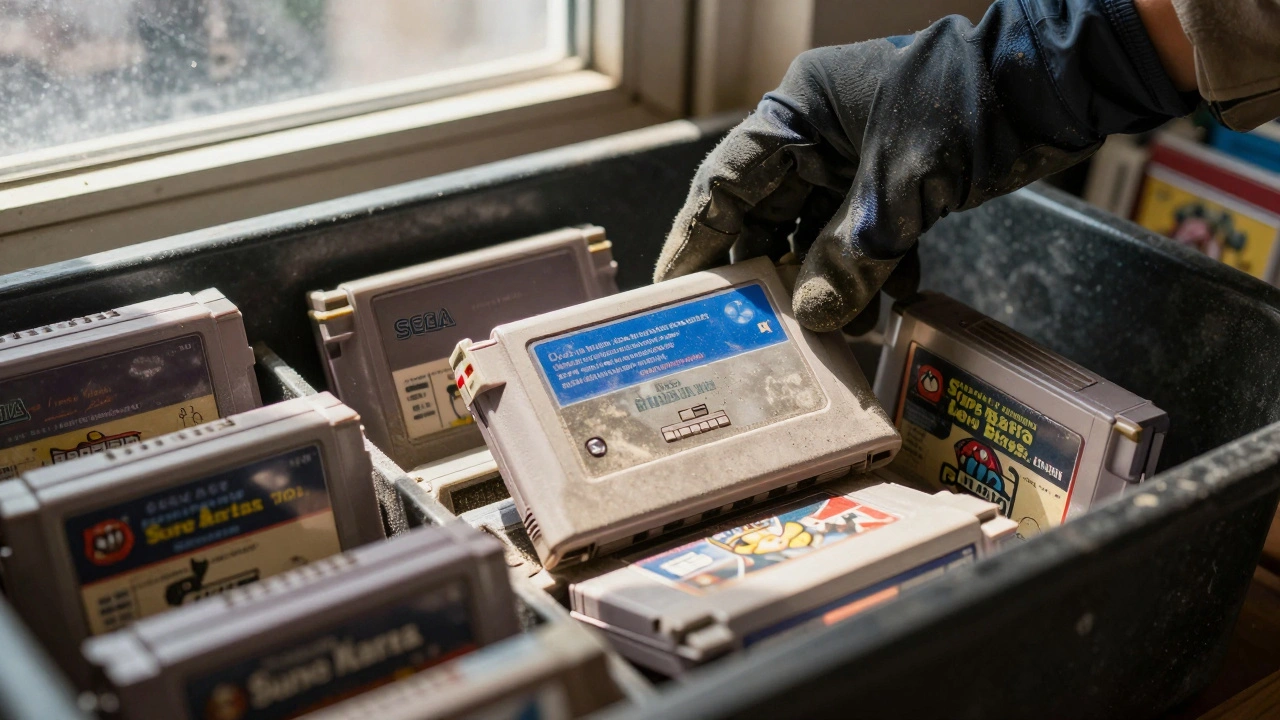
Walking through a cluttered bin of dusty game cartridges at a flea market or thrift store can feel like digging through a landfill. But sometimes, buried under a pile of Super Mario Bros. and Game & Watch titles, there’s a game worth $300-or more. You don’t need a degree in game history to find them. You just need to know what to look for.
Start with the console, not the game
Most people grab the box that looks familiar: Super Mario World, Legend of Zelda, Sonic. But those are everywhere. The real treasures are the games no one remembers because they were obscure, regional, or came out too late to matter.First, ask yourself: Which console is this? If it’s a Sega Genesis, look for games from 1992-1994. That’s when Sega released a ton of obscure European and Japanese titles that never made it to North America. Games like Gunship 2000 (1993) or Streets of Rage 3 (1994) were rare even when new. If you see a Genesis cart with a blue label and no English text? That’s a red flag-and maybe a goldmine.
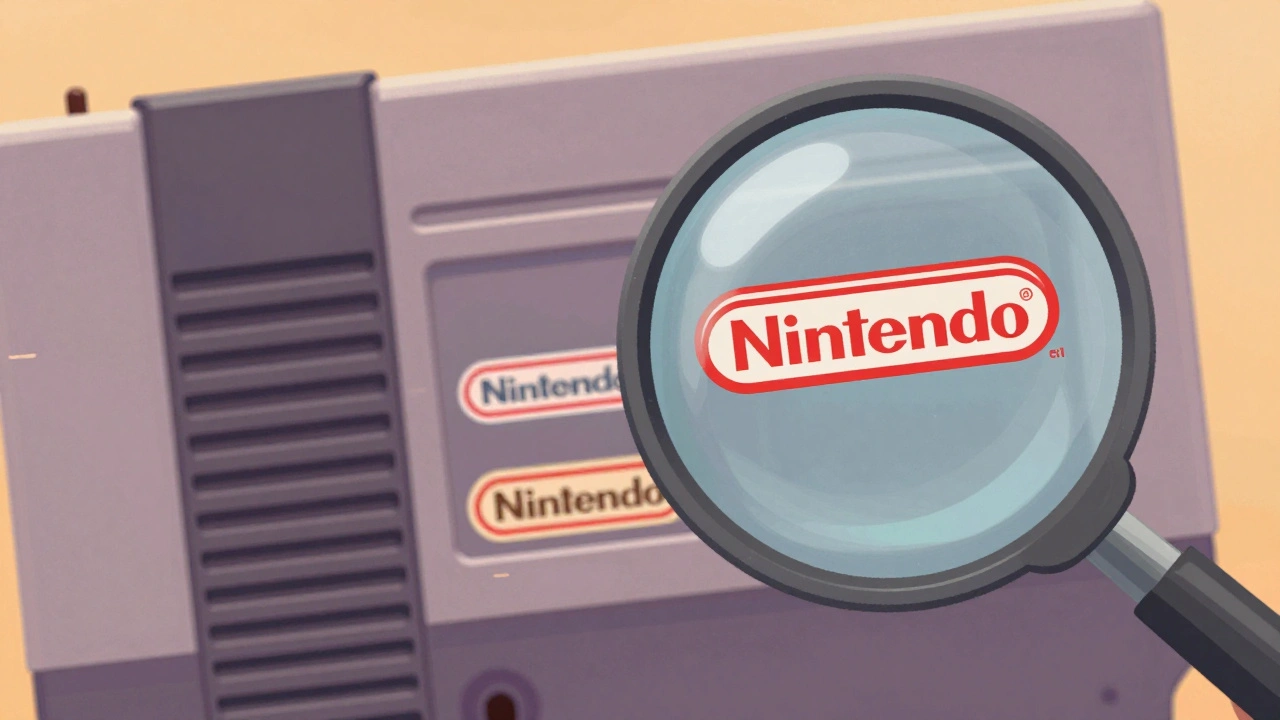
Same goes for the Nintendo Entertainment System. The most valuable NES games aren’t the ones with the bright boxes. They’re the ones with weird labels. Stadium Events (1987) had a run of 50,000 copies. But the version with the "Nintendo" logo on the label? Only 1,000 were made. It sells for $800 today. The box looks identical. The difference? A tiny logo shift on the front.
Check the label, not just the box
A game’s value lives in the details. Most people don’t look past the front. But the back of the cartridge? The label? The manual? That’s where the story hides.Look for these markers:
- Manufacturing codes: On the back of NES carts, there’s a small stamp like "NES-001" or "NES-005." The lower the number, the earlier the production run. Early runs are rarer.
- Regional variants: A Japanese Final Fantasy cartridge for the NES? That’s not just rare-it’s illegal to import in the U.S. unless it’s original. But if you find one with an English manual? That’s a combo that collectors pay $1,200 for.
- Label color and texture: Sega Master System games from 1986 have a glossy label. By 1989, they switched to matte. The matte version is 3x more common. But if you find a glossy one with the original box? That’s a $200 game.
- Missing parts: A cartridge without a manual is worth 70% less. But if the manual has a sticker on the front? That means it was a store display copy. Those are rare. Some stores used them as demo units. They’re in worse shape-but collectors love them.
Know the quiet killers
There are games no one talks about that sell for insane money. Here are five that show up in bins more than you think:- Stadium Events (NES, 1987) - Only 1,000 copies with the original "Nintendo" logo. $800-$1,200.
- Red Sea Crossing (Atari 2600, 1983) - A religious-themed game. 2,000 copies made. Never reprinted. $400-$600.
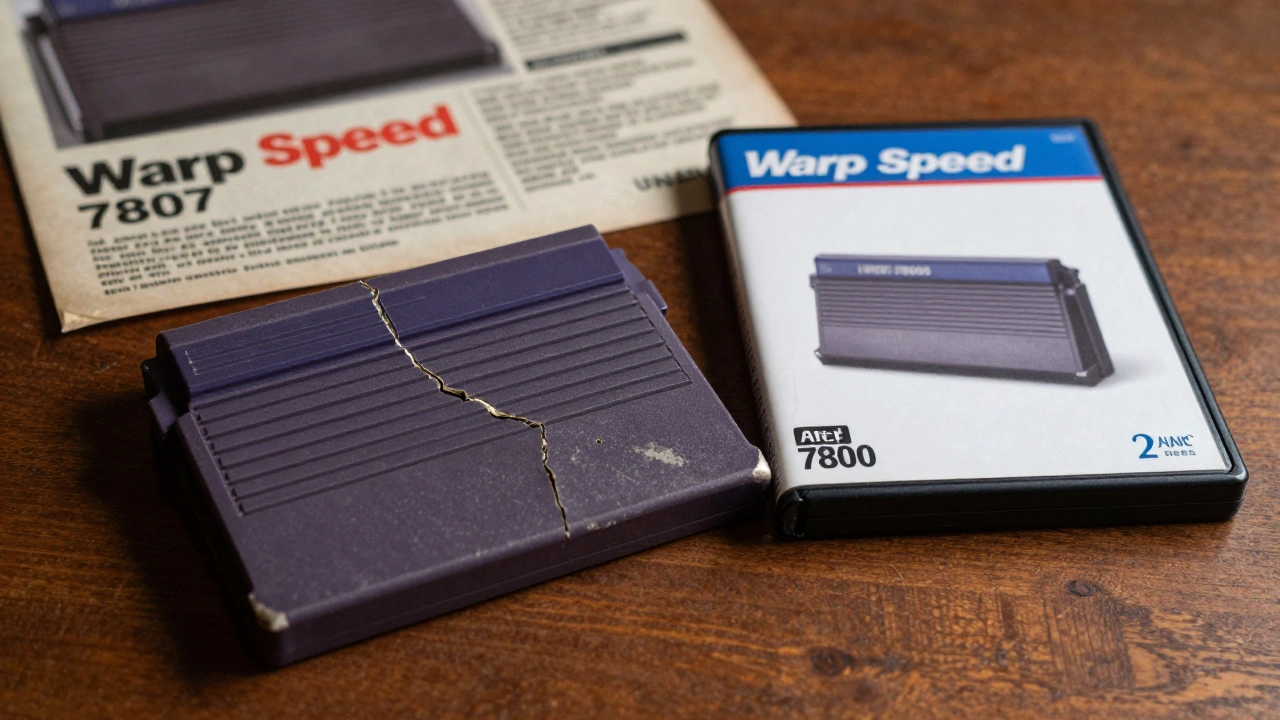
- Warp Speed (Atari 7800, 1987) - A racing game with no box. Just a cartridge. If it’s still in shrink? $500.
- Game Boy Camera (Game Boy, 1998) - The camera itself is worth $150. But the version with the original box, manual, and two memory cards? $450.
- Yars’ Revenge (Atari 2600, 1982) - The original version had a silver label. Later pressings were gold. The silver? $300.
These aren’t myths. They’re real. I’ve seen a guy in Portland pull a Red Sea Crossing out of a $5 bin and walk out with $550. He didn’t even know what it was. Just knew the label looked weird.
Condition isn’t everything
You’ve heard it: "It has to be mint." That’s true for collectors who want to resell. But for the people who buy games to play? Condition matters less than rarity.Take Warp Speed. If the cartridge is cracked, the label is peeling, and the manual is gone? It’s worth $50. Still more than most games in the bin. But if it’s complete? $500. So don’t toss the broken ones. Look closer.
Some games were only sold in certain stores. Super Scope 6 (NES) came with a light gun. If you find the game without the gun? That’s normal. But if you find it with the gun and the box? That’s a $1,000 set. You’ll never find that in a store. But you might find it in a bin where someone dumped a whole room of old gear.
Learn the signs of factory error
Manufacturing mistakes don’t make a game worse-they make it valuable. Think of it like a misprinted dollar bill.One of the most famous examples: Super Mario Bros. for the NES. The original version had a glitch where you could jump through walls. Nintendo fixed it in later runs. But the glitch version? It’s still out there. If the game plays with the wall-jump bug? That’s a $400 find.
Another: EarthBound (SNES, 1995). The first print had a typo on the box: "Mother 2" instead of "EarthBound." The second print fixed it. The first? $600. The second? $120.
Look for:
- Text that doesn’t match the official box art
- Wrong colors on the label
- Missing copyright dates
- Cartridges with different serial numbers than the box
These aren’t defects. They’re historical artifacts. And they’re still hiding in bins.
What to do when you find something
Don’t celebrate yet. Don’t even buy it until you’ve done one thing: check the serial number.Grab your phone. Open Google. Type: [game name] [console] serial number. Look for collector forums. Reddit’s r/VideoGameCollecting has 500,000 members. They’ve cataloged every known variant. If you see a match? That’s your confirmation.
Or better yet: take a photo of the label and the back of the cartridge. Upload it to the Video Game History Foundation database. They’ll tell you if it’s rare. No cost. No login. Just upload.
And if you’re still unsure? Walk away. The next bin will have something better. The best finds aren’t the ones you rush into. They’re the ones you recognize because you’ve seen them before.
What you’re really looking for
You’re not hunting for money. You’re hunting for history. The games that were forgotten because they didn’t sell. The ones that were too weird, too niche, too early, or too late. The ones that got lost because no one thought they mattered.That’s why the best hunters don’t care about price tags. They care about stories. The guy who made Red Sea Crossing was a church minister. The Warp Speed cartridge was never sold in stores-it was given away at a tech expo in 1987. The Game Boy Camera was a Japan-only release that never left Asia.
When you find one of these, you’re not just buying a game. You’re holding a piece of something no one else saved.