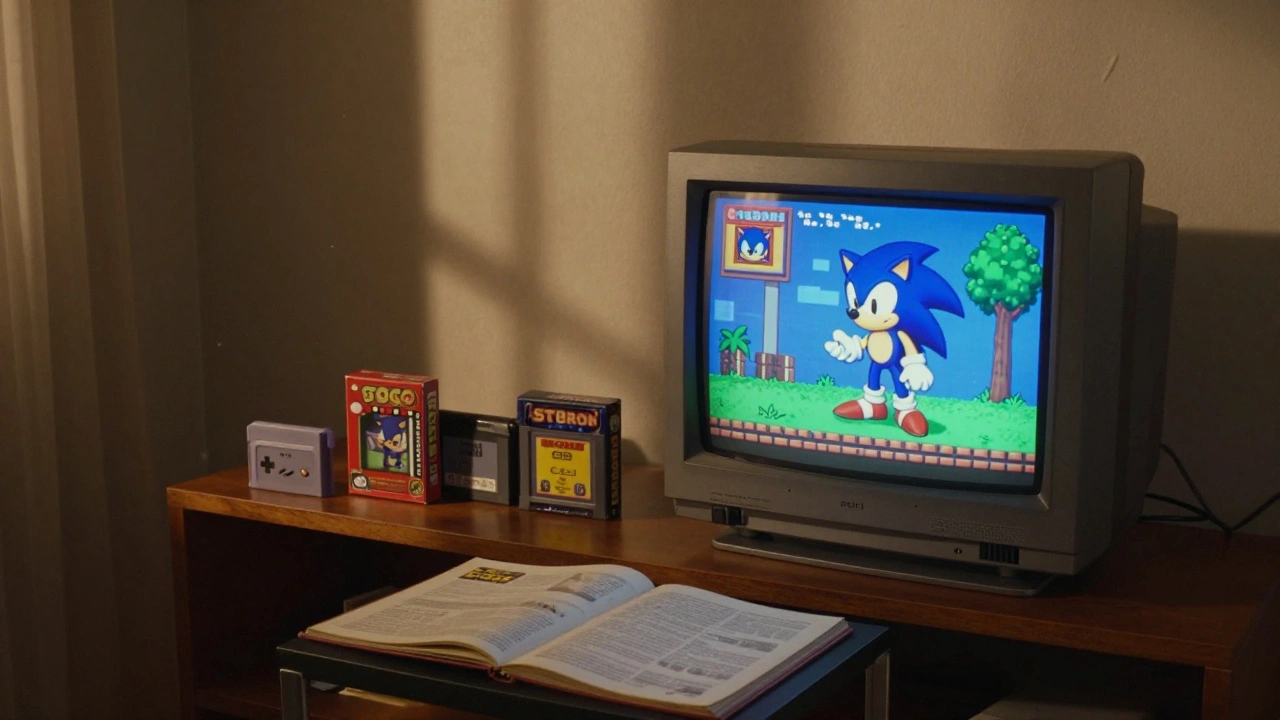
Starting a retro video game collection can feel exciting - and overwhelming. You scroll through Instagram and see someone’s entire wall filled with sealed SNES games, or YouTube videos of someone unboxing a crate of 200 NES cartridges. It’s tempting to think you need to match that. But here’s the truth: retro video game collecting isn’t about owning everything. It’s about building something that means something to you.
Start with One System, Not Every System
Don’t begin by trying to collect every game ever made for every console. That’s how people burn out before they even get started. Instead, pick one system you actually played as a kid, or one you always wished you had. Maybe it was the Sega Genesis because you spent weekends playing Sonic. Or the original PlayStation because you still remember the thrill of loading up Final Fantasy VII. That system becomes your anchor. Once you lock in on one console, your collection starts to make sense. You’re not chasing random cartridges anymore. You’re hunting for the games you remember, the ones you never finished, or the ones you lost when you moved. You might start with just three titles: the game you played the most, the one you never beat, and the one you always wanted but couldn’t afford back then.Choose Your Focus: Console, Genre, or Franchise?
There are three main ways to organize your collection - and each creates a different kind of experience.- Console-focused: You collect only games for one system. Example: Only PlayStation 1 games. This is the easiest for beginners because you only need one console to play them all.
- Genre-focused: You collect games by type, no matter what system they’re on. Example: Only fighting games - Street Fighter II, Mortal Kombat, Killer Instinct, Soulcalibur. This lets you compare how the same genre evolved across hardware.
- Franchise-focused: You collect every entry in a series. Example: Every Spyro game ever released - from the original on PS1 to the 2000s reboots on GameCube. This is satisfying because you’re tracking a story across time.
Understand What You’re Really Buying
Not all copies of a game are equal. A loose cartridge (just the game, no box or manual) might cost $5. The same game in a Complete In Box (CIB) condition - with original packaging, manual, and label - could cost $40. And a sealed, factory-new copy? That might run $150. Here’s the thing: most retro games don’t need to be sealed to be valuable. For example, a copy of EarthBound on SNES in loose condition still sells for $80-$120 because it’s rare and beloved. But a sealed copy? It’s $1,000+. Do you really need to pay that? Probably not. Use Price Charting (a free website) to check current market values. Look at the price difference between loose, CIB, and sealed. You’ll notice that for most games, the jump from loose to CIB isn’t worth the extra cash - unless you care about the box art or manual. For many collectors, the manual is the real treasure. That little booklet with maps, tips, and lore? That’s part of the experience.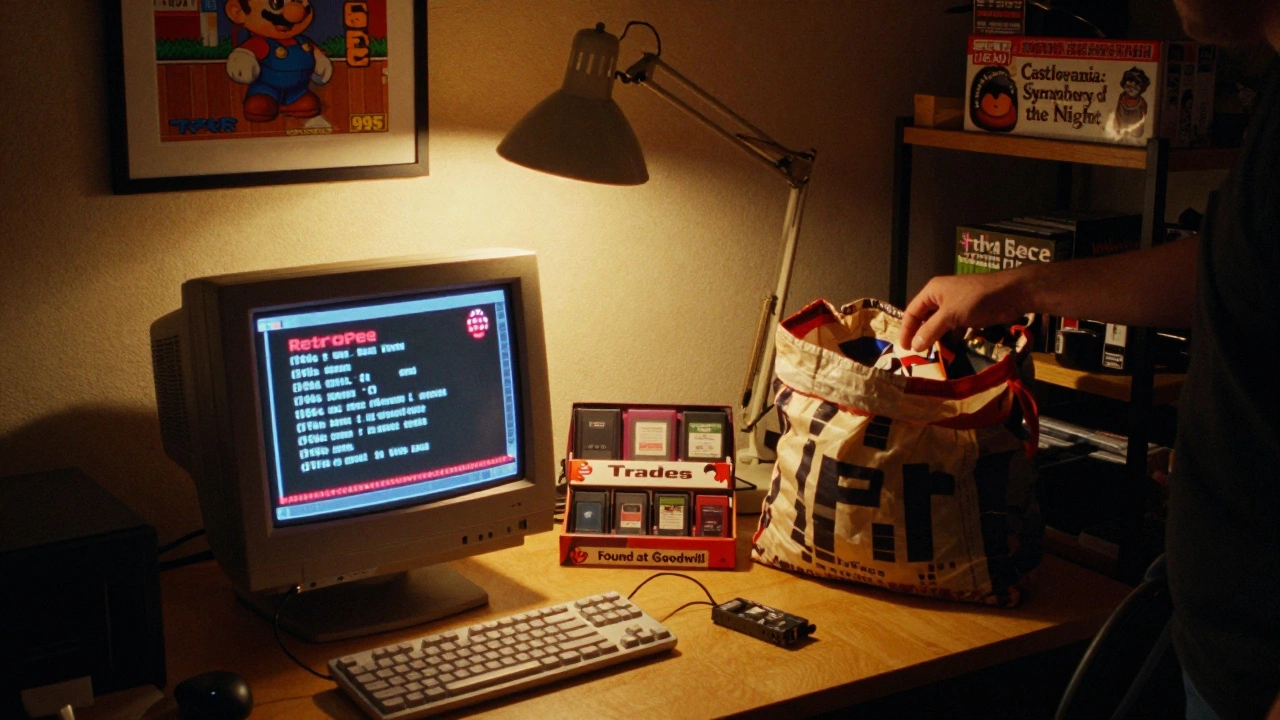
Where to Find Games (Without Going Broke)
You don’t need to buy everything online. In fact, some of the best finds come from places you’d never expect.- Thrift stores: Goodwill, Savers, Salvation Army. Go often. Most people don’t know what they’re selling. You’ll find a lot of broken systems and missing cartridges - but every now and then, you’ll hit gold. One collector in Portland found a sealed copy of Shining Force II for $3.
- Estate and garage sales: Especially in spring and fall. People are cleaning out basements. Look for milk crates full of old games. If you see a crate labeled "Video Games - $20 all", grab it. Even if half are duplicates, you’ll find one gem.
- Pawn shops: They don’t always know what they have. I’ve seen people walk away from a $50 game because they thought it was "just an old Nintendo game." Bring a phone with Price Charting open. Ask if they’ve had any other games in lately.
- Facebook groups and Reddit: r/gamesales and local buy/sell groups are goldmines. Set up alerts for your target system. You’ll get notified when someone sells a game you’ve been hunting for months.
International Finds Can Save You Money
Japanese games are often cheaper than U.S. versions. A copy of Dragon Quest III on Super Famicom might cost $15 in Japan but $50 in the U.S. Why? Because Japanese collectors don’t care as much about box art - they care about the gameplay. And the cartridges? They’re identical. The only difference is the language and the box. You’ll need a Japanese console or a modded system to play them, but that’s easy now. You can buy a region-free retro console for under $100. Or use a Raspberry Pi with RetroPie. The point isn’t to play them in English - it’s to build your collection smartly. A Japanese copy of Castlevania: Symphony of the Night with the original Japanese box? That’s a conversation piece.Don’t Forget the Extras
Your collection doesn’t have to stop at games and consoles. Think about what made the experience special back then.- Original posters from game stores
- Official soundtracks on vinyl or CD
- Statues or figurines - like a Sonic or Mario bust
- Collector’s editions with steelbook cases
- Bobbleheads or plush toys from the era
Emulation Isn’t the Enemy - It’s the Backup
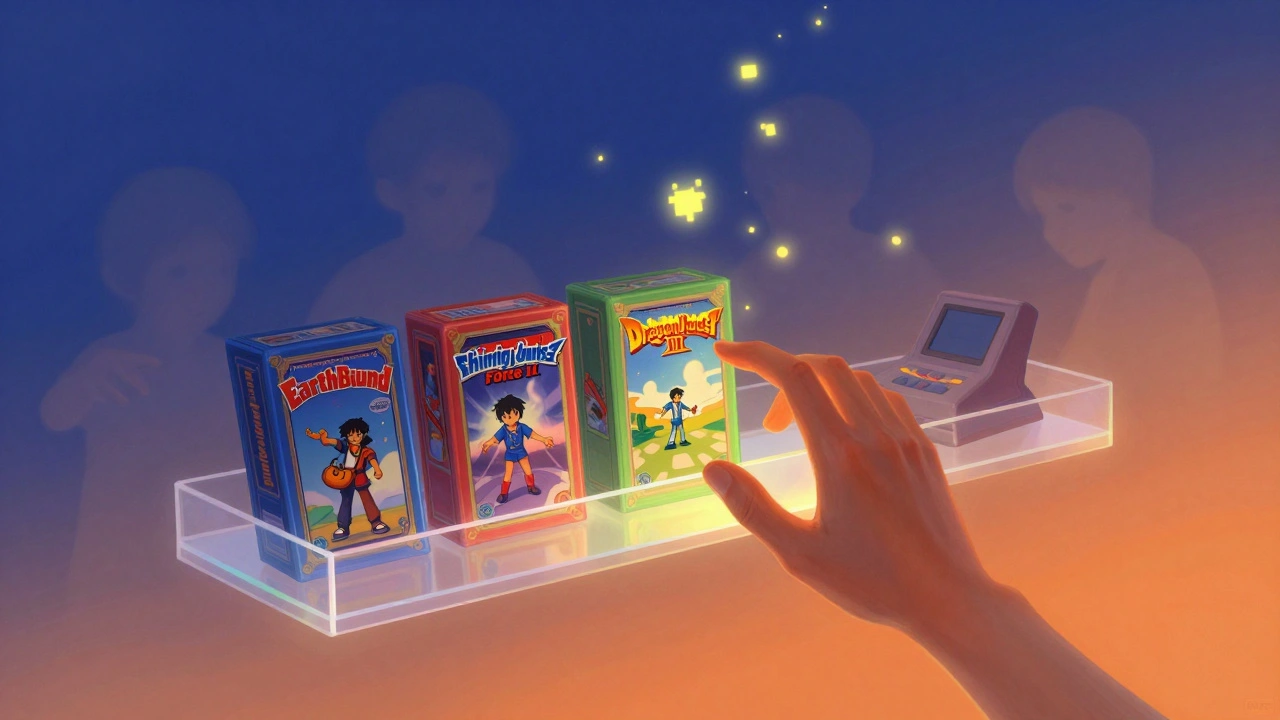
Some people say emulation ruins collecting. But here’s the reality: if you can’t afford a sealed copy of EarthBound, you’re not a bad collector. You’re just smart. Using RetroPie on a Raspberry Pi lets you play hundreds of games without buying them. It’s perfect for testing out titles before you buy the physical copy. You can try Shining Force on emulator, love it, then hunt for the cartridge. Or use it to play games you already own - so you can keep them sealed. Emulation isn’t about replacing your collection. It’s about protecting it.Trade Up, Don’t Just Buy Up
You don’t need to spend money to grow your collection. Trade is a powerful tool. Start by keeping a box of games you don’t care about. Then, every time you buy a new game, add one of your "junk" games to the top of the box. When you meet another collector, say: "I’ve got this box of 15 games. Pick two, and I’ll give you one of mine." You’d be surprised how many people have games they don’t want but think are valuable. A copy of Blue Stinger for Dreamcast? Most people think it’s worthless. But in Japan? It’s rare. Trade it for a $20 game you’ve been wanting - and suddenly you’ve upgraded without spending a dime.It’s Not About Completing the Set
The biggest mistake new collectors make? Thinking they need every version, every release, every variant. You don’t. You need the ones that make you smile. A friend of mine collects only games with "butterfly" in the title. He has 12 of them. One of them is a $3 cartridge from a thrift store. He doesn’t care if it’s not rare. He cares that it’s weird. And that’s the whole point. Retro collecting isn’t about investment. It’s about memory. It’s about the smell of a new cartridge. The sound of a console booting up. The way a manual felt in your hands. Start small. Stay focused. Don’t compare your shelf to someone else’s. Your collection doesn’t need to be big. It just needs to be yours.What’s the best way to start a retro game collection on a budget?
Start with one console you already know - like the NES, SNES, or original PlayStation. Buy one game you loved as a kid. Then, look for used copies at thrift stores or garage sales. Avoid sealed or mint-condition games at first - they’re expensive. Use Price Charting to check fair prices. Trade games you don’t want for ones you do. Your collection grows slowly, but it stays meaningful.
Should I collect games with boxes and manuals?
Only if you care about them. For most games, the difference in value between a loose cartridge and a Complete In Box (CIB) copy isn’t worth the extra cost - unless you’re into the art, nostalgia, or completeness. Manuals often have maps, tips, and lore that enhance the experience. If you’re building a personal museum, keep them. If you just want to play, skip them.
Are Japanese retro games worth importing?
Yes - if you have a way to play them. Japanese games are often cheaper than U.S. versions, especially for rare titles. The cartridges work the same. The box art is different - sometimes better. You’ll need a region-free console or an emulator. But if you’re into aesthetics and value, Japanese imports are one of the smartest moves in retro collecting.
Is emulation cheating in retro collecting?
No. Emulation is a tool, not a replacement. Use it to try games before you buy them. Use it to play games you already own so you can keep them sealed. Use it to explore titles you can’t afford. Many serious collectors use emulation alongside physical copies. It’s not about purity - it’s about access and preservation.
How do I avoid overspending on retro games?
Set a monthly budget - even if it’s just $20. Stick to one system or genre. Avoid buying games on impulse. Use Price Charting to know fair prices. Wait for sales on Facebook groups or Reddit. Trade games you don’t want. Most retro games are cheap. You don’t need to buy the expensive ones to enjoy the hobby.