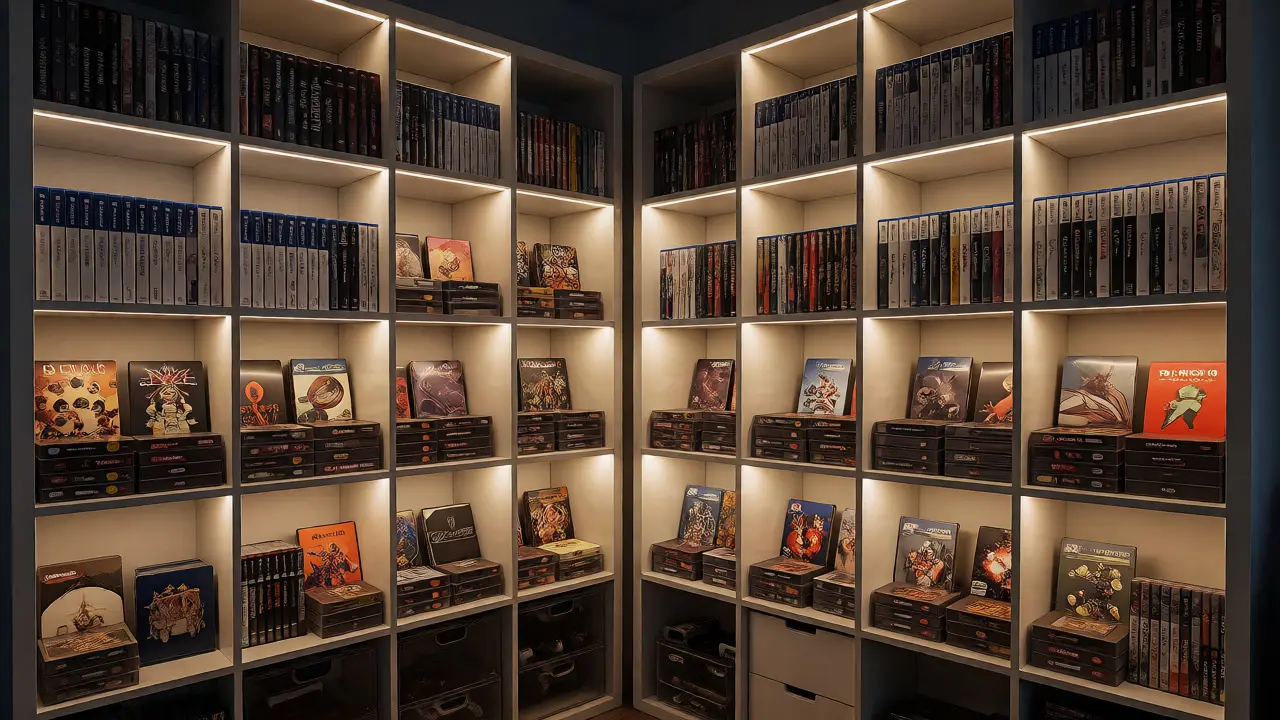
You bought the limited edition steelbook of Zelda and the complete box set of Final Fantasy VII. Now you have 300 games, a growing pile of retro cartridges, and absolutely no idea where to put them without turning your living room into a hoarder’s paradise. Most people make the mistake of buying cheap bookcases that bow in the middle after six months or shelves so deep that you can’t see the spines of the back row. Choosing the right shelving system isn't just about aesthetics; it's about physics, accessibility, and preserving the condition of your collection.
This guide cuts through the marketing fluff. We’re looking at real-world constraints: weight limits, depth requirements for modern consoles versus retro hardware, and how to future-proof your setup as your collection inevitably grows by another 50 titles next year.
Understanding Your Collection’s Physical Needs
Before you buy a single bracket, you need to audit what you actually own. Not all video games are created equal in terms of size and weight. A standard PlayStation 4 Blu-ray case is roughly 17mm thick. An original NES cartridge is bulkier but lighter. A collector’s edition with a statue might be 6 inches wide and weigh three pounds. If you mix these randomly on one shelf, you’ll either waste massive amounts of space or run out of room instantly.
Measure your deepest item. For most modern collections, this is likely a large box art or a bundled figurine. Standard bookshelves are often 10-12 inches deep. This is usually overkill for PS5 or Xbox Series X cases, which are slim. You end up with dead space behind every game. Conversely, if you collect CRT-era consoles, those units are deep and heavy. You need adjustable shelves that can accommodate varying depths without compromising structural integrity.
The Big Three: IKEA Kallax, Billy, and Custom Metal
When collectors talk about storage, three names dominate the conversation. Let’s break down why each works (or doesn’t) for specific scenarios.
IKEA Kallax is the undisputed king of modular gaming storage. It’s a cube-based system available in various configurations, from 2x2 to 4x4 grids. Its primary advantage is modularity. You can stack them, add doors, insert drawers for controllers, or use inserts specifically designed for media. However, Kallax has a known weakness: sagging. The particleboard shelves are not rated for heavy loads. If you fill a 13-inch square with hardcover strategy guides and metal boxes, the center will droop. Use the "inserts" wisely-keep the heavy stuff low and the light stuff high.
IKEA Billy is the classic bookcase. It’s taller, narrower, and generally cheaper per linear foot than Kallax. But here’s the catch: Billy shelves are fixed at specific intervals unless you buy extra pins, and they are shallow. They work great for DVD-style cases but struggle with bulky collector editions. Also, Billy is notoriously unstable when tall. If you stack two Billys, you must anchor them to the wall. Without anchoring, a slight bump from a cat or a toddler can send 400 games crashing to the floor.
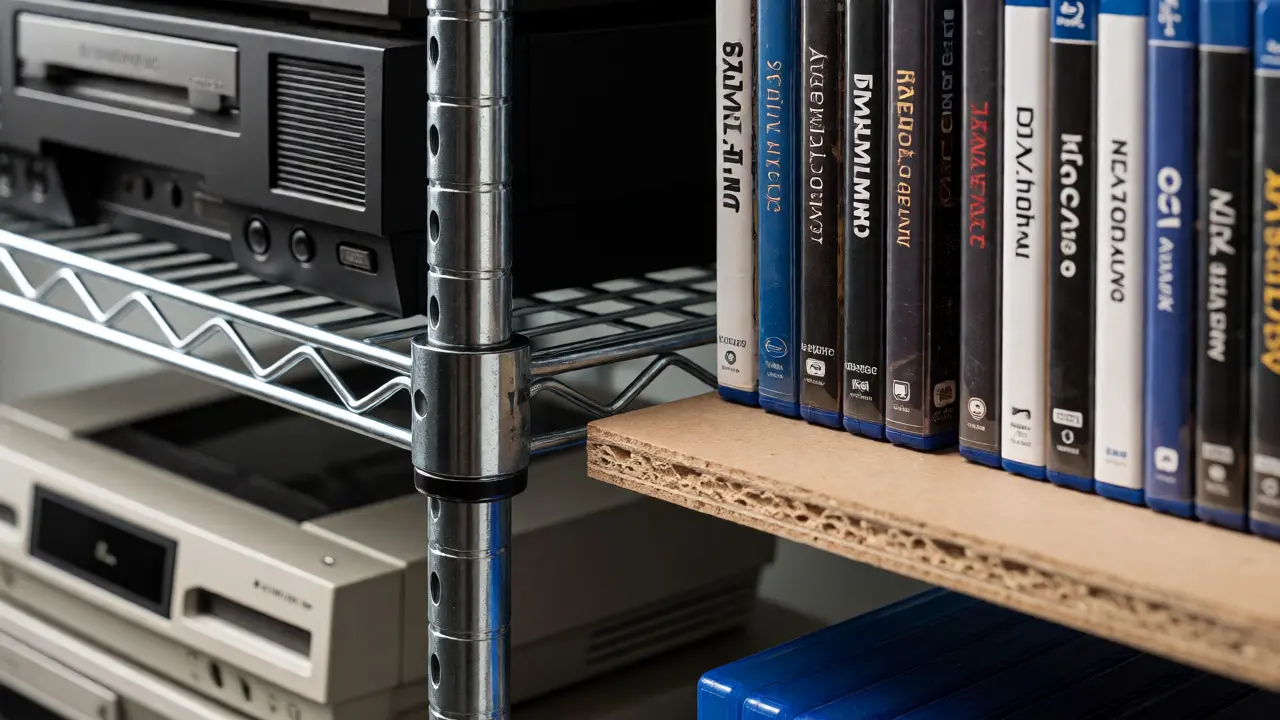
For the serious archivist, Custom Metal Shelving (like Wire Shelving or Heavy-Duty Steel Racks) offers unmatched durability. These systems don’t sag. They handle hundreds of pounds per shelf. The downside? They look industrial. Unless you’re going for a warehouse aesthetic, they might clash with a cozy gaming den. But if you have 1,000+ games, metal racks are the only way to go without building a custom carpentry project.
| Feature | IKEA Kallax | IKEA Billy | Wire/Metal Rack | Wall-Mounted Floating Shelves |
|---|---|---|---|---|
| Weight Capacity (per shelf) | ~30 lbs (low risk of sag) | ~25-30 lbs (risk of bowing) | 200-800 lbs (high durability) | 15-50 lbs (depends on anchors) |
| Depth Suitability | Good for mixed media | Poor for bulky items | Excellent (adjustable) | Shallow (good for slim cases) |
| Aesthetic Flexibility | High (add doors/drawers) | Medium (classic look) | Low (industrial) | High (minimalist) |
| Cost Efficiency | Medium | High | Medium-High | Low (hardware costs add up) |
| Assembly Difficulty | Moderate | Easy | Hard (requires tools/skills) | Hard (wall studs required) |
Depth Matters: The Invisible Space Killer
Most people measure height and width but ignore depth. This is critical. A standard PS5 game case is about 14mm thick. If your shelf is 12 inches deep, you have nearly 9 inches of empty space behind the game. That’s wasted real estate. Over 500 games, that’s enough space for another full shelf.
If you mostly collect modern console games (PS4, PS5, Xbox One/Series), look for shallow shelving, around 8-10 inches deep. This saves money and reduces visual clutter. If you collect retro consoles (N64, SNES, Genesis), you need deeper shelves because the boxes are larger and the consoles themselves are bulky. In this case, consider mixing systems: use shallow shelves for loose discs and deeper cabinets for boxed retro hardware.
Another trick is using Magazine Files. Instead of laying games flat or standing them up in rows, place them vertically in magazine files on a desk or floating shelf. This turns your game library into an accessible archive rather than a hidden stockpile. It’s perfect for frequently played titles.
Preservation: Light, Dust, and Humidity
Your shelf choice impacts the longevity of your collection. Paper manuals fade. Plastic cases warp. Cardboard boxes get brittle. Direct sunlight is the enemy of everything. If your gaming room has south-facing windows, open shelving will turn your vibrant cover art into pastel ghosts within five years.
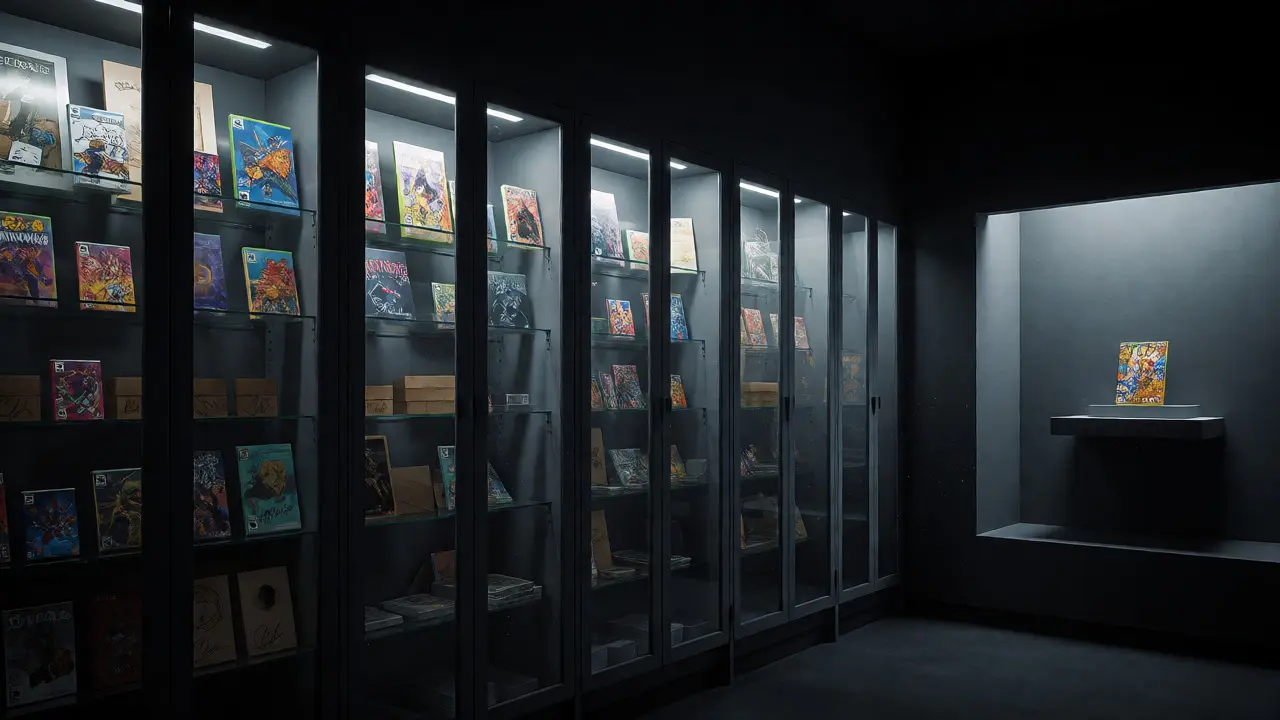
Closed cabinets with UV-filtering glass are the gold standard for preservation. If you prefer open shelves for the "wow factor," rotate your collection. Move the sun-exposed games to the back or inside drawers every few months. Dust is another silent killer. Open shelves require constant dusting, which risks scratching acrylic cases. Closed doors reduce cleaning frequency significantly.
Humidity control matters more than you think. In damp basements, cardboard boxes can develop mold. Metal shelves can rust if not coated properly. Wood shelves can swell. If you live in a humid climate, avoid raw wood finishes near the floor. Use sealed laminates or metal. Keep your collection off the ground entirely-never store games directly on carpet or concrete floors.
Display vs. Storage: Finding the Balance
Do you want to show off your games or hide them? There’s no wrong answer, but mixing strategies helps manage clutter. Use the "Top Shelf Rule": reserve the topmost shelves for your crown jewels-the rare finds, the signed copies, the limited editions. Put them in protective cases or on dedicated LED-lit shelves. This draws the eye upward and makes the collection feel curated rather than chaotic.
For the bulk of your library, prioritize accessibility. Can you find "Halo 3" in under ten seconds? If your shelves are packed tight, you’ll hesitate to play anything because pulling out a disc means rearranging three others. Leave a little breathing room between groups of genres. Group by franchise or platform. Visual separation makes browsing easier and protects the spines from friction damage.
Consider lighting. Standard ceiling lights cast shadows on lower shelves. Add battery-operated LED strips under each shelf edge. It transforms a boring bookcase into a glowing showcase. Plus, it helps you read small text on spines without squinting.
Future-Proofing Your Setup
Your collection won’t stop growing. Buy 20% more capacity than you currently need. If you have 200 games, plan for 240. Why? Because you’ll forget to account for the new DLC codes, the soundtrack CDs, and the stray controllers that never seem to fit in the drawer.
Modular systems like Kallax allow you to expand laterally or vertically. Wall-mounted systems are harder to change once installed. Think long-term. If you move apartments, will the shelves fit? Will they survive the move? Flat-pack furniture is easier to transport but less durable. Solid wood or metal is harder to move but lasts decades.
Finally, label your shelves. It sounds obvious, but when you have 500 items, memory fails. Use clear bins with labels for accessories. Use color-coded dividers for platforms. A well-labeled system encourages you to keep things organized. A messy system invites chaos.
How much weight can standard IKEA Kallax shelves hold?
IKEA officially rates Kallax shelves for about 30 lbs (13 kg) per shelf. However, real-world experience shows that particleboard sags noticeably if you load it with dense items like hardcover books or metal boxes. For video games, which are relatively light, this is usually fine, but avoid stacking heavy encyclopedias or statues on upper shelves.
Should I store video games upright or flat?
Upright is best for accessibility and spine visibility. Storing games flat (stacked on top of each other) can cause pressure marks on the front covers of the bottom items and makes finding specific titles difficult. Only store flat if you have very heavy collector editions that might fall over in a vertical position.
What is the best shelf depth for PS5 and Xbox Series X games?
Modern console game cases are slim, typically requiring only 6-8 inches of depth. A standard 10-12 inch shelf leaves significant wasted space. Look for shallow shelving units or use risers to create double-decker rows on deeper shelves to maximize density.
How do I prevent my shelves from bowing?
Use heavier-duty materials like solid wood or metal. If using particleboard, distribute weight evenly and avoid placing the heaviest items on the longest unsupported spans. Adding a central support bracket or installing the shelf closer to the wall stud can also help reduce sagging.
Is it safe to store games in direct sunlight?
No. UV rays fade artwork and degrade plastic and paper. If you cannot avoid sunlight, use UV-filtering film on windows or closed cabinets with tinted glass. Rotate your collection periodically so different items take turns being exposed.