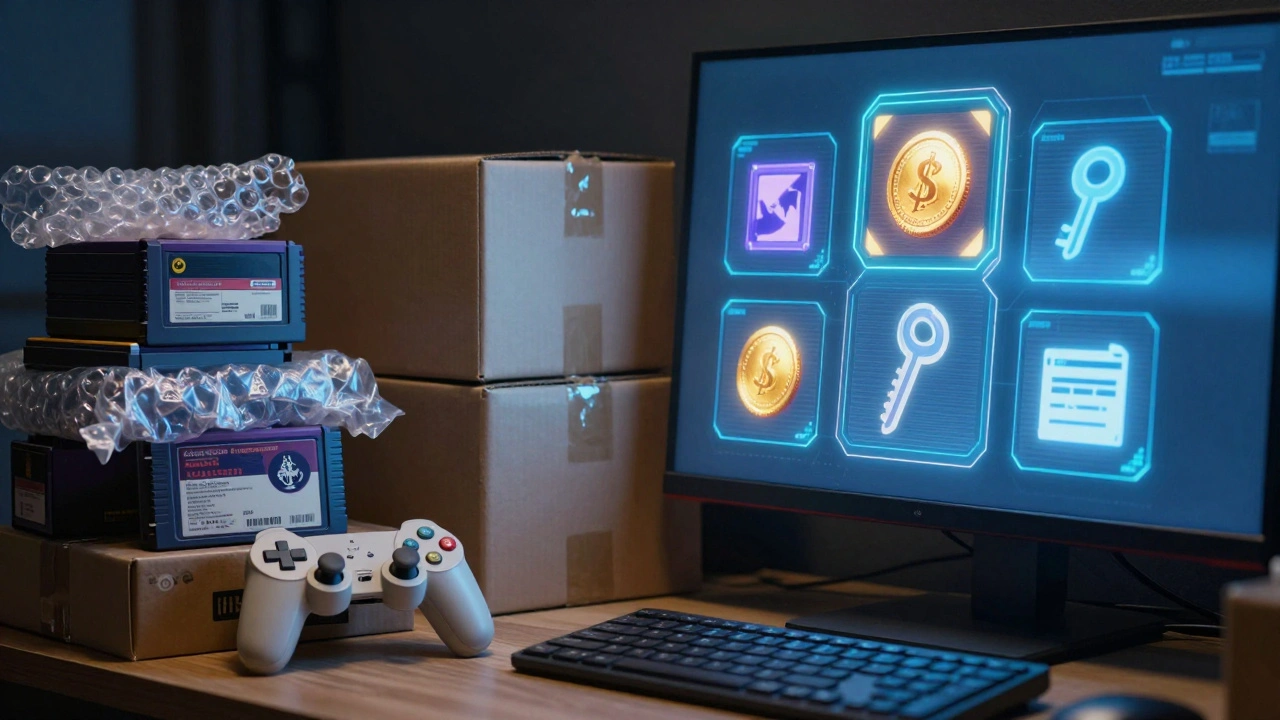
Have you ever sold a physical copy of a game on eBay, waited weeks for the money to clear, and realized that after shipping supplies and platform cuts, you barely broke even? You are not alone. For years, eBay has been the default place to offload old consoles and cartridges. But in 2026, the landscape has shifted. Sellers are increasingly looking at specialized platforms like Gameflip, which is a digital marketplace specifically designed for gamers to buy and sell gaming items and digital assets. The question isn't just about where you can list an item; it's about which platform actually puts more cash in your pocket and how fast you get it.
The short answer is complex because these two platforms serve different purposes. eBay is a general auction house with massive reach but hidden costs. Gameflip is a niche player focused on speed and gaming-specific assets, including digital goods that eBay simply cannot handle. If you are holding onto a stack of retro cartridges or trying to monetize unused in-game skins, understanding the fee structures and payout timelines of both is critical to maximizing your profit.
Understanding the Fee Structures: What Really Gets Deducted?
When comparing marketplaces, the headline percentage often hides the real cost. Let's break down exactly what happens to your sale price on each platform.
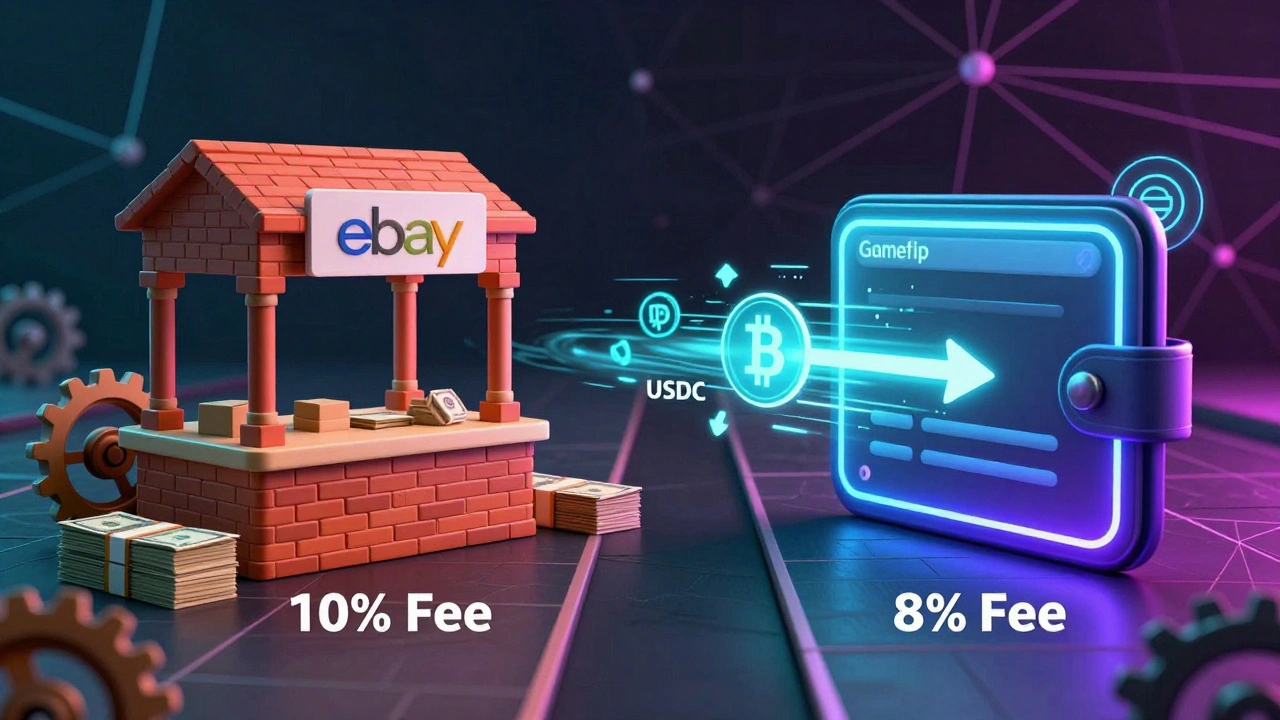
On eBay, which is a dominant peer-to-peer online auction and fixed-price marketplace founded in 1995, the math looks straightforward until you dig deeper. eBay charges a final value fee of 10% on the total amount of the sale (including shipping). If you sell a game for $50 plus $10 in shipping, eBay takes 10% of $60, which is $6. That leaves you with $54 before you pay for the actual shipping label. While eBay offers discounted shipping rates, you still have to buy the box, the bubble wrap, and the tape. These "soft costs" eat into your margin quickly.
Furthermore, eBay’s buyer protection policy, while free to use, creates a psychological tax. Sellers often inflate prices to cover potential returns or disputes, which can slow down sales. Conversely, if you keep prices competitive, you absorb the risk. There are no listing fees for sellers who post fewer than 50 items per month, which is great for casual sellers, but high-volume sellers face insertion fees that further complicate the equation.
Gameflip operates differently. As of 2026, Gameflip charges an 8% transaction fee on all listings. However, there is a catch for digital goods. If you are selling digital-only items-like gift cards, in-game currency, or accounts-there is an additional 2% fee, bringing the total to 10%. This matches eBay’s rate for digital items, but remember, eBay doesn’t support direct digital asset trading in the same way. For physical games, Gameflip sticks to that flat 8%.
Here is where Gameflip shines for many users: transparency. The platform advertises minimal shipping costs and integrates them more smoothly into the listing process. Unlike eBay, where shipping is a separate line item that buyers scrutinize, Gameflip’s model feels more streamlined for the gaming community. Neither platform charges upfront listing fees, so you don’t lose money if an item doesn’t sell. However, Gameflip’s consistent 8% base rate for physical items makes it slightly cheaper than eBay’s 10% cut, assuming comparable shipping costs.
| Cost Component | eBay | Gameflip |
|---|---|---|
| Transaction Fee | 10% of total sale price | 8% of total sale price |
| Digital Item Surcharge | N/A (Physical focus) | +2% (Total 10%) |
| Listing Fees | Free (up to 50/month) | Free |
| Shipping Costs | Seller pays actual cost + supplies | Minimal integrated shipping options |
| Payment Processing | Included in transaction fee | Varies by withdrawal method |
Payout Times: How Fast Do You Get Paid?
Fees matter, but cash flow matters more. If you need money now, the speed of payout is a deciding factor. Here is how the timelines compare in 2026.
eBay’s payout system is tied to delivery confirmation. Once a buyer receives their package and marks it as delivered, eBay typically releases funds within two days. However, this assumes the buyer accepts the item without issue. If a buyer opens a case or delays marking receipt, those funds are held. For a standard domestic shipment, you might wait 3-7 days from the moment you ship the item until the money hits your bank account. International sales can take significantly longer due to customs and extended transit times.
Gameflip uses a wallet system. When a buyer purchases an item, the funds are immediately transferred to your Gameflip wallet. This provides instant gratification-you see the balance update right away. However, getting that money out of the wallet and into your bank account requires a withdrawal step. Gameflip supports several withdrawal methods, including Payoneer, Skrill, Bitcoin, and USDC cryptocurrency. Notably, PayPal is no longer supported for withdrawals as of recent updates. Each withdrawal method has its own processing time and potential fees. For example, cryptocurrency withdrawals can be near-instant depending on network congestion, while bank transfers via Payoneer may take a few business days. The key takeaway is that while the sale converts to wallet credits instantly, the liquidity depends on your chosen exit strategy.
Physical vs. Digital: Where Each Platform Excels
This is the most critical distinction between the two. eBay is built for physical goods. It has robust tools for shipping labels, tracking numbers, and handling damaged items. If you are selling a vintage Nintendo cartridge or a used PlayStation 5 controller, eBay’s infrastructure is mature and reliable. The buyer protection policies reassure customers, which helps drive sales for higher-ticket physical items.
Gameflip, on the other hand, was built for the digital age. Its core value proposition is unlocking value from digital assets that would otherwise sit idle. Think in-game skins, virtual currency, or game accounts. eBay strictly prohibits the sale of most in-game items and accounts due to terms of service violations from game developers. Gameflip facilitates these transactions safely, acting as an escrow service. If you are a gamer looking to monetize your digital collection, Gameflip is the only viable option here. For physical games, Gameflip still competes well, especially for mid-range titles where the lower fee structure makes a difference.
User Experience and Hidden Friction
Selling online involves more than just listing an item. The user experience affects how much time you spend managing sales versus enjoying your profits. On eBay, you are responsible for creating detailed descriptions, taking multiple photos, and responding to buyer questions. Dispute resolution can be time-consuming, and while eBay often sides with buyers, the process can drain your energy. The platform’s global reach means you might deal with international buyers, adding complexity with customs forms and longer shipping windows.
Gameflip offers a more streamlined experience for gamers. The platform provides rapid item valuation tools, allowing you to search for a game and see an instant quoted value. This removes the guesswork from pricing. Shipping is handled through provided labels, requiring you to pack the item and drop it off at a designated point. The interface is cleaner and less cluttered than eBay’s, focusing solely on gaming products. However, the smaller buyer base compared to eBay means items might take longer to sell if they are niche or overpriced. Gameflip’s growth in 2024, with a 60% revenue increase, suggests a growing community, but it still lags behind eBay in sheer volume.

Which Platform Should You Choose in 2026?
Your choice depends on what you are selling and what you value more: maximum reach or lower fees and speed.
- Choose eBay if: You are selling rare, high-value physical items that benefit from a global audience. If you have a large inventory of varied physical goods and want the highest possible bid from a broad pool of buyers, eBay’s traffic is unmatched. It is also better for items that require detailed provenance or condition reports, as buyers trust the established dispute resolution system.
- Choose Gameflip if: You are selling digital assets, in-game items, or common physical games where the 2% fee savings add up. If you prefer a simpler, gamer-centric interface and want faster access to funds via crypto or digital wallets, Gameflip is superior. It is also ideal if you want to avoid the hassle of international shipping and complex buyer negotiations.
For many sellers, the best strategy is hybrid. List high-value, rare physical items on eBay to capture the global market. Use Gameflip for bulk sales of common games, digital codes, and in-game assets. This approach leverages the strengths of both platforms while mitigating their weaknesses.
Alternatives to Consider
While eBay and Gameflip dominate the conversation, other platforms exist. Swappa, for instance, charges no fees for items under $50, making it attractive for low-cost electronics. Trade4Cash offers no fees and free shipping for orders over $10, though it is more localized. Amazon’s trade-in program provides instant credit but often at lower values than private sales. Understanding these alternatives ensures you aren’t missing out on better deals for specific types of items.
Does Gameflip charge listing fees?
No, Gameflip does not charge any listing fees. You can post as many items as you want without upfront costs. You only pay the transaction fee when an item sells.
Can I sell digital game accounts on eBay?
Generally, no. eBay prohibits the sale of most in-game items, accounts, and virtual currency due to violations of game developers' terms of service. Gameflip is designed specifically for these types of digital assets.
How long does it take to get paid on Gameflip?
Funds are added to your Gameflip wallet immediately after a sale. Withdrawal times depend on the method chosen. Cryptocurrency withdrawals like Bitcoin or USDC can be nearly instant, while bank transfers via Payoneer or Skrill may take a few business days.
Is eBay safer for buyers than Gameflip?
eBay has a longer history and more robust buyer protection policies for physical goods, including money-back guarantees. Gameflip also offers protection mechanisms, particularly for digital items, but its ecosystem is newer and more specialized. Both platforms are generally safe, but eBay’s dispute resolution is more established for physical merchandise.
What are the total fees for selling a $100 game on Gameflip?
For a physical game, Gameflip charges an 8% transaction fee. So, for a $100 sale, the fee would be $8. You would also need to account for any shipping costs, which are typically minimal and integrated into the platform.
Does Gameflip support PayPal withdrawals?
As of 2026, Gameflip no longer supports PayPal for withdrawals. Users must use alternative methods such as Payoneer, Skrill, Bitcoin, or USDC cryptocurrency.
Which platform is better for rare retro games?
eBay is generally better for rare retro games because of its larger global audience and auction format, which can drive up prices for unique items. Gameflip is better suited for common titles and digital assets.