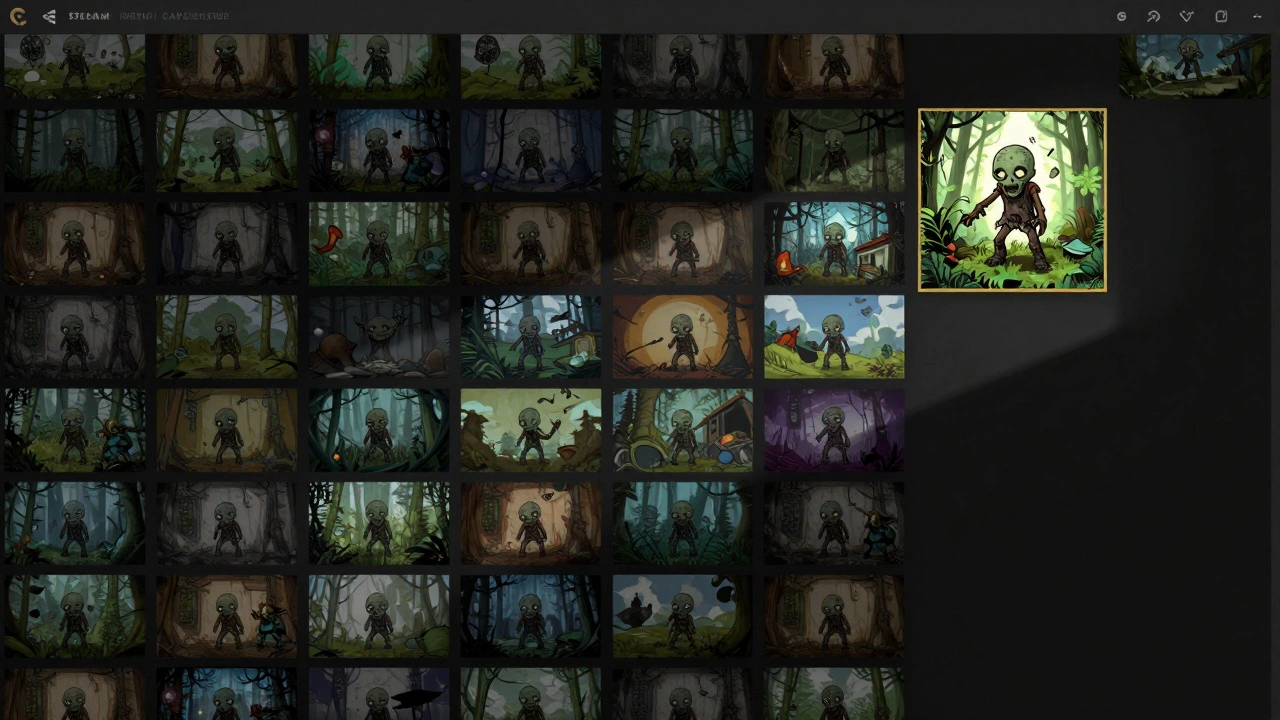
When you buy a used copy of Legend of Zelda: Ocarina of Time for $5 at a thrift store and sell it for $40 online, you’re not breaking any rules. But what if someone buys a pack of pre-made 3D models, slaps on a few textures, throws in a generic soundtrack, and calls it a game? That’s asset flipping-and it’s flooding Steam with hundreds of low-quality titles every month. The line between reselling and exploiting is thin, and the gaming community is fed up.
What Is Asset Flipping, Really?
Asset flipping isn’t about buying and selling physical copies of games. It’s about using marketplaces like the Unity Asset Store or Unreal Marketplace to buy ready-made models, animations, sound effects, and code snippets-then turning them into full games with almost no original work. These aren’t stolen files. They’re legally purchased. But the intent? That’s where it breaks down.
Imagine buying Lego bricks from a store, snapping them together into a basic tower, and calling it a masterpiece. Then selling it as a one-of-a-kind creation. That’s asset flipping. Developers who do this aren’t building games-they’re building profit machines. Some churn out 50+ games in a single year. Each one takes a few days. Each one earns $500-$2,000 on Steam. The math is simple: low effort, high return.
But the cost isn’t just financial. It’s cultural. These games clutter search results. They confuse new players. They make it harder for real indie devs to get noticed. One Steam user told me they spent $15 on a game labeled "survival horror," only to find out it was a recycled zombie model with three scripted events and a broken save system. No wonder 78% of Steam users say they avoid games under $5 after 2020.
The Community Strikes Back
Players didn’t wait for Valve to fix this. They started doing it themselves. Groups like "Sentinels of the Store" formed on Reddit and Discord. Their mission? Find, screenshot, and report asset-flipped games. They look for telltale signs: identical character models across ten different titles, reused dialogue files, and sound effects that appear in three unrelated horror games. One team even built a public database tracking over 2,300 confirmed flips since 2016.
Valve did try. They removed trading cards from indie games in 2017 because flippers were using them to artificially inflate player counts. They added stricter review filters. They purged entire batches of games. But new ones keep showing up. Why? Because the system still rewards volume. If you can upload ten games in a week and one of them accidentally gets traction, you win. There’s no penalty for spamming. No consequence for flooding the market.
Take the case of Piccled Ricc. It was a blatant rip-off of Rick and Morty, using the exact same character designs and voice lines. It passed Steam’s automated review because the assets were licensed. Only after fans filed a copyright complaint did Valve remove it. That’s not a system working-it’s a system barely holding together.
Reselling vs. Flipping: The Line Matters
Not all game flipping is unethical. Buying a used PS4 game from a garage sale and reselling it for double the price? That’s fair. You’re not creating anything. You’re just moving existing product. That’s called arbitrage. It’s been around since the 1980s. GameStop does it at scale. So do thousands of eBay sellers.
The difference? Original creators still benefit. When you buy a used game, the money goes to a private seller. The publisher doesn’t get a cut, but they also don’t lose anything. The game was already sold. The copy you’re reselling was legally owned. No new copies were made. No deception happened.
Asset flipping is different. It’s a distortion of the tools meant for developers. Asset marketplaces exist to help small teams build better games faster. They’re not meant to be a shortcut for people who don’t want to code, design, or test anything. When someone uses a $100 pack of trees to make ten "forest survival" games, they’re not helping the ecosystem. They’re poisoning it.
How Manipulative Monetization Feeds the Problem
Asset flipping doesn’t exist in a vacuum. It thrives alongside other unethical practices. Many flipped games include loot boxes, pay-to-win mechanics, and "daily login bonuses" designed to hook players into spending. These aren’t accidents. They’re copied from hit games like Fortnite or Genshin Impact-without any thought for whether they fit the game’s scope or audience.
Celia Hodent, a cognitive scientist who studies game design ethics, says these systems exploit brain chemistry. Variable rewards-where you never know when you’ll get a rare item-trigger the same dopamine response as slot machines. When you add guilt-trip animations (a character crying because you didn’t buy a skin) or time-gated progression (you must pay to skip a 3-hour grind), you’re not selling a game. You’re selling addiction.
And guess what? Most asset-flipped games use these exact tactics. Why? Because they work. Even if the game is broken, if it makes you spend $5 on a loot box, the flipper wins. This creates a cycle: bad games → manipulative monetization → low trust → fewer players willing to support real indie devs.
What Should Be Done? Best Practices for a Healthier Ecosystem
There’s no single fix. But here’s what needs to happen:
- Platforms must change incentives. Steam should stop rewarding games with high playtime if they’re under 10 hours and have no meaningful progression. Playtime metrics should be weighted by original content, not just time spent staring at recycled models.
- Asset marketplaces need usage rules. Unity and Unreal should require developers to declare if their game is built primarily from purchased assets. A simple checkbox: "This game uses more than 60% third-party assets." Transparency helps players make informed choices.
- Community reporting should be rewarded. Steam could offer store credit or early access to indie games for users who submit verified asset flip reports. Make it a game, not a chore.
- Developers should avoid copying monetization trends. Just because Call of Duty added a battle pass doesn’t mean your 3-hour platformer needs one. Ask: "Does this enhance the experience-or just the profit margin?"
- Players should vote with their wallets. Don’t buy games with no screenshots, no trailer, or a developer name that sounds like a random string of letters. Support devs who show their process, share their setbacks, and talk about their design choices.
The goal isn’t to ban asset flipping. It’s to make it pointless. If the profit margin drops below $50 per game because of stricter reviews, fewer sales, and public shame, the flippers will move on. The market will clear. Real developers will finally get a chance.
It’s Not Just About Games-It’s About Trust
Every time a flipped game appears, it chips away at what gaming means. It turns creativity into a commodity. It tells new developers: "You don’t need skill. You just need a template." It tells players: "Your time doesn’t matter. Just spend more money."
That’s not progress. That’s decay.
The community has already shown it can fight back. The tools exist. The knowledge is out there. What’s missing is the will to enforce it. Valve holds the keys. But if players keep buying these games, nothing will change. If you see a game that looks like it was made in a weekend with five assets, don’t just ignore it. Report it. Talk about it. Let the developer know their work isn’t valued.
Games should be made by people who care-not by people who just want a quick payout.
Is asset flipping illegal?
No, asset flipping is not illegal. The assets used are legally purchased from marketplaces like Unity Asset Store or Unreal Marketplace, and their terms of service allow their use in commercial games. However, while it’s legal, it’s widely considered unethical because it exploits the intended purpose of those assets-helping developers build better games, not mass-produce low-effort titles.
Why do people still buy asset-flipped games?
Many buyers don’t realize they’re buying a flipped game. These titles often have catchy names, flashy thumbnails, and misleading descriptions. Some players are drawn in by low prices or mistaken assumptions that "indie" means "small team," not "no team at all." Others buy them on impulse, especially if they’re bundled with Steam sales or recommended by algorithms.
Can I use asset store items in my own game?
Yes, absolutely. Asset stores exist to help developers save time and reduce costs. The key is how you use them. If you’re using assets as building blocks to create something original-adding custom coding, level design, story, and polish-you’re doing it right. If you’re selling a game that’s mostly assets with minimal changes, you’re crossing into unethical territory.
What’s the difference between asset flipping and game reselling?
Asset flipping creates new digital products from purchased components, often with no original content. Game reselling involves buying and selling existing, completed games-usually physical copies-on the secondary market. Reselling doesn’t create new copies or mislead buyers; flipping does. One is a used goods market; the other is a content exploitation system.
How can I tell if a game is asset-flipped?
Look for these signs: identical character models across multiple games, reused sound effects, generic titles like "Forest Survival 3" or "Zombie Shooter HD," no developer backstory, minimal updates since release, and screenshots that look like they came straight from an asset pack. Check community forums like Reddit’s r/Steam or r/GameFlipping for reports before buying.
Do platforms like Steam have policies against asset flipping?
Steam has no explicit policy against asset flipping because it’s technically legal. However, they do remove games that violate copyright, lack original content, or are spammy. They’ve purged thousands of titles and changed how trading cards work to discourage mass uploads. But enforcement is reactive, not proactive. Community reporting remains the most effective tool.
Are there ethical ways to make money from game development?
Yes. Focus on originality, transparency, and player trust. Charge fair prices. Offer clear value. Avoid loot boxes unless your game is for adults and you disclose exact odds. Let players earn items through play, not just payment. Share your development process. Build community. Players will support developers who respect them-and ignore those who treat them like ATMs.