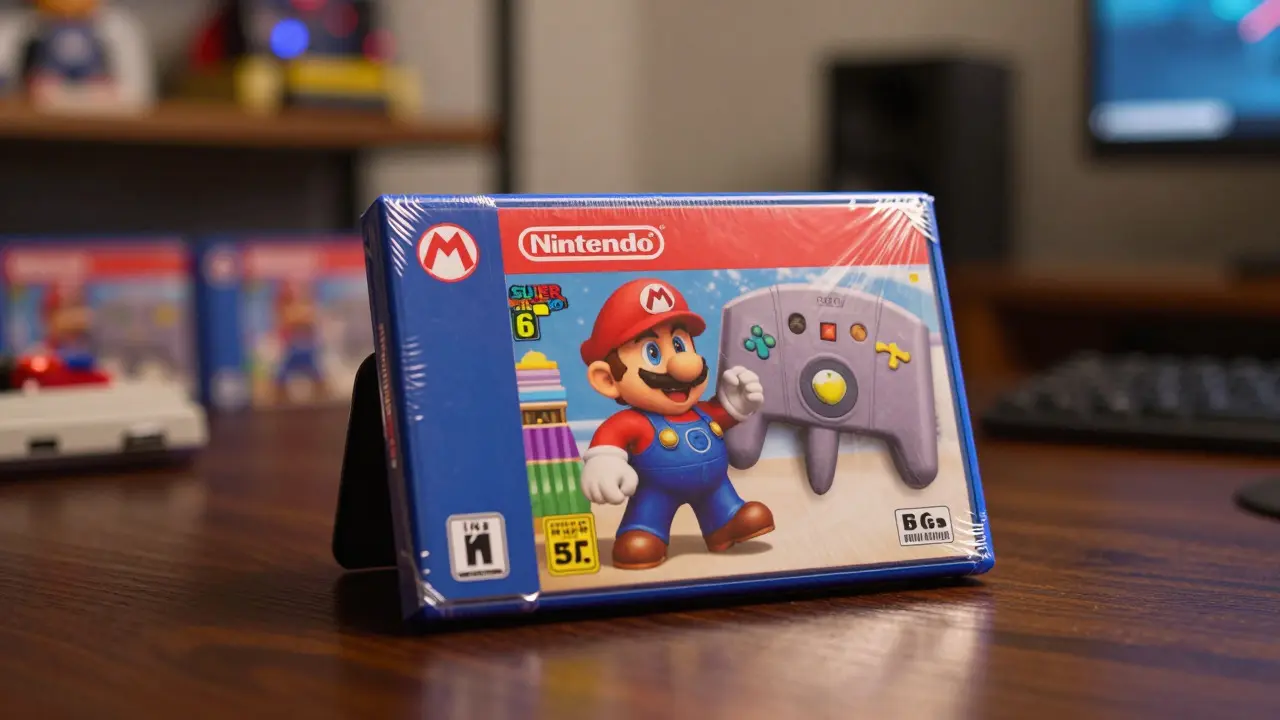
Imagine you're holding a sealed copy of Super Mario 64 is a landmark Nintendo 64 title that remains one of the most sought-after retro games in the collector market. You see a listing on GoCollect showing it sold for $1,200 last month. But was that sale real? Was the grade accurate? And does that single data point actually reflect the current market value if you were to sell today? This is the core tension for anyone treating video games as assets rather than just entertainment. The line between hobbyist pricing and investment-grade data isn't about having more numbers; it's about knowing which numbers matter.
Most collectors rely on aggregated sales data from platforms like eBay or GOFA (Game Grail). These sources are great for casual checking, but they often include unverified grades, shipping costs, and outliers that skew the average. If you're building a portfolio or planning a significant purchase, you need data that strips away the noise. That’s where specialized valuation services come in, and understanding when to trust them is the first step toward making smart financial decisions in the gaming space.
The Difference Between Market Noise and Signal
To understand why specific platforms like GoCollect gain traction among serious investors, we have to look at what constitutes "investment-grade" data. In traditional finance, this means audited, standardized, and liquid markets. In video games, liquidity is low, and standardization is rare. A game graded "9.5" by one grader might be an "8.5" by another. This subjectivity creates a gap in data reliability.
Investment-grade price data requires three key attributes:
- Verified Provenance: Proof that the item exists, its condition is documented, and the seller is legitimate.
- Standardized Grading: Consistent criteria across all entries, often backed by third-party grading services like Wata or CGC (Certified Guaranty Company).
- Liquid Transaction History: Multiple comparable sales within a short timeframe to establish a trend, not just a snapshot.
When you look at a platform that provides this level of detail, you’re moving from guessing to analyzing. For instance, if a platform only shows the median price of all listings (including those never sold), you’re looking at aspirational prices, not actual transaction values. True investment data tracks closed deals only.
Why GoCollect Stands Out in the Valuation Space
GoCollect is a data-driven marketplace and valuation tool designed specifically for high-end collectibles, including vintage video games. Unlike general auction sites, it focuses heavily on the integrity of the data points it presents. It aggregates sales from trusted sources and applies filters to remove anomalies, such as typos in pricing or non-negotiable "buy it now" listings that don’t reflect true market interest.
The platform’s strength lies in its treatment of Graded Media is collectible items that have been professionally evaluated and encapsulated by certified third-party companies. When a game is inside a slab with a score, the variable of "condition" is removed. What remains is the demand for that specific score. GoCollect tracks these scores meticulously. If a PSA 10 copy of Tetris is the original Game Boy launch title, known for its minimalist design and enduring popularity. sells for $3,500, that data point is far more reliable than a raw, ungraded cart selling for $1,500 because the risk premium for condition is eliminated.
This distinction is crucial. Ungraded items carry a hidden discount for uncertainty. Graded items trade closer to their intrinsic value because the buyer knows exactly what they are getting. Therefore, when evaluating whether to trust price data, you must first ask: Is this data based on graded or ungraded units? If the mix is unclear, the data is less useful for investment purposes.
Key Metrics to Verify Before You Buy
Even the best data providers can have gaps. As an investor, you should perform your own due diligence using a few simple checks. Here is a practical framework for validating any price data you encounter, whether from GoCollect, GOFA, or other sources.
- Check the Sample Size: How many sales occurred in the last 90 days? If there are fewer than five comparable sales, the data is anecdotal, not statistical. Look for volume.
- Verify the Grade Distribution: Are the sales clustered around a specific grade? If you want a 9.5, but most recent sales are 8s and 10s, the price for a 9.5 might be interpolated rather than observed.
- Look for Shipping and Fees: Does the listed price include shipping and buyer’s premiums? In high-value transactions, these can add 10-15% to the total cost. Always normalize prices to "net received" amounts for accurate comparison.
- Assess Market Velocity: How long did these items take to sell? A game that sits on the market for six months before selling at $1,000 has a different market dynamic than one that sells in two weeks. Slow-moving markets indicate lower liquidity, which affects exit strategy.
By applying these four checks, you filter out the noise. You stop looking at isolated numbers and start seeing the shape of the market. This is the difference between a hobbyist’s guess and an investor’s calculation.

Comparing Data Sources: A Practical Breakdown
No single source is perfect. To make informed decisions, it helps to understand how different platforms handle data. Below is a comparison of common sources used by collectors and investors.
| Source | Data Type | Best For | Limitation |
|---|---|---|---|
| eBay Sold Listings | Raw Transactions | Real-time market activity | Includes fees, shipping, and unverified grades |
| GOFA (Game Grail) | Aggregated Sales | Broad market trends | Mixes graded and ungraded data without clear separation |
| GoCollect | Filtered/Verified Sales | High-end, graded investments | May lack depth for very niche or low-volume titles |
| Wata/CGC Reports | Primary Grading Data | Verifying authenticity and condition | Does not provide secondary market price history |
Notice that each source serves a different purpose. eBay gives you the raw pulse of the market, but it’s messy. GOFA cleans up some of that mess but still blends different quality tiers. GoCollect attempts to isolate the high-quality tier, making it particularly useful for Retro Gaming Investments is the practice of purchasing vintage video games and consoles primarily for capital appreciation rather than playability. However, even GoCollect relies on the underlying sales happening elsewhere. Its value is in the curation and presentation of that data.
Pitfalls to Avoid in Valuation
Even with good tools, human error and market manipulation can distort prices. Here are the most common traps that catch off guard new investors.
The Recency Bias Trap: People tend to overvalue the most recent sale. If a game sold for a record high yesterday, buyers assume the next one will do the same. In reality, markets correct. Always look at the trailing 6-month average, not just the last transaction.
The Grade Inflation Myth: Some sellers claim a game is "near mint" when it’s actually "very good." Without a professional slab, you’re relying on the seller’s word. This introduces a massive risk premium. If you’re buying ungraded, always negotiate a 10-20% discount compared to graded equivalents to account for this uncertainty.
Liquidity Illusion: Just because a game sold for $5,000 doesn’t mean you can sell yours for $5,000 tomorrow. High-ticket items have thin trading volumes. You might wait months to find a buyer. Factor in storage costs and insurance while you wait. Your effective return is lower than the headline price suggests.
Building a Reliable Personal Database
Don’t rely solely on any single platform. The most sophisticated collectors build their own spreadsheets. Track every sale you see, noting the date, price, grade, and source. Over time, you’ll develop an intuition for what fair value looks like. You’ll also spot discrepancies in third-party data faster. If GoCollect shows a spike but your personal log shows no supporting sales, investigate further.
This active approach turns you from a passive consumer of data into an analyst. You’re not just asking "What is it worth?" but "Why is it worth that much right now?" That shift in mindset is what separates successful investors from speculators.
Frequently Asked Questions
Is GoCollect data better than eBay sold listings?
GoCollect is generally better for investment analysis because it filters out obvious errors and focuses on verified, high-quality sales. eBay sold listings are more comprehensive but require significant manual cleaning to remove outliers, shipping costs, and unverified grades. For quick checks, eBay is fine; for portfolio tracking, GoCollect offers cleaner signals.
How often should I update my valuation models?
For highly liquid titles like popular Nintendo or PlayStation classics, check weekly. For niche or low-volume items, monthly updates are sufficient. The key is consistency. Sudden spikes or drops should trigger an immediate review, but routine fluctuations can be monitored on a slower cadence.
Does the region of the game affect price data reliability?
Yes, significantly. Japanese imports, for example, often have smaller sample sizes in Western databases. This makes their price data more volatile and less reliable. Always specify the region (NTSC-U, PAL, NTSC-J) when comparing data. Mixing regions skews averages and leads to poor valuation estimates.
What is the minimum number of sales needed to trust a price point?
Aim for at least five comparable sales within the last 90 days. Fewer than that, and you’re dealing with anecdotes rather than trends. If a game is so rare that it only sells once a year, you may need to look at broader context, such as similar titles or historical performance, to estimate value.
Should I pay for premium access to data platforms?
If you are managing a portfolio worth more than $10,000, yes. Premium tiers usually offer deeper historical data, API access, and advanced filtering. For casual collectors, free tiers are often sufficient. The cost of a wrong decision due to bad data far exceeds the subscription fee for serious investors.