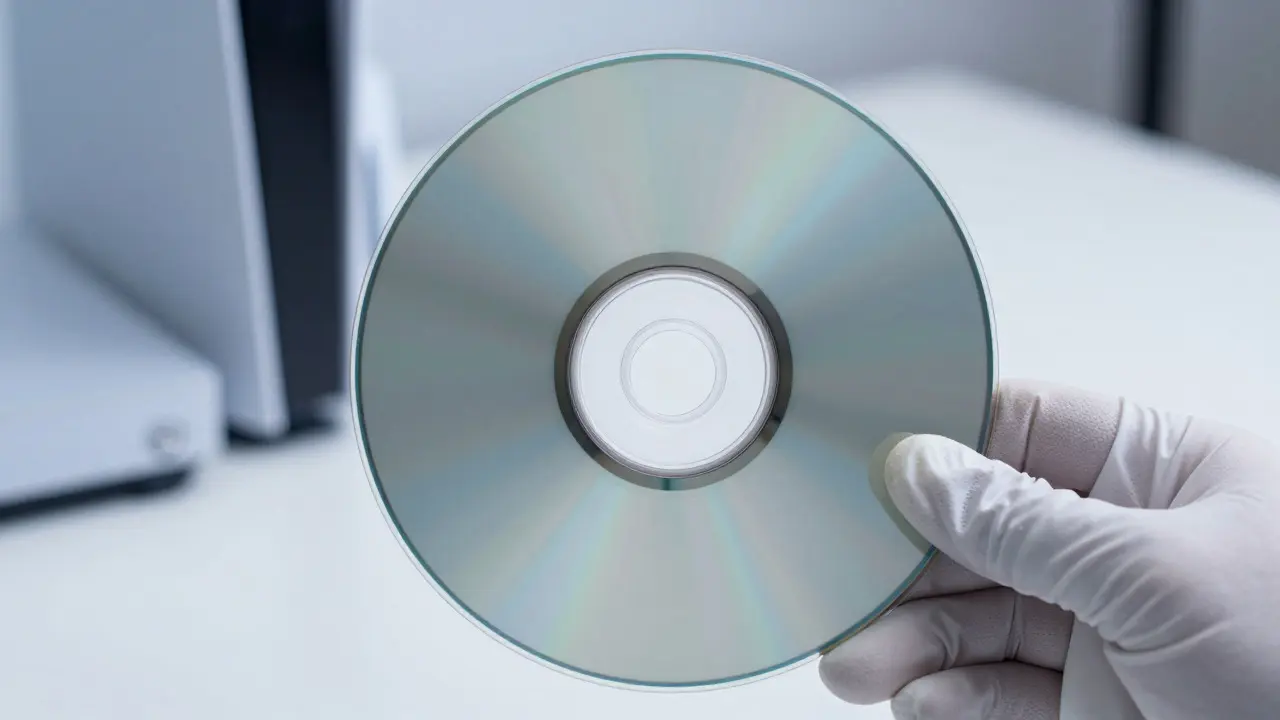
Walk into any serious video game store or online marketplace, and you'll see two distinct worlds of physical media. On one side, you have the sleek, flat discs for consoles like PlayStation and Xbox. On the other, you have the chunky, plastic cartridges for Nintendo systems. While they both hold your favorite memories, collectors treat them very differently when it comes to grading standards. Why does a scratched PS4 disc still sell for full price, while a single scuff on a Game Boy cartridge can drop its value by half? The answer lies in how these two formats interact with light, touch, and time.
The Physics of Damage: Light vs. Touch
To understand grading, you first have to understand what actually damages each format. A Blu-ray disc is a data storage medium that uses laser technology to read information encoded in microscopic pits. The critical layer here is the transparent polycarbonate substrate. When you handle a disc, you usually touch the label side. This is safe because the data layer is protected underneath. However, if you scratch the bottom (the shiny side), you disrupt the path of the laser. Even a hairline scratch can cause read errors, leading to freezes or crashes during gameplay. Graders for discs focus heavily on this optical integrity. A "Mint" grade often requires zero visible scratches under magnification, not just perfect playability.
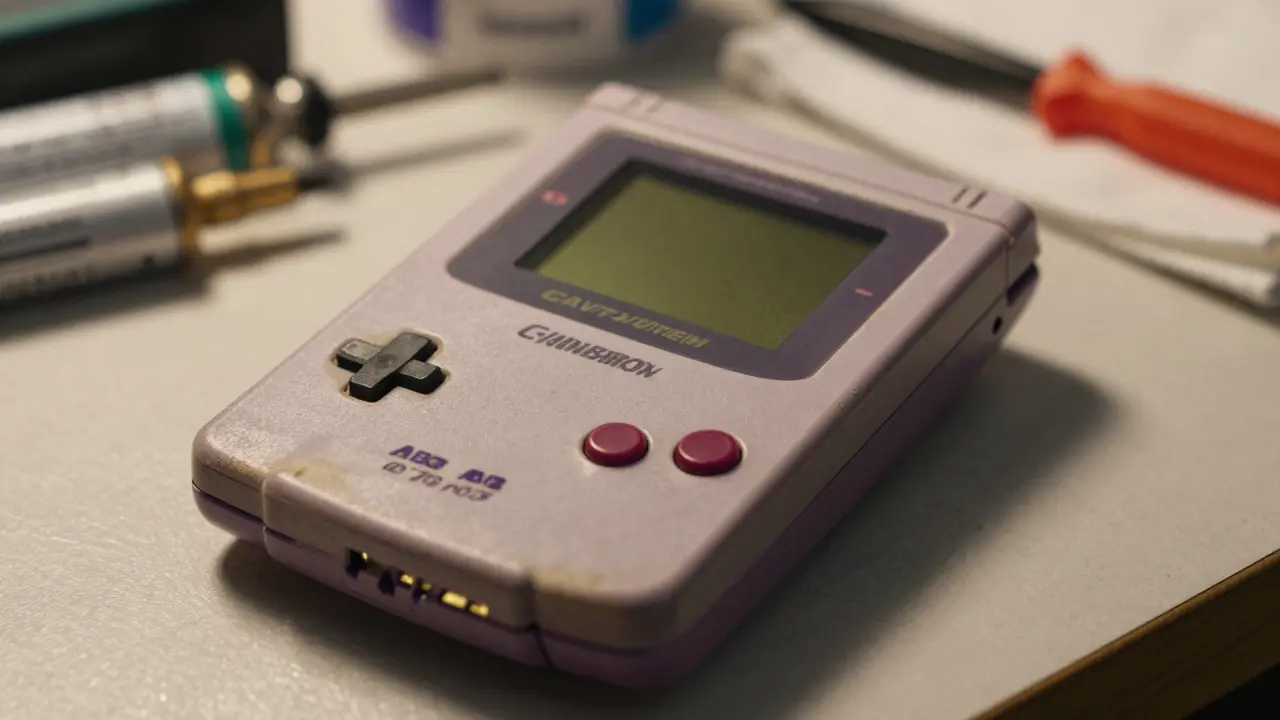
In contrast, a Game Boy Advance cartridge is a solid-state memory device housed in a rigid plastic shell that connects via electrical pins. There is no laser involved. The damage here is mechanical and cosmetic. The main points of failure are the contact pins (which corrode over time) and the plastic shell itself. Because the shell is made of ABS plastic, it is prone to yellowing due to UV exposure and chemical reactions with stabilizers. Furthermore, the hinge mechanism on many handheld cartridges is a weak point. A loose hinge doesn't stop the game from working, but it destroys the collector's value instantly. For cartridges, function is secondary to aesthetics; a game that works perfectly but has a cracked shell is considered damaged, whereas a disc with minor surface scuffs might still be graded highly if it plays flawlessly.
Defining the Grades: Mint, Near Mint, and Below
Most grading scales, such as those used by major auction houses or community-driven platforms, use similar terminology but apply it differently based on the medium. Let's break down the common tiers and how they shift between discs and cartridges.
| Grade Level | Disc-Based (PS4/Xbox/PC) | Cartridge-Based (N64/SNES/GBA) |
|---|---|---|
| Mint / New | No visible scratches, original case sealed or pristine. Label must be unmarked. | Zero yellowing, crisp edges, tight hinge, clean pins. Must look factory-fresh. |
| Near Mint | Faint micro-scratches invisible to naked eye. Case may have light shelf wear. | Slight haze or minimal yellowing. No cracks. Hinge tension normal. Pins clean. |
| Very Good | Visible shallow scratches that do not affect playback. Case corners worn. | Noticeable yellowing or scuffs. Minor stress cracks acceptable if structural integrity remains. |
| Good / Playable | Deep scratches causing occasional read errors. Case broken or missing parts. | Heavy yellowing, loose hinge, or bent pins. Still functional but visually degraded. |
Notice the difference in the "Near Mint" definition. For a disc, we are looking at optical clarity. For a cartridge, we are looking at material preservation. A GBA cart with slight yellowing is often capped at Near Mint or even Very Good, regardless of how well it boots up. Conversely, a PS3 disc with a few fine scratches might still be listed as Near Mint if a high-quality player reads it without issue, provided the case is intact.
The Role of Packaging in Valuation
You cannot separate the game from its box. In the world of collectibles, the packaging is part of the entity being graded. For disc-based games, the jewel case is standard. Collectors look for "case burn," which is a white haze that forms on the inner walls of the plastic case due to heat or poor manufacturing. While annoying, case burn rarely affects the disc itself, so it impacts the grade of the *set* rather than the *disc*. If you buy a "Complete in Box" (CIB) copy of a PlayStation 2 title, you expect the manual, inserts, and stickers to be present. Missing papers drop the grade significantly, often moving a piece from CIB to "Loose" status, which can halve the price.
For cartridges, the box art is equally important, but the condition of the box interacts differently with the cartridge. Many older Nintendo boxes feature cardboard spines that crack easily. A cracked spine is a common deduction in grading. Additionally, the presence of a protective film on the box front is a major factor. On SNES or N64 titles, a box with the original shrink wrap intact commands a premium. For disc games, shrink wrap is less critical because the plastic case already protects the contents, but it still adds to the "New" designation. The key takeaway here is that for cartridges, the box is more fragile and thus more likely to limit the overall grade of the item, whereas for discs, the durability of the case makes the packaging slightly more forgiving in terms of long-term wear.
Common Pitfalls for New Collectors
If you are starting to build a collection, knowing where things go wrong helps you avoid overpaying. Here are the most frequent issues that catch people off guard:
- Yellowing vs. Dirt: On cartridges, beginners often mistake deep yellowing for dirt and try to clean it with alcohol. This can strip the paint or labels. Yellowing is a chemical change, not grime. It is permanent unless treated with UV light (UV curing), which is risky for non-experts.
- Disc Spindle Marks: Small circular marks around the center hole of a disc are called spindle marks. They occur when the disc is held by the console's hub. These are generally accepted in lower grades but disqualify a disc from "Mint" status. They do not always affect readability, but graders count them as cosmetic defects.
- Hinge Stress Cracks: On Game Boy and DS cartridges, tiny cracks near the hinge are often invisible until you open the cart. Always check the hinge area under bright light before buying. A hidden crack can snap later, rendering the cart unusable without repair.
- Case Burn on Discs: As mentioned, this is common on older PlayStation discs. It looks like frost on the inside of the case. It is purely cosmetic but signals age and potential heat exposure, which might have affected the disc adhesive layers.
How to Grade Your Own Collection
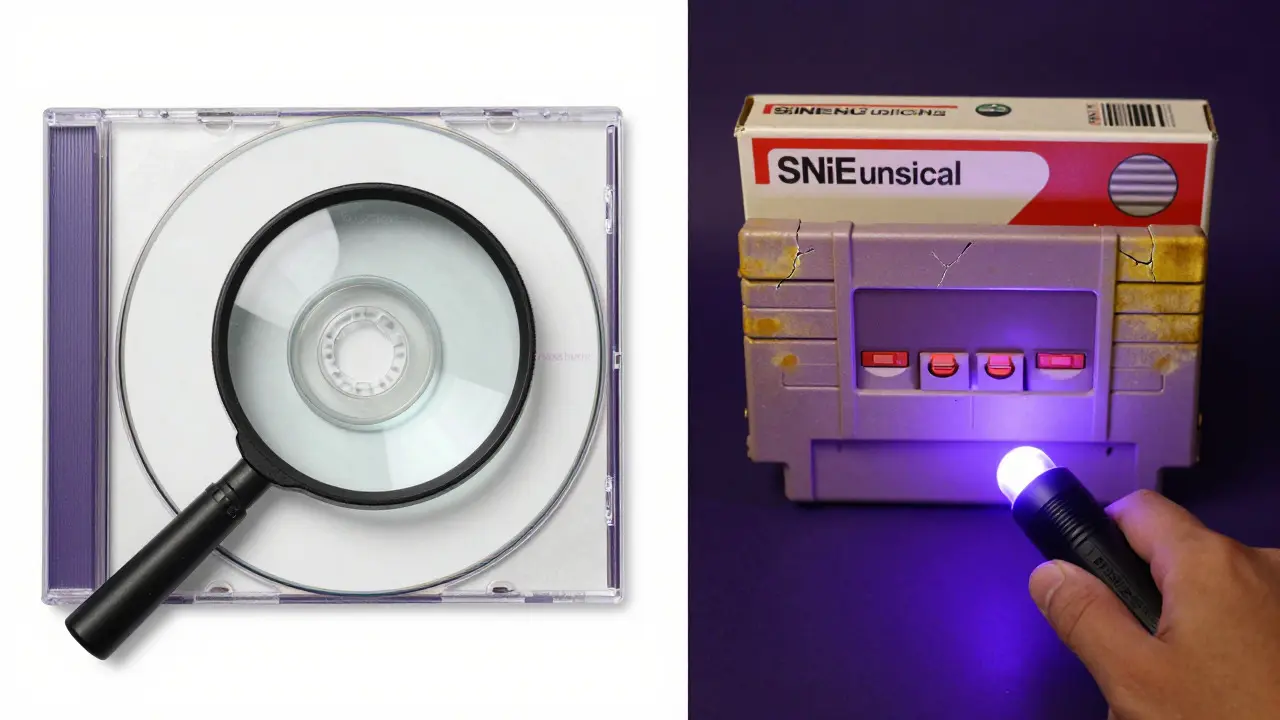
You don't need a professional lab to assess your shelves. You can apply these standards yourself to determine fair market value. Start with a clean, dust-free environment. Use a soft microfiber cloth for discs-wipe from the center outward to avoid creating new radial scratches. For cartridges, use compressed air to clear dust from the pins and a dry brush for the shell. Avoid liquids unless you know exactly what you are doing.
Next, inspect under strong lighting. Hold the cartridge up to a window or use a desk lamp to spot yellowing and micro-cracks. For discs, tilt them against a light source to reveal scratches. Finally, test functionality. Does the disc boot? Does the cartridge insert smoothly? If a game is "Dead on Arrival" (DOA), it is worth far less, regardless of cosmetic condition. In the resale market, a "Working" tag is essential. A beautiful cartridge that doesn't work is a paperweight. A scratched disc that works is still a playable asset. This distinction is the core of how grading standards differ: discs are graded by their ability to transmit data, while cartridges are graded by their physical preservation.
Frequently Asked Questions
Does a scratched disc lose value if it still plays?
Yes, but not drastically. If the scratch is minor and the game runs without freezing, the value might drop by 10-20% compared to a flawless copy. However, if the scratch causes read errors, the value drops significantly because the buyer assumes risk. Cosmetic condition matters, but functionality is the primary driver for disc pricing.
Is yellowing on a Game Boy cartridge bad?
It depends on the severity. Light yellowing is common on older plastic and is generally accepted in "Near Mint" or "Very Good" grades. Heavy, orange-brown yellowing lowers the grade to "Good" or below. Collectors prefer blue or green carts to remain vibrant, so significant color shift reduces desirability and price.
What is 'Complete in Box' (CIB) and why does it matter?
CIB means the game includes all original components: the game media, the box, the instruction manual, and any promotional inserts. Missing manuals or boxes turn a CIB item into a 'Loose' item. Loose items typically sell for 50-70% of the CIB price, depending on rarity. For rare titles, CIB copies can be worth double or triple the loose price.
Can I clean a dirty cartridge with rubbing alcohol?
Use caution. Isopropyl alcohol (90%+) is safe for cleaning the metal pins, but avoid getting it on the plastic shell or printed labels, as it can cause cloudiness or ink bleed. For the shell, use a dry microfiber cloth or compressed air. Never soak a cartridge in liquid, as moisture can seep into the internal circuitry.
Which format holds value better: discs or cartridges?
Historically, cartridges hold value better for retro gaming because they are rarer and more susceptible to damage. Discs are mass-produced in higher quantities and are easier to duplicate. However, this varies by region and era. Early PlayStation discs are now rare and valuable, while late-generation Xbox 360 discs are common. Generally, scarcity drives value more than format type.