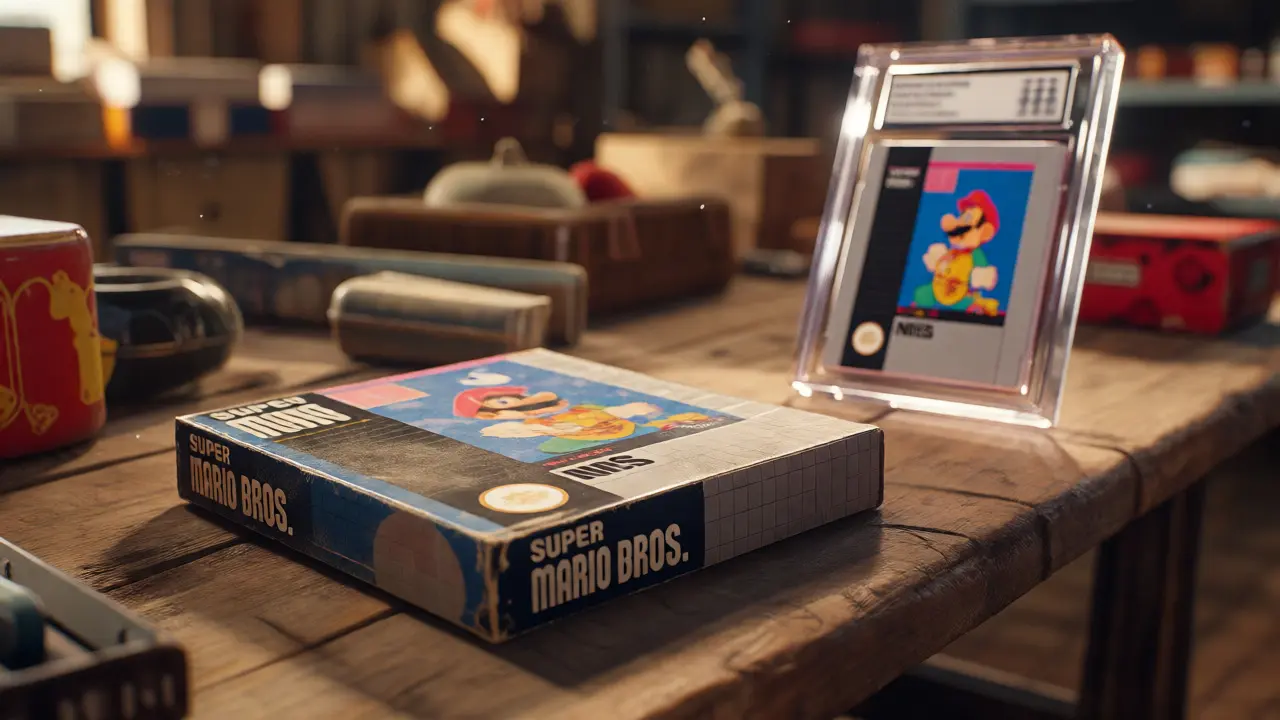
You walk into an estate sale and spot a dusty copy of Super Mario Bros. for the NES. It’s got the box, the manual, and it looks untouched. You think you’ve struck gold. Then you see the same game on eBay with a grade of 9.8 A+ from Wata, selling for $15,000. Your ungraded copy? Maybe worth $200 if you’re lucky. Why does that piece of cardboard and plastic change the price by such a massive margin?
The answer isn’t just about condition; it’s about trust. In the world of classic video game auctions, grading acts as the ultimate equalizer. It removes the guesswork. When a third-party company certifies a game, they are essentially vouching for its authenticity and state. This certification transforms a risky purchase into a liquid asset. But not all grades are created equal, and understanding how specific scores impact final hammer prices is the difference between a smart investment and a costly mistake.
The Psychology of Certainty in Bidding Wars
Think about buying a used car. If the seller says, "It runs great," you hesitate. If the seller hands you a certified inspection report from a reputable mechanic, your confidence spikes. You’re willing to pay more because the risk of hidden engine trouble is gone. Video game grading works exactly the same way. Auction bidders are often anonymous or distant. They can’t hold the cartridge, smell the paper, or check for resealing tape under UV light. Without a grade, they assume the worst-case scenario: missing manuals, bent corners, or fake seals.
When a game is graded, the uncertainty vanishes. The bidder knows exactly what they are getting. This certainty fuels competition. Bidders who might have stayed away due to fear of fraud jump in, driving the price up. Data from major auction houses like Heritage Auctions shows that graded copies of rare titles often sell for 3x to 10x the price of their raw counterparts. It’s not just hype; it’s the premium paid for peace of mind.
Decoding the Scale: Where the Money Lives
Most collectors focus on the big names like Wata, VGA, or GameGrails. Each uses a different scale, but the economic principle remains the same: exponential value growth at the top end. For Wata, which is currently the market leader for sealed games, the scale goes from 1 to 10, with half-point increments. However, the real money is in the 9.6 to 9.8 range.
Here is the brutal reality of the grading curve. A score of 9.4 is considered "near mint." It looks perfect to the naked eye. But if you compare auction results, a 9.4 might sell for $500, while a 9.8 of the exact same game could fetch $5,000. That one-tenth of a point represents microscopic flaws-maybe a tiny scratch on the shrink wrap or a slight yellowing of the plastic case-that only appear under magnification. Because high-grade examples are scarce, wealthy collectors chase them aggressively. The supply of 9.8s is tiny, so demand crushes the price upward.
| Grade | Condition Description | Estimated Market Value Multiplier | Buyer Profile |
|---|---|---|---|
| Raw / Ungraded | Unverified condition, potential defects | 1x (Base) | Bargain hunters, players |
| Wata 7.0 - 8.0 | Visible wear, shelf wear, minor creases | 1.5x - 2x | Casual collectors |
| Wata 9.0 - 9.4 | Near Mint, minimal visible flaws | 3x - 5x | Serious hobbyists |
| Wata 9.6 - 9.8 | Mint, virtually flawless under scrutiny | 10x - 20x | Investors, museums |
| Wata 10 | Perfect, no detectable flaws | 50x+ | Ultra-wealthy elite |
Sealed vs. Loose: Two Different Markets
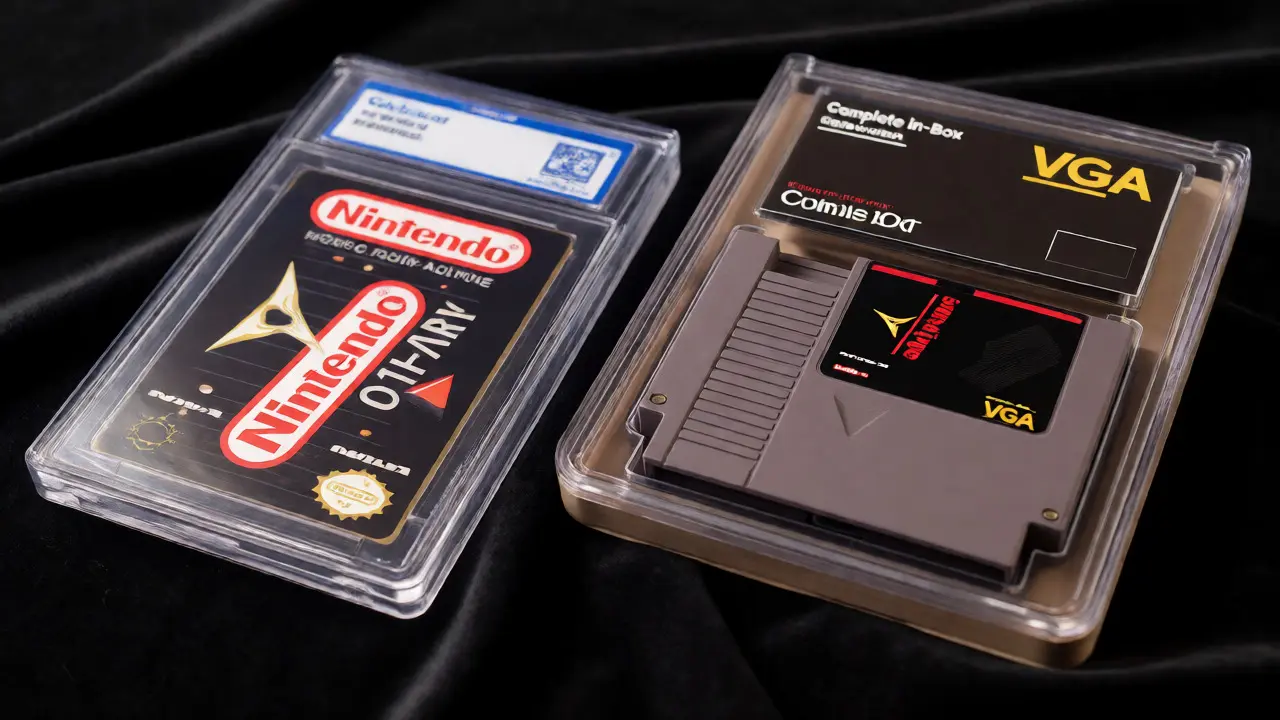
Not all classic games are graded in the same way. There is a huge divide between sealed games and loose cartridges. Sealed games are graded on their packaging integrity. Is the shrink wrap original factory seal? Are there tears? Is the box crushed? Companies like Wata specialize in this. If you have a sealed copy of The Legend of Zelda for the NES, the grade reflects the outer shell.
Loose games, however, are judged differently. Here, the focus shifts to the cartridge label, the PCB board, and the manual completeness. This is often called "CIB" (Complete in Box) grading. VGA has historically been strong here, though newer services are entering the space. The auction dynamics for loose games are slightly different. While a high grade still boosts value, the ceiling isn’t as astronomically high as sealed games unless the title is exceptionally rare, like Super Mario Bros. 3 with a sticker intact. For most loose games, a clean, complete copy without a slab can still do well, whereas a sealed game almost always needs the slab to command top dollar.
Which Grader Should You Trust?
If you plan to sell at auction, the brand of the grader matters immensely. Not all slabs carry the same weight. Currently, Wata holds the dominant market share for sealed Nintendo and Sega games. Their database is vast, and buyers recognize their labels instantly. If you send a sealed game to a lesser-known grader, you might save $20 on fees, but you could lose hundreds in final bid price because buyers don’t trust the assessment.
For loose games, the landscape is fragmented. Some collectors prefer VGA for older consoles, while others look at new entrants that offer faster turnaround times. Always check recent auction results before choosing. Search for your specific game title plus the grader’s name. If you see ten sales for "Wata 9.6" and zero for "Grader X 9.6," stick with Wata. Liquidity is king. An illiquid asset is hard to sell quickly, even if the grade is technically accurate.
Pitfalls That Kill Auction Prices
Even with a grade, things can go wrong. One major issue is "grade inflation" or inconsistency. If a grader is known for being lenient, their 9.8 might be viewed as a 9.4 by savvy bidders. This skepticism lowers bids. Another pitfall is over-grading common games. Don’t waste money grading a $50 game. The grading fee ($30-$60) plus shipping will eat your profit. Only grade games where the potential upside is significant. Look for titles with historical significance or low print runs.
Also, beware of "re-seals." These are games that were opened and re-shrunk to look sealed. Professional graders catch these and mark them as "Re-seal" or give them a lower grade. An auction listing that hides a re-seal status will get hammered down in price once bidders inspect the photos closely. Transparency builds trust; hiding flaws destroys it.
Maximizing Returns: Tips for Sellers
So, how do you leverage grading to win at auction? First, research comps. Use sites like eBay Sold Listings or Heritage Auctions archives. Find out what your game sold for in various grades. Second, consider the "population report." How many copies of your game exist at a 9.8? If there are only three known copies, your game is unique. Highlight this in your listing. Scarcity drives FOMO (Fear Of Missing Out), which drives bids.
Third, presentation matters. Even inside a slab, the angle of the photo counts. Show the back of the slab clearly so bidders can read the certificate number. Verify that the grade matches the description. Finally, time your sale. Auctions around holidays or major gaming conventions often see higher traffic. But remember, the best time to sell is when you have a solid grade and a clear story about why this specific copy is special.
Does grading guarantee a higher price than selling raw?
No, not always. If the game receives a low grade (below 8.0), the cost of grading may exceed the value increase. Additionally, some buyers prefer raw games because they want to open them or believe they can fix minor issues themselves. Grading guarantees a higher price primarily for high-grade (9.0+) copies of rare or popular titles.
What is the most trusted video game grading company right now?
As of 2026, Wata Games is widely considered the market leader for sealed retro games, particularly for Nintendo and Sega titles. Their grades are highly liquid and recognized globally. For loose games, VGA and newer competitors like GameGrails have niche followings, but liquidity varies by platform.
Can I grade a game myself before sending it in?
You cannot officially grade it yourself, but you can pre-screen it. Check for shelf wear, spine ticks, and yellowing. If you see obvious flaws, it likely won't score above a 9.0. Sending a flawed game for grading is a financial risk because you pay the fee regardless of the outcome.
How long does video game grading take?
Turnaround times vary by service level. Standard grading usually takes 4 to 6 weeks, while express options can take 1 to 2 weeks for a higher fee. During peak seasons, delays can occur, so plan ahead if you need the item for a specific auction date.
Do graded games appreciate in value over time?
High-grade sealed games have shown consistent appreciation, similar to fine art or wine. However, this is not guaranteed for all titles. Common games rarely appreciate significantly. Investment potential lies in rare titles with low population reports in high grades.