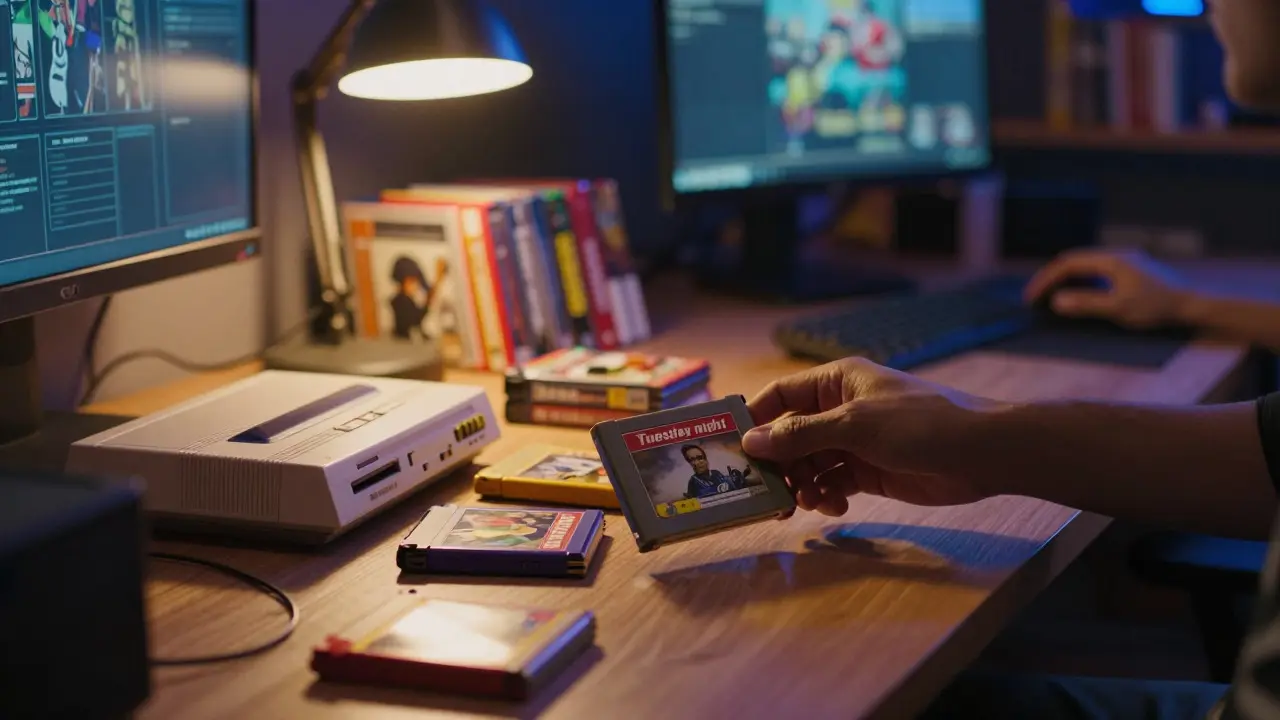
Imagine a Tuesday night where your Discord server isn't just silent, but buzzing with photos of dusty cartridges and rare consoles. That is the power of a well-designed community challenge. For video game collectors, static displays are cool, but active participation keeps the hobby alive. If you run a group or content channel, you know that keeping people engaged week after week is tough. People get bored. They stop posting. The algorithm buries your content. A structured challenge solves this by giving everyone a specific goal to chase.
This guide breaks down how to create challenges that actually work. We are not talking about vague prompts like "post something." We are talking about clear rules, low barriers to entry, and rewards that matter to nerds. Whether you have ten members or ten thousand, these tactics will help you turn passive viewers into active participants.
Why Challenges Beat Passive Posting
Most collector groups rely on organic posts. Someone finds a rare box, they post it, others comment, and then silence returns. This cycle has a short lifespan. A Community Challenge is a time-bound event where participants complete a specific task related to their collection. It creates urgency. It creates competition. It gives people a reason to dig through their storage bins instead of scrolling social media.
The psychology here is simple. Humans love progress bars. When you tell someone to "collect three items from the 90s," they visualize the finish line. Without a challenge, collecting is an endless open-ended task. With a challenge, it becomes a game within the game. You are essentially gamifying the hobby. This shifts the mindset from "I am storing things" to "I am playing a quest."
Defining Your Core Audience
Before you write a single rule, you need to know who you are talking to. Not all collectors are the same. Some hunt for first-print Pokémon cards. Others track down every edition of a specific RPG. Your challenge must fit their level of expertise and budget.
- Casual Collectors: They have a few favorites. Keep challenges simple. "Show me your most played cartridge."
- Serious Enthusiasts: They care about condition and rarity. Use challenges like "Find a sealed copy of [Game] in any condition."
- Budget Collectors: They hunt for deals. Try "Best value find under $10 this month."
If you mix these groups without adjusting the difficulty, you will lose half your audience. Casuals will feel intimidated by high-value requirements. Serious collectors will feel bored by easy tasks. Segment your audience if possible, or design challenges with tiered difficulty levels.
Structuring the Perfect Challenge
A good challenge has four non-negotiable parts. If you miss one, engagement drops.
- The Hook: A catchy title that sparks curiosity. Avoid boring names like "July Challenge." Go for "The Dust Bunnies Hunt" or "Console Wars: PS1 vs N64."
- The Rules: Clear, concise, and unambiguous. How do they enter? Where do they post? What counts as valid?
- The Timeline: Start and end dates. Deadlines create FOMO (Fear Of Missing Out). Two weeks is usually the sweet spot. One week is too stressful; a month is too long to maintain momentum.
- The Reward: It doesn't have to be money. Recognition often works better. Feature the winner on your main page. Give them a digital badge. Offer a shoutout in your newsletter.
Keep the rules simple. If you need more than three sentences to explain how to enter, you are overcomplicating it. Complexity kills participation. The barrier to entry should be lower than the effort required to buy a new game.

Ideas That Actually Work
Running out of ideas? Here are five proven concepts that generate high-quality content and discussion.
| Challenge Type | Difficulty Level | Engagement Potential | Best For |
|---|---|---|---|
| Thematic Month | Low | High | Broad audiences |
| Rarity Hunt | High | Medium | Serious collectors |
| Budget Find | Medium | High | Budget-conscious users |
| Storytelling | Low | Very High | Building community bonds |
| Completionist | High | Medium | Series-specific groups |
Promoting Your Challenge Effectively
You can have the best challenge in the world, but if nobody sees it, it fails. Promotion is key. Don't just post it once and hope for the best. Create a mini-campaign around it.
- Teaser Phase (3 days before): Post cryptic hints. "Something big is coming next week. Get your cameras ready." Build anticipation.
- Launch Day: Pin the announcement. Send a push notification if you have an app. Email your list. Make it loud.
- Mid-Week Check-in: Share early entries. Highlight a few good examples. Remind people there is still time to enter.
- Final Call (Last 24 hours): Urgency. "Last chance!" Works every time.
Visuals matter. Create a simple graphic with the date and the core question. Use bright colors. Make it look official. Even a Canva template looks professional. Consistency in branding builds trust.
Judging and Recognizing Winners
Fairness matters. If people think the judging is biased, they won't play again. Decide upfront how you will pick winners.
- Community Vote: Let members vote via polls. This boosts engagement during the voting period. Just watch for friends voting for each other.
- Admin Pick: You choose based on quality or creativity. Be transparent about your criteria. "We are looking for the best photo composition" or "The most unique backstory."
- Random Draw: Everyone who entered gets a chance. This encourages maximum participation because even casual posters have a shot.
Whatever method you choose, announce the winners publicly. Tag them. Screenshot their post. Make them feel famous. Social proof is powerful. When others see someone winning, they want to win next time.

Common Pitfalls to Avoid
Even experienced creators make mistakes. Here is what to watch out for.
Too Many Rules: If you require specific lighting, angles, or metadata, you will scare people off. Keep it loose. You want quantity and fun, not perfection.
Niche Down Too Much: If your group is general, don't make a challenge only about a specific obscure console. You will alienate the majority. Test the water with broad themes first.
No Follow-Up: After the challenge ends, share the results. Recap the best entries. Thank the participants. This closes the loop and sets the stage for the next event.
Ignoring Feedback: Ask people what they thought. Did they enjoy it? Was it too hard? Use this data to refine your next challenge. Community building is iterative.
Measuring Success
How do you know if it worked? Look at the numbers, but also look at the vibes.
- Participation Rate: How many people posted compared to last month?
- Comment Volume: Are people discussing the entries? More comments mean higher engagement.
- New Members: Did the challenge attract outsiders? Often, people join groups because they saw a cool challenge advertised elsewhere.
- Content Quality: Are the photos better? Are the descriptions more detailed? Challenges often improve the overall quality of user-generated content.
Don't obsess over perfect metrics. If the community feels more connected and active, you succeeded. The numbers will follow the energy.
FAQ
How often should I run a community challenge?
Monthly is the standard cadence. It gives people enough time to prepare without losing interest. Weekly challenges can burn people out, while quarterly ones might feel too distant. Stick to monthly until you build a rhythm, then adjust based on feedback.
Do I need to offer cash prizes?
No. In fact, cash prizes can sometimes attract low-effort entries just for the money. Recognition, exclusive badges, or featuring their collection on your main platform are often more valuable to dedicated collectors. If you do offer prizes, keep them small and relevant, like a gift card to a game store.
What if participation is low?
Check your promotion strategy. Did you remind people mid-week? Is the topic too narrow? Try lowering the barrier to entry. Instead of asking for a rare item, ask for any item from a specific year. Simplicity drives volume.
Can I run multiple challenges at once?
Generally, no. Running two challenges simultaneously splits attention and confuses participants. Focus on one main challenge per month. You can have smaller, ongoing activities like "Photo of the Week," but save the big structured events for one at a time.
How do I handle disputes over entries?
Be decisive. If the rules are clear, enforce them strictly. If the rules were vague, use your best judgment and move on quickly. Lingering disputes kill community morale. State clearly that admin decisions are final to prevent endless arguments.