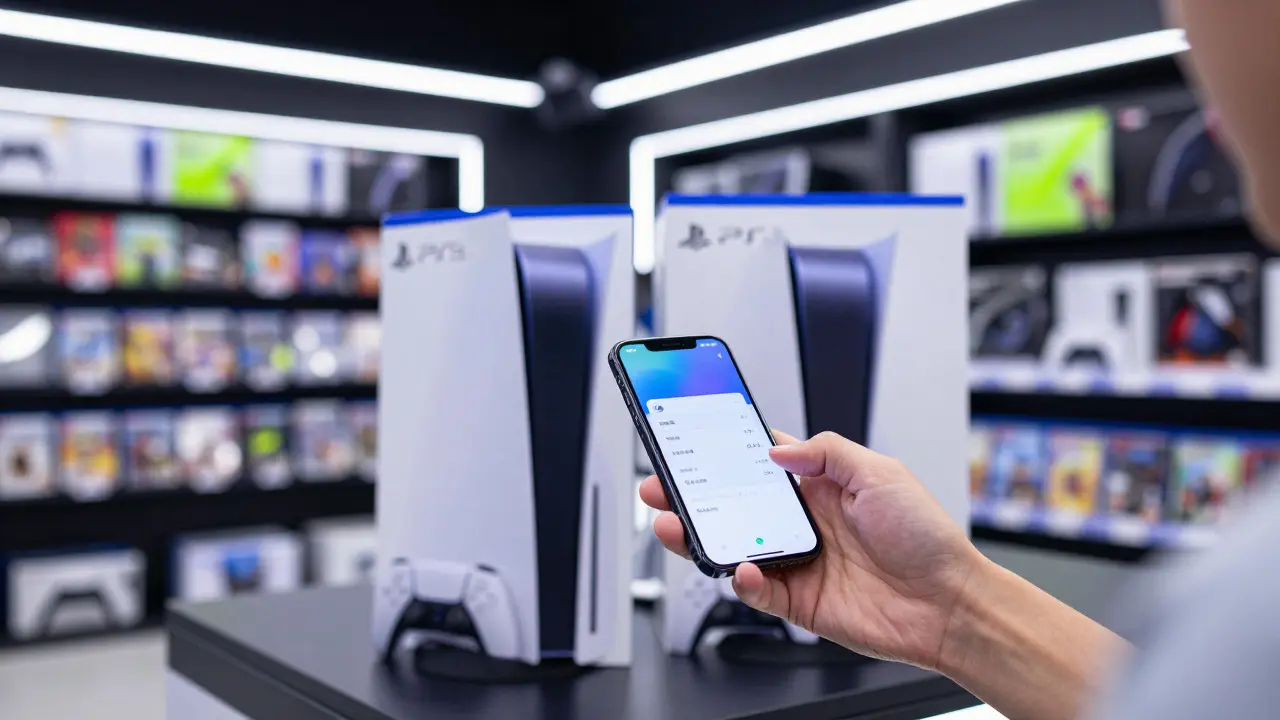
Walking into a store expecting a discount only to find the shelf price higher than online is frustrating. But you don't have to pay full price just because the tag says so. Video game price matching is a retail policy where stores agree to match or beat the lower price of a competitor for identical products. It’s a powerful tool that can save you significant money on new releases and back-catalog titles, provided you know exactly how to use it.
Most major retailers like GameStop, Best Buy, and Walmart have specific rules about when they will honor a lower price. The key isn't just finding a cheaper deal; it's presenting that deal in the exact format the store manager expects. If you miss a detail, you lose the savings. This guide breaks down the mechanics of price matching, how to pair it with trade-in offers for maximum value, and the common traps that void your claim.
Understanding the Basics of Retail Price Matching
Price matching is not a universal right; it is a store-specific benefit. Each retailer defines what counts as a "valid" competitor price. Generally, the competing offer must be from a reputable brick-and-mortar or online retailer. Local garage sales, auction sites like eBay, and marketplace sellers are almost always excluded. Why? Because those prices are volatile and often involve used or refurbished goods, whereas the store wants to sell brand-new, sealed inventory.
The most critical rule across nearly all major chains is the identical product requirement. If you are buying a PlayStation 5 Slim Digital Edition, the competitor must be selling the exact same model, in the same region, with the same language options. A standard PS5 disc edition does not qualify for a price match on a digital edition, even if the price difference is small. Always check the SKU or model number before heading to the customer service desk.
Step-by-Step: How to Execute a Successful Price Match
You need to do the research before you arrive at the store. Calling ahead rarely works because stock levels change hourly. Here is the process that works:
- Find the Lower Price: Check major competitors (Amazon, Walmart, Target, other GameStop locations). Take a screenshot of the listing showing the price, the product title, and the date. Ensure the item is listed as "In Stock."
- Check Exclusions: Read the fine print on the retailer's website. Does the competitor have to be local? Is there a minimum purchase amount? Are third-party sellers excluded?
- Visit the Store: Go to the customer service desk, not the checkout lane. Cashiers often lack the authority or knowledge to apply manual price overrides.
- Present Your Evidence: Show the screenshot on your phone. Have the physical game in hand if possible. Ask the associate to scan the barcode to confirm the item matches the competitor's listing.
- Request the Adjustment: Ask them to either lower the price on the register or issue a price adjustment receipt if you bought it recently.
If the first associate says no, politely ask for a manager. Managers have more discretion and are less likely to fear making a mistake. In many cases, the initial denial is simply due to an associate being unsure of the policy rather than a strict rule against the match.
Combining Price Matches with Trade-In Offers
This is where savvy shoppers really win. Many people forget that price matching can sometimes interact with trade-in values, though policies vary. Let's look at a concrete scenario.
Suppose you want to buy Call of Duty: Black Ops 6 for $70. You see it for $65 at a nearby competitor. You also have an old copy of Red Dead Redemption 2 worth $40 in trade-in credit at the main store. If the main store matches the $65 price, your out-of-pocket cost drops. However, some stores calculate trade-in credit based on the *current* shelf price, while others use a fixed buyback rate. Always ask: "Does the trade-in value change if I get a price match on the new game?" Usually, it doesn't, but confirming this prevents surprises.
Furthermore, timing matters. New games often have launch pricing that drops within two weeks. Waiting for that natural drop might yield better results than forcing a price match immediately. Use price tracking tools to monitor historical lows. If the price has been stable for three months, a price match is your best bet. If it's fluctuating wildly, wait for the dip.

Common Pitfalls That Void Your Price Match Claim
Even if you have the right price, these errors will kill your claim:
- Out-of-Stock Competitor Listings: If the competitor shows "Only 1 left" or "Ships in 3 days," the store may argue it's not a valid immediate alternative. Aim for listings marked "In Stock" with same-day shipping options.
- Marketplace Sellers: On Amazon, filter for "Ships from and Sold by Amazon." Third-party sellers are frequently excluded because their reliability is questionable.
- Bundles vs. Standalone: A game sold in a bundle with a controller does not qualify for a price match on the standalone game, even if the bundle price is lower per unit. The items must be identical.
- Expired Coupons: If the lower price relies on a coupon code that expires in one hour, the store may reject it. Use permanent sale prices whenever possible.
Another subtle trap is regional pricing. If you are buying in California, a price match from a Texas-based online retailer might be rejected if the store policy specifies "local competitors only." Check the geographic scope of the policy before relying on national online prices.
Negotiating When the Policy Seems Rigid
Sometimes, the price difference is small-maybe $2 or $3. Associates might say it's "not worth the hassle." This is where persistence pays off. Explain that you are ready to buy right now. Stores prefer a completed sale over a lost customer. If the manager is hesitant, ask if they can apply a store credit voucher for the difference instead of lowering the cash price. This is often easier for them to approve because it keeps the revenue recorded as a sale, just with a slight margin reduction covered by marketing budgets.
Also, consider loyalty programs. If you are a member of the store's rewards program, you might have access to member-only pricing that beats the competitor's public price. Combining a member discount with a price match request can create a layered discount structure that saves you significantly more than either method alone.
When Price Matching Isn't Worth It
Not every situation warrants the effort. If the price difference is less than 5%, the time spent researching, driving to the store, and waiting in line may outweigh the savings. Calculate your hourly wage. If saving $5 takes 30 minutes of your time, is that a good return on investment? For high-ticket items like consoles or premium editions, yes. For a $10 mobile game, probably not.
Additionally, avoid price matching during peak holiday seasons like Black Friday or Christmas week. Prices are already at their lowest, and stores are overwhelmed. The likelihood of a successful match drops, and the lines grow longer. Instead, focus on mid-week afternoons when traffic is low and associates are more patient.
| Retailer Type | Competitor Scope | Third-Party Sellers | Typical Exclusions |
|---|---|---|---|
| Major Electronics Chains | National Online + Local Brick-and-Mortar | Usually Excluded | Bundles, Refurbished, Marketplace |
| Specialty Game Stores | Local Competitors Only | Excluded | Online-Only Deals, Pre-orders |
| Big Box Supermarkets | National Online + Local | Included if Prime Eligible | Clearance Items, Open Box |
Maximizing Value Through Strategic Timing
Price matching works best when combined with lifecycle awareness. New games follow a predictable price curve. At launch, prices are rigid. Two weeks later, the first price cut happens. Six months later, another drop occurs. If you catch a competitor's price drop during these windows, the chance of a successful match increases because the store acknowledges the market shift. Conversely, trying to match a flash sale that lasts only 24 hours is risky because the store may view it as an anomaly rather than a sustainable market price.
Keep a simple spreadsheet or note in your phone. Record the date, the game title, the current price, and the competitor's price. Over time, you'll see patterns. Some stores are more generous with matches during slow periods (like January) compared to busy periods (like October). Adapt your strategy accordingly.
Do I need to show a printed ad for a price match?
No, a digital screenshot is usually sufficient. Most retailers accept photos from your phone as long as the price, product name, and availability are clearly visible. Printed ads are outdated unless the competitor specifically requires them.
Can I price match a game I bought online from the same store?
Yes, this is called a price adjustment. If you bought a game online from Store A and then see it cheaper in their physical location (or vice versa), you can usually request a refund of the difference within a set window, often 14 to 30 days.
Does price matching work on pre-order bonuses?
Rarely. Pre-order bonuses are considered part of the package. If the competitor is selling the game without the bonus, it is not an identical product. To match, the competitor must offer the same bonus content or physical extra.
What if the competitor goes out of stock after I take the screenshot?
It depends on the store's policy. Some require the item to be in stock at the time of purchase. Others accept the screenshot as proof of recent pricing. To be safe, try to complete the transaction quickly after capturing the evidence.
Are used games eligible for price matching?
Generally, no. Price matching applies to new, sealed merchandise. Used games are treated as distinct products with different quality guarantees. You would need to compare used-to-used prices, which is rarely supported by formal policies.