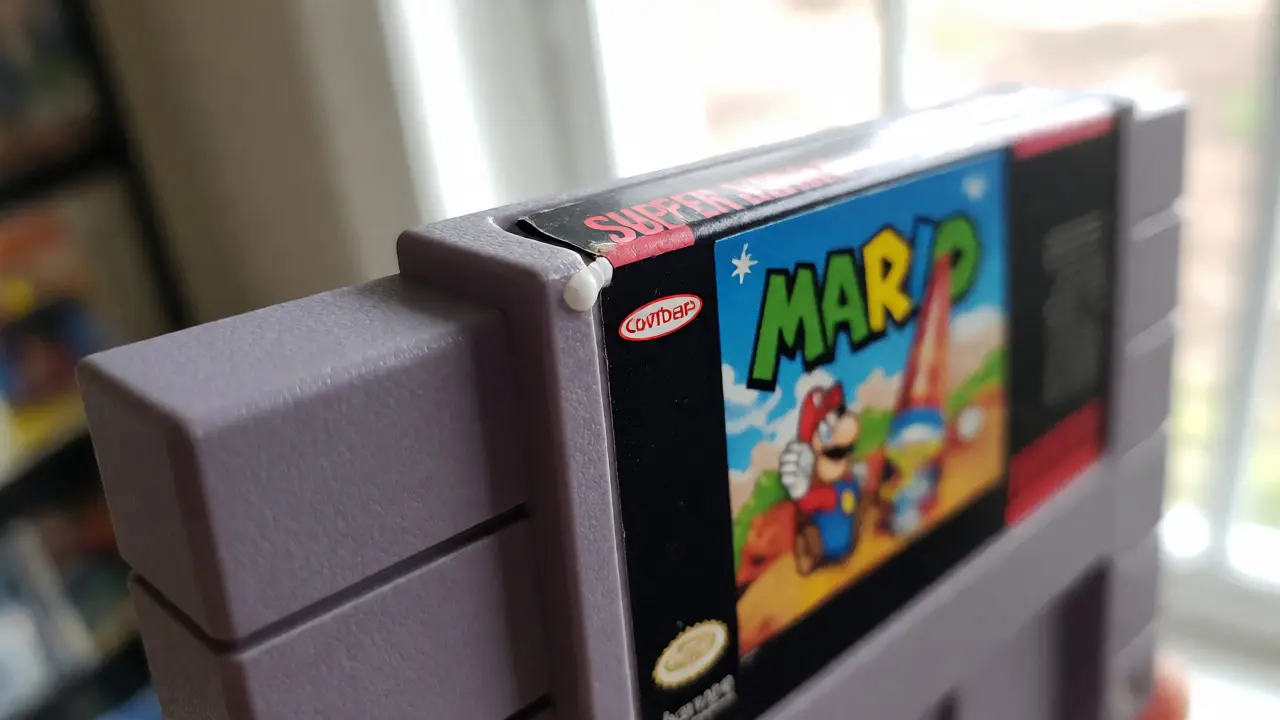
You just bought a mint-condition copy of Super Mario World for the SNES. You hold it up to the light, admiring the vibrant artwork. Then you see it: a tiny bubble at the corner of the label. It’s not dirt. It’s not wear. The glue is letting go. That small white gap is the beginning of the end for that pristine value.
If you collect Nintendo Entertainment System (NES), Game Boy, or N64 cartridges, you know this enemy. It’s called label delamination, and it’s the silent killer of retro game collections. Unlike screen scratches on consoles, which are obvious, label peeling creeps in slowly until one day your favorite game looks like it went through a war zone. But here’s the good news: you can stop it. And if you catch it early, you might even reverse it.
Why Do Nintendo Labels Peel?
To fix the problem, you have to understand the culprit. Most people think old games peel because they’re old. That’s only half true. The real issue lies in the chemistry of the adhesives used by Nintendo during the manufacturing process in the 1980s and 1990s.
Nintendo primarily used two types of labels: paper-backed stickers with water-soluble glue and plastic-coated labels with solvent-based adhesives. The water-soluble ones are notorious for reacting to humidity. If you live in a damp climate-say, Portland, Oregon, where I’m writing this-moisture seeps into the porous paper backing. This breaks down the glue bond from the inside out. The label doesn’t just fall off; it lifts because the moisture has no place to escape but between the label and the plastic shell.
The other common cause is thermal cycling. If you stored your games in an attic or a garage, temperature fluctuations expand and contract the plastic cartridge shell faster than the paper label. Over years, this mechanical stress shears the adhesive bond. So, when you ask why your Pokémon Red label is curling, it’s rarely just age. It’s usually humidity, heat, or poor original application quality.
The Golden Rule: Environment Control
You cannot preserve what you don’t protect. The single most effective way to prevent future peeling is controlling the environment where your games live. Forget fancy display cases for a second. Think about where your box sits.
- Temperature: Keep your collection between 65°F and 75°F (18°C-24°C). Avoid attics and basements. Attics get too hot in summer; basements get too damp in winter.
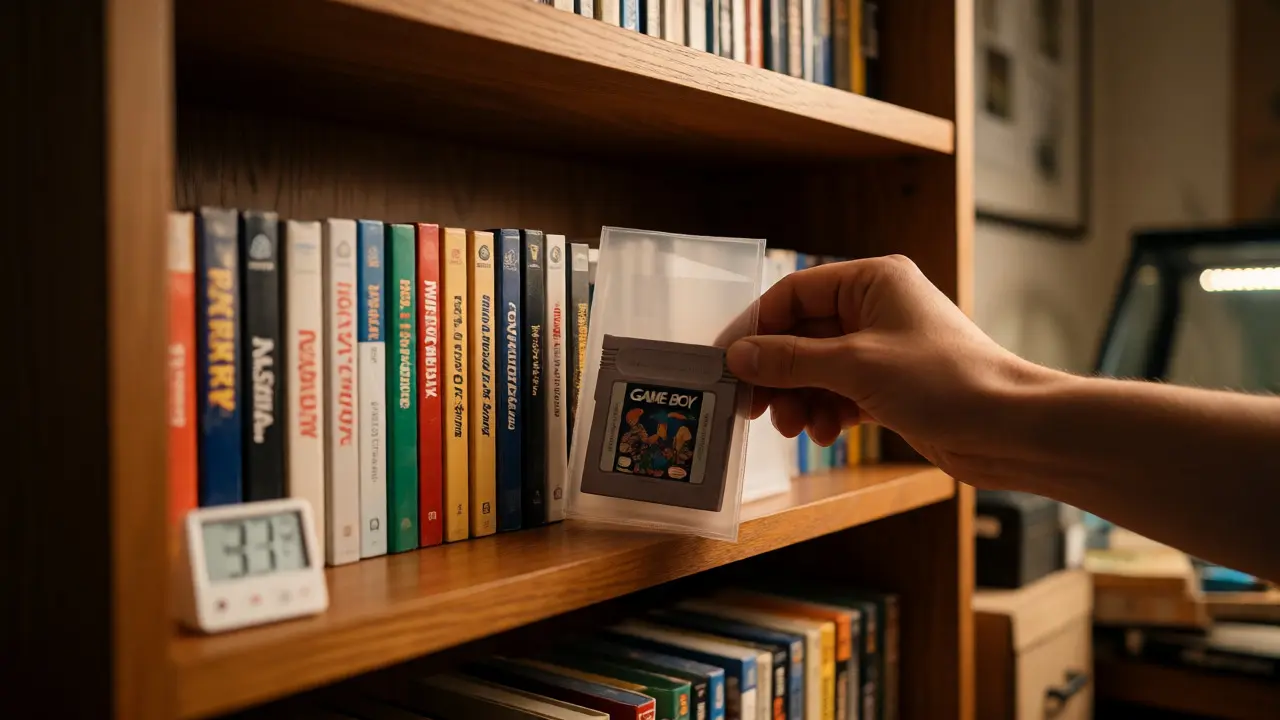
- Humidity: Aim for 30% to 50% relative humidity. Below 30%, the plastic becomes brittle. Above 50%, mold risks rise, and paper labels absorb moisture. Use a hygrometer to check. They cost ten bucks and save hundreds in lost value.
- Light: UV rays fade ink and degrade adhesives. Store games in dark places. If you display them, use UV-filtering glass or keep them out of direct sunlight.
Here’s a pro tip from my own shelf: I store my loose cartridges in acid-free polypropylene sleeves. These sleeves allow the cartridge to "breathe" slightly while blocking dust and oils from your fingers. Never use PVC sleeves. PVC releases hydrochloric acid over time, which eats away at both the plastic shell and the label adhesive.
Handling and Storage Mistakes to Avoid
You’d be surprised how often collectors destroy their own inventory through well-meaning mistakes. The biggest one? Stacking games horizontally without support. When you stack NES carts on top of each other, the weight presses against the labels. If there’s any slight bowing in the plastic shell, that pressure concentrates on the edges of the label, forcing it to lift.
Instead, store your games vertically, like books on a shelf. Use bookends to keep them upright so they don’t lean or crush each other. If you must stack them, limit the pile to three or four games max, and ensure the surface below is perfectly flat. Uneven surfaces create point-pressure that cracks labels.
Another mistake is cleaning labels with harsh chemicals. People see a smudge and grab Windex or alcohol wipes. Bad idea. Alcohol dissolves many vintage adhesives. Water swells paper labels. If you need to clean a label, use a dry, soft microfiber cloth. Gently dab-don’t rub. If there’s sticky residue, try a tiny amount of distilled water on the very edge of a cotton swab, but test it on an inconspicuous spot first. Better yet, leave it alone. Patina is part of the history.
Repairing Early Stage Peeling
What if you already have a lifted corner? Don’t panic. If the label is still attached for more than 90% of its surface area, you can likely stabilize it. If it’s flapping in the wind, you might need professional help or accept the loss.
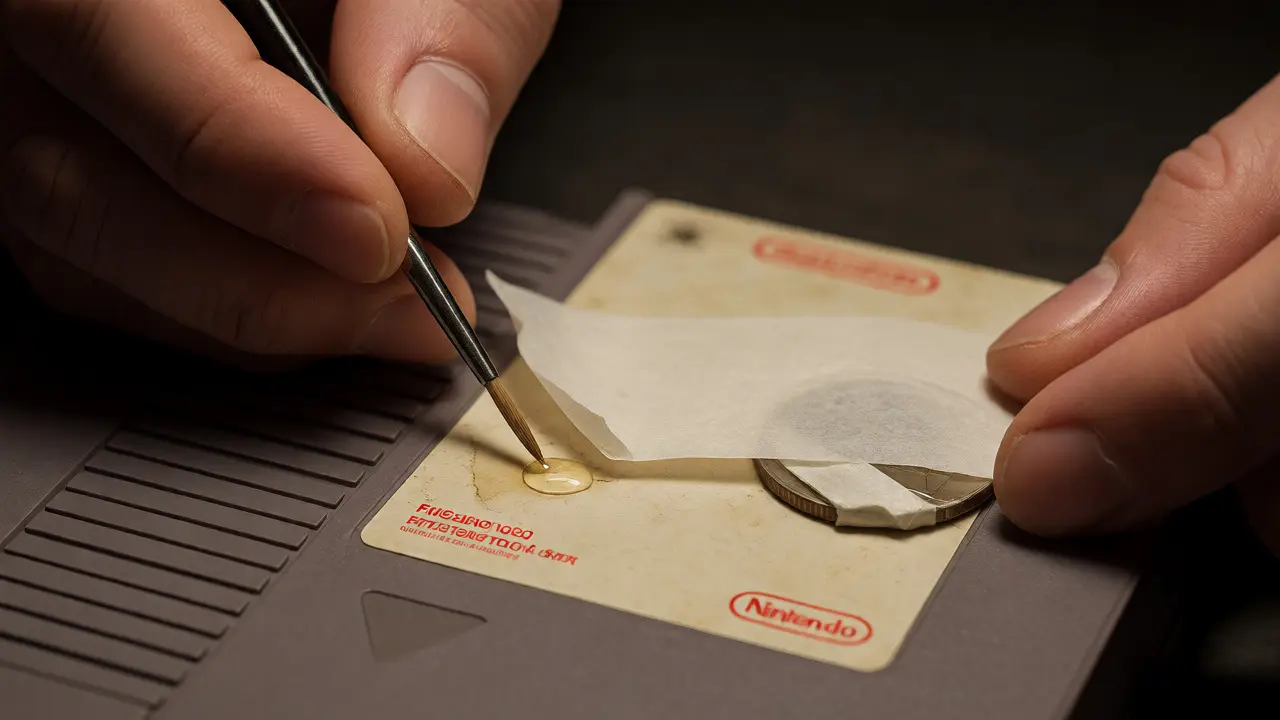
For minor lifting, you need a specialized adhesive. Not super glue. Super glue creates a rigid bond that will crack when the plastic flexes, and it leaves a visible shiny blob. You want a flexible, clear-drying archival adhesive. Museum-grade PVA (polyvinyl acetate) glue works well, but it’s hard to find in small tubes. Many restorers prefer a diluted solution of methylcellulose, a neutral pH cellulose ether used in bookbinding. It’s reversible, meaning you can undo it later if needed, which is crucial for collectors who might sell the item someday.
| Adhesive Type | Flexibility | Clarity | Reversibility | Best For |
|---|---|---|---|---|
| Cyanoacrylate (Super Glue) | Rigid | High (can fog) | No | Bonding broken plastic shells (not labels) |
| Methylcellulose | Flexible | Clear | Yes (with water) | Paper labels on NES/SNES/Game Boy |
| Archival PVA | Semi-Flexible | Clear | Partially | Stabilizing larger lifted areas |
| Double-Sided Tape | Variable | Opaque | No | Temporary fixes or heavy N64 labels |
When applying the adhesive, use a toothpick or a fine brush. Apply a minuscule amount under the lifted edge. Press the label down gently using a piece of wax paper to prevent sticking to your finger. Place a small weight (like a coin wrapped in tissue) on top for 24 hours. Do not rush this. The goal is invisible stabilization, not perfection.
Protecting High-Value Rarities
If you own a World Championship NES cartridge or a sealed Game Boy Color title, DIY repairs are risky. One slip of the hand can ruin a $500 item. For these pieces, prevention is strictly environmental.
Consider encapsulation. Companies like VGA or WATA grade and seal games in hard plastic cases. This locks out humidity and physical damage entirely. However, grading is expensive and takes months. If you aren’t ready to grade, invest in high-quality archival boxes. Acid-free cardboard boxes with foam inserts provide cushioning and block light. They are far superior to keeping loose games in a drawer where they scratch against each other.
Also, beware of "shrink wrap." Some sellers shrink-wrap individual cartridges to make them look new. While this protects against dust, it traps moisture against the label if the humidity fluctuates. If you buy a shrink-wrapped game, remove the plastic within a few weeks to let the cartridge acclimate to your home’s humidity levels. Long-term trapping can accelerate adhesive breakdown in humid climates.
When to Walk Away
Sometimes, the label is gone. If the paper backing has separated completely and the ink is cracking, no amount of glue will make it look factory-fresh again. In these cases, decide if the game is for playing or displaying. If it’s for playing, stick a removable, low-tack painter’s tape strip across the corners to hold it down temporarily. It won’t hurt the plastic and keeps the label from snagging on the console slot.
If it’s for display, consider leaving it as-is. A peeled label tells a story of survival. Trying to force it back often makes it look worse, with bubbles and wrinkles that scream "bad repair." Collectors pay premiums for "near mint" condition, but a professionally stabilized "very good plus" is better than a botched "mint" attempt. Honesty about condition preserves trust in the community.
Can I use regular Scotch tape to hold a peeling label down?
No. Regular tape uses rubber-based adhesives that yellow over time and can stain the label. Worse, when you try to remove it later, it often pulls off more of the label than it holds down. If you must use tape, use archival-quality polyester film tape, but generally, avoid tape on paper labels entirely.
Does cold weather cause Nintendo labels to peel?
Cold itself doesn't cause peeling, but rapid temperature changes do. If you bring a cold game into a warm room, condensation forms on the cartridge. This moisture can weaken the adhesive. Always let games acclimate to room temperature before handling them after transport.
Is it safe to wash a Nintendo cartridge with water?
Never submerge a cartridge in water. Water will seep into the contacts and potentially rust the PCB. It also swells paper labels, causing immediate delamination. Clean the exterior with a dry cloth only. For dirty contacts, use isopropyl alcohol (90%+) applied carefully to the pins, avoiding the label area.
How do I know if my label is paper or plastic?
Paper labels feel matte and slightly textured. They are prone to tearing and moisture damage. Plastic-coated labels feel smooth and glossy. They are more resistant to moisture but can still peel due to adhesive failure. Most NES and SNES games use paper labels, while some later Game Boy Advance titles use synthetic materials.
Should I re-glue a fully detached label myself?
If the label is fully detached, aligning it perfectly is extremely difficult without professional tools. Misalignment ruins the aesthetic value. For high-value items, seek a professional restorer. For cheap bulk copies, practice on them first to learn the technique before attempting it on rare finds.