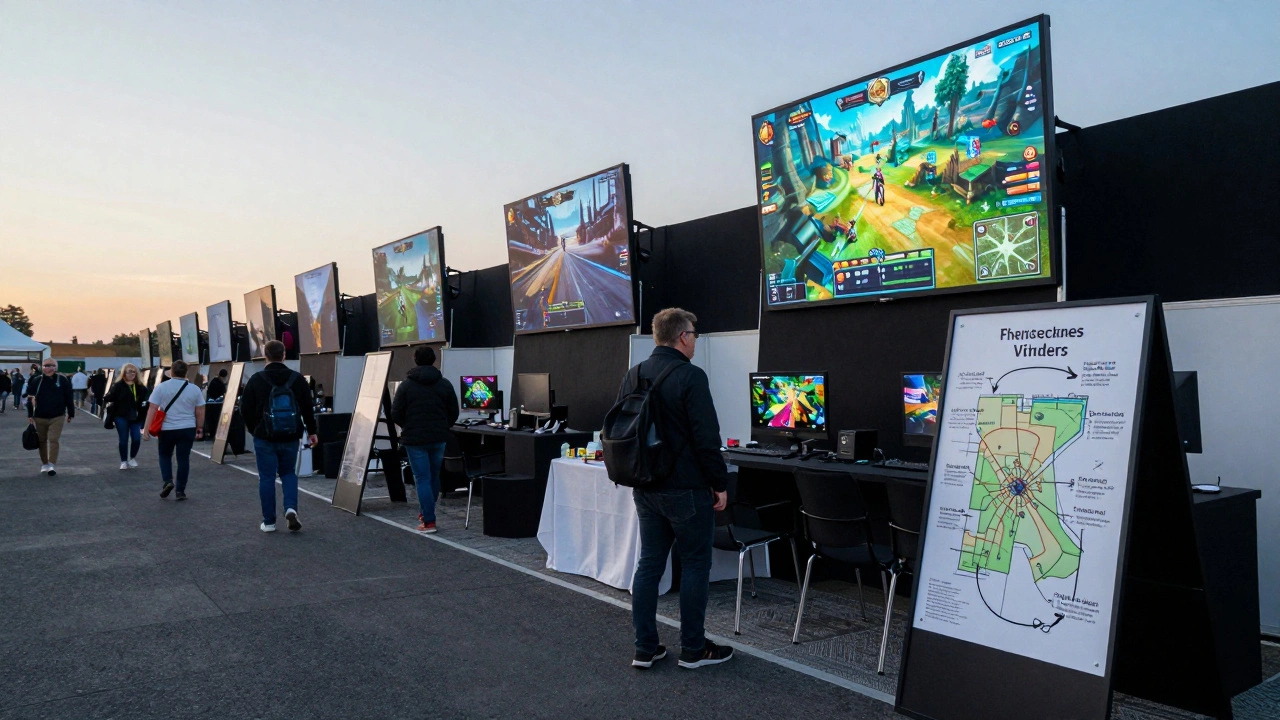
Walking into a massive video game expo like E3, Gamescom, or Classic Game Fest is like stepping into a maze made of neon lights, loud demos, and endless collectibles. You’ve got three hours before the next panel starts, and you want to hit every booth that matters - the indie devs with rare physical editions, the retro hardware sellers with that one cartridge you’ve been hunting for, the merch tables with limited-run pins. But the floor plan? It’s a sea of identical-looking booths, and half the time you’re circling back because you missed a turn. Here’s how to actually plan a route that gets you where you need to go - without wasting half your day wandering.
Start with the Digital Floor Plan - Don’t Just Glance at It
Most major expos now offer interactive floor plans online. Gamescom, GDC 2026, and Classic Game Fest 2025 all use platforms like ExpoFP or ExpoCAD that let you zoom in, search by company name, and even bookmark booths before you arrive. Don’t just open it and close it. Spend 20 minutes on it the night before the event. Type in the names of the vendors you absolutely must see. If you’re after retro Nintendo peripherals, search for "Nintendo" or "Retro-Bit". If you’re hunting for indie RPGs, look up the studios you follow on Twitter. The system will highlight their booth numbers and locations. Write those down. Or take a screenshot. You won’t remember them when you’re elbow-deep in a crowd.Know Where the Landmarks Are
Large booths don’t just sell stuff - they act as navigation beacons. Look for booths with 84-inch (2-meter) elevated screens. These are impossible to miss. They’re usually placed at key intersections or near major entrances. If a booth has a giant screen showing gameplay from a hot new game, that’s your north star. Same with booths that have live demos, cosplay contests, or free giveaway tables. These draw crowds, and crowds create natural pathways. If you need to get from Hall A to Hall B, follow the people - not the map. The flow of bodies will guide you faster than any arrow on a screen.Corner Booths Are Your Friends (and Your Enemies)
Booths on corners have two advantages: they’re visible from two aisles, and they have more open space because they’re not boxed in on three sides. That means they get more foot traffic. If you’re trying to find a specific vendor, check if they’re on a corner. If they are, you’re more likely to spot them. But if you’re trying to avoid crowds? Skip the corners. The biggest names - Square Enix, Capcom, Sony - always grab corner spots. So if you’re here for the hidden gems, head for the middle aisles. That’s where the indie devs, small publishers, and obscure hardware makers set up. You’ll find better deals and fewer people.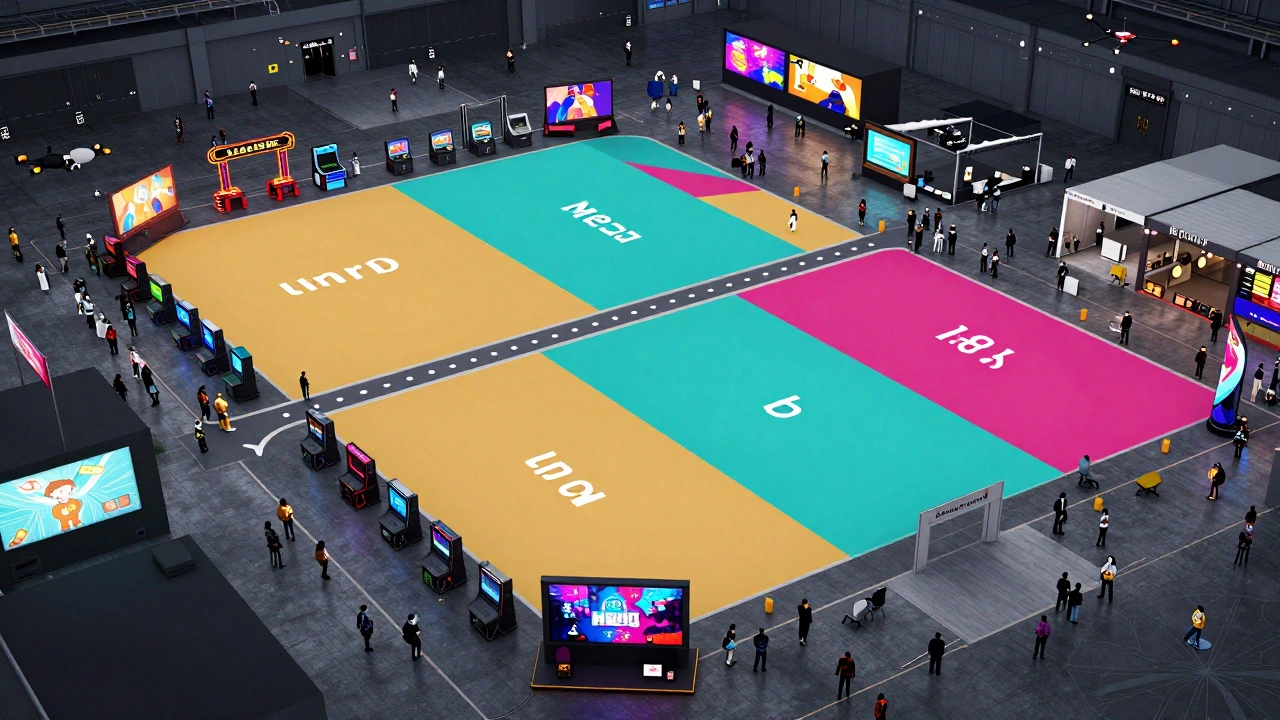
Map Your Priorities by Zone
Don’t try to do it all in one go. Split the floor into zones. Most expos group booths by category: Retro Gaming, Indie Games, Hardware & Mods, Merch & Collectibles, and Live Demos. Use the floor plan to identify which zone each of your must-visit booths is in. Then plan your route to hit one zone at a time. Start with the farthest zone from the entrance - that way, you’re not fighting the incoming crowd. If your top three targets are all in the Retro Gaming section, go there first. Then move to Merch, then Demos. This keeps you from backtracking. Walking 1,200 feet across the floor twice is exhausting. Walking it once? Much easier.Watch for Traffic Traps
Some booths are designed to trap you. They have long lines, free swag, or playable demos that pull you in for 20 minutes. That’s fine - if it’s on your list. But if you’re just browsing? Don’t get sucked in. If you see a line snaking around a booth, and it’s not one of your targets, walk around it. Don’t assume it’s worth the wait. A lot of booths have crowds just because they have flashy lights or loud music. The best stuff? Often quiet. Look for the booth with a single person inside, calmly showing off a handmade controller. That’s probably the one you’ll remember.Use Physical Markers - Not Just Your Phone
You’re going to get tired. Your phone battery will die. The Wi-Fi will lag. So print out a simplified map. Or sketch one. Circle your top five booths. Draw arrows between them. Write "Retro" next to the booth with the NES cartridges. Write "Free Pin" next to the one with the giveaway table. Keep this paper in your pocket. When you’re lost, pull it out. No app can replace a quick glance at a hand-drawn route when you’re surrounded by 20,000 people.
Time It Right - Avoid the Rush
Most people arrive at 10 a.m. sharp. That’s when the floor is heaviest. If you can get in at 8 a.m. on opening day, you’ll have the whole Retro Gaming section to yourself. If you can’t, aim for mid-afternoon - around 3 p.m. That’s when the panels end, and the crowd thins out. The demo lines clear. The merch tables restock. And you can actually talk to the vendor instead of yelling over their shoulder. The best deals? Often happen when the booth staff has time to chat. They’ll tell you about the limited run they’re holding back. They’ll show you the prototype they didn’t put on the website. That doesn’t happen at 10 a.m.Leave Room for Discovery
Your plan is a guide, not a prison. You’ll walk past a booth you didn’t know existed - maybe it’s a guy selling hand-painted Game Boy shells, or a tiny studio with a demo of a horror game that looks like it came from 1997. If it catches your eye? Stop. Don’t stick to the route just because you wrote it down. The magic of expos isn’t in checking off booths. It’s in the surprises. Your plan just makes sure you don’t miss the ones you really care about.What to Pack
- Printed or screenshot floor plan
- Portable charger (yes, really)
- Water bottle and snacks - don’t rely on overpriced expo food
- Small backpack - not a tote bag. You’ll need to carry merch.
- Pen and paper - for sketching your route
- Comfortable shoes - you’ll walk 5-7 miles
There’s no magic formula. But if you use the tools they give you - the digital maps, the landmark booths, the quiet corners - you’ll cut your wasted time in half. And you’ll walk out with more than just a bag of merch. You’ll walk out with the feeling that you actually saw everything you came for.
Should I use the expo app or a printed map?
Use both. The app lets you search and bookmark booths, but it drains battery and can glitch. A printed or hand-drawn map is your backup. Sketch your top 5 stops and the path between them. Keep it in your pocket. When the Wi-Fi dies or your phone dies, that paper will save your day.
Are corner booths better for finding vendors?
It depends. If you’re looking for big names like Nintendo or Sony, corner booths are where they are - and they’re easy to find. But if you’re hunting for indie devs, small publishers, or hidden hardware makers, avoid corners. They’re expensive real estate, so the big players take them. The hidden gems are usually in the middle of aisles, where foot traffic is lighter but still steady.
How do I know which booths have the best deals?
Look for booths with fewer people. If a booth has a long line, it’s probably popular - but not necessarily the best deal. The best prices are often at small booths with one or two staff members. They’re not trying to move volume. They’re happy to haggle, bundle items, or offer exclusives. Ask: "Do you have anything else I might’ve missed?" They’ll often show you something they didn’t put on the table.
Is it worth waiting in line for a demo?
Only if it’s on your list. If you’re excited about the game, yes. If you’re just curious, skip it. A 30-minute wait for a 5-minute demo isn’t worth it unless you’re a hardcore fan. Use that time to check out other booths. You can always come back later - or catch the demo on YouTube after the event.
What time of day is best to hit the vendor floor?
Early morning (8-10 a.m.) is best for avoiding crowds and getting first access. If you can’t make it then, aim for mid-afternoon (3-5 p.m.). That’s when the big crowds thin out after panels end. You’ll have space to talk to vendors, and they’ll be more likely to offer you something special - like a last-minute discount or an exclusive item.