Submitting a sealed video game for professional grading isn’t just about sending in a box and waiting for a number. It’s about understanding exactly what graders are looking for - and making sure your game doesn’t lose points over something you could’ve fixed before submission. If you’re aiming for a CGC 10, every scratch, corner dent, or faded seal matters. And if you don’t know how to inspect your game properly, you might be overpaying for a grade you could’ve improved on your own.
Start with a Realistic Self-Assessment
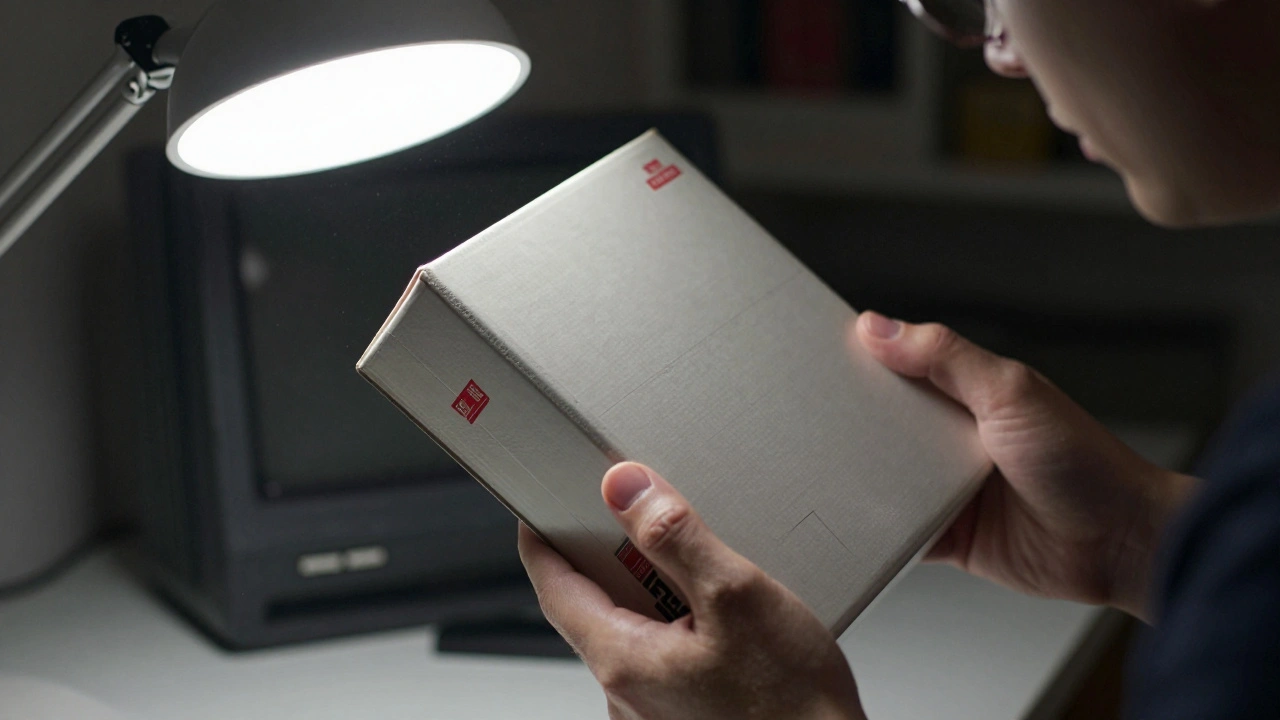
Before you even pack your game, turn off the overhead light and grab a bright LED lamp. Professional graders use forensic tools to spot things you’d miss, but you can still catch 90% of the flaws with good lighting. Hold the box up to the light. Look at every corner - not just the front. Those eight corners are critical. A single rounded corner can drop your grade from 9.8 to 9.6. Run your fingers along the edges. Is there a crease? A dent? A fold that wasn’t there before? Don’t assume it’s "just a small mark." Graders measure damage in microns.Check the seal. It should look like factory-applied plastic - no bubbles, no wrinkles, no lifted edges. Even a tiny gap where the seal peeled back slightly can count as tampering. Some collectors try to reseal games with heat guns or irons. That’s a red flag. CGC uses X-ray and UV scanning to detect altered seals. If they find evidence of manipulation, your game gets flagged for authenticity review - and that can delay submission or even disqualify it.
Know What Graders Actually Look For
CGC Video Games doesn’t just grade based on looks. They verify authenticity first. A game can look pristine but still be a bootleg, a repackage, or a replacement box with an original cartridge. That’s why they scan the box, the cartridge, the manual, and every insert. Even the paper quality matters. Original manuals from 1992 have a specific texture. Reproductions feel flimsy. The ink on the box? Original printing has a slight raised texture. Fakes are flat.Here’s what they check in order:
- Box corners: Sharp, square, no crushing. A 9.8 game might have one slightly rounded corner. A 9.6 has two. A 9.4 has three or more.
- Box deformation: No warping. No dents from pressure. If the box looks like it was sat on, even lightly, you’re looking at a 7.0 or lower.
- Seal integrity: No bubbles, no tears, no adhesive residue. Even a fingerprint smudge under the seal counts.
- Surface marks: Scuffs, scratches, or stains on the box. A single thin line might be okay on a 9.6, but a 9.8 can’t have any.
- Manual and inserts: Must be complete. No missing pages. No coffee rings. No handwritten notes. Even a pencil mark on the inside cover drops the grade.
Graders don’t guess. They measure. A 9.8 game might have a 0.1mm scratch. A 9.6 game might have a 0.3mm dent. You don’t need a caliper, but you do need to look closer than you ever have before.
Understand the Grading Scale
CGC Video Games uses a 10-point scale, but it’s not linear. The jump from 9.8 to 9.9 is harder than from 9.0 to 9.8. A CGC 10 means zero manufacturing or handling defects - no printing errors, no misaligned seals, no dust under the plastic. It’s rare. Less than 5% of sealed NES games submitted get a 10.Here’s what each grade roughly means:
- 10.0: Factory fresh. No visible imperfections under magnification.
- 9.9: One microscopic flaw - maybe a single dust speck under the seal.
- 9.8: One very minor surface mark or slightly rounded corner.
- 9.6: Two minor flaws - a small crease, a faint scuff, or a slightly loose seal.
- 9.4: Noticeable wear - a few small dents, a visible seam gap, or minor corner wear.
- 8.0-9.2: Moderate wear - creasing, scuffing, or slight warping. Still collectible.
- 6.5 and below: Heavy damage - water stains, deep dents, torn corners, or mold. These rarely sell above $50.
There’s no "half-grade" wiggle room. A 9.7 doesn’t exist. If your game is borderline 9.8/9.6, CGC will assign the lower one. Don’t assume they’ll round up.
Choose the Right Submission Tier
CGC offers multiple submission tiers. Picking the wrong one can cost you time or money. Here’s how to pick:- Standard Tier ($50/game): Best for games under $2,500. 45-day turnaround. Includes sealed, cartridge-only, or box-only submissions.
- WalkThrough Tier ($150 + 2% of value): For high-value games ($2,500+). 5-day turnaround. Ideal for rare titles like Super Mario Bros. 3 with original box or Stadium Events with manual.
- Standard Bulk Tier ($45/game): Only if you’re submitting 30+ games. Doesn’t accept CIB (complete-in-box) items. Good for bulk lots of common games.
- CrossOver Tier ($50 or $150): If your game is already graded by WATA or another company. CGC will reholder it and regrade it. The grade usually stays the same unless damage occurred after encapsulation.
- Regrading ($25-$75): If your game is already in a CGC holder and you want a new one (for resale or display). No re-evaluation - just a new case.
Remember: there’s a $5 handling fee on every submission, no matter the tier. And if CGC thinks your declared value is too low, they’ll bump you to a higher tier - and charge you the difference. Be honest.
Submission Process: What to Do (and Not Do)
You need a free CGC Video Games account. Sign up at CGCvideogames.com. Fill out the submission form. List each game, its title, system, condition, and fair market value. Don’t guess. Check recent eBay sold listings. If you say a Super Mario Bros. is worth $100 and it’s actually worth $800, you’ll get hit with extra fees.Package your game carefully:
- Use a rigid box - not a padded envelope.
- Wrap the game in bubble wrap, but don’t tape directly to the box.
- Never send it in a Mylar sleeve or card saver. CGC throws those away.
- Include the submission form inside the outer box.
- Don’t send original packaging materials (like the box the game came in). CGC doesn’t return them.
Also: CGC doesn’t count weekends or holidays. If you submit on a Friday before E3, your 45-day clock doesn’t start until the next business day. Plan ahead.
Add-ons: Cleaning and Pedigree
You can pay extra for services:- Mild debris removal ($10): Removes dust, lint, or light residue. Doesn’t clean the box - just the surface.
- Heavy debris removal ($40): Removes stickers, tape residue, or glue. If your game has a price tag stuck on the box, this is your only option.
- Pedigree designation ($10): Adds "Collection of [Your Name]" to the label. Useful if you’re known in the community or selling to serious collectors.
Don’t bother with cleaning unless you see visible debris. If the box looks clean, don’t risk it. Improper cleaning can cause more damage than it fixes.
What Happens After Submission?
Once CGC receives your game, they log it, scan it, and assign it to a grader. You’ll get an email confirmation. The grader uses UV light, magnifiers, and X-ray to inspect every component. They compare the box to manufacturer databases. They check the cartridge for re-labeling. They verify the manual against known print runs.If the game is authentic and meets the grade, it gets encapsulated in a tamper-proof slab with a barcode and serial number. You’ll get a digital certificate. The game ships back in a padded box. No Mylars. No sleeves. Just the slab.
If it’s altered or fake, you’ll get a letter explaining why - and you can choose to have it returned ungraded (with a $10 fee) or destroyed.
Final Checklist Before You Ship
Double-check this before sealing your box:- Is the box free of visible dents, creases, or scuffs?
- Are all eight corners sharp and undamaged?
- Is the seal intact with no bubbles or lifts?
- Is the manual complete, with no writing or stains?
- Are all inserts present and clean?
- Did you declare the correct fair market value?
- Did you pick the right submission tier?
- Did you remove all packaging materials (sleeves, Mylars, tape)?
If you said yes to all of these, you’ve done everything right. Now you just wait.
Can I submit a game that’s already been graded by WATA?
Yes. CGC offers a CrossOver tier specifically for games previously graded by WATA or other companies. You pay $50 (for games under $2,500) or $150 plus 2% of value (for higher-end titles). CGC will open the existing holder, inspect the game, and reholder it in a CGC slab. The grade usually stays the same unless damage occurred after the original encapsulation.
What happens if I misstate the value of my game?
CGC reserves the right to adjust your declared value if they believe it’s too low. If they do, you’ll be moved to a higher submission tier (like WalkThrough), and you’ll owe the difference in fees. Always check recent eBay sold listings for accurate pricing - don’t guess.
Do I need to be a paid member to submit?
No. Anyone can submit with a free CGC Video Games account. But paid memberships (Associate, Premium, Elite) offer discounts - 10% or 20% off grading fees. If you submit more than once a year, the membership pays for itself.
Can I get my game back if it’s rejected?
Yes. If CGC determines your game is altered, fake, or damaged beyond grading, you can choose to have it returned ungraded for a $10 fee. You can also choose to have it destroyed. They won’t return any packaging materials you sent with it - no Mylars, sleeves, or tape.
How long does grading take?
Turnaround depends on the tier: Standard is 45 days, CrossOver is 20 days, WalkThrough is 5 days. Business days only - weekends and holidays don’t count. If you submit on a Friday before a major convention, the clock doesn’t start until the next business day.