
You just sold your copy of Final Fantasy VII Rebirth on an online marketplace. The buyer is excited, the money is pending, and you feel good about the deal. Then, three days later, a notification pops up: "Item damaged." You open the package photos and see a cracked disc or a bent cartridge pin. Your profit vanishes, replaced by a refund and a bad review.
This happens more often than you think. Shipping media isn't like sending a t-shirt. Game cases are brittle plastic, discs scratch easily, and consoles have sensitive ports that snap under pressure. Whether you're clearing out your backlog on eBay, Mercari, or Facebook Marketplace, how you pack determines if you get paid or lose money.
The Quick Fix Checklist
Before you tape anything shut, run through this list. It saves time and prevents headaches:
- Remove discs from jewel cases: Never ship a loose disc in a standard plastic case; it will crack.
- Protect cartridge pins: For Nintendo systems, ensure contacts aren't exposed to dust or bending.
- Use rigid mailers for single games: Bubble wrap alone doesn't stop crushing forces.
- Disconnect cables from consoles: Never ship a console with cords plugged in; they break ports.
- Document condition: Take photos before sealing the box. This is your proof if a dispute arises.
Why Standard Packaging Fails Gamers
Most people grab a padded envelope, toss the game in, and seal it. That’s a mistake. Padded envelopes offer zero structural integrity against crushing. If a delivery driver steps on your package, the contents flatten. For hard drives, SSDs, or optical discs, compression is the enemy.
Consider the physics of a Blu-ray disc. It’s made of polycarbonate plastic. While flexible enough to bend slightly, it snaps if twisted or crushed unevenly. A standard DVD case has thin walls designed for shelf display, not transit shock. When these elements combine without proper cushioning, failure is guaranteed. You need layers that absorb impact and distribute weight evenly.
Packing Strategy for Disc-Based Games (PS5, Xbox Series X|S)
If you’re shipping a physical disc for PlayStation or Xbox, follow this specific order. It might seem tedious, but it works.
- Eject the disc: Remove it from the case entirely. Do not leave it inside.
- Clean the surface: Use a microfiber cloth to wipe away fingerprints. Dust turns into scratches during transit vibration.
- Wrap the disc individually: Place the disc between two sheets of bubble wrap. Tape the bubble wrap around the disc so it doesn’t slide. Alternatively, use a dedicated CD sleeve, then bubble wrap.
- Secure the case: Wrap the empty plastic case separately. If it’s a steelbook or limited edition, add extra foam corners.
- Combine in a rigid mailer: Place the wrapped disc and case inside a cardboard-backed bubble mailer. Fill any gaps with crumpled paper or packing peanuts so nothing shifts.
- Seal and label: Tape all edges securely. Mark "Fragile" clearly, though don’t rely on handlers respecting it.
Pro tip: If you’re selling multiple games together, keep them separate within the same box. Stack them vertically like books, separated by cardboard dividers. Laying them flat in a pile increases the risk of the bottom cases cracking under the weight of the top ones.
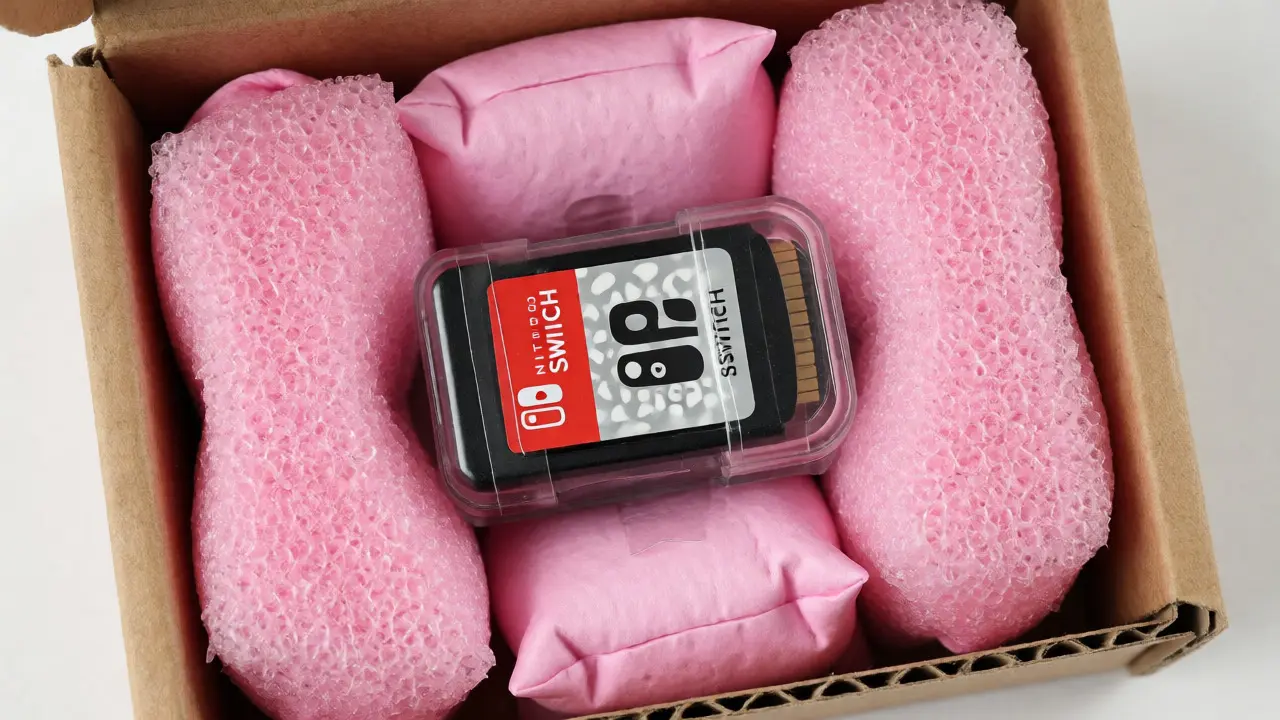
Nintendo Switch and Handheld Cartridges
Cartridges are different animals. They contain small metal contact pins on the back. These pins are fragile and can bend if pressed directly. They also attract static electricity, which can corrupt save data in older formats, though modern flash memory is resilient.
For Nintendo Switch cards:
- Keep them in their original cases: Yes, even if they look bulky. The plastic shell protects the pins.
- Tape the case closed: Switch cases have a latch that can pop open. Use clear packaging tape across the hinge and the front opening to prevent accidental ejection.
- Add anti-static protection: If you have anti-static bags, use them. If not, avoid wool or synthetic fabrics that generate high static charge when rubbing against the card.
- Box it up: Don’t just put the case in a bubble mailer. The corner impact can crack the case. Use a small corrugated box. Place the taped case in the center, surrounded by at least one inch of dunnage (bubble wrap, air pillows, or foam) on all sides.
| Material | Best For | Risk Factor | Cost Estimate |
|---|---|---|---|
| Bubble Mailer | Single Switch Card (taped) | High (Crushing) | $0.10 - $0.30 |
| Rigid Cardboard Box | Disc Games, Bundles | Low | $0.50 - $1.00 |
| Anti-Static Bag | PC Components, Loose Cards | None | $0.05 |
| Original Retail Box | Collectors, Sealed Items | Medium (Cosmetic Damage) | Included |
Shipping Full Consoles Without Breaking Ports
Selling a used PlayStation 5 or Xbox Series S is where things get expensive. One mistake costs you $400+. The biggest danger here isn't dropping the unit; it's shipping it with accessories attached.
Never ship a console with the HDMI cable, power cord, or controller sticks plugged in. Here’s why: During transit, packages tumble. If a heavy power brick hangs off the port, leverage breaks the solder joints inside the motherboard. It looks fine externally, but the console won’t boot.
Follow this protocol for consoles:
- Factory reset: Clear user data. This protects privacy and ensures the buyer gets a clean slate.
- Disconnect everything: Remove all cables, controllers, and stands.
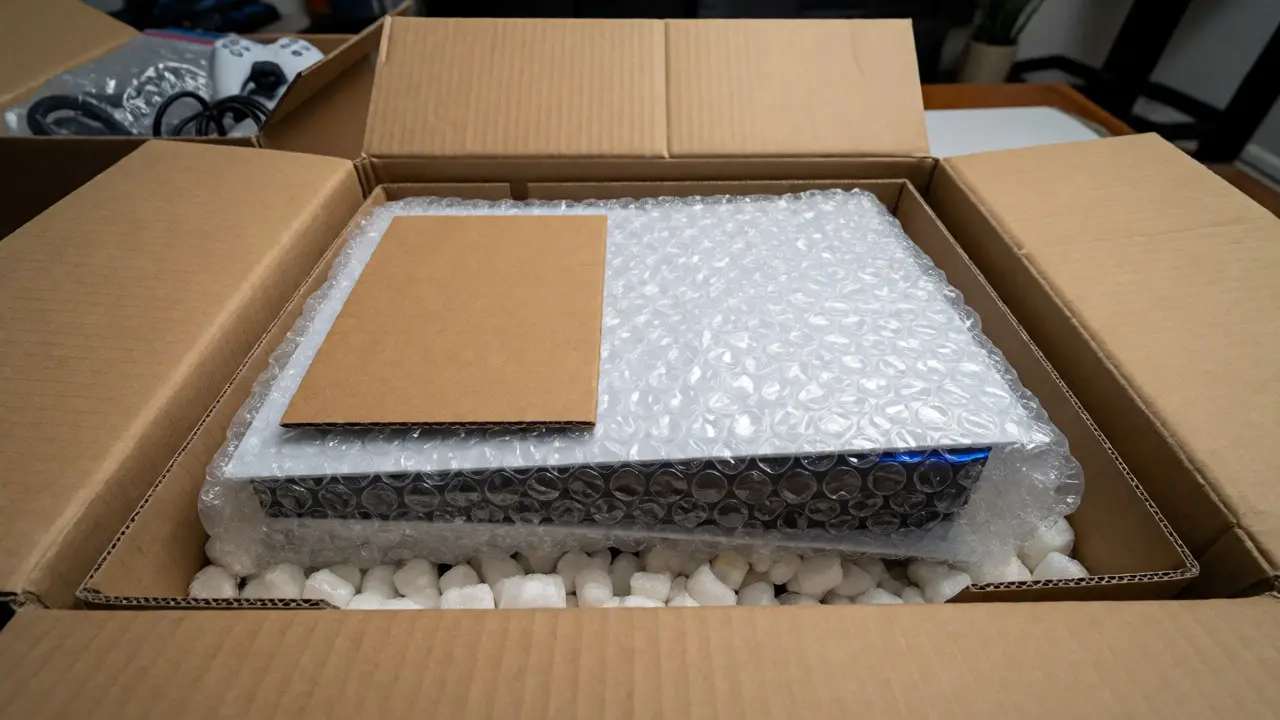
- Wrap the unit: Use large-bubble bubble wrap. Pay special attention to the front disc drive slot and rear ventilation grilles. Crushed vents mean overheating later.
- Protect the faceplate: If the console has white or light-colored plastic, place a sheet of cardboard over the front before wrapping. This prevents scuff marks from other items in the box.
- Double-box method: Place the wrapped console in a snug-fitting inner box. Then, place that inner box inside a larger outer box. Fill the space between boxes with packing peanuts or crumpled newspaper. This creates a suspension system.
- Ship accessories separately: Put cables and controllers in a separate small bag or box. Tape them to the outside of the main box only if they are heavily padded, but better yet, include them inside the double-box structure with ample cushioning.
Insurance is non-negotiable for consoles. USPS Priority Mail includes some insurance, but for values over $500, consider adding extra coverage via UPS or FedEx. The cost difference is negligible compared to the loss.
Common Pitfalls That Kill Sales
Even with perfect packing, buyers complain. Why? Usually, it’s cosmetic damage to the retail box. Collectors care about the box as much as the game. If you’re selling a sealed copy, do not remove the shrink wrap unless necessary for inspection. If you must open it, re-seal it carefully with heat-shrink film, not cheap tape that leaves residue.
Another issue is humidity. Portland, Oregon, where I live, is damp. Paper inserts in game cases can warp if shipped in wet conditions. Always include a silica gel packet in the box. It costs pennies and saves the manual from looking like a wavy potato chip.
Finally, check local regulations. Some international shipments require customs forms declaring the value accurately. Under-declaring to save on duties often leads to packages being held in customs for weeks, frustrating the buyer and delaying your payout.
Frequently Asked Questions
Do I need to remove the disc from the case before shipping?
Yes, absolutely. Leaving a disc in a plastic jewel case during shipping is risky because the case can crack, and the disc can shift and scratch against the plastic. Removing the disc, wrapping it in bubble wrap or a sleeve, and shipping the case separately ensures both items arrive intact.
Can I ship Nintendo Switch cartridges in a padded envelope?
You can, but it is not recommended. Padded envelopes offer little protection against crushing. If a heavy package lands on yours, the cartridge case can crack, potentially damaging the internal circuit board. A small rigid cardboard box with bubble wrap is safer and costs only slightly more.
Should I ship a console with its original retail box?
If the original box is in good condition, yes, because collectors prefer it. However, you should still double-box it. Place the original retail box inside a sturdy shipping carton with plenty of cushioning material. This protects the retail box from dents and tears while keeping the console safe inside.
What is the best way to protect HDMI ports during shipping?
The best way is to disconnect all cables. Never ship with cables plugged in. Additionally, wrap the console in bubble wrap, ensuring the ports are covered by several layers of padding. Some sellers use small pieces of foam or cut-up sponges to plug the ports temporarily, but adequate external wrapping is usually sufficient if no tension is applied to the ports.
Is insurance worth it for shipping video games?
For individual games under $50, insurance is often optional, depending on your risk tolerance. For bundles over $100 or consoles, insurance is highly recommended. Most carriers include basic coverage, but checking the limits is crucial. Adding extra insurance for a few dollars provides peace of mind and covers full replacement value if the item is lost or severely damaged.