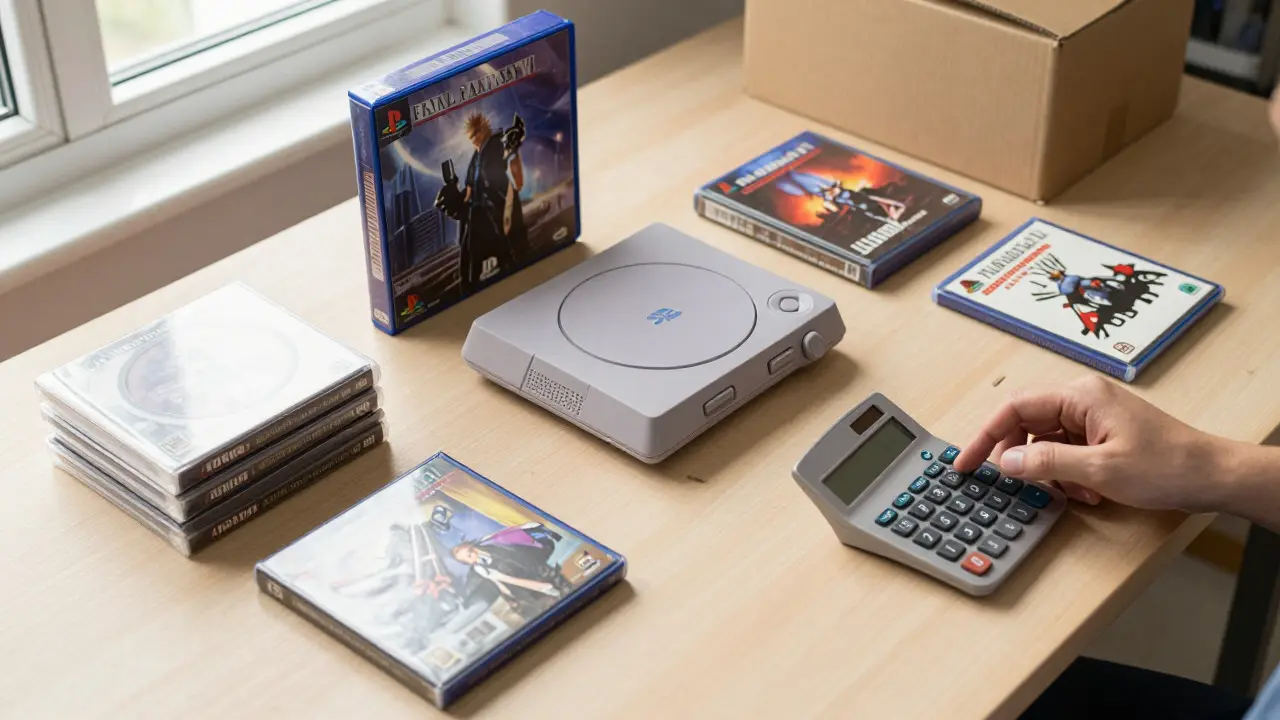
Imagine you bought a copy of Final Fantasy VII in 2019 for $15. Today, it’s worth over $400 on secondary markets. But do you know exactly how much profit you made? If you haven’t tracked your acquisition costs, that answer is just a guess. For serious collectors, video games are no longer just hobbies; they are assets with fluctuating values that require diligent record-keeping.
Tracking these numbers isn't about being obsessive-it's about making smart decisions. Whether you're deciding when to sell, calculating taxes, or simply understanding the health of your portfolio, having accurate data is non-negotiable. This guide walks you through the practical steps to build a reliable system for monitoring both what you paid and what your games are currently worth.
Why Tracking Matters More Than You Think
Most casual gamers treat their library as static. They buy a game, play it, and forget about it until they want to resell it years later. Serious collectors, however, view their inventory as a dynamic asset class. The primary reason to track Acquisition Cost is tax efficiency. In many jurisdictions, capital gains taxes apply to the sale of collectibles. Without a documented purchase price, you might end up paying taxes on the full sale amount rather than just the profit.
Beyond taxes, tracking helps identify trends. Are sealed boxes holding value better than loose cartridges? Is one specific console generation outperforming another? By comparing your historical costs against current Market Value, you can spot which segments of your collection are appreciating and which are stagnating. This data allows you to rebalance your collection, selling off underperformers to fund new acquisitions that have stronger growth potential.
Defining Your Data Points
Before you start logging data, you need to define exactly what information matters. Not every detail is useful. Focus on the core attributes that directly impact valuation and financial tracking.
- Title and Platform: The exact name of the game and the hardware it runs on (e.g., PlayStation 3, Nintendo Switch).
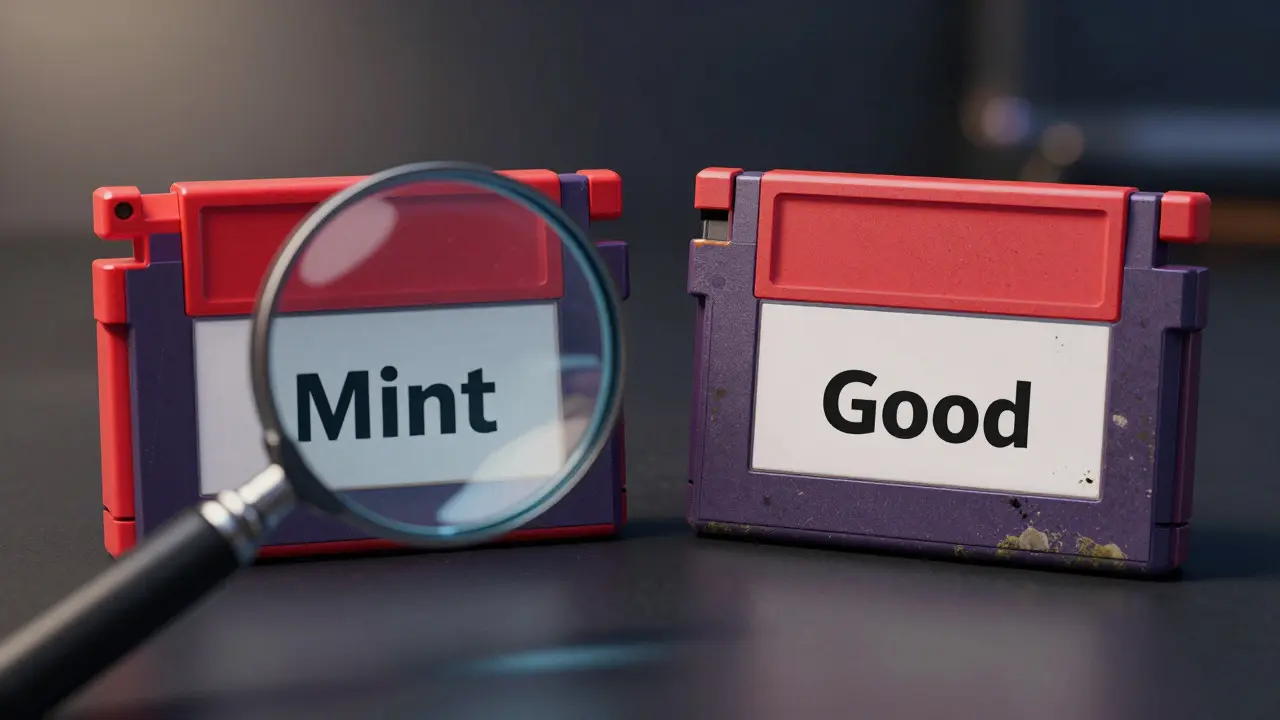
- Condition Grade: Use standardized grading terms like "Mint," "Near Mint," "Very Good," or "Good." Condition drastically affects value. A "Mint" copy of a rare title can be three times more valuable than a "Good" one.
- Version Type: Distinguish between Standard Edition, Collector's Edition, Limited Run, or First Print. These distinctions often drive significant price differences.
- Purchase Date: The date you acquired the item. This establishes your holding period, which may influence tax rates.
- Acquisition Cost: The total amount paid, including shipping and sales tax if applicable. This is your baseline for profit calculation.
- Current Market Value: The estimated resale price based on recent comparable sales. This number should be updated regularly.
Building Your Database
You don't need enterprise software to manage this. A simple spreadsheet or a dedicated database application works well. The key is consistency. Every entry must follow the same format so that filtering and sorting remain effective.
If you prefer spreadsheets, create columns for each data point listed above. Add a column for "Status" (Owned, Sold, Traded) to keep your active inventory clean. If you use a database tool, consider adding tags for genres or developers, as these can sometimes correlate with market trends. For example, games developed by specific indie studios often see spikes in value after critical acclaim or anniversaries.
Here is a basic structure you can replicate in any platform:
| ID | Title | Platform | Condition | Version | Purchase Date | Cost ($) | Last Valuation Date | Current Value ($) | Status |
|---|---|---|---|---|---|---|---|---|---|
| 001 | The Legend of Zelda: Ocarina of Time | Nintendo 64 | Mint | Standard | 2023-05-12 | 120.00 | 2026-08-01 | 350.00 | Owned |
| 002 | Halo: Combat Evolved | Xbox Original | Near Mint | Collector's | 2024-11-03 | 45.00 | 2026-08-01 | 85.00 | Owned |
Determining Accurate Market Values
This is the trickiest part of the process. Asking "what is this worth?" rarely yields a single answer. Instead, you need to triangulate your estimate using multiple sources. Relying on a single listing price is dangerous because sellers often list items higher than what buyers actually pay.
Look at completed sales, not active listings. Platforms like eBay show "Sold Items" history, which reflects real transactions. Check specialized databases like PriceCharting or VGChartz, which aggregate data from thousands of sales to provide average market prices. Cross-reference these numbers with local community groups or forums where enthusiasts discuss fair trade values.
Remember that condition is king. A "Mint" game with original box and manual will command a premium over a loose cartridge. When valuing, always specify the condition grade you used for the estimate. If you only have the cartridge without the box, note that specifically, as the value drops significantly compared to a complete-in-box set.
Establishing a Regular Review Routine
Market values change. Some games spike during anniversaries or when sequels are announced. Others decline as new generations launch. To keep your records accurate, establish a regular review schedule.
For most collections, a quarterly review is sufficient. Once every three months, pull up your database and update the "Current Market Value" for each item. Don't try to update daily; it’s too time-consuming and the fluctuations are usually minor. However, mark high-value items or those in volatile categories for monthly checks.
During these reviews, also check your physical inventory. Ensure the condition grades still match reality. Did a box get dented? Did a disc get scratched? Adjusting the condition grade immediately prevents overestimating your assets. This routine keeps your data honest and actionable.
Calculating Profit and Loss
Once you have your acquisition costs and current values, calculating performance is straightforward. For each item, subtract the Acquisition Cost from the Current Market Value. A positive number indicates unrealized gain; a negative number indicates unrealized loss.
To get a portfolio-wide view, sum up all the individual gains and losses. This gives you a snapshot of your collection's net worth relative to what you invested. You can also calculate percentage returns by dividing the gain by the acquisition cost. This metric helps compare performance across different price points. A $5 gain on a $10 game is a 50% return, while a $5 gain on a $500 game is only a 1% return. Percentage returns help you identify which investments are truly performing well.
When you sell an item, move its status to "Sold" and record the final sale price. This locks in your realized gain or loss, which is crucial for tax reporting. Keep receipts or digital proof of purchase for every transaction to support your records if ever audited.
Common Pitfalls to Avoid
Even with a good system, mistakes happen. Here are the most common errors collectors make when tracking values.
- Ignoring Shipping and Fees: Always include shipping costs and marketplace fees in your acquisition cost. These reduce your actual profit margin.
- Overvaluing Rare Variants: Just because a variant exists doesn't mean it sells for a premium. Verify demand before assigning a high value.
- Stale Data: Values from two years ago are irrelevant. Always use recent sales data.
- Inconsistent Grading: Be strict with your condition definitions. What you call "Near Mint" should look the same as what others call "Near Mint."
Frequently Asked Questions
How often should I update my game's market value?
For most collections, updating values quarterly (every three months) is sufficient. However, high-value items or games in rapidly changing markets should be checked monthly. Daily updates are usually unnecessary and time-consuming.
Should I include shipping costs in my acquisition cost?
Yes. To accurately calculate your profit, include all costs associated with acquiring the item, such as shipping, handling, and sales tax. This ensures your profit margin reflects the true expense.
What is the best source for checking sold prices?
Completed sales data from major marketplaces like eBay is the most reliable indicator of actual market value. Aggregators like PriceCharting also provide useful averages, but always cross-reference with recent sold listings for accuracy.
Do I need to track every single game in my collection?
Ideally, yes. Even low-value games contribute to your overall portfolio health. However, if you have hundreds of items, you might prioritize tracking high-value or limited-edition titles first, then expand to the rest as time permits.
How does condition affect the value of a video game?
Condition has a massive impact. A game in "Mint" condition with original packaging can be worth three to five times more than the same game in "Good" condition without a box. Always specify the condition grade when recording values.