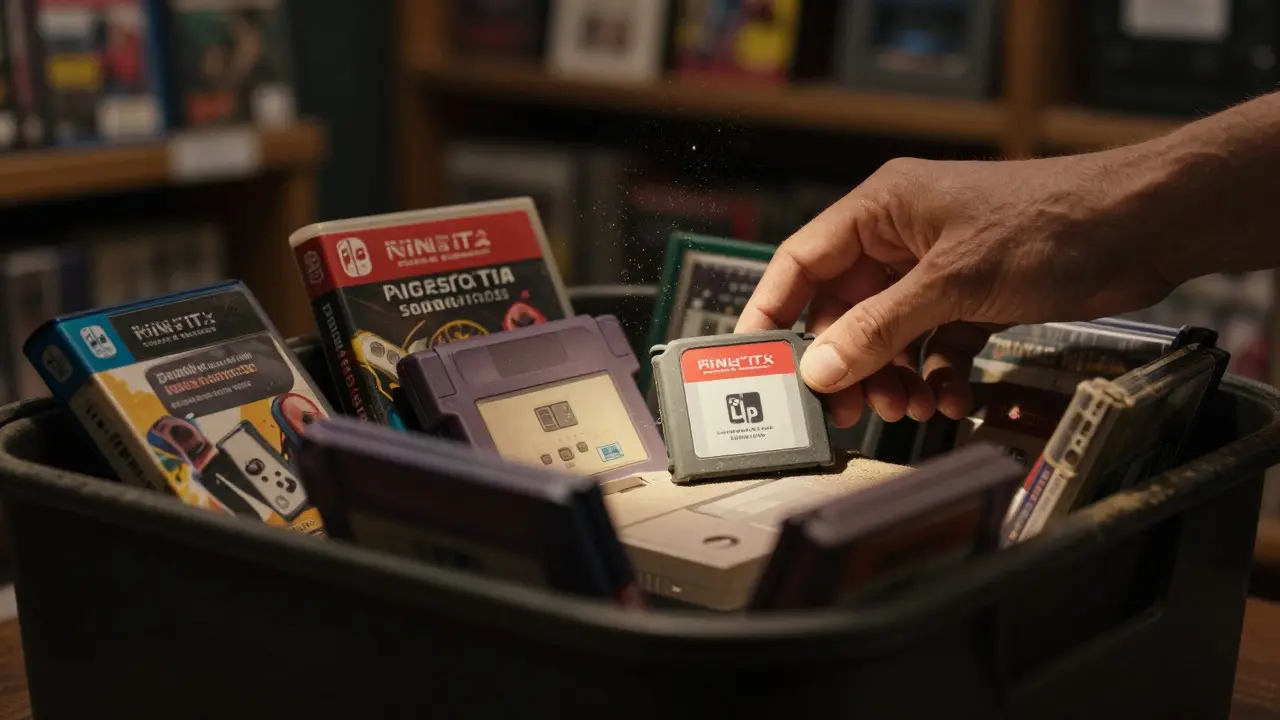
There is a specific feeling you get when you find a rare Nintendo Switch cartridge in a dusty bin at a local thrift store. Your heart skips a beat, but then reality hits: the price tag says $40, and your wallet only has $15. This is where store credit becomes your secret weapon. It is not just leftover cash from a return; it is a flexible currency that lets you keep hunting without draining your bank account.
Many collectors treat store credit as an afterthought, using it up on accessories or forgetting about it entirely. But if you view it as part of your collection strategy, it changes the math. You can trade in common titles to fund the hunt for obscure gems. You can split payments between cash and credit to hit exact budget limits. The goal is simple: maximize the number of games you add to your shelf while keeping your monthly spending predictable.
Understanding How Store Credit Works in Gaming Retail
Before you start trading, you need to know what you are dealing with. Store credit is distinct from gift cards. Gift cards often have expiration dates or fees. Store credit, however, is usually tied directly to your customer profile at a specific retailer like GameStop, Best Buy, or a local independent shop. It acts as a balance on your account.
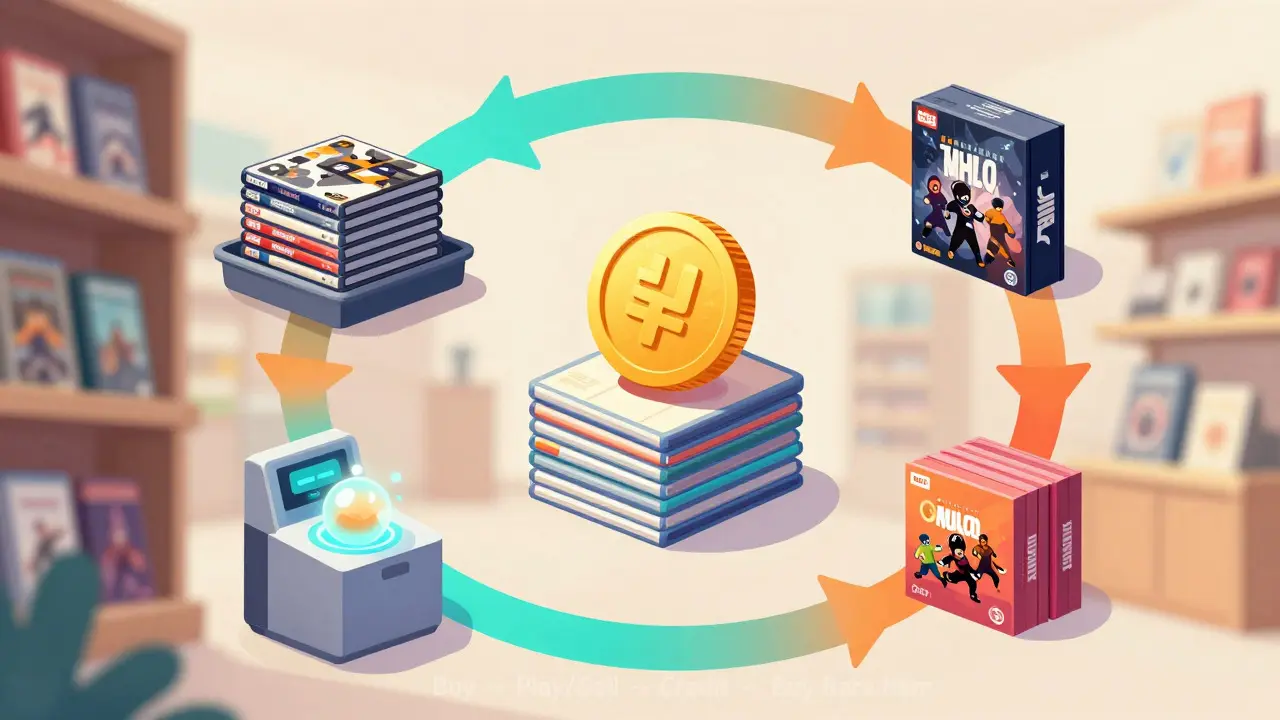
The key attribute here is flexibility. When you buy a game with store credit, you are essentially borrowing against future purchases. If you sell a game back to the same store, you receive credit immediately. This creates a loop: Buy → Play/Sell → Credit → Buy Rare Item. Unlike cash, which leaves your pocket permanently, store credit stays within the ecosystem of that retailer.
However, there is a catch. Most stores offer two types of value when you trade in:
The Trade-In Loop: Turning Common Titles into Capital
You likely own games you will never play again. These are your raw material. The process of converting them into buying power is straightforward but requires discipline.
- Audit your shelf: Identify titles with low resale value but high personal utility. Think standard releases of popular franchises (e.g., Call of Duty annual entries) that you have already beaten.
- Check current rates: Visit the trade-in page of your preferred retailer. Rates fluctuate based on demand. A new release might pay 80% in credit, while an older title pays 40%.
- Batch your trades: Instead of selling one game at a time, gather five or six. This reduces trips to the store and often qualifies you for small bonuses or loyalty points.
- Choose credit over cash: Unless you desperately need liquid funds, select the store credit option. If a $60 game pays $30 in cash but $50 in credit, you gain $20 in purchasing power instantly.
Let’s look at a concrete example. Suppose you want to buy a limited edition copy of a retro RPG for $80. You have $40 in cash. You also have three old sports games worth $15 each in cash or $22 each in credit. By choosing credit, you generate $66 in store credit. Add your $40 cash, and you have $106 total. You buy the $80 game and still have $26 left over for shipping or another small purchase. Had you chosen cash, you would have had only $85 total, leaving you short by $5 and forcing you to dip into savings.
Strategic Purchasing: Stretching Every Dollar
Once you have accumulated store credit, how do you spend it? The mistake most people make is spending it on impulse buys. Instead, use these strategies to stretch your budget further.
Split Payments
Most major retailers allow you to combine payment methods. If a rare PlayStation 2 game costs $120 and you have $50 in store credit, pay $50 with credit and $70 with debit. This preserves your cash for emergencies or other collections, while utilizing the "free" money you earned from previous trades.
Target High-Credit Items
Not all items give you the same return on investment when you eventually resell them. Focus your credit purchases on items with stable or appreciating value. Limited editions, first-run printings, and out-of-print manuals tend to hold their value better than mass-market digital codes. By using credit to buy these, you are effectively investing your saved value into assets that may pay you back later.
Timing Your Buys
Store credit doesn't expire at most major chains, but prices do. Wait for sales events like Black Friday, holiday weekends, or clearance sections. If a $50 game is marked down to $30, and you have $50 in credit, you buy it for $30 and keep $20 in credit. You just gained $20 in additional purchasing power simply by waiting. Patience is a skill in collecting.
Comparing Payment Methods for Collectors
To visualize why store credit is superior for budget stretching, compare it against other common payment methods used in gaming retail.
| Payment Method | Immediate Cost Impact | Resale Value Retention | Risk Factor | Best For |
|---|---|---|---|---|
| Cash | High (Direct drain) | N/A | Low | Urgent finds, flea markets |
| Credit Card | Medium (Deferred) | N/A | Medium (Debt interest) | Earn rewards/cashback |
| Store Credit | Low (Pre-funded) | High (Kept in ecosystem) | Low (Tied to one store) | Budget stretching, trading loops |
| Gift Card | High (Fixed amount) | Low (Often expires) | Medium (Loss if unused) | One-off purchases |
Notice the risk factor for store credit. It is low because the money is already spent. You aren't taking on debt. However, the constraint is that it is locked to one retailer. If you prefer buying from eBay or local swap meets, store credit is useless there. So, this strategy works best if you have a primary retail hub where you do 70% of your buying and selling.

Pitfalls to Avoid When Using Store Credit
Even with a solid strategy, mistakes happen. Here are the most common traps that eat into your budget.
- The Impulse Accessory Trap: Buying controllers, cases, or posters with store credit feels harmless because it isn't "real" money. But these items rarely appreciate. Save your credit for games or hardware that hold value.
- Ignoring Condition Grading: If you plan to resell later, condition matters. Don't use your precious credit to buy a game with a cracked case unless the discount is massive. A pristine copy is easier to trade in for high credit later.
- Overlooking Tax Rules: In some states, store credit transactions are tax-exempt, while cash transactions are not. Check your local laws. In Oregon, for example, there is no state sales tax, so this isn't an issue. But in neighboring Washington or California, this difference can save you several dollars per transaction.
- Losing Track of Balance: If you don't log your credit balance, you might overspend. Keep a simple spreadsheet or use the retailer's app to track your remaining credit after every transaction.
Building a Long-Term Collection Strategy
Using store credit is not just a tactic; it is a habit. Over time, it builds a financial buffer for your hobby. Imagine you collect Sega Genesis games. You start with a modest budget of $50 a month. You trade in two modern titles for $60 in credit. You now have $110 available. You buy a rare $80 Genesis title. You have $30 left. Next month, you repeat the cycle. After a year, you haven't just bought 12 games; you've built a portfolio of valuable items funded by the rotation of less valuable ones.
This approach separates serious collectors from casual buyers. Casual buyers spend income. Serious collectors manage flow. Store credit allows you to smooth out the peaks and valleys of your budget. When you have extra cash, you can buy more aggressively. When you are tight, you rely on the credit you've generated from past trades. It creates a self-sustaining engine for growth.
Start small. Pick one retailer. Audit your shelf. Make your first trade-in for credit. Then, wait for the right opportunity. The next rare find won't cost you what you think it does if you've been playing the long game.
Does store credit expire?
At most major US retailers like GameStop and Best Buy, store credit does not expire. However, smaller independent shops may have different policies. Always check the terms on your receipt or the store's website before relying on it for long-term saving.
Can I use store credit online?
Yes, most large retailers allow you to apply store credit during the checkout process on their websites. You typically need to be logged into your account for the balance to appear automatically. Some stores require you to enter a specific code, so read the instructions carefully.
Is store credit better than a gift card?
For active traders, yes. Store credit is linked to your account and usually offers a higher payout percentage when you sell items back. Gift cards are anonymous and fixed-amount, making them less flexible for the trade-in loop. Store credit grows as you trade; gift cards stay static until spent.
What happens if I close my retail account?
If you close your account at a retailer, any remaining store credit is usually forfeited or converted to a check, depending on state law. To avoid losing value, always spend down your balance before closing an account or transferring it if the store allows transfers.
Can I trade in a game and immediately buy another with the credit?
In most cases, yes. The credit is applied to your account instantly upon approval of the trade-in. You can then proceed to checkout and use that new balance for your next purchase in the same visit. This makes it easy to swap one game for another without carrying cash.