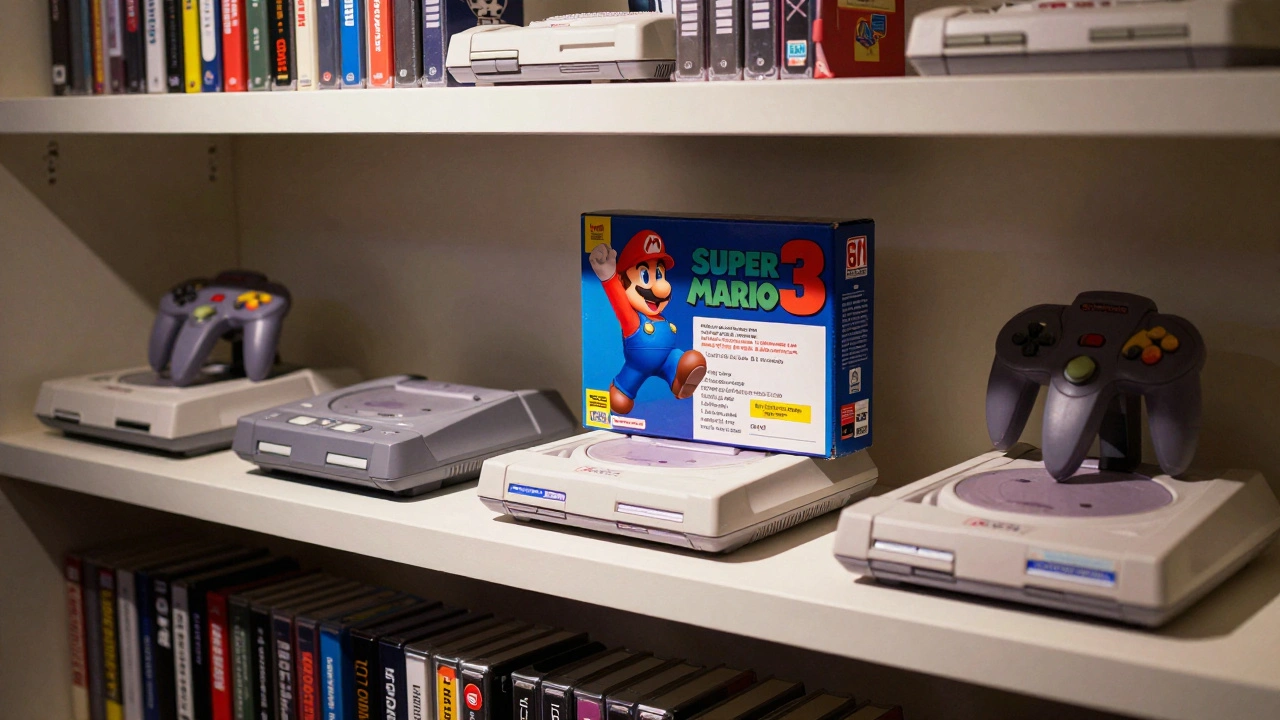
Most people don’t realize that a boxed copy of Super Mario Bros. 3 with its original manual and box can be worth more than a used car. Or that a sealed copy of Stadium Events for the NES sold for over $100,000 in 2024. If you’ve spent years building a video game collection-whether it’s retro consoles gathering dust in a closet or a curated shelf of sealed modern exclusives-you’re not just a collector. You’re an investor. And like any investment, it needs protection.
Standard homeowners or renters insurance won’t cut it. These policies usually cap collectibles coverage at $1,000 to $2,500 total. That’s fine for a few figurines, but if your collection includes a mint-condition Sega Genesis with original packaging, a complete set of Final Fantasy Japanese imports, or a limited-run Legend of Zelda: Ocarina of Time with the Nintendo Power magazine, you’re leaving thousands on the table. Worse, if something happens, you might not even get replacement value-you’ll get depreciated cash, which means you’ll never rebuild your collection.
Why Video Game Collections Need Special Insurance
Video games aren’t like TVs or laptops. You can’t just buy a replacement. Many systems are out of production. Games are discontinued. Manuals, boxes, and cartridges are irreplaceable. If your Nintendo 64 gets stolen, you can’t walk into Best Buy and buy another one. You’ll have to hunt eBay for months, pay inflated prices, or accept a used unit that’s missing its original accessories.
And here’s the kicker: repair is nearly impossible. A cracked cartridge? A broken controller port? A console that won’t power on because the capacitors dried out? There are maybe a dozen technicians in the U.S. who can fix these. Most collectors don’t even try-they just replace the whole thing. That’s why replacement value coverage matters more than anything else.
Specialized collectibles insurance treats your games like fine art or vintage watches. It covers theft, fire, flood, accidental damage, and even loss during transit. If you ship a game to a friend for a trade and it vanishes in the mail? Covered. If your cat knocks over your PlayStation 5 and the disc drive shatters? Covered. If a storm floods your basement and your retro shelf goes under? Covered.
How Valuation Works: Agreed Value vs. Market Value
Not all insurance policies are created equal. Some will pay you based on what you paid for the item five years ago. Others will pay what it’s worth today. The difference could be $50 or $5,000.
Two main valuation methods exist:
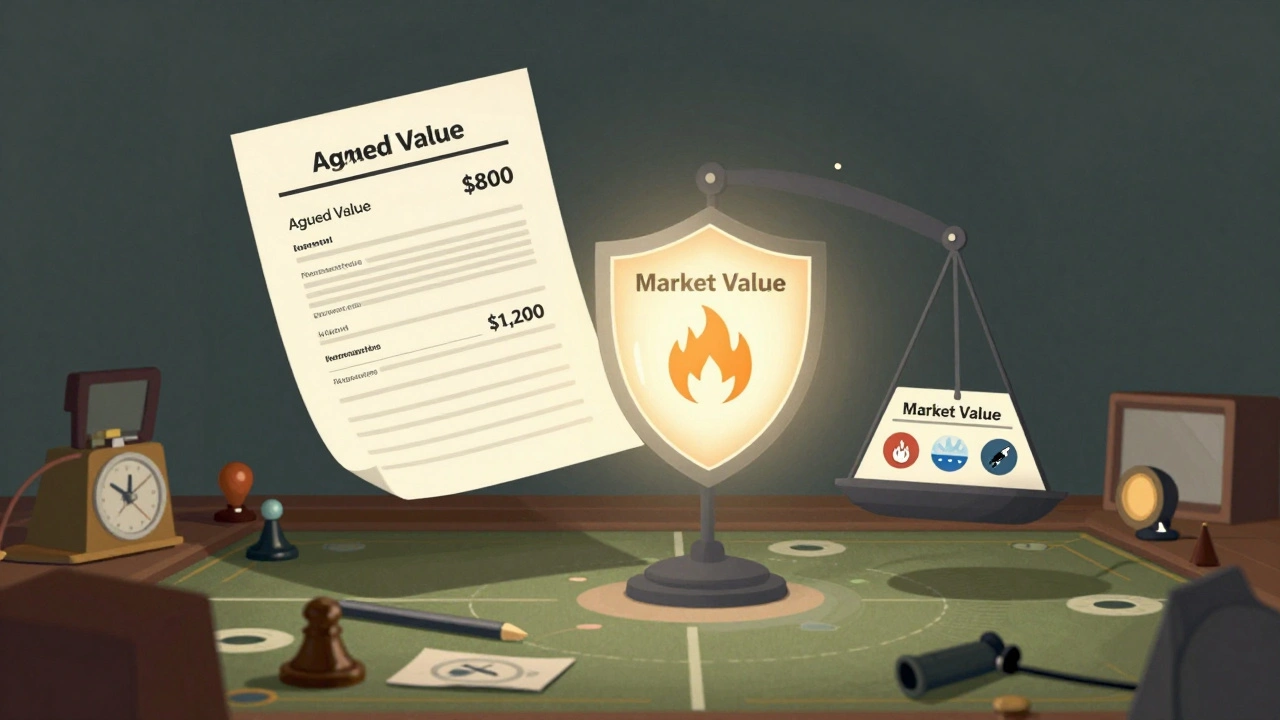
- Agreed Value: You and the insurer agree on a fixed amount for each item upfront. That’s what you get if it’s lost-no debate, no market fluctuations.
- Market Value: The insurer pays what the item is worth right now, based on current sales data. This is better if your collection is growing in value.
Top-tier policies let you choose the higher of the two. So if you agreed your Super Mario 64 was worth $800, but it just sold for $1,200 on eBay? You get $1,200. Some providers even let you extend coverage up to 150% of the agreed value-perfect for rare items that are skyrocketing in price.
For large collections, you don’t need to list every single game. Group them. Put all your SNES cartridges in one category, all your Atari 2600 titles in another. Assign an average value to each group. For example: “15 SNES games, average value $120 each.” That’s how the Library of Congress recommends handling big collections.
What You Need to Document
Insurance doesn’t pay out if you can’t prove what you owned. No receipt? No claim. No photos? Probably no payout.
Here’s what you actually need:
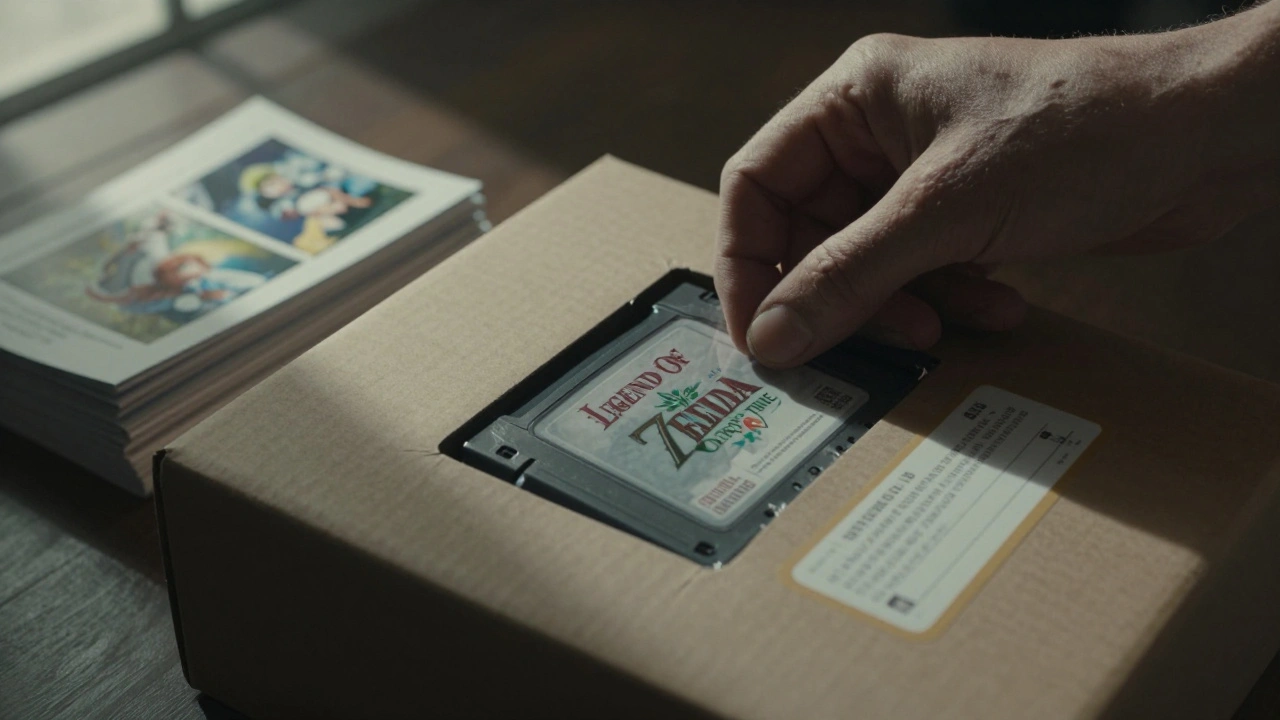
- Photos: Clear shots of each item-front, back, box, manual, label, serial number. For sealed games, photograph the shrink wrap and the seal.
- Receipts: Purchase invoices, eBay receipts, auction confirmations. Even a PayPal transaction history works if it shows the item description.
- Serial numbers: Write them down. For consoles, they’re usually on the bottom or back. For cartridges, they’re inside the label.
- Appraisals: Not always required, but if any single item is worth over $10,000-or if it’s your top 10% of the collection-a professional appraisal adds serious weight to your claim.
Update this every 6 months. Buy a new Animal Crossing special edition? Add it. Sell your Nintendo DS? Remove it. Out-of-date records are the #1 reason claims get denied.
Blanket vs. Scheduled Coverage
You have two main options:
- Blanket Coverage: Covers your entire collection under one total limit. Good for smaller collections or if you’re not tracking every item. You get up to your policy limit, but you can’t specify individual values.
- Scheduled Coverage: You list each item with its value. Higher protection, especially for rare pieces. If one item is stolen, you get its full value-not a portion of your total limit.
Most serious collectors go with scheduled coverage. It’s more work upfront, but it pays off when you file a claim. If you own a Sega Dreamcast with a rare Shenmue box set, you want that item listed separately. Don’t let it get lost in the crowd.
Automatic Coverage for New Additions
One of the best features of modern collectibles insurance? You don’t have to call your agent every time you buy a game.
Many policies automatically cover new items for up to 25% of your total policy limit. So if you have a $50,000 policy, any new game or console you buy in the next 90 days is automatically covered up to $12,500. That’s huge. It means you can buy a $5,000 Atari Jaguar bundle on eBay and know it’s protected right away.
Transit and Storage Coverage
Insurance shouldn’t stop at your front door. If you’re moving, shipping a game to a convention, or storing part of your collection in a friend’s garage, you need coverage.
Good policies include transit protection. That means if your game gets lost in the mail, damaged during a move, or stolen from your car while you’re heading to a retro gaming expo, you’re covered. Some even cover storage in non-primary residences-like a rented storage unit or a parent’s attic.
And here’s something most people forget: humidity. Retro cartridges and discs degrade in damp environments. If your collection is stored in a basement or garage, make sure your policy covers moisture damage. It’s not always listed as a standard peril, but it should be.
What’s Not Covered
Even the best policies have limits. Here’s what’s usually excluded:
- Damage from poor storage (e.g., leaving games in direct sunlight for years)
- Loss due to war, nuclear events, or intentional damage (like if you drop it on purpose)
- Wear and tear (a scratched disc isn’t covered, but a cracked console from a fall is)
- Items valued over policy limits without prior approval
Always read the fine print. If your policy says “no coverage for items over $10,000 without appraisal,” and you have a $12,000 Sega CD bundle, you’re out of luck unless you get that appraisal.
When to Add a Rider
Some items are too valuable-or too unique-for standard coverage. Think:
- A sealed Super Mario Bros. with a factory error
- Prototype consoles from game developer auctions
- Hand-painted custom controllers
For these, add a rider. It’s like a special add-on that gives you extra coverage for specific items. You’ll need a professional appraisal, but once it’s approved, that item gets its own line on your policy with its own value and protection. It’s the only way to fully protect one-of-a-kind pieces.
Final Thoughts
Your collection isn’t just a hobby. It’s a piece of cultural history. It’s the games your kids will one day ask about. It’s the console you played with your best friend in 1997. That’s worth protecting.
Don’t wait until your basement floods or your apartment gets broken into. Start documenting. Get an inventory. Talk to a collectibles insurer. Make sure your policy covers replacement value-not just depreciated cash. And if you own rare items, don’t skip the appraisals.
The market for retro games keeps growing. So should your protection.
Do I need an appraisal for every game in my collection?
No. Most insurers only require formal appraisals for individual items valued over $10,000 or for the top 10-25% of your collection by value. For the rest, clear photos, receipts, and serial numbers are usually enough. If you’re unsure, start with a professional appraisal for your most valuable pieces and document everything else.
Can I insure games I bought secondhand?
Yes. As long as you can prove ownership with a receipt, invoice, or even a detailed seller letter, insurers will cover secondhand games. The key is documentation-not where you bought it. A sealed GoldenEye 007 from eBay with a PayPal receipt and clear photos qualifies just as well as one bought new.
Will filing a claim raise my homeowners insurance rates?
No-if you use a standalone collectibles insurance policy. These policies are separate from your homeowners or renters coverage. Claims made under your collectibles policy won’t affect your primary insurance premiums or coverage. That’s one of the biggest advantages of specialized coverage.
What if I lose a game during a trade with a friend?
If your policy includes transit and disappearance coverage, then yes-you’re covered. Many policies protect items while they’re being shipped or transported, even if it’s just across town. Make sure your policy explicitly includes "disappearance in transit" as a covered peril. If it doesn’t, ask your provider about adding it.
Can I insure my collection if I live in an apartment?
Absolutely. In fact, apartment dwellers benefit the most from collectibles insurance because renters insurance rarely covers high-value items. Most collectibles policies work for renters, homeowners, and people living in dorms or shared spaces. Location doesn’t matter as much as how well you document your collection.
Next steps: Start today. Take photos of your most valuable items. Gather receipts. Write down serial numbers. Call a collectibles insurer and ask about blanket vs. scheduled coverage. You don’t need to insure everything at once-just start with your top five items. The rest will follow.