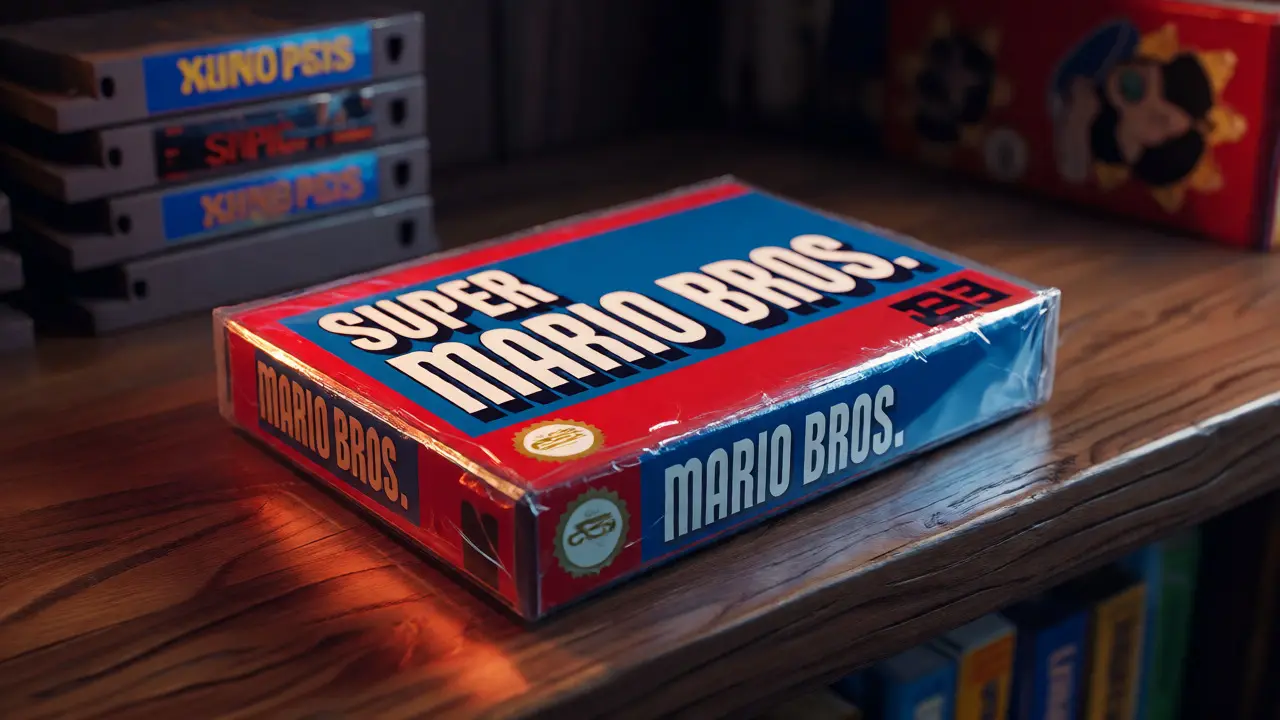
You just spent three years hunting down a sealed copy of Super Mario Bros. for the NES. You bought it for $400. Last week, an auction house sold a similar grade-9 copy for $12,000. Your heart skipped a beat-not because you’re rich, but because your standard renters insurance policy probably caps electronics at $50 per item. If your apartment floods or someone walks off with that box, you’re out thousands. This is the silent killer of hobbyists: assuming your home policy covers your passion. It usually doesn’t.
The Gap in Standard Homeowners Policies
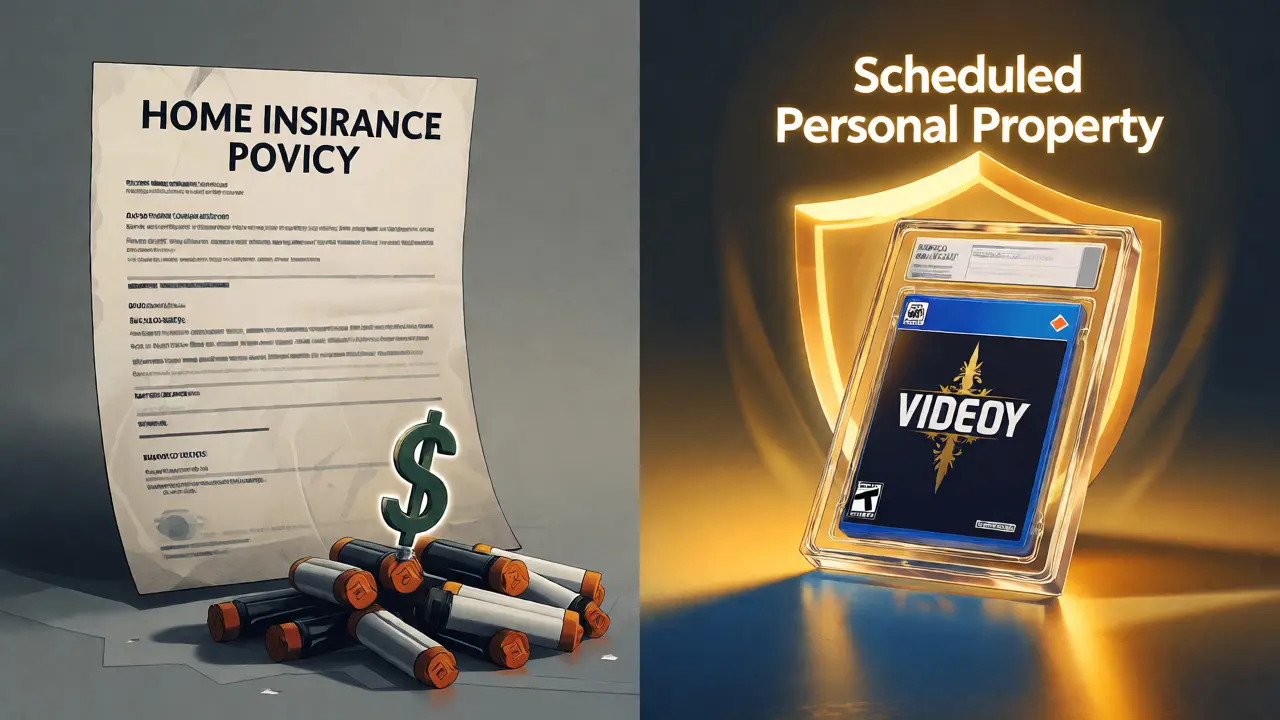
Most people think their homeowners or renters insurance covers everything inside their four walls. That’s a dangerous myth when it comes to niche hobbies like video games. Standard policies typically have two major limitations that hurt collectors. First, there’s the "single item limit." Many policies cap any single piece of personal property at $500 to $1,000. Second, there’s the category exclusion. Some insurers explicitly exclude "collectibles" unless they are specifically scheduled on the policy. If you don’t schedule them, you might get nothing-or a depreciated payout based on what the insurer thinks a used cartridge is worth, not what the market says.
Imagine a fire destroys your shelf. You had ten rare RPGs. The adjuster sees "used software" and offers you $20 each because that’s what Best Buy charges for a new release. You know those copies are worth $300 each. Without specific scheduling, you lose $2,800 instantly. To fix this, you need to understand how scheduled personal property works.
Scheduling vs. Blanket Coverage
You have two main ways to protect your collection: blanket coverage and scheduled coverage. Most collectors start with blanket coverage, which is included in your base premium. It covers all your belongings up to a certain percentage of your total dwelling coverage (usually 50% for contents). But here’s the catch: blanket coverage rarely has sub-limits for high-value items. If your policy has a $1,500 sub-limit for "electronics," and your entire Nintendo 64 library fits under that umbrella, you’re fine. But if one Pokemon Gold cartridge is worth $2,000, you still hit that ceiling.
Scheduled coverage is different. You list individual items on your policy, pay a small extra fee (often 1-2% of the item’s value), and get guaranteed replacement cost. There are no deductibles for these items, and they’re covered against "all risks"-meaning theft, fire, water damage, and even accidental drops are usually covered unless specifically excluded. For a serious collector, scheduling is non-negotiable. It removes the argument about value during a claim because you’ve already agreed on the number with the insurer.
| Feature | Standard Homeowners Policy | Scheduled Personal Property | Specialty Collector Insurance |
|---|---|---|---|
| Coverage Limit | Sub-limits apply (e.g., $500/item) | Agreed Value (No limit per item) | Agreed Value (High limits available) |
| Deductible | $500 - $2,500 per claim | None | None or Low |
| Valuation Method | Actual Cash Value (Depreciated) | Replacement Cost | Market Value / Agreed Value |
| Proof Required | Receipts often required | Appraisal or receipt needed upfront | Professional appraisal required |
| Best For | Low-value bulk collections | Mid-to-high value key pieces | High-value, museum-grade collections |
Why Specialty Insurers Beat Generalists
If your collection exceeds $10,000 in value, generalist insurers like State Farm or Allstate might drop you or refuse to schedule items without excessive paperwork. Enter specialty insurers. Companies like Collectors Insurance (owned by AIG) or Griffin Underwriters exist solely to cover hobbies. They understand the difference between a loose cartridge and a CIB (Complete in Box) copy. They also offer broader peril coverage. While a home policy might exclude "mysterious disappearance" (where you can’t prove theft), many specialty policies cover it. This matters if you lend a game to a friend who never returns it, or if it vanishes during a move.
Another huge benefit? No depreciation. Specialty insurers use "agreed value." You tell them the game is worth $1,000 based on recent sales. They agree. If it’s destroyed, they cut a check for $1,000. They don’t ask what a 10-year-old plastic case is "worth" in today’s retail market. They honor the agreement. This peace of mind is worth the slightly higher premium.
The Art of the Appraisal
You cannot insure what you cannot prove. This is where appraisals come in. For low-value items ($50-$200), a dated screenshot from eBay completed listings or a receipt from a reputable retailer like GameStop or Amazon is usually enough. Just print it out and keep it in a digital folder labeled "Insurance Proof."
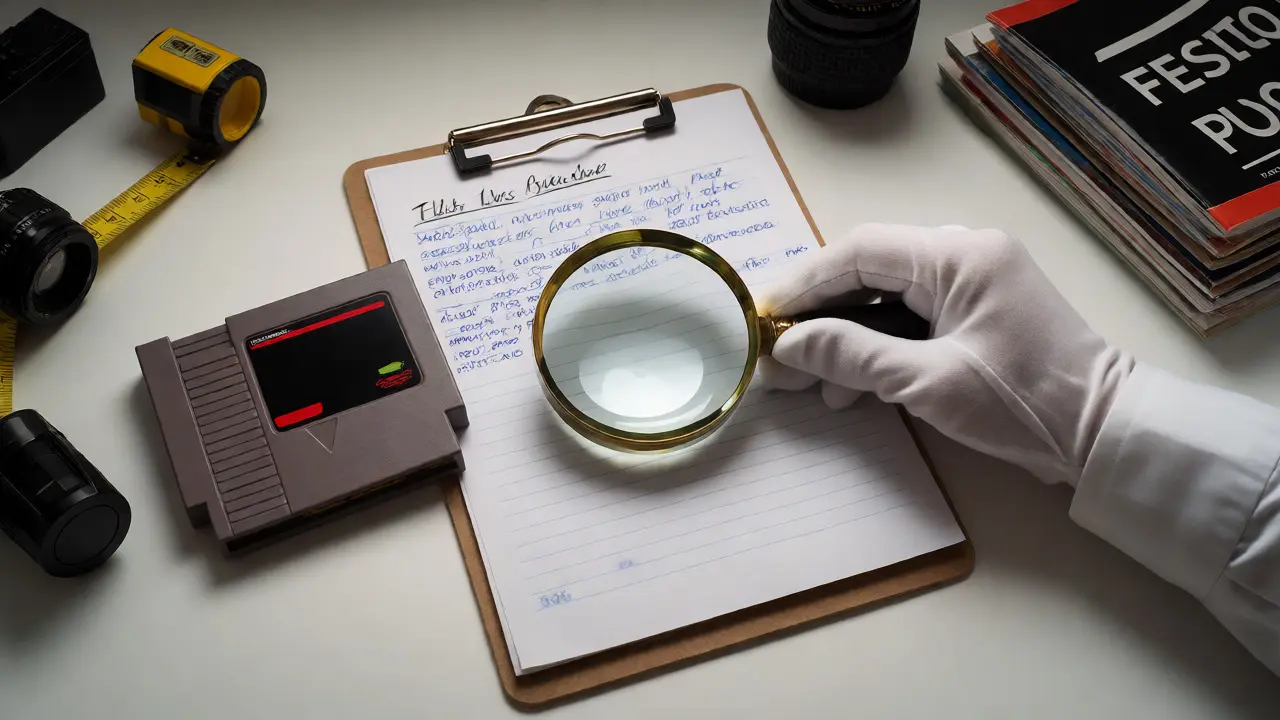
For high-value items (anything over $500), you need a formal appraisal. Who does this? Not your local pawn shop. You need a certified appraiser who specializes in pop culture memorabilia or video games. Organizations like the International Society of Appraisers (ISA) or the Appraisers Association of America maintain directories. Look for credentials like ASA (American Society of Appraisers) or ISA Certified.
A proper appraisal document must include:
- Description: Title, platform, year, edition, and condition (graded if applicable).
- Methodology: How did they determine the value? Did they use comparable sales data from eBay, Heritage Auctions, or PriceCharting?
- Effective Date: Values change fast. An appraisal from 2020 might be useless in 2026.
- Appraiser Credentials: Their signature, license number, and conflict of interest statement.
Expect to pay $75-$150 per hour for a professional appraiser. For a single $5,000 game, that’s a negligible cost compared to the risk. If you have a large collection, negotiate a flat rate for cataloging and valuing multiple items.
Documentation: Your Best Friend
Before you even call an insurer, build a database. Use a spreadsheet or an app like Collectorz. For every item, record:
- Title and Platform
- Purchase Date and Price
- Current Market Value (check monthly)
- Condition Grade (if graded by WATA, VGA, or WBC)
- Serial Number (if applicable)
- Photos: Take clear photos of the front, back, spine, and any defects. Include a photo of the item next to a newspaper or phone screen showing the date to prove timestamp.
Store this data in the cloud. If your house burns down, your physical inventory goes with it. A digital backup ensures you can file a claim immediately.
Common Pitfalls to Avoid
Don’t assume "new for old" applies to vintage games. If you buy a retro console for $200 and it breaks, the insurer won’t give you $200 to buy a new PlayStation 5. They’ll try to replace it with a similar vintage unit. If none exists, they might pay cash value. Clarify this in writing.
Watch out for "storage location" clauses. If you keep your collection in a detached garage or a basement prone to flooding, some policies charge more or exclude water damage entirely. Be honest about where your games live. If you move them to a safe deposit box, tell your insurer. Off-premises coverage is often limited.
Finally, update your values annually. The video game market is volatile. A game worth $100 today could be $500 next year due to a movie adaptation or streaming series. Review your scheduled items every January. If values have dropped, you might lower your premium. If they’ve risen, you need to increase coverage to avoid being underinsured.
Do I need to insure loose cartridges differently than boxed ones?
Yes, potentially. Loose cartridges are generally less valuable than Complete-in-Box (CIB) copies. However, some rare loose cartridges (like certain PAL exclusives) can still hold significant value. Insurers will treat them as separate line items. Ensure your documentation clearly distinguishes between "Loose" and "CIB" states, as this directly impacts the insured amount. If a loose cartridge is only worth $20, it may fall under your general personal property limit and not require scheduling.
Are graded games (WATA/VGA) easier to insure?
Absolutely. Graded games come with a third-party verification of authenticity and condition, which reduces risk for the insurer. Because the value is tied to a public grading scale, appraisals are faster and cheaper. Many insurers accept the grading company’s population report and recent sales data for that specific grade as sufficient proof of value, sometimes waiving the need for a separate expensive appraisal if the game is from a recognized grader.
What happens if my collection appreciates after I buy insurance?
If your collection grows in value significantly, you risk being underinsured. In a total loss scenario, you might receive less than the current market value. Most policies allow you to add riders or increase coverage mid-term. Some specialty insurers offer automatic inflation adjustments, but for volatile markets like video games, manual annual reviews are safer. Always re-appraise high-value items every 1-2 years.
Does insurance cover accidental damage, like dropping a controller?
It depends on the policy. Standard homeowners policies often exclude "mechanical breakdown" or "wear and tear." Accidental damage is sometimes covered under scheduled personal property endorsements, but you must read the fine print. Specialty collector policies are more likely to cover accidental breakage, such as cracking a case or damaging a label, provided it wasn’t caused by negligence or gradual deterioration.
Can I insure a collection stored in a safe deposit box?
Yes, but coverage may differ. Items in a bank safe deposit box are often covered by the bank’s liability, which is very low (sometimes capped at $5,000 total). Your homeowner’s policy might cover off-premises losses, but limits are often reduced. Specialty insurers frequently offer better terms for off-site storage, including protection against bank errors or natural disasters affecting the vault. Always declare the storage location to your insurer.