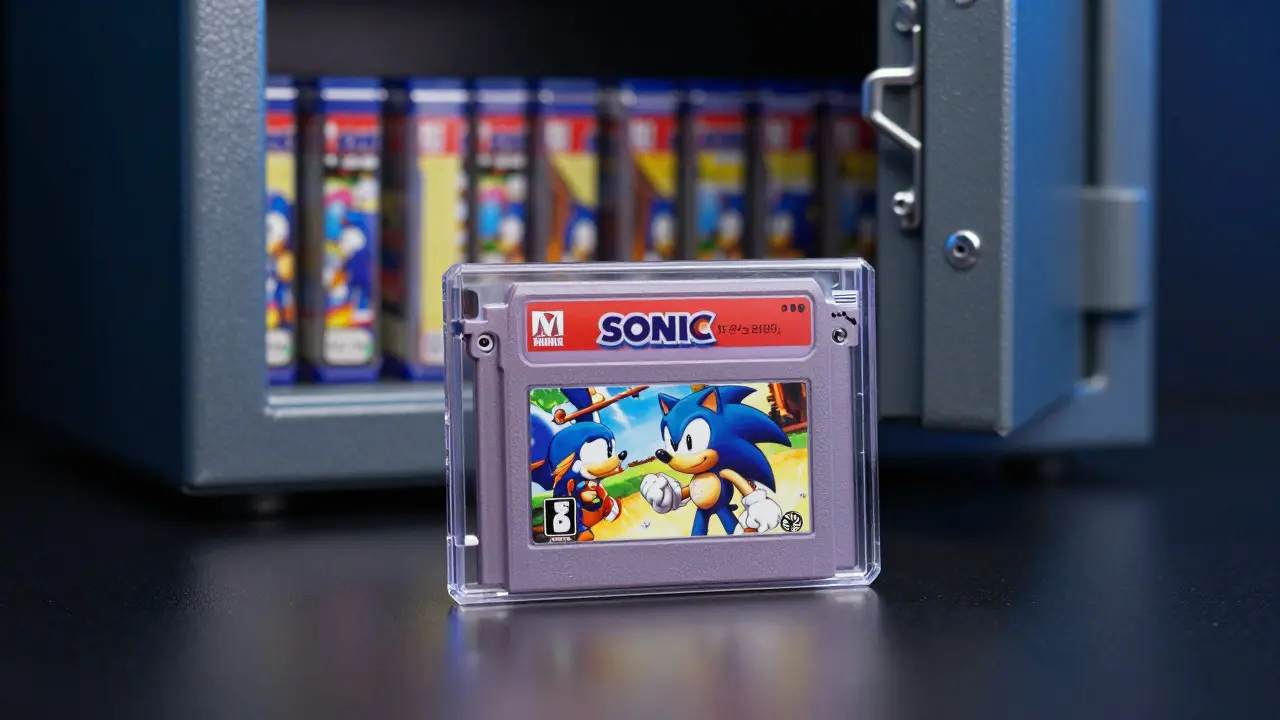
Imagine opening your safe to find a pristine copy of Sonic the Hedgehog in its original box, sealed since 1991. If it’s been graded by PSA and sits at a 10, you’re looking at a significant financial asset. But here is the scary part: standard homeowner’s insurance often caps coverage for collectibles at just $1,000 or less. For a serious collector, that gap can be devastating.
Grading video games has transformed from a hobby into a high-stakes investment market. With prices for rare titles like The Legend of Zelda or early Nintendo Entertainment System cartridges soaring into the thousands, protecting these assets requires more than just a lockbox. You need a strategy that accounts for the specific vulnerabilities of plastic media, the volatility of the secondary market, and the strict requirements of modern insurers.
Why Standard Insurance Falls Short
Most people assume their renter’s or homeowner’s policy covers everything inside their walls. While this is true for basic replacement, it rarely holds up for high-value collectibles. Insurers use a concept called "actual cash value" (ACV) rather than "replacement cost." ACV factors in depreciation. In the world of video games, this logic is flawed. A 30-year-old cartridge doesn’t lose value; it gains it as scarcity increases.
Furthermore, standard policies often have sub-limits for specific categories. Jewelry might be capped at $2,000, and art at $5,000. Collectibles are frequently lumped into a general "personal property" bucket with a low aggregate limit. If you have a collection worth $50,000, but your policy only covers $1,000 of collectibles, you are effectively self-insuring $49,000 of risk. This is where the real danger lies. You aren't just losing money; you're losing an irreplaceable piece of gaming history that took years to curate.
The Role of Professional Grading in Valuation
This is where grading standards become your best friend. When you submit a game to a reputable grading service like Professional Sports Authenticator (PSA) or Wata Games, you get more than just a shiny slab. You get a standardized, third-party verification of condition.
Insurers love objective data. Instead of arguing over whether a case has "minor wear" or "significant scuffing," you point to the grade. A PSA 10 indicates perfect condition. A Wata 95+ indicates near-perfect. These grades create a clear baseline for valuation. When filing a claim, the adjuster looks at recent auction results for that specific grade. This removes ambiguity and speeds up the payout process significantly.
| Coverage Type | Valuation Method | Typical Limit | Best For |
|---|---|---|---|
| Standard Homeowner's | Actual Cash Value (Depreciated) | $1,000 - $2,000 | Low-value duplicates |
| Rider / Floater | Agreed Value (Appraised) | Customizable ($5k+) | Mixed collections |
| Blanket Policy | Replacement Cost | High Limits | Large, high-value estates |
Choosing the Right Policy Structure
Once you’ve decided to insure your collection, you have two main paths: adding a rider to your existing policy or buying a standalone blanket policy. Each has distinct advantages depending on the size of your collection.
The Rider (or Floater): This is an add-on to your current home or renter’s insurance. It allows you to list specific high-value items or set a total limit for a category. The key feature here is "agreed value." You and the insurer agree upfront on what the items are worth based on appraisals. If they burn down, you get that exact amount without haggling over depreciation. This is ideal for collectors with collections valued between $5,000 and $25,000.
The Blanket Policy: For serious investors with collections exceeding $25,000, a specialized blanket policy from a fine art or collectibles insurer is often better. These policies cover all items in a specific category (e.g., "Video Games") up to a high limit. They don’t require you to list every single cartridge. As long as the item fits the definition, it’s covered. This is crucial if you are actively trading or acquiring new pieces frequently, as updating a rider for every new purchase is administratively painful.
Storage and Environmental Risks
Insurance isn’t just about fire and theft; it’s about environmental damage. Video games are made of plastic and paper, materials that degrade over time. UV light fades box art. Humidity causes label peeling and discoloration. Heat warps cases. If an adjuster finds your collection stored in a hot attic or a damp basement, they may argue that negligence contributed to the damage, potentially reducing your payout.
To protect your investment, store your graded slabs in a climate-controlled environment. Aim for temperatures between 65°F and 70°F and relative humidity between 40% and 50%. Use acid-free boxes for ungraded items. For graded items, ensure the slabs are not stacked too heavily, as pressure can crack the acrylic over decades. Documenting your storage conditions with photos and temperature logs can serve as proof of due diligence if a claim arises.
The Appraisal Process: Getting the Numbers Right
You cannot insure what you haven’t valued accurately. An appraisal for video games is different from one for jewelry. It requires expertise in the secondary market trends. Look for appraisers who specialize in pop culture memorabilia or specifically video games. Generalist appraisers may undervalue niche items because they rely on outdated retail prices rather than live auction data.
A good appraisal should include:
- Itemized list of all high-value pieces.
- Current market value based on the last 90 days of comparable sales.
- Photographic evidence of each item’s condition.
- Verification of authenticity (especially for rare first-printings).
Remember, appraisals expire. The video game market is volatile. A title that was worth $500 six months ago might be worth $800 today. Most insurers require appraisals to be updated every three years, but for fast-moving markets, annual updates are safer to ensure you’re not underinsured.

Common Pitfalls to Avoid
Even experienced collectors make mistakes that void their coverage. Here are the most common traps:
- Failing to disclose upgrades: If you buy a new, expensive console or rare game, tell your insurer. If it’s stolen and wasn’t listed (in a scheduled policy), you might be out of luck.
- Ignoring deductibles: Some collectibles policies have high deductibles. Make sure the deductible makes sense for your collection size. A $5,000 deductible on a $10,000 collection means you only get paid for half the loss.
- Assuming worldwide coverage: If you travel with your collection or ship it to a convention, check if the policy covers "off-premises" storage. Many standard riders only cover items while they are in your home.
- Neglecting the "slab" itself: Does the policy cover the breakage of the grading slab? If a PSA slab cracks, the game is still valuable, but the premium associated with the protective packaging is lost. Ensure the coverage includes the container.
Next Steps for Your Collection
Protecting your high-value graded video game collection is an ongoing process, not a one-time task. Start by taking a full inventory. Sort your items by value and grade. Identify the top 20% of items that represent 80% of your collection’s value-these are your priority targets for specific coverage. Then, contact an independent insurance broker who specializes in collectibles. Ask them specifically about "agreed value" clauses and environmental exclusions. Finally, review your storage setup. If you’re keeping your crown jewels in a closet, move them to a dedicated, climate-controlled space. Your future self will thank you when the next market surge hits, knowing your assets are secure and fully protected.
Does standard homeowner's insurance cover video games?
Yes, but usually with very low limits (often $1,000 or less) and based on actual cash value, which depreciates the item. This is rarely sufficient for high-value graded collections.
What is the difference between a rider and a blanket policy?
A rider adds specific coverage to your existing home policy, usually requiring you to list individual items. A blanket policy is a separate insurance contract that covers all items in a category up to a high limit without needing to list each one individually.
How often should I get my video game collection appraised?
Most insurers require an appraisal every three years. However, given the volatility of the video game market, annual appraisals are recommended for collections with rapidly appreciating values.
Do I need to insure ungraded games?
If the ungraded games are rare and valuable, yes. However, grading them first is highly recommended because it provides a standardized value metric that makes insuring and claiming much easier and more accurate.
What storage conditions do insurers prefer?
Insurers prefer climate-controlled environments with temperatures between 65°F and 70°F and humidity levels between 40% and 50%. Items should be protected from direct sunlight and extreme heat or cold.