
Imagine you own a Counter-Strike 2 skin with the "Dragon Lore" pattern. On paper, it’s worth thousands of dollars. It is rare, beautiful, and coveted by collectors. But when you try to sell it today, there are no buyers at your price. You drop the price. Still nothing. You wait another week. Finally, one buyer appears, but they offer half of what you thought it was worth. This is the harsh reality of thinly traded video game titles and assets where rarity does not equal easy cash.
In the world of digital collectibles and physical retro games, we often confuse scarcity with value. We think that if something is hard to find, it must be easy to sell for a high price. That logic works for gold or real estate. It fails spectacularly in gaming markets. The tension between liquidity (how fast you can sell) and rarity (how scarce the item is) creates a trap for many sellers. Understanding this dynamic is the difference between walking away with profit and being stuck holding an unsellable bag of digital air.
The Illusion of Value in Rare Assets
Rarity is a marketing tool. Developers and platforms love to tell you that an item is "Legendary," "Covert," or "One-of-a-Kind." In Axie Infinity, at its peak in 2021, players were earning nearly $500 a month just by playing. The tokens and NFTs seemed incredibly valuable because they were scarce and in demand. But scarcity alone doesn’t create a stable market. It creates volatility.
When an asset is extremely rare, the pool of potential buyers shrinks dramatically. You aren’t selling to the general public; you’re selling to a tiny group of whales who already own similar items or are specifically hunting for yours. If none of them want it right now, you have zero liquidity. Your asset might have a high "notional value"-a theoretical price tag-but its "realized value" is whatever someone is willing to pay *today*. Often, that number is shockingly low.
Consider the crash of Smooth Love Potion (SLP), the utility token in Axie Infinity. At its height, SLP was liquid and valuable. As the economy became unsustainable, the price dropped 99.1% from its peak. The rarity of certain Axies didn’t save owners because the underlying ecosystem collapsed. Liquidity dried up first, then value followed. This shows that rarity without a healthy, active trading community is just a pretty picture on a screen.
What Makes a Gaming Market "Thin"?
A thin market is one where trade frequency is low, and order books lack depth. In traditional finance, this happens with obscure penny stocks. In gaming, it happens with highly specialized items. Let’s look at the mechanics that kill liquidity:
- Wide Bid-Ask Spreads: In a liquid market like common CS2 skins, the difference between the highest buy order and lowest sell order is small. In thin markets, this gap can be 20% or more. You list your item for $1,000, but the highest offer is $800. Do you take the loss?
- Low Trading Volume: If only three people bought that specific hero skin last month, you are fighting for attention in a very quiet room. Sellers end up undercutting each other desperately, driving prices down further.
- High Transaction Costs: On blockchain-based games using Solana or Polygon, gas fees or marketplace cuts can eat into profits. If you’re trying to sell a low-value but rare item, the fee might make the sale pointless, discouraging traders entirely.
These factors combine to create a situation where you are essentially the only seller and the only buyer. You set the price, but you also set the bottom. Without external demand, the price collapses under its own weight.
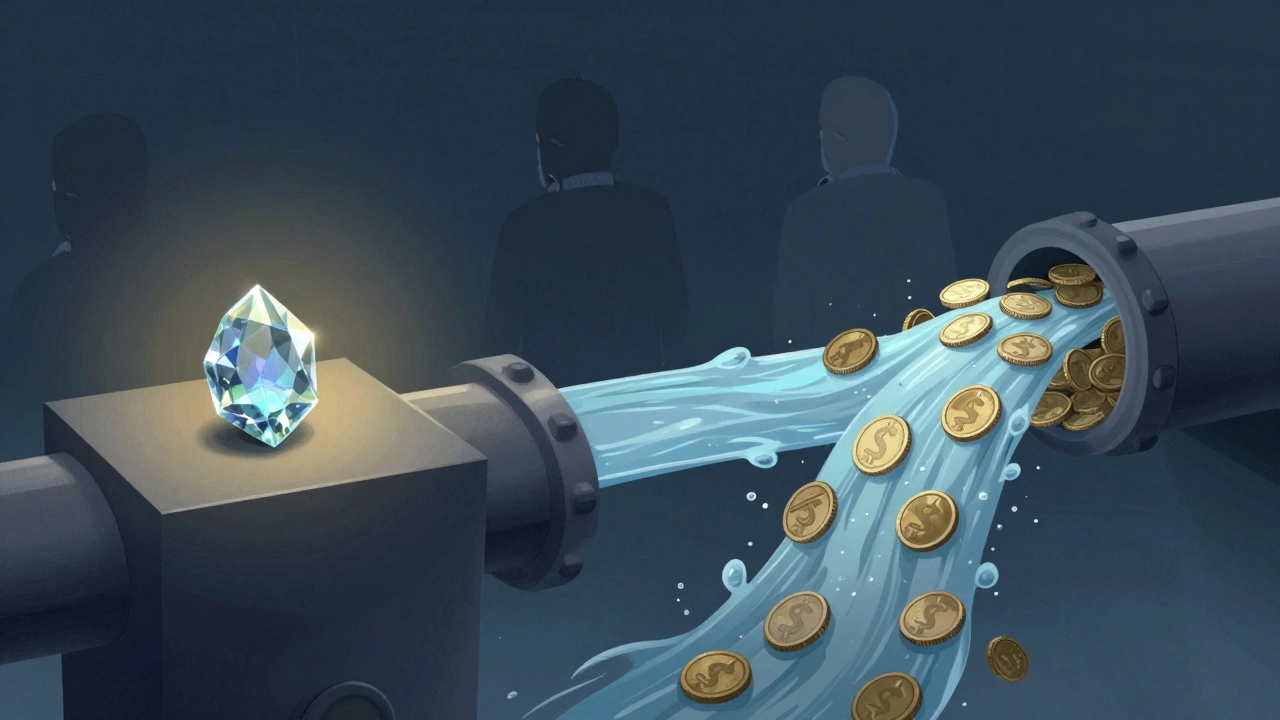
Liquidity Risk vs. Scarcity Premium
Financial theory tells us that illiquid assets should command higher expected returns to compensate for the risk of not being able to sell. This is called the "liquidity premium." In gaming, this principle holds true, but it’s dangerous for casual sellers. If you hold a rare item, you are betting that its scarcity will eventually outweigh the inconvenience of selling it.
Studies of AI trading strategies in CS2 markets show a clear preference. Automated bots favor moderately rare, highly liquid items. Why? Because they can turn over inventory quickly, capturing small profits repeatedly. They avoid the "Restricted" and "Covert" tiers unless the portfolio is massive. Human "Buy-and-Hold" investors, however, tend to pile into these rarer tiers, hoping for a windfall. They accept lower tradability in exchange for the dream of exponential growth.
This divergence creates a bubble. When everyone is buying rare items hoping to flip them later, supply dries up, and prices inflate artificially. But when the music stops-and it always does-the liquidity vanishes. Those same rare items become impossible to move without slashing prices. The AI traders exit cleanly; the human holders are left stranded.
How External Shocks Kill Liquidity Overnight
Gaming markets are uniquely sensitive to external events. A new game update, a change in developer policy, or even an e-sports championship can shift the entire landscape. These are exogenous shocks that financial models struggle to predict.
Take a recent patch note from a popular RPG. Suddenly, a weapon that was once rare and powerful becomes obsolete due to a balance tweak. Its rarity remains unchanged-it’s still hard to find-but its utility drops to zero. Demand evaporates. Liquidity disappears. Conversely, a character winning a major tournament can spike demand for their associated skins, temporarily boosting liquidity. But this is fleeting. Once the hype fades, the market returns to its thin state.
Developers also play a role. In games like The Sandbox, users can mint new assets freely. If anyone can create a slightly different version of your "rare" land plot, your scarcity advantage is undermined. New entries flood the market, increasing supply and diluting value. True scarcity requires strict controls on creation, which not all developers implement effectively.
Strategies for Selling in Thin Markets
If you are sitting on thinly traded assets, you need a strategy. Waiting for a miracle buyer rarely works. Here are practical steps to maximize your exit:
- Patient Pricing: Don’t panic-list at a steep discount. Instead, research historical sales data. Look for patterns in when similar items sold. Sometimes, waiting for a seasonal surge or event can bring buyers back.
- Bundle Items: If you have multiple rare items from the same game, bundle them. A single rare card might be hard to sell, but a complete set appeals to collectors who want convenience. This increases the effective liquidity of your package.
- Use Multiple Platforms: Don’t rely on one marketplace. List your item on secondary markets, Discord communities, and dedicated forums. Each platform has a different user base. One niche community might be actively seeking exactly what you have.
- Negotiate Directly: In thin markets, direct negotiation often works better than fixed-price listings. Reach out to known collectors or traders in the community. Build relationships. A trusted seller can often get a better price than a faceless listing.
Remember, liquidity is not static. It changes based on sentiment, news, and time. Your job is to position yourself to capture value when liquidity briefly spikes, rather than expecting constant ease of sale.
The Future of Gaming Asset Valuation
As the industry matures, we’re seeing a shift. Early blockchain games suffered from wild volatility and poor liquidity management. Today, developers are learning. They’re implementing deflationary mechanics, burning assets to maintain scarcity, and tying rewards to sustainable economic models. The gaming sector raised billions in investment recently, signaling confidence in long-term stability.
However, the core challenge remains. Rarity attracts attention, but liquidity drives survival. For sellers, the lesson is clear: don’t fall in love with the rarity tier. Fall in love with the market depth. Ask yourself: "Who else wants this, and how easily can I reach them?" If the answer is vague, you’re holding a thin asset. Plan your exit before you need it.
What is liquidity in the context of video game assets?
Liquidity refers to how quickly and easily you can convert a gaming asset into cash or another currency without losing significant value. High liquidity means many buyers and frequent trades; low liquidity means few buyers and wide price gaps.
Why are rare video game items often harder to sell than common ones?
Rare items have a smaller pool of potential buyers. While they may have a higher theoretical value, the lack of frequent trading activity (thin market) means you might wait weeks or months for a buyer, forcing you to lower your price significantly to close the deal.
How do game updates affect the liquidity of digital assets?
Game updates can drastically alter asset value. A balance patch can make a rare weapon obsolete, killing demand and liquidity instantly. Conversely, a new feature might boost interest in specific items, temporarily increasing liquidity. These external shocks make rare assets volatile.
Is it better to hold rare items or sell liquid ones?
It depends on your goals. If you need consistent income and quick turnover, liquid items are safer. If you have a large portfolio and a long time horizon, holding rare items can yield higher returns, but you must accept the risk of being unable to sell them quickly during market downturns.
Can I increase the liquidity of my rare gaming assets?
Yes, by bundling items together, listing on multiple platforms, engaging directly with collector communities, and timing your sales around events or tournaments. You cannot change the inherent scarcity, but you can improve your access to potential buyers.